
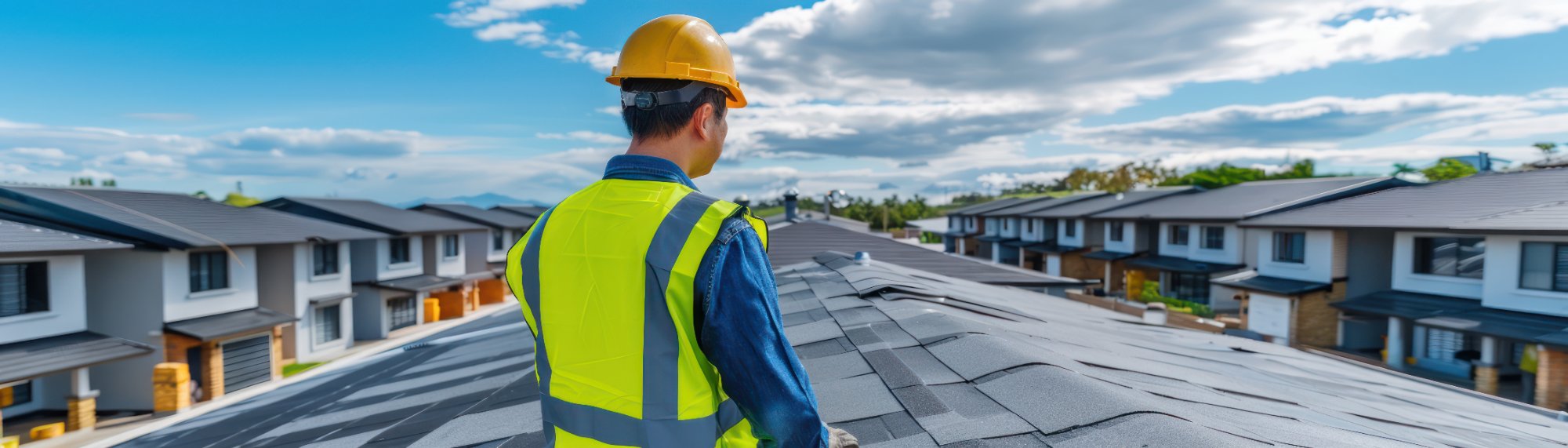
Coopers Hill Roof Surveys provide independent, certified roof inspections throughout this distinguished corner of the Runnymede borough and the surrounding landscape of Englefield Green. Combining drone aerial photography with thermal imaging analysis, our surveyors assess every category of roof found across the area — from the imposing Victorian Gothic buildings of the former Coopers Hill estate and the substantial Edwardian detached homes set back along tree-lined lanes, through the interwar family housing around St Jude's Road and Priest Hill, to the post-war residential developments closer to Egham and the luxury apartments within the Magna Carta Park development.
Fast, independent roof surveys from local experts.
The Coopers Hill area presents a particular challenge for roof assessment because of how dramatically the housing stock varies over short distances. Grand period properties with complex slate and lead rooflines stand within a few hundred metres of modest 1950s semis with concrete interlocking tiles. Converted institutional buildings carry roof structures engineered for an entirely different purpose. Luxury new-build developments use modern membrane systems that demand a different inspection methodology altogether. Coopers Hill Roof Surveys bring the range of expertise and equipment necessary to handle every one of these scenarios with equal rigour.
Whether you are completing a purchase on a period home along Coopers Hill Lane, dealing with persistent moisture in a property near Englefield Green, building an insurance case after storm damage, or seeking a clear-eyed view of your roof before agreeing to an expensive contractor quote, our surveys give you the documented evidence to move forward with confidence.
Coopers Hill Roof Surveys exist because property owners in this part of Surrey deserve access to honest, technically rigorous roof assessments — not sales pitches disguised as inspections. The area around Coopers Hill and Englefield Green attracts significant property investment, and that investment deserves protection. Yet too many local homeowners have committed to unnecessary roof work on the back of a fifteen-minute ladder inspection by a contractor already planning the repair, or have exchanged on a purchase without knowing what lay behind the ridge tiles and chimney stacks above them.
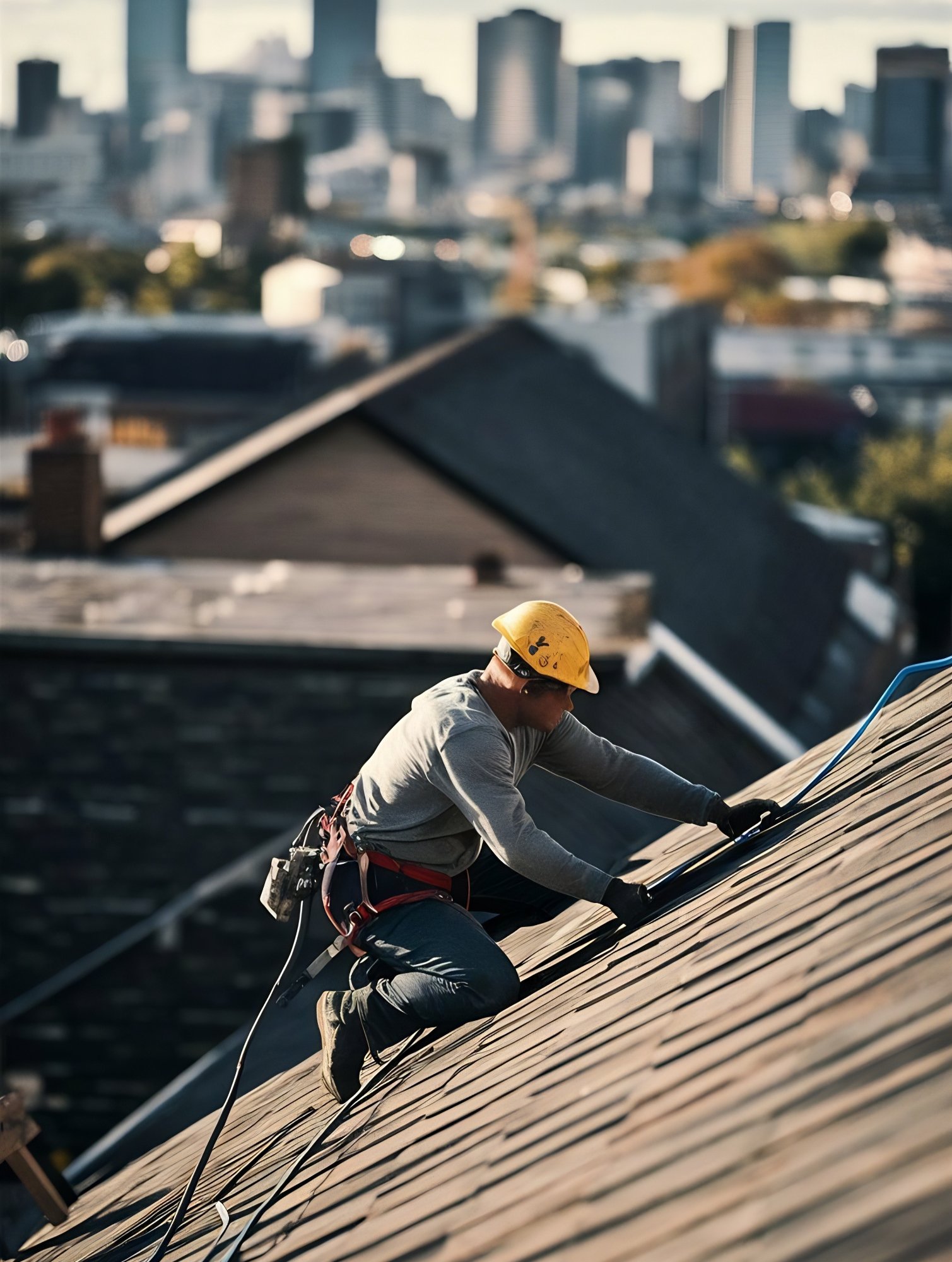
Every inspection we carry out follows a structured, evidence-based methodology. We walk the full perimeter at ground level, assessing rainwater goods, fascia boards, soffits, and any visible deterioration from below. Our DJI Enterprise drone then captures comprehensive high-resolution imagery of every elevation, ridge line, valley, hip, flashing, and chimney stack — delivering perspectives that even scaffolding cannot match on the tall, steeply pitched roofs typical of the older Coopers Hill properties. Where the survey package includes thermal imaging, our FLIR cameras map moisture patterns concealed beneath the roof covering and within the structural timbers.
What makes the Coopers Hill area unusual is the density of architectural history packed into a relatively compact geography. A Victorian Gothic former college building converted to residential use sits alongside Edwardian country houses, 1930s suburban semis, post-war council stock, and twenty-first century luxury apartments. Each demands a different eye, different knowledge, and different expectations about what might be failing and why. Coopers Hill Roof Surveys have invested in understanding those differences because the area demands nothing less.
We maintain strict independence. Coopers Hill Roof Surveys do not perform roof repairs and have no commercial relationship with any roofing contractor. When we confirm a roof is performing well, that conclusion is disinterested and credible. When we document a defect, the repair costs in our report are based on verifiable market rates — not estimates designed to create urgency or steer you toward a particular firm.
Nearby Areas with Similar Properties: The roofing challenges found around Coopers Hill extend into the neighbouring towns and villages of the Runnymede and Spelthorne districts. Property owners in Egham and Virginia Water encounter comparable issues with ageing plain tiles, exposed lead work, and the effects of heavy tree cover on roof surfaces. See our area-specific guides for detailed information about your location.
Coopers Hill Roof Surveys are not roofers, builders, or contractors. We provide independent inspection and reporting only — ensuring every assessment is free from commercial bias.
Coopers Hill Roof Surveys are ready to inspect your property. Whether it is a period home on Coopers Hill Lane, a detached family house near Englefield Green, or a modern apartment within Magna Carta Park, our team delivers the clarity you need.
What Coopers Hill Roof Surveys bring to homeowners, buyers, and landlords across the area
Many of the properties around Coopers Hill sit on sloping ground behind mature hedgerows and boundary walls, making safe ladder placement difficult or impossible. The converted estate buildings and taller Edwardian houses along Coopers Hill Lane present steeply pitched rooflines that are inaccessible by conventional means. Our DJI Enterprise drone captures every ridge, valley, hip, flashing, and chimney stack in high-definition detail — including angles and elevations that scaffolding alone could not reach.
The heavy tree canopy throughout the Coopers Hill area traps moisture against roof surfaces and accelerates the decay of flashings, tiles, and mortar joints. Leaks can develop gradually beneath clay tiles and slate without any visible sign from inside the property until the damage is already extensive. Our FLIR thermal cameras detect temperature differentials caused by trapped moisture beneath the roof covering and within structural timbers — identifying problems at a stage when repair is straightforward rather than urgent.
Every Coopers Hill Roof Surveys report is built to be used — by your solicitor during a conveyancing negotiation, by your insurance provider when processing a claim, or by a roofing contractor as a precise work specification. Each report contains annotated high-resolution drone photographs, thermal overlays where applicable, condition ratings for every roof element, and clear itemised repair costings at current market rates.
Coopers Hill Roof Surveys hold full professional indemnity and public liability insurance. Our surveyors carry recognised industry certifications and CAA-approved drone pilot licences. Every inspection follows a standardised methodology refined across thousands of Surrey properties, ensuring consistent and accurate assessments whether we are examining a Victorian Gothic conversion on the former college grounds or a modern apartment block near Egham station.
Coopers Hill is not one housing type — it is an extraordinary patchwork of eras and styles compressed into a landscape shaped by centuries of changing ownership. The Victorian Gothic structures on the former college estate carry steep slate roof pitches, decorative stone parapets, deep box gutters, and chimney stacks that rise above the surrounding tree line. The Edwardian detached houses scattered along the lanes present handmade clay tiles, hipped and half-hipped roofs, ornamental ridge tiles, and bay window lead work. The interwar and post-war housing closer to Englefield Green village relies on concrete interlocking tiles, simpler hip and gable forms, and ridge mortar that was never designed to last a century.
Coopers Hill Roof Surveys understand that a single inspection checklist cannot serve such variety. We calibrate every survey to the specific age, material, and construction method of the building in front of us, because that is the only way to deliver findings that are genuinely useful rather than generically reassuring.
From the heritage rooflines of the Coopers Hill estate to the concrete tiles of the 1950s housing near Englefield Green, Coopers Hill Roof Surveys know this area's roofscape inside out.
How Coopers Hill Roof Surveys have helped local homeowners and property buyers
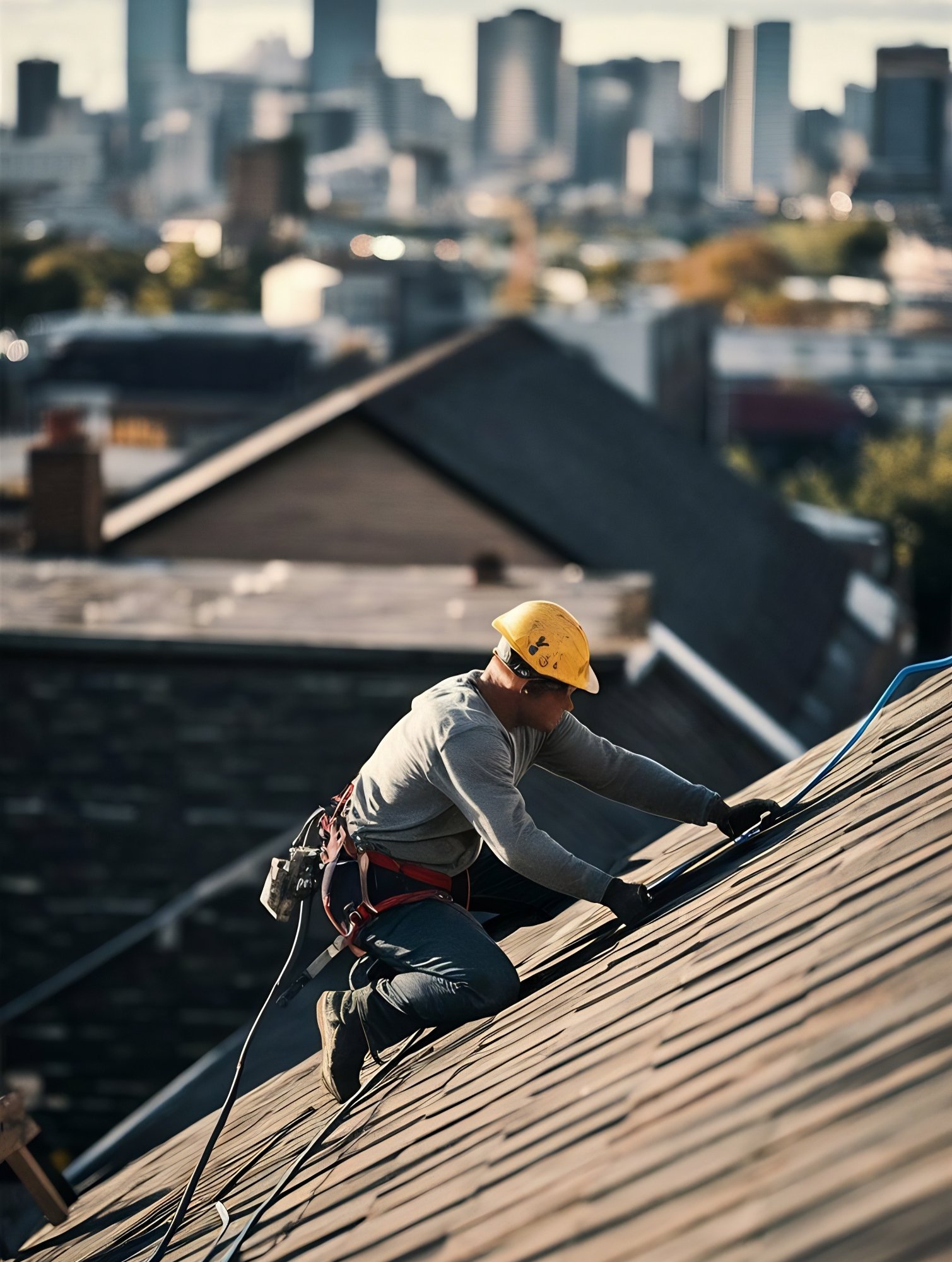
A couple purchasing an imposing Edwardian detached house on Coopers Hill Lane had received a homebuyer report describing the roof as "satisfactory with minor maintenance needed." Given the property's asking price exceeded one and a quarter million pounds, they wanted verification before exchanging contracts and contacted Coopers Hill Roof Surveys for a second opinion.
Our drone accessed viewpoints above the decorative stone parapet on the west elevation — a vantage point entirely invisible from ground level or a standard ladder inspection. Behind the parapet sat a lead-lined box gutter that had corroded through at two points. Thermal imaging confirmed active moisture tracking into the eaves timbers on that side of the building. We also documented six cracked plain clay tiles on the north-facing slope and degraded mortar around the base of the main chimney stack.
Coopers Hill Roof Surveys costed the remedial works at approximately eleven thousand eight hundred pounds. The buyers' solicitor used our report to negotiate a price reduction that covered the full amount. The box gutter was replaced within eight weeks of completion, and the new owners avoided what would have become a far more expensive timber repair had the moisture path continued through another winter season.
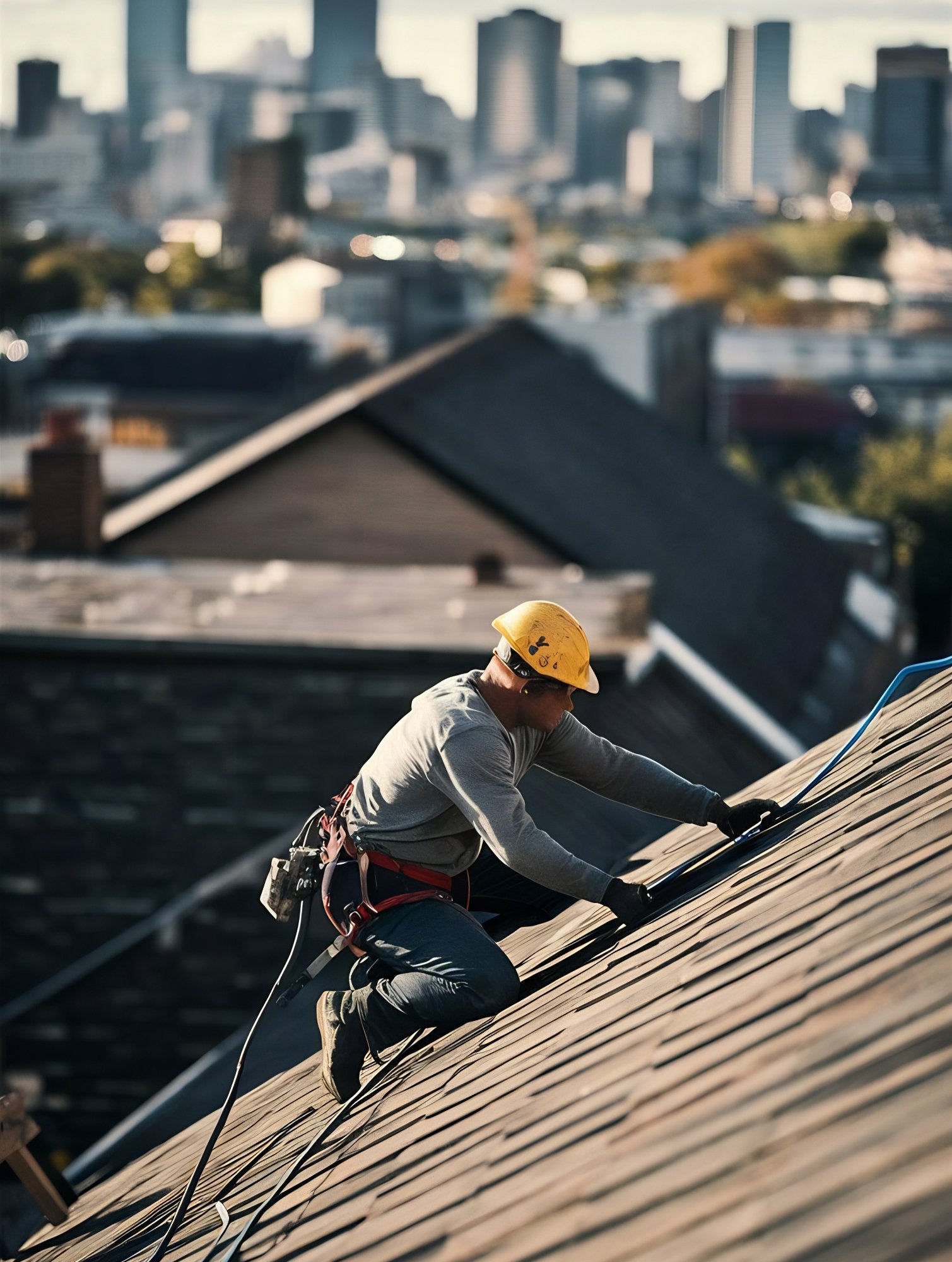
Following severe autumn storms in 2024, a homeowner near St Jude's Road in Englefield Green discovered water entering their spare bedroom. Their insurer dispatched a loss adjuster who classified the damage as pre-existing deterioration and declined the claim. The homeowner felt the assessment was rushed and asked Coopers Hill Roof Surveys to provide independent evidence.
Drone photography captured eight displaced concrete tiles on the south-west facing slope, with clean fracture edges and debris patterns consistent with the recorded storm wind direction. Thermal imaging mapped a concentrated moisture path from the displaced area through to the bedroom ceiling directly below. Critically, we photographed intact tiles with weathered edges adjacent to the displaced ones — demonstrating that the damage was sudden and event-related rather than a product of gradual decline.
The timestamped Coopers Hill Roof Surveys report was submitted as a formal appeal. The insurer reversed their original decision and approved the claim in full within four weeks. Repair costs of three thousand eight hundred pounds were covered under the homeowner's buildings policy. Our report provided exactly the photographic and thermal evidence needed to distinguish storm damage from pre-existing wear.
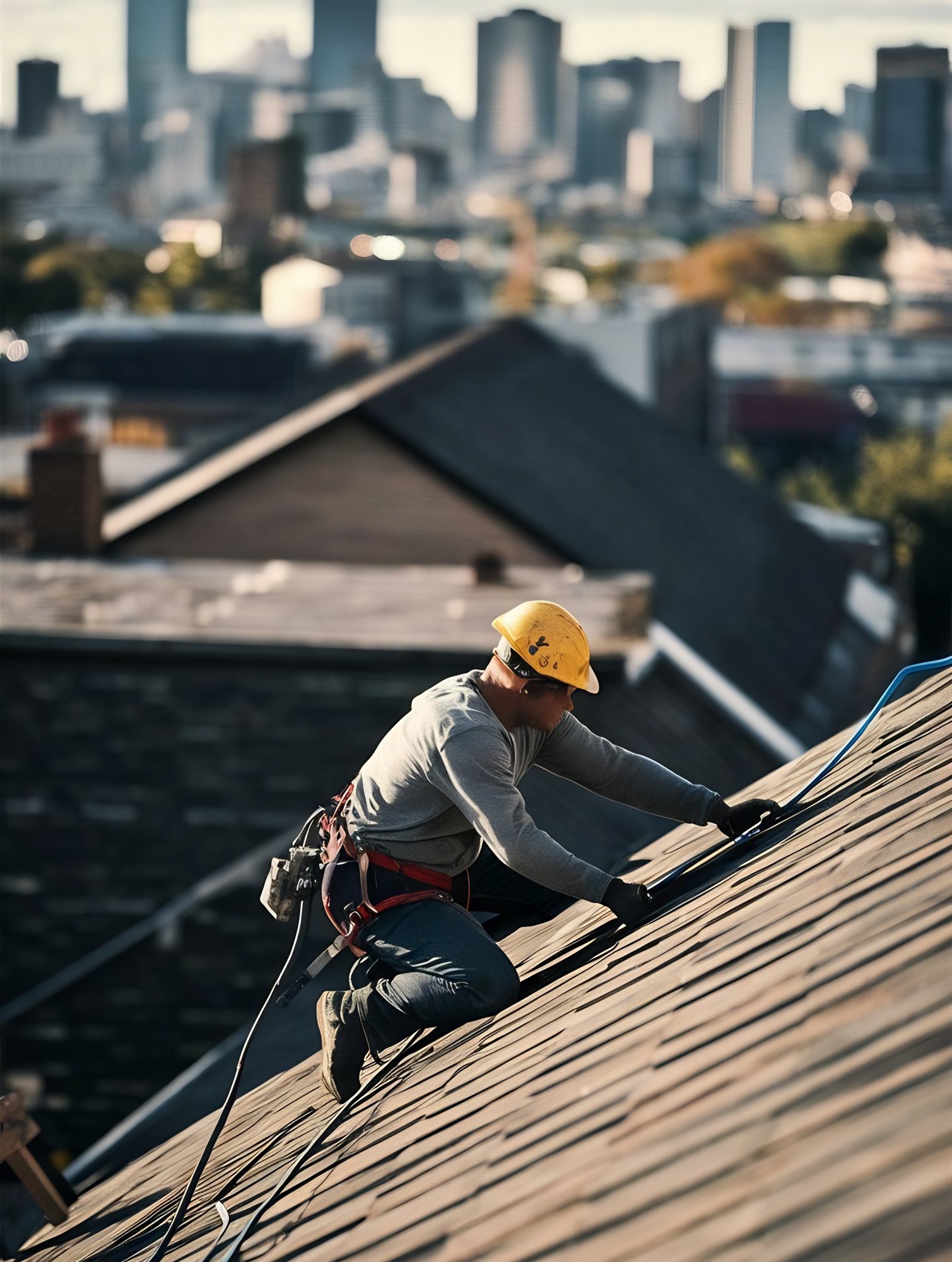
A landlord owning a 1960s detached property near Priest Hill received a roofing contractor's quote for eighteen thousand pounds to completely strip and recover the main pitched roof after the contractor spent just twenty minutes on site with a ladder. The landlord had no way to evaluate whether the full re-roof was genuinely necessary and sought an independent assessment from Coopers Hill Roof Surveys.
Our comprehensive survey — drone photography of all four elevations plus internal loft inspection — established that the main pitched roof was performing adequately. The concrete interlocking tiles on the front and side elevations showed surface weathering but no structural failure. The problem was isolated to the flat-roofed rear extension, where the felt membrane had blistered and split in three places, and the upstand junction with the main house wall had separated. The pitched roof needed ridge repointing and four replacement tiles — routine maintenance, not a re-roof.
Coopers Hill Roof Surveys specified the flat roof membrane replacement at approximately four thousand five hundred pounds and the pitched roof maintenance at around one thousand two hundred. The landlord saved over twelve thousand pounds against the original quote and received a prioritised schedule for future monitoring. Our report gave the landlord the technical clarity to commission targeted repairs rather than an unnecessary wholesale replacement.
The owners of a converted Victorian property near the Magna Carta Park estate had noticed damp patches appearing in the hallway ceiling and a musty smell in the attic space. The building had been converted from institutional use to residential approximately fifteen years earlier, and the owners suspected the conversion work may not have addressed underlying roof drainage issues. They asked Coopers Hill Roof Surveys to investigate.
Our drone inspection revealed that the original Victorian cast-iron rainwater hopper on the east elevation had been boxed in during the conversion rather than replaced. Debris had accumulated above the concealed hopper, causing water to overflow behind the cladding and track down the internal wall. Thermal imaging confirmed moisture penetration along a three-metre vertical path from eaves level to first floor ceiling height. We also documented cracked lead soakers at the junction between the original slate roof and a newer tile-clad dormer added during conversion.
The owners used our Coopers Hill Roof Surveys report — which included annotated thermal evidence and drainage pathway analysis — to instruct a heritage-experienced contractor. The concealed hopper was exposed, replaced, and properly connected. The dormer junction was re-soaked with new lead. Total cost was approximately seven thousand six hundred pounds, but the report's early detection prevented the moisture damage from reaching the structural timbers, which would have doubled the remediation cost.
Need a professional roof survey for your Coopers Hill property? Get in touch with Coopers Hill Roof Surveys today for a free consultation.
Feedback from homeowners and buyers who have used Coopers Hill Roof Surveys
"Purchased an Edwardian house on Coopers Hill Lane and knew the homebuyer report had barely glanced at the roof. Coopers Hill Roof Surveys found a corroded box gutter hidden behind the parapet and cracked tiles on the north slope that would have cost us dearly down the line. Their detailed report gave our solicitor everything she needed to renegotiate. Absolutely outstanding."
"Two different roofers told us our chimney was the source of our damp problem. Coopers Hill Roof Surveys traced it with thermal imaging to a completely different location — a failed flat roof junction at the rear. The problem was sorted in a fortnight and the damp has vanished. We wasted months listening to guesswork before finding these surveyors."
"Our insurer rejected a storm damage claim, calling it wear and tear. Coopers Hill Roof Surveys photographed clean fracture lines and tile displacement patterns that proved the damage was caused by the storm. The insurer paid out in full within weeks. Their evidence made all the difference."
Transparent pricing from Coopers Hill Roof Surveys — choose the inspection level that suits your property and your needs
Coopers Hill Roof Surveys offer three tiers of inspection designed around the wide variety of properties found in this part of Surrey. Each tier uses the same certified team and professional methodology — the difference lies in the depth of investigation and technology deployed. Whether you own a compact apartment with a straightforward flat roof or a sprawling period home with multiple chimney stacks and hidden valleys, there is a package built for your situation.
Essential visual roof assessment for Coopers Hill homeowners seeking a clear overview of their roof's current condition
Full drone and thermal imaging inspection — the most requested package for Coopers Hill buyers and homeowners
Complete structural roof assessment for Coopers Hill's larger detached homes, period properties, and commercial premises
Common questions answered by Coopers Hill Roof Surveys
Coopers Hill Roof Surveys cover the full extent of the Coopers Hill area and its surrounding districts. Our regular inspection territory includes Coopers Hill Lane and its residential properties, the Magna Carta Park estate, the village of Englefield Green including the streets around St Jude's Road and the green itself, Priest Hill, Bishopsgate, and the scattered properties along the lanes towards Runnymede and the Thames. We also attend homes in the nearby residential roads off the A328 and around Royal Holloway University.
Inspections across the Coopers Hill area typically require between one and a half and two and a half hours on site. The larger Edwardian and converted period properties along Coopers Hill Lane and around Magna Carta Park — with their multiple roof pitches, concealed gutters, and tall chimney stacks — tend to require the full duration. The interwar and post-war housing closer to Englefield Green village is generally assessed more quickly. Clients receive their complete written report within forty-eight hours of the visit.
Converted and heritage buildings make up a significant proportion of our work in the Coopers Hill area. The former institutional buildings around the estate, the Victorian and Edwardian country houses, and the older cottages scattered along the surrounding lanes all require specialist knowledge that a generic roof inspection cannot provide. Our drone-based approach is particularly well-suited to these properties, where ladder access risks damaging decorative stonework, period brickwork, or fragile roof coverings. We regularly work with properties subject to conservation area restrictions.
Every comprehensive and premium report from Coopers Hill Roof Surveys includes timestamped drone photography, thermal scan overlays where applicable, detailed damage narratives, and itemised repair costings calculated at current market rates. Insurers require this standard of documented evidence when processing roof-related claims, and our reports are structured to meet those requirements precisely. We have supported numerous successful claims for properties across the Coopers Hill and Englefield Green area, including storm damage appeals that reversed initial insurer rejections.
Coopers Hill sits on elevated ground above the Thames flood plain and is exposed to prevailing south-westerly weather fronts that carry moisture across from the river corridor. The area's dense mature tree cover compounds this by trapping dampness against roof surfaces, blocking gutters with seasonal leaf fall, and encouraging moss and lichen colonisation on clay and concrete tiles. Specific problems we encounter regularly include cracked plain clay tiles on Edwardian homes, corroded lead flashings and box gutters on period properties, concrete tile delamination on post-war housing, failed flat roof membranes on rear extensions, and degraded ridge mortar across most building eras.
Commercial inspections form a regular part of our schedule in the wider Coopers Hill and Runnymede area. We survey converted estate buildings, educational premises, retail and office properties in Egham and Englefield Green, and the range of commercial buildings across the Runnymede borough. All flat roof systems — felt, GRP, EPDM, and single-ply membranes — fall within our scope, as do the pitched roofs covering converted commercial premises and purpose-built units in the surrounding area.
Have another question? Contact Coopers Hill Roof Surveys directly.
Coopers Hill Roof Surveys provide professional roof inspections across the area and wider Runnymede borough
The historic heart of the area includes the former college buildings — now converted to residential use — and the substantial detached homes set along the tree-lined lane. Roof types range from steep Victorian Gothic slate pitches with stone parapets and deep box gutters to Edwardian handmade clay tiles with ornamental ridge detailing and multiple chimney stacks.
The residential streets surrounding the village green and along St Jude's Road contain a mixture of Victorian cottages, Edwardian family homes, interwar semis, and some later infill development. Plain clay tiles, concrete interlocking tiles, and slate are all represented across the village roofscape.
The elevated residential roads around Priest Hill and towards Bishopsgate feature detached 1950s and 1960s houses interspersed with older properties. Concrete interlocking tiles dominate the post-war stock, with some later re-roofing in modern tiles. Exposure to wind and heavy tree cover create persistent moss growth and gutter blockage.
The lower ground towards the River Thames and historic Runnymede includes scattered residential properties, riverside homes, and older dwellings along the lanes. Proximity to the river increases humidity and the risk of persistent dampness affecting roof timbers and flashings.
The streets around Royal Holloway University and along Egham Hill include a range of Victorian and Edwardian properties alongside student accommodation conversions and later residential development. Bay window lead work, slate coverings on period homes, and concrete tiles on twentieth-century housing are all common.
Coopers Hill Roof Surveys operate throughout the Runnymede borough and into the neighbouring districts. We regularly attend properties in the surrounding towns and villages that share similar housing stock and roofing challenges.
Coopers Hill Roof Surveys deliver the independent, technically rigorous roof inspections that this area's varied and valuable property stock demands. Whether you are a buyer completing due diligence on a period home along Coopers Hill Lane, a homeowner tracing a stubborn leak in Englefield Green, a landlord evaluating a contractor quote on a property near Priest Hill, or simply seeking honest answers about an ageing roof before committing to significant expenditure, our surveys provide the evidence you need.
Every inspection combines certified expertise with advanced technology — drone aerial photography, thermal imaging, and detailed written reporting — to produce a complete, unbiased picture of your roof's condition. We do not carry out repairs. We do not recommend contractors. We provide the facts, the photographs, and the costings, and you decide what happens next.
Every report from Coopers Hill Roof Surveys is independent, detailed, and written to be acted upon — whether you are buying, selling, claiming, or simply protecting your investment.
Call us today or complete the form below to arrange your Coopers Hill roof survey.
Contact Coopers Hill Roof Surveys today to arrange your roof inspection
Monday - Friday: 7:30 AM - 9:30 PM
Saturday: 7:30 AM - 7:00 PM
Sunday: 9:00 AM - 5:00 PM
For urgent roof inspection needs in Coopers Hill, please call Coopers Hill Roof Surveys directly.
Call Now