
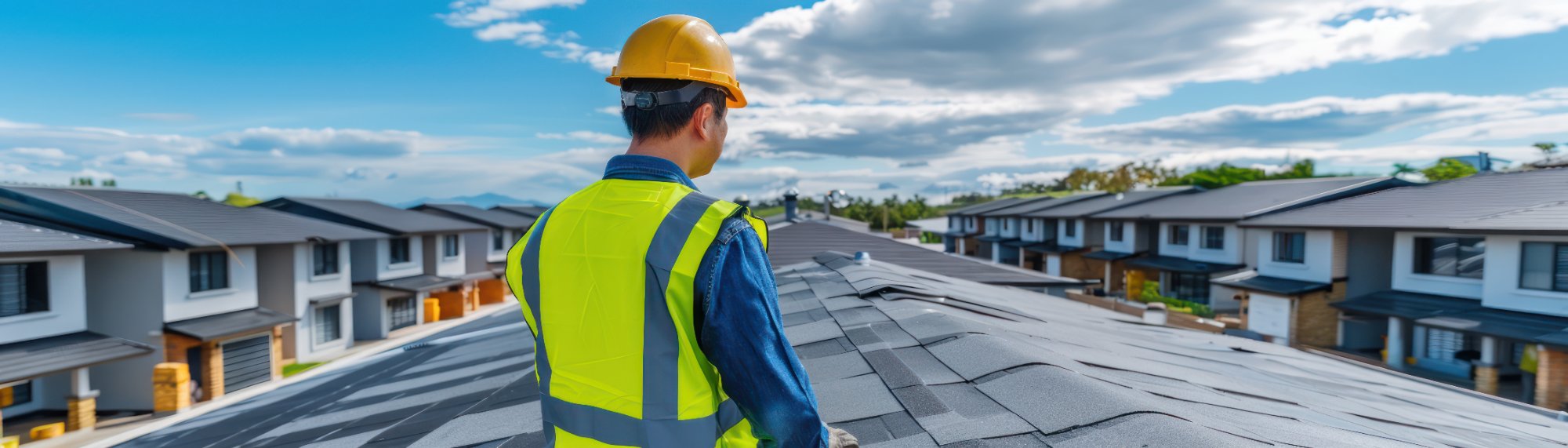
Hammersmith Roof Surveys provide independent, certified roof inspections across this densely built corner of West London. Our surveyors combine drone aerial photography with thermal imaging to deliver thorough, impartial assessments of every roof type found within the W6 postcode — from the elegant three-storey Victorian terraces that define Brackenbury Village and the tree-lined streets around Brook Green, through the substantial Edwardian mansion flats flanking Hammersmith Road and Glenthorne Road, to the interwar housing south of King Street, the post-war council-built estates near Hammersmith Broadway, and the contemporary riverside developments along the Thames at Furnivall Gardens and Lower Mall.
Fast, independent roof surveys from local experts.
Hammersmith Roof Surveys exist because this part of London packs an extraordinary range of building styles into a compact area. The Victorian expansion that followed the opening of the Metropolitan Railway in 1864 produced street after street of slate-roofed terraces, many now three storeys with rear additions and loft conversions that have altered the original roofline. The Edwardian period added mansion blocks and generous family houses, while the twentieth century contributed everything from 1930s semi-detached homes to brutalist social housing and steel-framed apartment buildings. Each generation brought different materials and methods, and each demands its own inspection approach. Hammersmith Roof Surveys bring the equipment and expertise to assess them all.
Whether you are purchasing a period terrace in Brackenbury Village, challenging a service charge demand on a mansion flat near Brook Green, documenting wind damage after an autumn storm has lifted slates across the neighbourhood, or seeking an honest opinion on a roof before committing to an expensive contractor's quote, Hammersmith Roof Surveys deliver the hard evidence you need to act with confidence.
Hammersmith Roof Surveys were established to address a gap that too many property owners in this part of West London fall into: spending thousands on roof work based on a contractor's word, or completing a purchase without ever seeing the roof up close. In a borough where terraced houses routinely sell for well over a million pounds, that gap between assumption and evidence can be extraordinarily costly.
Our inspection methodology is built for Hammersmith's particular challenges. The area's tight Victorian street plans — narrow rear yards, party wall boundaries, limited scaffold access — make conventional ladder-based inspections unreliable at best and impossible at worst. Our DJI Enterprise drone overcomes those constraints, capturing every ridge, valley, flashing, and chimney stack in high-resolution detail from angles that no scaffold tower or roofing contractor's quick ladder climb can replicate. Where thermal imaging is included, our FLIR cameras map moisture patterns hidden beneath slate, tile, and lead — identifying active leaks before they cause visible damage inside the property.
What separates Hammersmith Roof Surveys from a roofer's free estimate is independence. We do not carry out repairs. We hold no trade relationships with roofing contractors and receive no referral fees. When our report states a roof is sound, there is no incentive behind that conclusion other than accuracy. When we identify a defect, the costings reflect genuine current market rates — not figures inflated to justify a sale.
Our reports are designed for action. Solicitors use them to renegotiate purchase prices. Leaseholders present them to freeholders as evidence for overdue maintenance. Insurers accept them as supporting documentation for weather damage claims. Homeowners use them to distinguish between the work they genuinely need and the work a contractor is trying to sell them.
Nearby Areas with Similar Properties: The Victorian and Edwardian roofing challenges we encounter across Hammersmith are shared by neighbouring parts of West London. Homeowners in Fulham and Chiswick face comparable issues with ageing slate coverings, deteriorating lead flashings, and chimney stacks in need of repointing. See our area-specific guides for detailed information about your location.
Hammersmith Roof Surveys are not roofers, builders, or contractors. We provide independent inspection and reporting only — ensuring every assessment is free from commercial bias.
Hammersmith Roof Surveys are ready to inspect your property. Whether it is a Victorian terrace in Brackenbury Village, an Edwardian mansion flat on Hammersmith Road, or a modern riverside apartment, our team delivers the answers you need.
What Hammersmith Roof Surveys bring to homeowners, buyers, and leaseholders across W6
Hammersmith's residential streets were laid out in an era when rear access was an afterthought. Narrow return passages, shared party walls, and limited yard space mean that erecting scaffolding or placing extension ladders safely is often impractical — particularly on three-storey terraces with basement lightwells. Our DJI Enterprise drone captures every elevation, ridge line, dormer, flashing detail, and chimney stack in high resolution, reaching vantage points that conventional access methods simply cannot achieve in these tightly packed streets.
Concealed moisture is a recurring concern in Hammersmith's older properties. Victorian slate roofs with ageing lead soakers, Edwardian clay tile coverings with worn pointing, and flat-roofed rear kitchen extensions with decades-old felt membranes can all harbour leaks that remain invisible until they cause ceiling staining or timber decay. Our FLIR thermal cameras detect temperature variations caused by trapped moisture beneath tiles, behind flashings, and within the roof structure — identifying problems that a visual inspection alone would miss entirely.
Every Hammersmith Roof Surveys report is built to serve a purpose. Annotated drone photographs, thermal overlays where applicable, clear damage narratives, and itemised repair costings at current market rates combine into a document that your solicitor can present during a property negotiation, your freeholder cannot dismiss when you challenge a service charge, your insurer will accept as evidence for a claim, or your chosen contractor can follow as a specification for the work required.
Hammersmith Roof Surveys hold full professional indemnity and public liability insurance. Our surveyors carry recognised industry certifications and CAA-approved drone pilot licences. Every inspection follows a repeatable methodology developed across thousands of London properties, ensuring the same standard of accuracy whether we are assessing a converted Victorian villa in Brook Green or a flat-roofed commercial unit on King Street.
Hammersmith is not one housing type — it is a patchwork of Victorian terraces, Edwardian mansion flats, interwar semis, post-war estates, and modern riverside developments, each with its own roofing materials and characteristic vulnerabilities. The Victorian streets around Brackenbury Village and Overstone Road carry Welsh slate on steep pitches with lead-dressed dormers and tall chimney stacks. The Edwardian mansion blocks along Hammersmith Road present shared valley gutters, parapet walls with concealed lead-lined channels, and communal roof spaces that complicate responsibility. The post-war estates near Shepherd's Bush Road use concrete interlocking tiles and flat membrane roofs with shorter lifespans than many residents assume.
Hammersmith Roof Surveys have built our methodology around these distinctions. We do not apply a one-size-fits-all checklist — every inspection is tailored to the specific construction era, roofing material, and structural arrangement of the property in front of us. That specificity is the difference between a report that tells you something actionable and one that merely confirms a roof is present above the building.
From the slate terraces of Brackenbury Village to the mansion flats of Hammersmith Road, Hammersmith Roof Surveys understand W6's roofscape inside out.
Real inspection outcomes from Hammersmith Roof Surveys across the W6 area
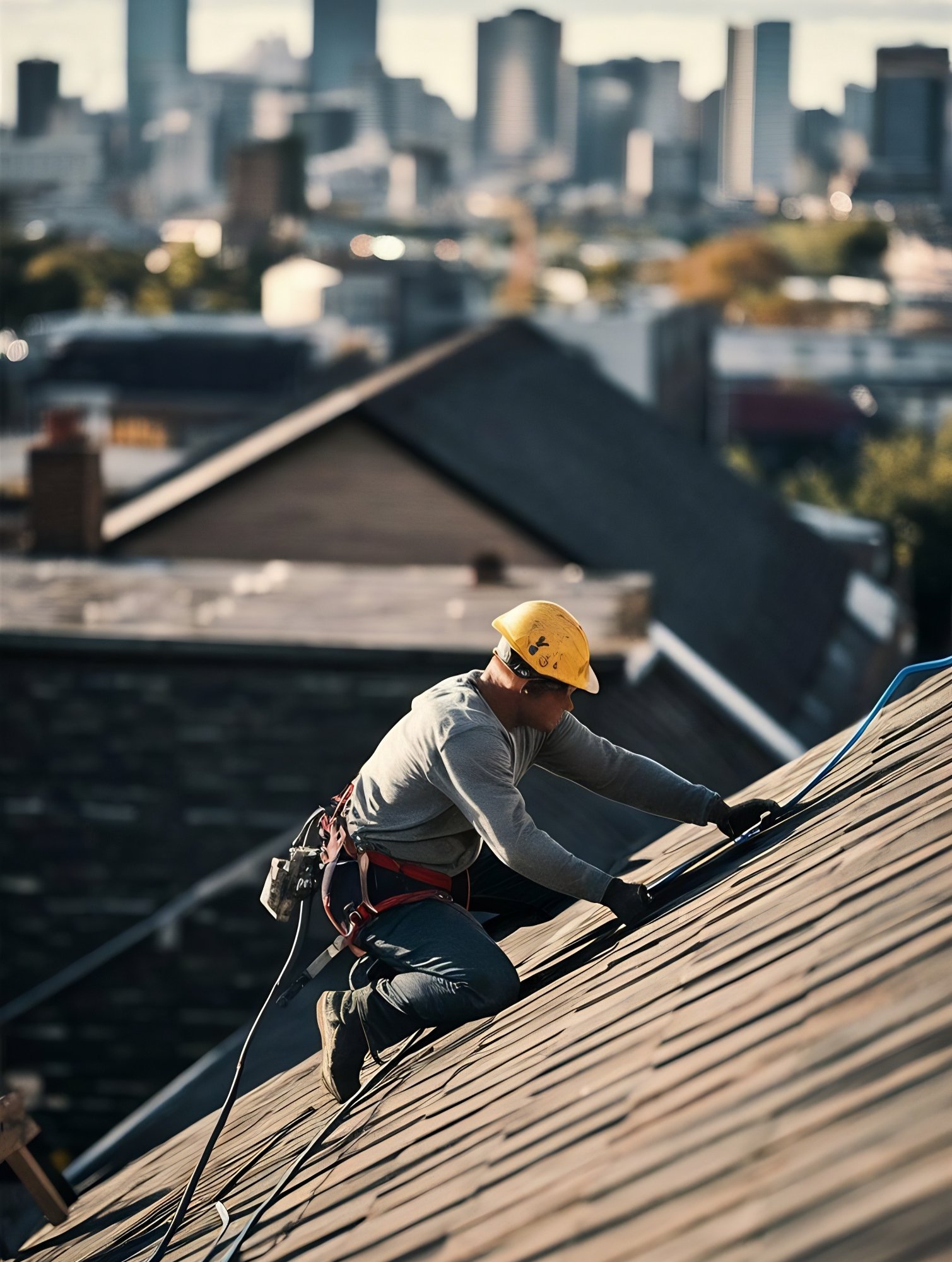
A couple purchasing a three-storey Victorian terrace off Brackenbury Road received a homebuyer report that described the roof as requiring "routine maintenance only." The property had been extended into the loft with a rear dormer, and the asking price was approaching one and a half million pounds. Wanting certainty before committing, they contacted Hammersmith Roof Surveys for an independent assessment.
Our drone revealed that the lead cheek flashings on both sides of the rear dormer had lifted away from the brickwork, leaving a gap of nearly twenty millimetres along the upper edge. Thermal imaging confirmed an active moisture trail running from the dormer junction into the loft conversion timbers below. We also documented eight slipped Welsh slates on the rear slope and a chimney stack with eroded pointing on three courses.
Hammersmith Roof Surveys costed the remedial works — dormer re-flashing, slate replacement, and chimney repointing — at approximately seven thousand eight hundred pounds. The buyer's solicitor presented our report and secured a price reduction of the full amount before exchange. The dormer repair was completed within a month of moving in, preventing what would have become significant water damage to the loft bedroom below.
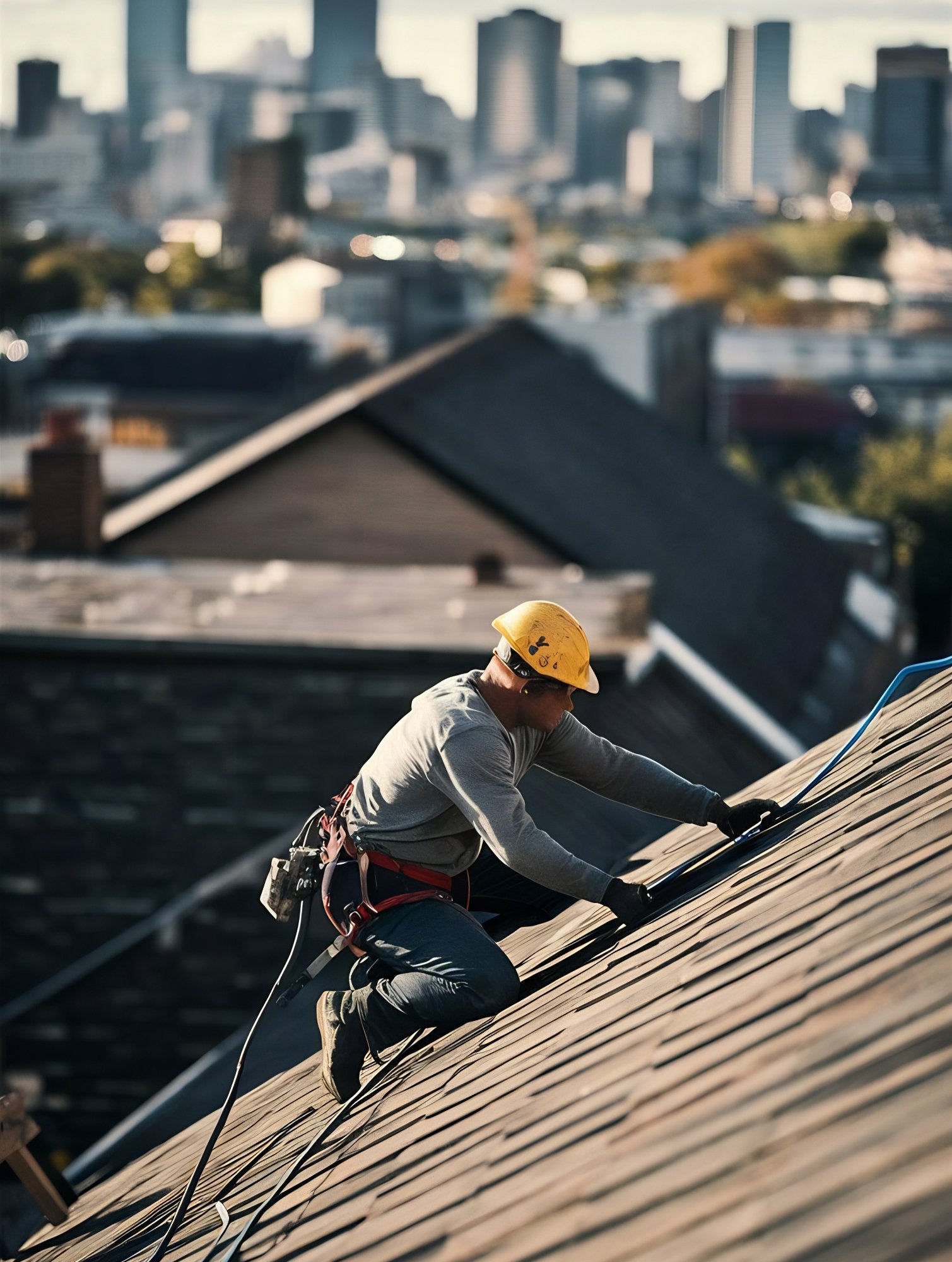
A top-floor leaseholder in an Edwardian mansion block on Hammersmith Road received a major works invoice for thirty-eight thousand pounds — their share of a proposed full roof replacement. The managing agent's surveyor had recommended stripping the entire roof and re-covering all four elevations. Suspecting the scope was excessive, the leaseholder commissioned Hammersmith Roof Surveys to provide a second opinion.
Our drone inspection of the entire roof confirmed that the north and east elevations were in serviceable condition with minimal slate displacement and intact ridge mortar. The south and west elevations, exposed to prevailing weather, did require re-slating and lead valley gutter renewal. We also identified that two of the four chimney stacks were structurally sound and needed only repointing, not the full rebuild the managing agent had specified.
Armed with the Hammersmith Roof Surveys report, the leaseholder challenged the major works proposal at a tribunal consultation. The scope was reduced to cover only the two affected elevations and partial chimney work. The revised cost brought the leaseholder's share down to approximately sixteen thousand pounds — a saving of over twenty thousand. The tribunal panel specifically cited the quality of the independent survey evidence in their decision.
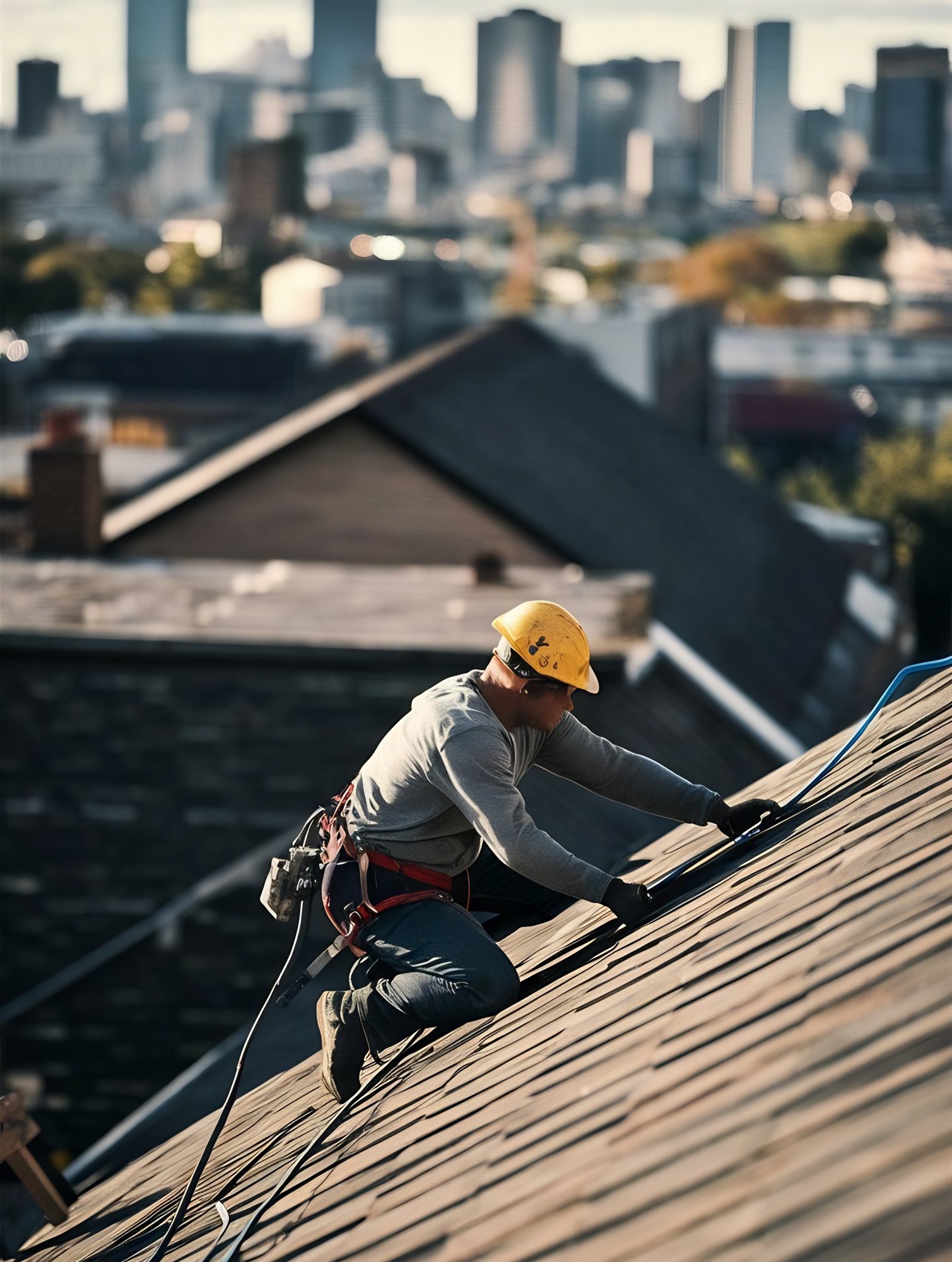
A homeowner near Ravenscourt Park had experienced recurring leaks in their ground-floor kitchen extension every winter for three consecutive years. Two separate roofing firms had patched the flat felt roof covering, yet water continued to appear along the junction between the extension and the original rear wall. The homeowner turned to Hammersmith Roof Surveys to determine the actual source of the problem.
Our thermal imaging scan immediately revealed that the moisture was not entering through the flat roof membrane itself — which the previous patches had addressed — but through a defective lead upstand where the flat roof met the original Victorian brickwork. The lead had corroded at the fold line and separated from the mortar bed, allowing rainwater running down the rear wall to track behind the upstand and into the kitchen ceiling below.
The repair — replacing the lead upstand and re-dressing it into a freshly cut chase — cost approximately one thousand two hundred pounds. Three years of failed patches and increasing frustration were resolved by a single correctly diagnosed defect. The homeowner has reported no further water ingress since the work was completed. The Hammersmith Roof Surveys thermal scan provided the evidence that finally identified the true cause.
The owner of a mixed-use building on King Street — with a commercial ground floor and two residential flats above — submitted an insurance claim following storm damage that had displaced ridge tiles and cracked several slates on the front elevation. The insurer's loss adjuster attributed the damage to pre-existing wear rather than the storm event and rejected the claim. The owner asked Hammersmith Roof Surveys to provide independent evidence.
Our drone photography documented clean fracture lines on the displaced ridge tiles with no weathering on the exposed edges — clear evidence of recent breakage. We photographed matching debris in the rear gutter that was consistent with the storm date. Thermal imaging confirmed a concentrated moisture path from the damaged ridge line directly into the flat below, and our report correlated the damage pattern with the recorded wind direction and speeds from that evening.
The Hammersmith Roof Surveys report was submitted as part of a formal appeal. The insurer reassessed the claim, reversed the rejection, and approved the full repair cost of five thousand six hundred pounds. The owner confirmed that without our timestamped evidence and damage correlation analysis, they would have been forced to absorb the entire cost themselves.
Need a professional roof survey for your Hammersmith property? Get in touch with Hammersmith Roof Surveys today for a free consultation.
Feedback from homeowners, buyers, and leaseholders who have used Hammersmith Roof Surveys
"We were purchasing a Victorian terrace in Brackenbury Village and the homebuyer report gave the roof a passing mention with no detail at all. Hammersmith Roof Surveys found that the dormer flashings had separated and slates were missing on the rear slope — repairs that would have cost nearly eight thousand pounds. The report gave our solicitor exactly the leverage she needed. Could not recommend them highly enough."
"Damp in our top-floor flat in Brook Green had been dismissed as condensation by two contractors. Hammersmith Roof Surveys used thermal imaging to trace it to a failed lead gutter behind the parapet — something neither tradesman even looked at. The freeholder agreed to carry out the repair once they saw the evidence. Thorough, professional, and genuinely independent."
"A roofer quoted fourteen thousand to completely strip and re-slate our Ravenscourt Park terrace. Hammersmith Roof Surveys demonstrated that only the rear slope and one chimney needed attention — the front elevation was perfectly sound. Saved us around eight thousand pounds and provided a realistic maintenance schedule for the years ahead. Honest and straightforward."
Six common situations where Hammersmith Roof Surveys provide the clarity you need
Standard homebuyer reports rarely examine the roof beyond a glance from the garden. In an area where terraced houses frequently exceed a million pounds, that cursory assessment leaves you exposed. Hammersmith Roof Surveys give you a detailed picture of the roof's true condition before you exchange contracts — including repair costings that your solicitor can use during negotiations.
Ceiling stains, peeling wallpaper in upstairs rooms, and musty smells in the loft are all signals that water may be entering through the roof. In Hammersmith's Victorian and Edwardian properties — where multiple layers of roofing material, lead work, and render interact — the entry point is often nowhere near the visible damage. Our thermal imaging traces the moisture path to its actual source.
Hammersmith's dense terraced streets create wind tunnel effects that accelerate gusts between buildings, and the three-storey rooflines are particularly exposed. After a storm, displaced slates, cracked ridge tiles, and lifted flashings may not be visible from the ground. Hammersmith Roof Surveys document the damage from above with timestamped evidence that satisfies insurance claim requirements.
Roofing contractors in London regularly quote for full strip-and-replace jobs when targeted repairs would suffice. Without independent evidence, you have no way to assess whether their recommendation is proportionate. Hammersmith Roof Surveys provide an unbiased assessment that separates genuine defects from overstated ones — giving you the facts before you commit to an expensive contractor.
Hammersmith has a high concentration of mansion flats and converted Victorian houses where leaseholders share responsibility for roof maintenance through service charges. When a managing agent proposes major works, our independent survey provides the evidence to assess whether the scope and cost are justified — or whether you should be challenging the specification at tribunal.
Flat-roofed rear extensions are ubiquitous across Hammersmith's Victorian and Edwardian terraces. Many still carry original bitumen felt membranes well beyond their expected lifespan, or GRP coverings applied over deteriorating substrates. Hammersmith Roof Surveys assess the current membrane condition, check upstand and flashing junctions, and advise whether a repair, overlay, or full replacement is warranted.
Common questions answered by Hammersmith Roof Surveys
Hammersmith Roof Surveys cover the entire W6 postcode and the surrounding streets that fall within the London Borough of Hammersmith and Fulham. Our regular inspection areas include Brackenbury Village, Brook Green, Ravenscourt Park, the King Street corridor, Hammersmith Broadway and Hammersmith Grove, the riverside properties along Lower Mall and Upper Mall, and the residential streets running between Shepherds Bush Road and Fulham Palace Road. We also attend properties in the border areas towards Chiswick, Shepherd's Bush, and Fulham.
A typical Victorian or Edwardian terraced house in Hammersmith takes between ninety minutes and two hours on site. Three-storey properties with rear dormers, multiple chimney stacks, and loft conversions — which are extremely common across Brackenbury Village and the streets around Brook Green — tend toward the longer end of that range. Smaller two-storey houses and flat-roofed extensions are quicker to assess. Every client receives their full written report within forty-eight hours of the inspection.
Mansion blocks and converted Victorian houses represent a substantial proportion of our Hammersmith work. We survey the Edwardian mansion flats along Hammersmith Road and Glenthorne Road, the large Victorian conversions around Brook Green and Blythe Road, and the purpose-built blocks near Hammersmith Broadway. For leasehold properties, our reports are formatted to support service charge challenges and freeholder maintenance claims — including evidence that can be presented at a First-tier Tribunal if the dispute reaches that stage.
Hammersmith Roof Surveys reports include timestamped drone imagery, thermal scan evidence where applicable, detailed condition narratives, and itemised repair costings at current market rates. Mortgage lenders and their appointed valuers routinely accept our documentation because it exceeds the level of detail their underwriters require. We have supported numerous property transactions across Hammersmith where roof condition was raised as a retention or valuation concern during the lending process.
Hammersmith's housing stock is predominantly Victorian and Edwardian, so the most common issues relate to ageing natural materials. Slipped or cracked Welsh slates on rear elevations, deteriorated lead soakers around dormers and bay windows, eroded mortar on chimney stacks, and perished felt on flat-roofed rear extensions are the problems we encounter most frequently. The Edwardian mansion flats add their own recurring challenges — shared valley gutters that back up with debris, parapet walls where the lead-lined channels have corroded, and communal roof timbers where no single leaseholder has taken responsibility for maintenance.
We offer priority scheduling for urgent situations across Hammersmith and the wider W6 area. Active water ingress, recent storm damage, structural movement, or any concern that requires rapid assessment can typically be attended within twenty-four to forty-eight hours. Contact Hammersmith Roof Surveys directly by phone to discuss your situation and we will arrange the earliest available appointment.
Have another question? Contact Hammersmith Roof Surveys directly.
Hammersmith occupies a stretch of the Thames in West London that has been continuously developed since the medieval period, though the housing stock that dominates today dates overwhelmingly from the Victorian and Edwardian eras. The arrival of the Metropolitan Railway and District Railway in the 1860s and 1870s transformed Hammersmith from a riverside village into a dense residential suburb, producing the grid of terraced streets that still define areas like Brackenbury Village, Overstone Road, and the streets between King Street and the Goldhawk Road.
Property values in Hammersmith reflect its transport links, riverside position, and proximity to central London. Three-bedroom Victorian terraces in Brackenbury Village regularly sell between one and two million pounds, while larger family houses around Brook Green and Ravenscourt Park reach well beyond that. Edwardian mansion flats along Hammersmith Road and Glenthorne Road typically trade between five hundred thousand and one million. At these price points, the condition of the roof is not a minor detail — it is a material factor in the transaction.
The leasehold structure of many Hammersmith properties adds a further layer of complexity. Mansion flat owners share responsibility for communal roof maintenance, and disputes over the scope and cost of major works are common. A Hammersmith Roof Surveys report provides the independent evidence that transforms a service charge argument from opinion into documented fact — whether the outcome is agreement to proceed or a formal challenge at tribunal.
Hammersmith Roof Surveys provide professional roof inspections across W6 and the surrounding neighbourhoods
The sought-after grid of Victorian terraces between Goldhawk Road and King Street features three-storey houses with Welsh slate roofs, lead-dressed dormers, tall chimney stacks, and narrow rear yards that make conventional access difficult. Loft conversions are common and alter the original roofline.
The leafy streets around Brook Green contain a mix of large Victorian family houses, Edwardian mansion flats, and some attractive Georgian survivals. Roofs here tend to be complex — multiple pitches, dormer windows, and shared party wall gutters between converted properties.
The streets surrounding Ravenscourt Park feature a handsome mix of Victorian and Edwardian housing — terraces, semi-detached villas, and some larger detached homes. Original Welsh slate, decorative ridge tiles, and bay window lead work are common across this desirable residential area.
The commercial heart of Hammersmith includes mixed-use buildings with residential upper floors, purpose-built apartment blocks, and the post-war estates near the flyover. Roof types range from pitched slate and tile to flat membrane systems on modern and converted commercial buildings.
The riverside properties along Lower Mall, Upper Mall, and Furnivall Gardens include period cottages, Georgian houses, and modern apartment buildings. Proximity to the Thames brings increased exposure to wind-driven rain and damp — making regular roof assessment particularly important.
Hammersmith Roof Surveys operate across the wider borough and into neighbouring West London districts. We regularly attend properties in surrounding areas that share similar Victorian and Edwardian housing stock and comparable roofing challenges.
Hammersmith Roof Surveys deliver the independent, professional roof inspections that this densely built West London neighbourhood demands. Whether you are a first-time buyer anxious about a Victorian roof in Brackenbury Village, a leaseholder challenging a major works proposal on a mansion flat, a homeowner dealing with a persistent leak traced back to ageing lead work, or a landlord protecting the value of a rental property near Ravenscourt Park, our surveys deliver clear, documented answers.
Every inspection pairs certified expertise with advanced technology — drone aerial photography, thermal imaging, and detailed written reporting — to give you an honest, unbiased assessment of your roof's condition. We do not carry out repairs. We do not recommend contractors. We provide the evidence, the photographs, and the costings, and leave the decisions to you.
Every report is independent, detailed, and written to be acted upon — whether you are buying, selling, claiming, disputing, or simply protecting your property.
Call us today or complete the form below to arrange your Hammersmith roof survey.
Contact Hammersmith Roof Surveys today to arrange your roof inspection
Monday - Friday: 7:30 AM - 9:30 PM
Saturday: 7:30 AM - 7:00 PM
Sunday: 9:00 AM - 5:00 PM
For urgent roof inspection needs in Hammersmith, please call Hammersmith Roof Surveys directly.
Call Now