
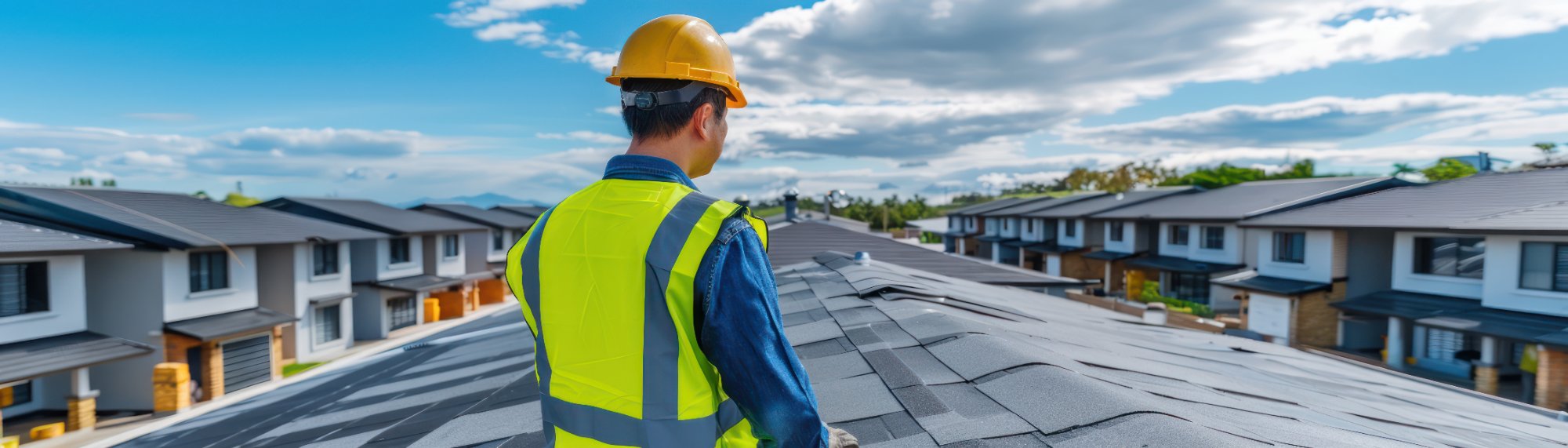
Lambeth Roof Surveys provide independent, certified roof inspections across one of south London's most architecturally diverse boroughs. Our surveyors combine drone aerial photography with thermal imaging technology to assess every style of roof found between the Thames and Streatham Common — from the handsome Georgian terraces and stucco-fronted townhouses of Kennington and the Oval, through the dense Victorian streets of Brixton, Stockwell, and Herne Hill, to the Edwardian villas of Streatham, the interwar housing of Tulse Hill and West Norwood, and the post-war estates and modern developments rising along the Vauxhall corridor and South Bank.
Fast, independent roof surveys from local experts.
The reason Lambeth Roof Surveys exist is that the borough's building stock covers virtually every chapter of London's architectural history. Georgian squares and crescents in the north give way to mile after mile of Victorian terraced housing through the central belt, with Edwardian expansion southward into Streatham and substantial interwar and post-war development filling the gaps between. Each era introduced different roofing materials, construction techniques, and vulnerabilities — and each demands an inspection team that understands the difference between a butterfly gutter failure on a Georgian parapet roof and concrete tile delamination on a 1950s semi.
Whether you are buying a period property in one of Lambeth's conservation areas, tracing a stubborn leak through a Victorian terrace, assessing wind damage after a storm, or seeking honest answers about an ageing roof before committing to expensive contractor quotes, Lambeth Roof Surveys deliver the documented evidence that puts you in control.
Lambeth Roof Surveys were established on a straightforward principle: homeowners and buyers across this borough deserve access to independent, unbiased roof assessments before spending tens of thousands of pounds on work they may not need — or completing a purchase that conceals serious defects above the ceiling line. Too many Lambeth residents have paid for unnecessary full re-roofs on the advice of contractors with a financial interest in the scope of works, and too many buyers have discovered hidden problems that a more rigorous inspection would have caught before exchange.
Our methodology is consistent and thorough. We begin with a full perimeter walk, assessing rainwater goods, fascias, soffits, and any ground-level defects visible to the trained eye. Our DJI Enterprise drone then photographs every elevation, ridge, hip, valley, chimney stack, and parapet detail — reaching angles that ladders and scaffolding cannot safely access on Lambeth's tightly packed terraces and tall Georgian townhouses. Where the survey package includes thermal imaging, our FLIR cameras map moisture patterns concealed beneath slates, behind flashings, and within the roof structure itself.
What makes Lambeth particularly demanding for surveyors is the sheer range of roofing systems within a compact area. A stucco-fronted Georgian terrace on Kennington Road will carry a concealed butterfly gutter, lead-lined parapet details, and natural slate on a low-pitch hidden roof. Half a mile south, a mid-Victorian terrace in Stockwell presents a completely different arrangement of Welsh slate on steep pitches, stepped lead flashings, and tall chimney stacks with decorative pots. Further south still, the 1930s semis around Streatham Hill use plain clay tiles on hipped roofs with valley intersections that trap debris and hold water. Lambeth Roof Surveys work across every one of these systems because this borough demands that breadth.
We maintain strict independence throughout. Lambeth Roof Surveys do not carry out repairs, do not employ roofers, and hold no financial interest in the outcome of any inspection. When our report confirms a roof is performing well, that confirmation carries genuine credibility. When we identify a defect, the repair costings reflect current trade rates for the specific labour and materials involved — not inflated figures designed to create urgency.
Serving Properties Across South London: The roofing challenges we encounter throughout Lambeth are shared by properties across neighbouring boroughs. Homeowners in Brixton and Southwark face comparable issues with ageing slate, deteriorating lead work, and Victorian chimney stack movement. Visit our area-specific pages for guidance tailored to your location.
Lambeth Roof Surveys are not roofers, builders, or contractors. We provide independent inspection and reporting only — ensuring every assessment is free from commercial bias.
Lambeth Roof Surveys are ready to inspect your property. Whether it is a Georgian townhouse in Kennington, a Victorian terrace in Brixton, or a post-war semi in Streatham, our team delivers the clarity you need.
What Lambeth Roof Surveys bring to homeowners, buyers, and landlords across the borough
Lambeth's terraced streetscape presents a unique access challenge. Rear elevations in Brixton and Stockwell are frequently hemmed in by narrow yards, shared passageways, and adjoining extensions that make safe ladder placement impractical. The tall Georgian townhouses of Kennington — some rising to four and five storeys — push conventional access methods beyond safe limits entirely. Our DJI Enterprise drone captures every ridge, valley, hip, flashing, parapet detail, and chimney stack in high definition, delivering inspection coverage that no ladder or scaffold tower could match in these conditions.
Concealed moisture is one of the most damaging threats to Lambeth's period housing stock. Georgian butterfly gutters can leak for years behind parapet walls without any visible staining inside. Victorian slate roofs harbour water beneath displaced tiles that tracks along battens before emerging far from the point of entry. Our FLIR thermal cameras detect the temperature differentials caused by trapped moisture — exposing problems within the roof structure, behind flashings, and beneath tile coverings that no visual inspection could identify.
Every Lambeth Roof Surveys report is a substantial working document — annotated with high-resolution drone imagery, thermal overlays where applicable, and itemised repair costings calculated at current trade rates. The document is designed to serve multiple purposes: handed to your solicitor during a property purchase, submitted to an insurer as evidence for a storm damage claim, or used as a precise brief when commissioning a roofing contractor to carry out identified works.
Lambeth Roof Surveys carry full professional indemnity and public liability cover. Our surveyors hold recognised industry certifications and CAA-approved drone pilot licences. Every inspection follows a standardised methodology refined across thousands of London properties — delivering the same consistency and rigour whether we are assessing a listed Georgian terrace overlooking Kennington Park or a converted warehouse loft apartment in Vauxhall.
Lambeth is not a single housing type — it is an entire cross-section of London's building history compressed into one borough. The Georgian terraces clustered around Kennington, the Oval, and Waterloo carry concealed parapet gutters, natural slate on shallow-pitched hidden roofs, and elaborate stucco detailing that complicates water management. The dense Victorian terraces through Brixton, Stockwell, Loughborough Junction, and Herne Hill present Welsh slate on steep pitches, stepped and soaker lead flashings, and chimney stacks serving multiple flues that sway and crack over time. The Edwardian and interwar housing across Streatham, Tulse Hill, and West Norwood introduces plain clay tiles, hipped roofs with valley intersections, and the first generation of concrete interlocking tiles now approaching the end of their service life.
Lambeth Roof Surveys understand these distinctions because they define our daily workload. We do not apply a one-size-fits-all checklist — each inspection is tailored to the specific age, material, and construction method of the roof we are assessing. That granular local knowledge separates a report that gives you actionable intelligence from one that merely confirms a roof is present.
From Georgian parapet roofs in Kennington to Victorian slate terraces in Brixton and interwar clay tiles in Streatham, Lambeth Roof Surveys know this borough's roofscape inside out.
How Lambeth Roof Surveys have helped local homeowners and property buyers
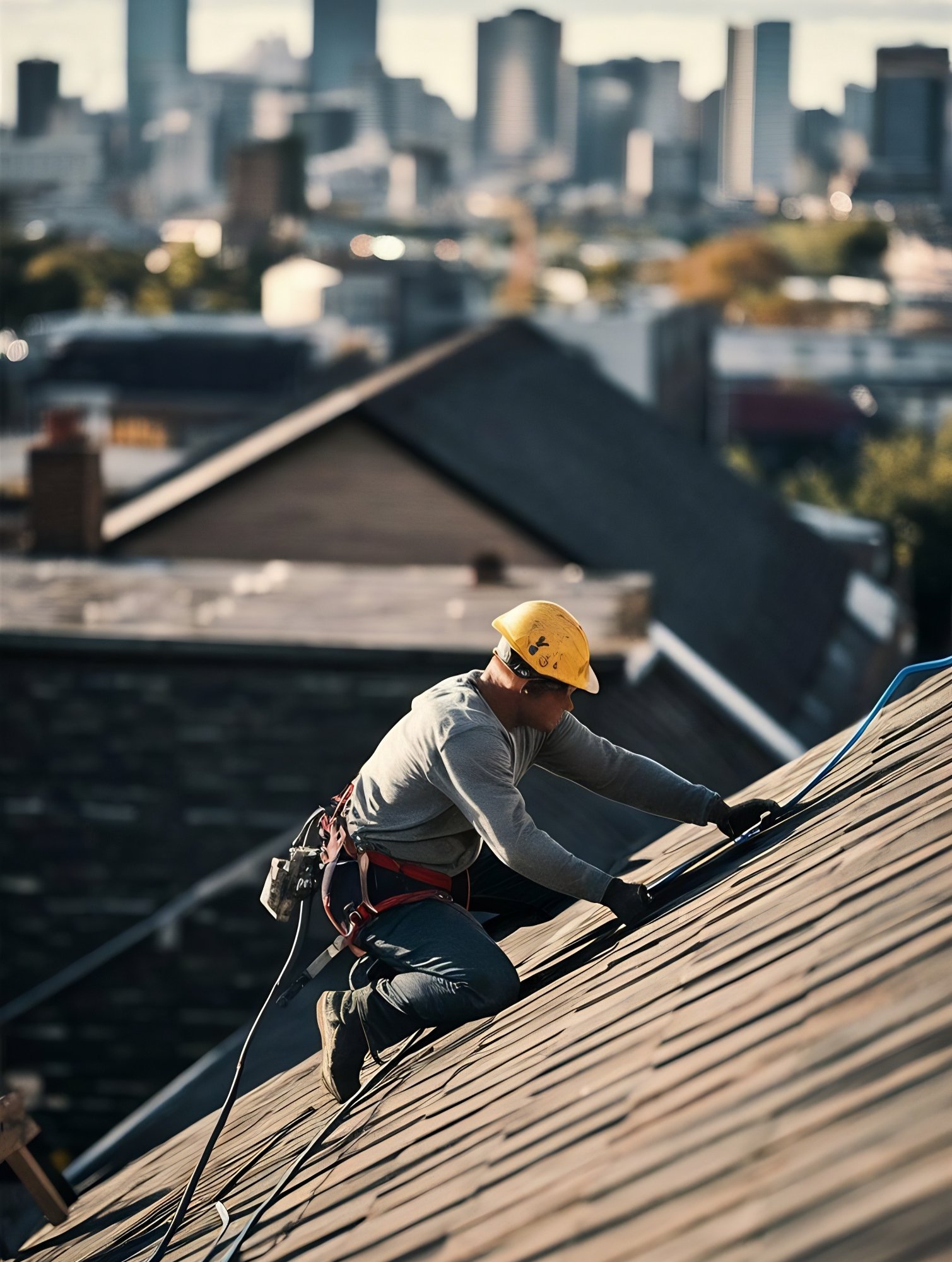
A couple purchasing a Grade II listed Georgian terrace near Kennington Park were told by their homebuyer surveyor that the roof appeared to be in reasonable order. With an asking price approaching one and a quarter million pounds, they wanted certainty before proceeding to exchange and contacted Lambeth Roof Surveys for a dedicated assessment.
Our drone captured the parapet-concealed roof from directly above — a vantage point impossible from any ladder. The lead-lined butterfly gutter running centrally between the two pitched slopes had split along a two-metre section, and thermal imaging confirmed active moisture tracking into the timber structure below. We also documented extensive moss growth blocking the hopper heads and three areas where the natural slate had slipped, exposing the battens to rain.
Lambeth Roof Surveys costed the necessary remediation at approximately eight thousand six hundred pounds. The buyer's solicitor used our report to negotiate a price reduction matching the full repair estimate. The butterfly gutter was replaced within two months of completion, averting what would have become serious structural timber decay had the leak continued through another winter season.
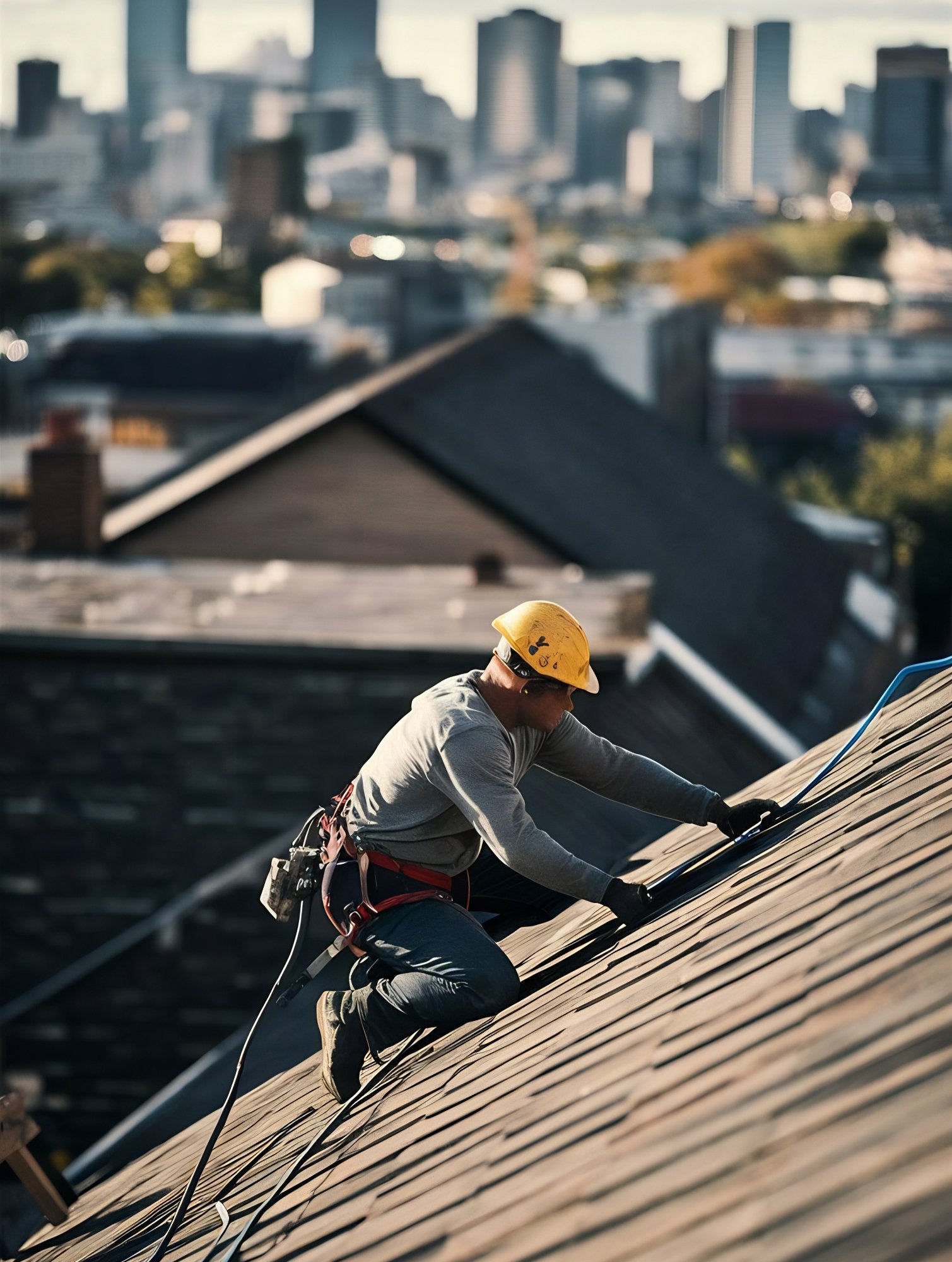
Following severe autumn storms, a homeowner on a residential street near Brixton Water Lane discovered water cascading through the first-floor bedroom ceiling. Their insurer's loss adjuster attributed the damage to long-term wear rather than storm impact and rejected the claim outright. Unwilling to accept the decision without a second opinion, the homeowner commissioned Lambeth Roof Surveys.
Our drone photography documented eight recently displaced Welsh slates on the front elevation — all showing clean fracture lines with no weathering on the newly exposed edges, consistent with sudden wind uplift rather than gradual deterioration. Thermal imaging mapped a concentrated moisture path from the displaced slates directly to the affected bedroom ceiling. We also identified fresh lead flashing displacement at the chimney stack abutment that matched the recorded wind direction during the storm event.
The Lambeth Roof Surveys report — with timestamped drone imagery and thermal evidence — was submitted as a formal dispute. The insurer reassessed the claim and approved it in full within four weeks. Total repair costs of five thousand three hundred pounds were covered under the policy. Our independent, documented evidence provided exactly the technical proof the insurer required to reverse their initial decision.
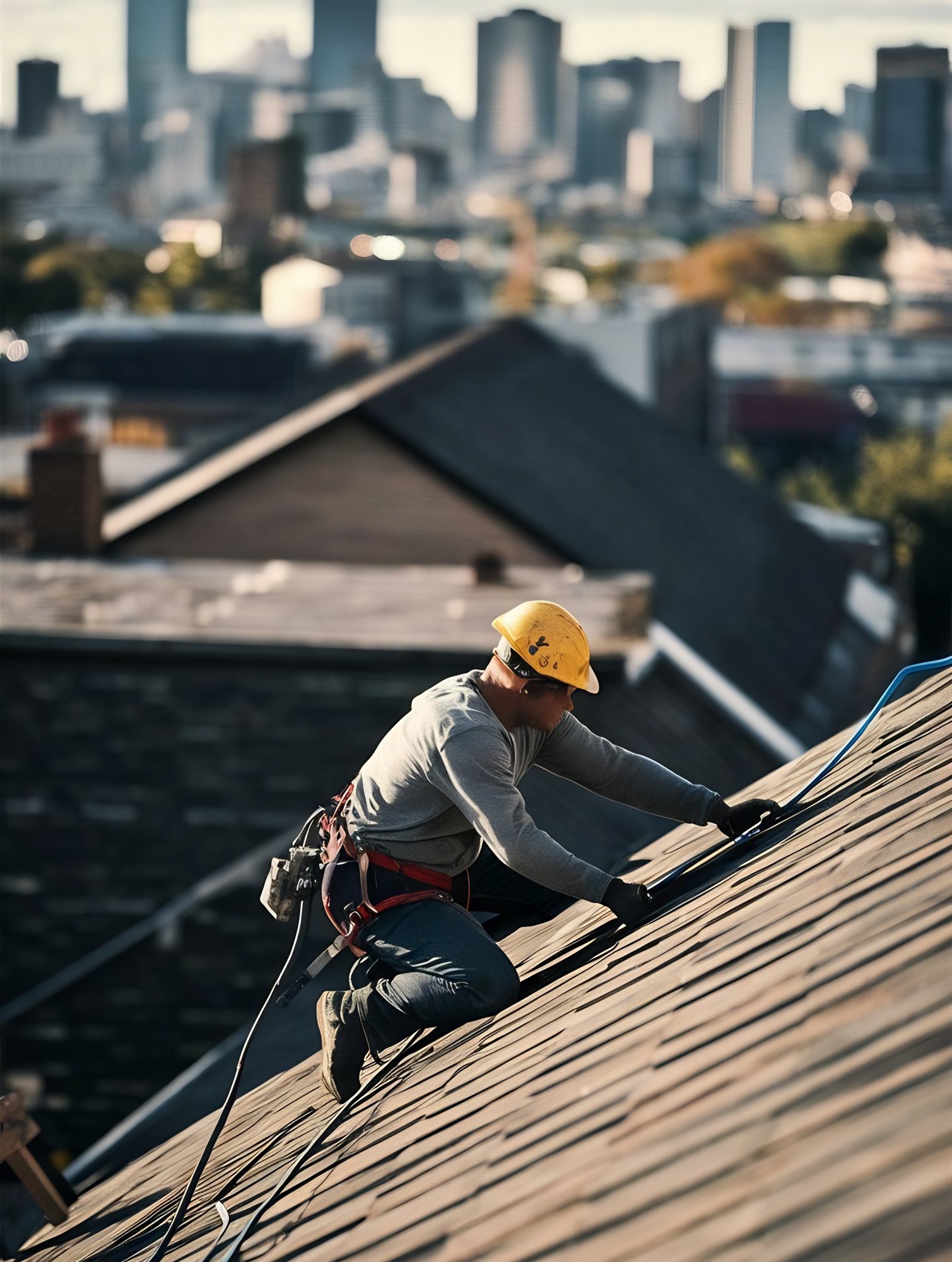
The owner of an Edwardian semi on a tree-lined avenue near Streatham Hill station received a contractor's quote for twenty-one thousand pounds to strip and re-tile the entire roof. The contractor had viewed the property from a ladder for twenty minutes and declared the whole covering to be at the end of its life. Reluctant to commit to such a sum without independent verification, the owner contacted Lambeth Roof Surveys.
Our comprehensive inspection — drone photography of every elevation combined with an internal loft assessment — confirmed that the front slope and both hipped sections were performing adequately with an estimated ten to fifteen years of remaining service. The rear slope, however, showed widespread clay tile spalling, crumbling ridge mortar along the entire length, and two fractured valley tiles funnelling rainwater behind the felt underlay.
Lambeth Roof Surveys estimated the rear slope re-tile, valley repair, and ridge repointing at approximately nine thousand two hundred pounds — well under half the original contractor's quote. The owner commissioned the targeted works based on our specification, and the front elevation and hips continue to perform with no intervention needed. Our report also included a maintenance timeline to guide future budgeting.
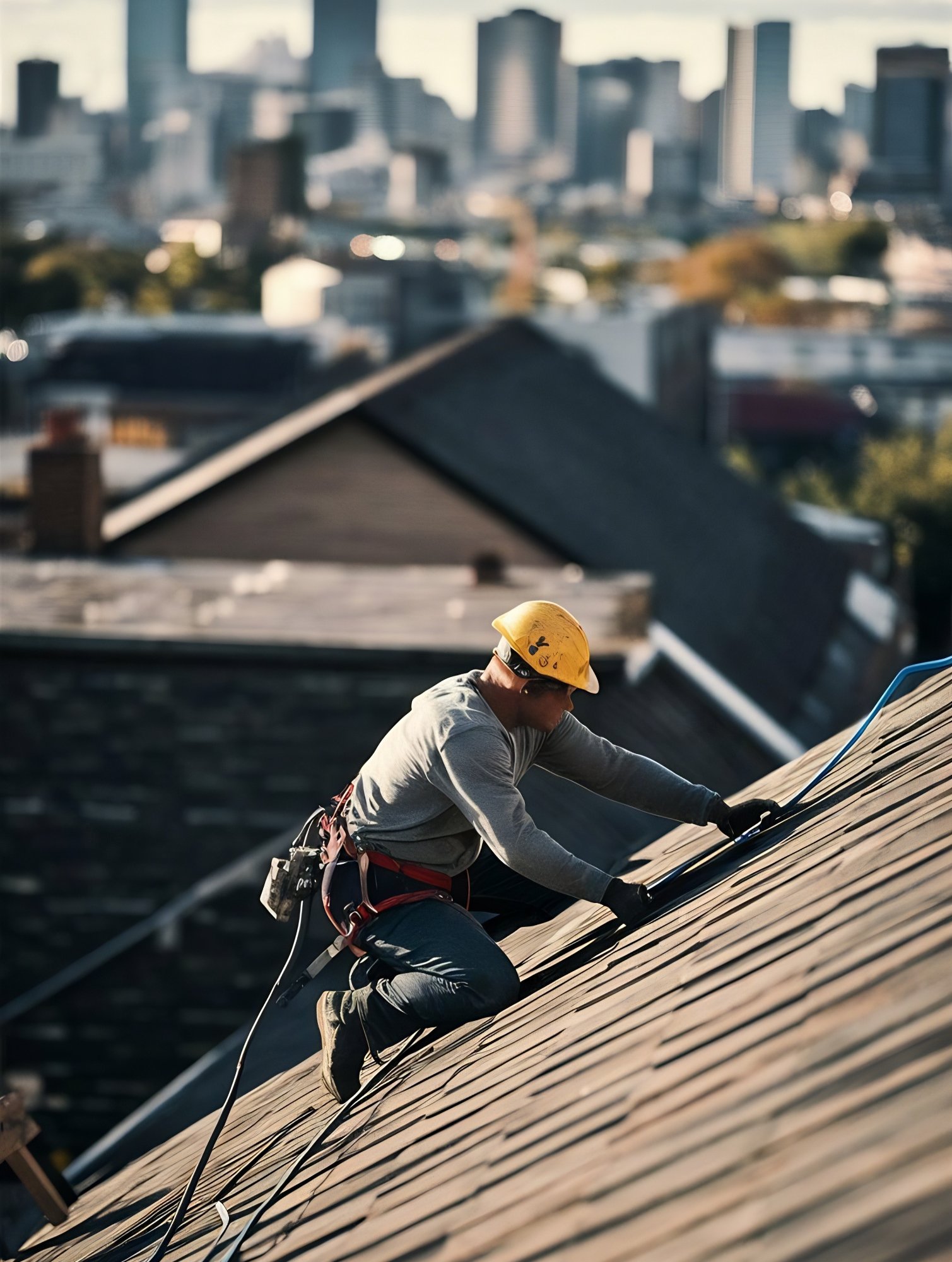
A landlord managing a converted Victorian terrace near Stockwell Road had been patching a persistent kitchen ceiling leak for three years. Two separate roofing contractors had applied felt patches to the flat rear extension roof, yet the leak returned within weeks each time. Frustrated by the repeated failure, the landlord asked Lambeth Roof Surveys for a diagnostic inspection to find the actual source.
Our thermal imaging scan of the flat roof surface revealed that the leak was not originating from the felt covering at all. The moisture path traced back to a failed lead upstand where the flat roof met the original rear wall of the main house. The upstand had separated from the brickwork by several millimetres — entirely invisible from below and concealed from above by the felt patches laid over it. Rainwater was entering behind the upstand and tracking along the wall plate before dripping onto the kitchen ceiling.
The targeted repair — removing the patches, reinstating the lead upstand with proper mechanical fixings, and re-dressing the felt junction — cost approximately one thousand eight hundred pounds. The leak has not returned in the eight months since. The landlord estimated they had already spent over three thousand on ineffective patch repairs before Lambeth Roof Surveys identified the true cause in a single visit.
Need a professional roof survey for your Lambeth property? Get in touch with Lambeth Roof Surveys today for a free consultation.
Feedback from homeowners and buyers who have used Lambeth Roof Surveys
"We were buying a listed Georgian terrace near Kennington Park and the standard survey barely mentioned the roof. Lambeth Roof Surveys discovered a failing butterfly gutter and cracked lead work at both chimney stacks — totalling over eight thousand in repairs. Our solicitor negotiated a full reduction. An invaluable service that paid for itself many times over."
"Two years of damp above our front bay in Stockwell and nobody could find the source. Lambeth Roof Surveys traced it with their thermal camera to a failed lead soaker joint hidden behind the parapet. Three weeks after the repair the staining has completely stopped. I only wish we had called them sooner — would have saved a fortune in wasted patch repairs."
"A roofer told us the entire roof on our Brixton terrace needed stripping — nineteen thousand pounds. Lambeth Roof Surveys showed that only the rear slope and one valley actually needed work. The front and hips were solid for another decade at least. Saved us well over ten thousand and gave us a proper maintenance plan. Completely independent and completely honest."
Common situations where a professional Lambeth Roof Surveys inspection protects your investment
Lambeth's Victorian terraces are predominantly covered in Welsh slate — a durable material that can last well over a century, but one that relies on iron nails that corrode over time. When nails fail, slates slip and expose the battens and felt beneath to direct rainfall. A single displaced slate on a Brixton or Herne Hill terrace can allow enough water into the roof structure to cause timber rot within a season if left unaddressed. Lambeth Roof Surveys document every displaced element from above, confirming the extent of the problem before you spend a penny on repairs.
Damp patches that reappear after rain are a familiar concern across Lambeth's older housing. The difficulty lies in tracing the entry point — water that penetrates at a chimney flashing on the roof ridge can travel along rafters and battens before emerging as a stain in a room two floors below and several metres away from the original defect. Our thermal imaging technology follows the moisture trail backwards to the point of ingress, eliminating the guesswork that leads to repeated, expensive, unsuccessful patch repairs.
Homebuyer surveys and even building surveys routinely note roof condition in vague, non-committal language — "further investigation recommended" is a phrase Lambeth buyers encounter frequently. Our pre-purchase inspections deliver the specific, costed detail that standard surveys omit: which slates are displaced, where lead work has failed, what the chimney stack pointing looks like from above, and exactly how much the identified defects will cost to remedy. That evidence gives your solicitor the leverage to negotiate a fair price or walk away with confidence.
Lambeth's elevated southern neighbourhoods — Streatham Hill, Tulse Hill, Knight's Hill — are exposed to prevailing south-westerly winds that can dislodge ridge tiles, lift slates, and damage chimney pots in a single storm event. Insurers require documented evidence of storm-specific damage to process claims, and verbal descriptions or mobile phone photographs from ground level rarely satisfy their requirements. Lambeth Roof Surveys provide timestamped, high-resolution drone evidence that distinguishes storm damage from pre-existing wear — the difference between a claim paid in full and one rejected at first assessment.
Virtually every era of Lambeth housing includes properties with flat-roofed rear extensions — from Victorian kitchen additions to 1970s bathroom builds. These roofs have a finite lifespan and frequently fail at junctions where the flat surface meets the original rear wall. Ponding water, blistered felt, and delaminating fibreglass are common findings across Brixton, Stockwell, and Clapham. Our surveys assess both the covering surface and the critical junction details that less thorough inspections overlook.
Lambeth's Victorian terraces carry some of the tallest, most exposed chimney stacks in south London — many serving three or four flues in properties where the fireplaces were sealed decades ago. Without the stabilising warmth of regular use, the mortar joints deteriorate faster, and the stack itself can develop a visible lean over time. The stepped lead flashings that seal the junction between chimney and roof slope are equally vulnerable, cracking and separating as the stack shifts. Lambeth Roof Surveys assess both the structural alignment of the stack and the integrity of every flashing joint from drone level, providing the evidence needed to prioritise repairs before a stack becomes genuinely dangerous.
The most frequent defects Lambeth Roof Surveys encounter across the borough's housing stock
The Georgian terraces of Kennington, the Oval, and Waterloo use concealed butterfly gutters — V-shaped lead-lined channels hidden behind parapet walls. These gutters are entirely invisible from street level and frequently leak undetected for years, saturating the timber structure beneath. Lambeth Roof Surveys use drone photography to inspect above the parapet and thermal imaging to confirm whether moisture ingress is active.
The majority of Lambeth's Victorian terraces were originally roofed with Welsh slate fixed using iron nails. After a hundred and thirty years or more, those nails corrode and lose their holding power, causing slates to slide out of position. This is the single most common defect we encounter on Victorian properties across Brixton, Stockwell, Herne Hill, and Loughborough Junction — and it accelerates once the first few slates are lost, exposing their neighbours to wind uplift.
Lambeth's Victorian and Edwardian properties carry tall, exposed chimney stacks that have endured over a century of London weather. Sulphate attack from historic coal burning, combined with frost action on weakened mortar joints, causes progressive deterioration. Stacks develop visible leans, pointing erodes to a depth where bricks become unstable, and the stepped lead flashings at the base crack and separate. These problems are frequently invisible from the ground but clearly documented from our drone's elevated vantage point.
Rear extension flat roofs are ubiquitous across Lambeth — most properties from every era have at least one. The junction where the flat covering meets the original rear wall is the most common failure point: lead upstands pull away from brickwork, felt perishes at the angle, and GRP fibreglass cracks where differential movement occurs between the extension and the main structure. These junction defects are responsible for a significant proportion of the damp complaints we investigate in the borough.
Multi-pitch rooflines — common on the larger Victorian and Edwardian detached properties around Herne Hill, Tulse Hill, and Streatham — rely on valley gutters to channel rainwater from intersecting roof slopes. Leaf debris, moss, and silt accumulate in these valleys, blocking the flow and causing water to back up beneath the tile edges. Over time, the lead or zinc valley lining itself corrodes, creating a concealed leak path that damages the timbers beneath.
The post-war housing estates across Streatham, West Norwood, and parts of Tulse Hill were roofed with concrete interlocking tiles that have a service life of approximately fifty to sixty years. Many of these tiles are now well past that point, showing surface erosion, delamination, and microcracking that compromises their waterproofing performance. The ridge mortar on these properties also degrades faster than on older clay tile roofs, creating entry points for wind-driven rain along the entire ridge line.
Common questions answered by Lambeth Roof Surveys
Lambeth Roof Surveys cover every neighbourhood across the borough. Our regular inspection areas include Kennington, Brixton, Stockwell, Vauxhall, Herne Hill, Tulse Hill, Streatham, Streatham Hill, Clapham, West Norwood, Gipsy Hill, and the South Bank waterfront district. We also attend properties in Loughborough Junction, Brixton Hill, Knight's Hill, the Oval conservation area, Larkhall, and the streets surrounding Brockwell Park.
Most Lambeth property inspections require between one and a half and two and a half hours on site. The taller Georgian terraces around Kennington and the Oval — often four or five storeys with complex parapet details — tend toward the upper end of that range. Standard two-storey Victorian terraces in Brixton and Stockwell typically fall in the middle. Every client receives their comprehensive written report within forty-eight hours of the site visit.
Heritage and listed properties represent a substantial share of our Lambeth workload. The borough contains over two thousand listed buildings, many concentrated in the conservation areas of Kennington, the Oval, Stockwell Park, and around the Albert Embankment. These buildings carry original slate coverings, delicate stucco mouldings, and intricate lead detailing that demand a non-invasive approach. Our drone survey method avoids any contact with the building fabric — no ladders leaning against stucco, no scaffolding clamped to fragile parapets — making it the preferred inspection method for listed and conservation area properties throughout Lambeth.
Lambeth's housing spans roughly two hundred years of construction and each generation presents characteristic weaknesses. Georgian properties in the north of the borough most frequently suffer from butterfly gutter deterioration concealed behind parapet walls. The extensive Victorian terraces through Brixton, Stockwell, and Herne Hill commonly exhibit nail sickness causing slipped Welsh slates, cracked stepped lead flashings around chimney stacks, and perished mortar bedding on ridge tiles. Edwardian and interwar houses across Streatham and Tulse Hill present clay tile spalling and valley gutter corrosion. Post-war concrete tile fatigue is widespread on the 1950s and 1960s estates. Flat roof failures on rear extensions affect every era of Lambeth housing.
Every comprehensive and premium report from Lambeth Roof Surveys includes timestamped drone photography, thermal imaging overlays where applicable, detailed damage narratives distinguishing storm impact from pre-existing wear, and itemised repair costings at current market rates. Insurers require specific, documented evidence — not verbal descriptions or photographs taken from ground level — and our reports are formatted to meet those exact requirements. We have supported numerous successful storm damage claims for Lambeth properties, including cases where our independent evidence reversed an initial rejection.
Commercial and mixed-use inspections are a growing part of our Lambeth work. We regularly survey the retail and commercial premises along Brixton Road, Atlantic Road, and the Brixton Village and Market Row complexes, the office conversions and new-build developments across the Vauxhall and Nine Elms corridor, school and community buildings, and the wide variety of commercial properties throughout the borough. We assess all flat roof systems — felt, GRP, EPDM, single-ply membrane — as well as the traditional pitched roofing on converted period commercial buildings.
Have another question? Contact Lambeth Roof Surveys directly.
Lambeth Roof Surveys provide professional roof inspections across the borough and into neighbouring areas
The northern reaches of Lambeth contain the borough's finest Georgian architecture — grand terraces and garden squares built in the late eighteenth and early nineteenth centuries. Parapet roofs with concealed butterfly gutters, natural slate coverings, and elaborate stucco detailing define the roofscape of this area.
The heart of Lambeth's Victorian housing belt — dense rows of terraced properties with Welsh slate roofs, tall chimney stacks, and bay windows stretching from Brixton Road to Loughborough Junction. A mix of residential, commercial, and mixed-use buildings creates a varied and challenging roofscape.
A district of contrasts — elegant Victorian and early Edwardian villas around the Stockwell Park conservation area sit alongside post-war council estates and the modern high-rise developments transforming the Vauxhall skyline. Each property type demands a distinct approach to roof assessment.
The leafy residential streets around Herne Hill and Tulse Hill feature a mix of substantial Victorian villas, Edwardian semi-detached houses, and interwar housing. Mature tree cover creates specific roofing challenges including moss growth, blocked valleys, and debris accumulation in gutters.
The southern reaches of Lambeth feature Edwardian and interwar housing on wider plots — semi-detached homes with hipped roofs, clay tile coverings, and valley intersections. Post-war estates with concrete interlocking tiles are also prevalent, many now reaching the end of their designed service life.
Lambeth Roof Surveys deliver the independent, detailed roof inspections that this architecturally rich borough demands. Whether you are a first-time buyer negotiating the purchase of a Georgian terrace in Kennington, a homeowner tracing a persistent leak through a Victorian roof in Brixton, a landlord protecting a portfolio property in Stockwell, or simply seeking reliable answers about an ageing roof in Streatham before committing to an expensive contractor's quote, our surveys provide the hard evidence you need.
Every inspection pairs certified expertise with advanced technology — drone aerial photography, FLIR thermal imaging, and comprehensive written reporting — to give you an honest, unbiased picture of your roof's condition. We do not carry out repairs. We do not recommend contractors. We deliver the facts, the photographs, and the costings, and the decisions remain yours.
Every report from Lambeth Roof Surveys is independent, detailed, and written to be acted upon — whether you are buying, selling, claiming, or protecting your property.
Call us today or complete the form below to arrange your Lambeth roof survey.
Contact Lambeth Roof Surveys today to arrange your roof inspection
Monday - Friday: 7:30 AM - 9:30 PM
Saturday: 7:30 AM - 7:00 PM
Sunday: 9:00 AM - 5:00 PM
For urgent roof inspection needs in Lambeth, please call Lambeth Roof Surveys directly.
Call Now