
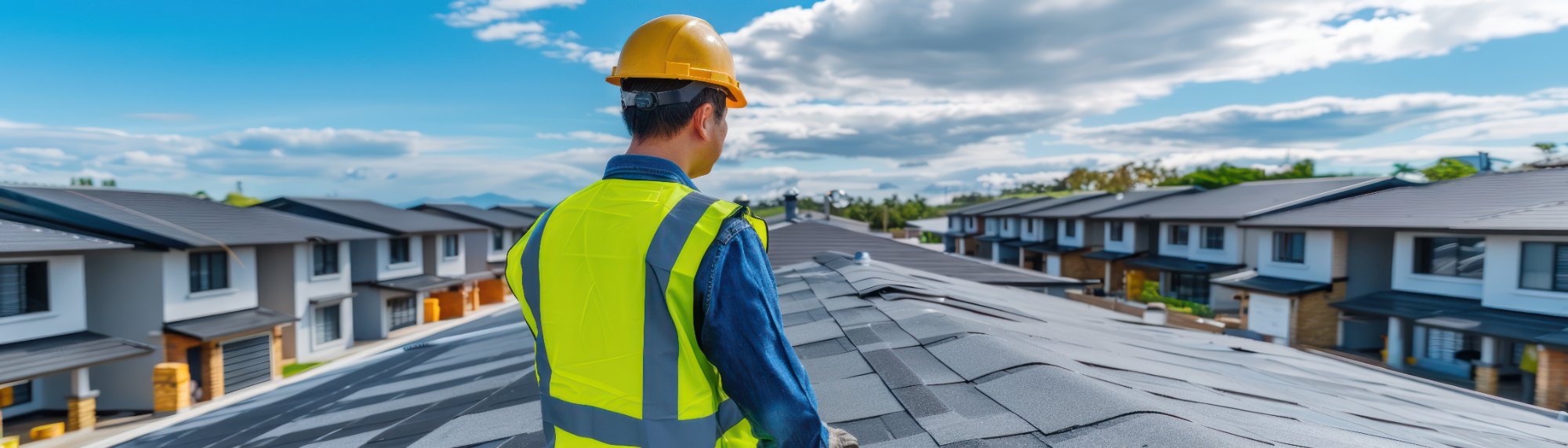
Nestled beneath the dramatic southern face of the South Downs escarpment, Steyning stands as one of West Sussex's most historically significant towns — a Saxon settlement with a conservation area housing over sixty listed buildings spanning medieval timber frames, Tudor cottages, Georgian townhouses, and Victorian commercial premises. Steyning Roof Surveys understand that a town where rooflines date from the fourteenth century through to modern estate development demands specialist inspection expertise that recognises the profound differences between a handmade peg tile roof on a timber-framed cottage and concrete interlocking tiles on a 1980s detached home beyond the High Street.
Fast, independent roof surveys from local experts.
Our service exists because Steyning's roofscape reflects the full sweep of English architectural history compressed into a compact footprint. The High Street conservation core carries roofs ranging from medieval oak pegs supporting handmade clay tiles to Victorian Welsh slate and ornate ridge detailing. Beyond the town centre, the residential streets of Shooting Field, Mouse Lane, and the estates along Jarvis Lane present twentieth-century construction methods — concrete tiles, standardised pitch angles, and cavity wall construction that behaves entirely differently under weather exposure. Steyning Roof Surveys apply the correct inspection methodology to each era and material type, delivering assessments rooted in genuine technical understanding rather than generic checklists.
Whether you are acquiring a period property in the conservation area, investigating persistent leaks in a modern home on the town's edges, documenting storm damage after winds gusting over the exposed Downs, or seeking clarity on roof condition before committing to expensive repairs, our surveys deliver the documented evidence you need to make confident decisions. Call Steyning Roof Surveys today or complete the contact form below to arrange your inspection.
Steyning Roof Surveys operate from a fundamental principle: property owners deserve honest, independent roof assessments that are not influenced by contractors seeking to sell repair work. Too many homeowners across this part of West Sussex have been pressured into unnecessary expenditure by tradespeople with a financial incentive to exaggerate problems, or have completed property purchases only to discover hidden damage that more rigorous inspection would have revealed before exchange. Our role bridges that gap — providing the technical expertise and documented evidence that allows informed decision-making.
Every inspection follows a consistent, repeatable methodology developed across thousands of surveys. We begin at ground level with a complete perimeter walk, assessing rainwater goods, fascias, soffits, and all visible defects from below. Our DJI Enterprise drone then captures high-resolution imagery of every roof plane, ridge, valley, hip, chimney stack, and flashing detail — including angles and elevations that conventional ladder access cannot safely reach on Steyning's taller period buildings and complex multi-pitch rooflines. Where thermal imaging forms part of the survey package, our FLIR cameras reveal concealed moisture patterns beneath tiles, behind flashings, and within roof timbers that visual inspection alone cannot detect.
The critical advantage of our approach becomes clear when you understand the sheer variety of Steyning's building stock. A timber-framed cottage from the fifteenth century requires entirely different assessment criteria from an interwar semi along Shooting Field, and both differ fundamentally from a modern estate home built in the 1990s. Handmade clay peg tiles, torching, and lime mortar present different failure modes from concrete interlocking tiles with modern felt underlay. Steyning Roof Surveys work across every era and material because the town demands that breadth of technical knowledge.
We maintain complete independence throughout. Steyning Roof Surveys do not undertake roof repairs and hold no financial stake in any findings. When we confirm a roof is sound, that assessment carries genuine weight. When we identify defects, the repair costings in our report reflect current West Sussex market rates — not inflated estimates intended to pressure quick decisions or benefit particular contractors.
Nearby Areas with Similar Building Stock: The roofing challenges we encounter across Steyning's historic properties and modern estates mirror those found throughout the Horsham district and neighbouring coastal plain settlements. Homeowners in Henfield and Storrington face comparable issues with period tile roofs, exposed positions beneath the Downs, and weathering accelerated by maritime proximity. See our area-specific guidance for detailed information relevant to your location.
Steyning Roof Surveys are not roofers, builders, or general contractors. We deliver independent inspection and reporting only — guaranteeing every assessment remains free from commercial bias.
Steyning Roof Surveys are equipped to inspect your property regardless of age, material, or complexity. Whether it's a medieval cottage on Church Street, a Victorian villa near the Downs, or a modern detached home on the edges of town, our team delivers the clarity you need.
What Steyning Roof Surveys bring to homeowners, buyers, and commercial clients across the town
Steyning's tightly packed historic core — narrow lanes, small rear gardens, properties built to the pavement edge — makes conventional ladder access difficult and sometimes impossible without risking damage to period fabric. Our DJI Enterprise drone captures every ridge, valley, chimney stack, and flashing detail from above, revealing defects invisible from ground level and documenting roof condition without physical contact. The same technology serves the modern estates equally well, capturing multi-pitch geometries and concealed roof planes in complete detail.
Concealed moisture represents the most insidious threat to Steyning's period properties. Handmade clay tiles laid on oak pegs over torching and bare rafters can harbour leaks for months before internal staining appears. Welsh slate on Victorian buildings similarly conceals moisture tracking behind flashings and along lap joints. Our FLIR thermal cameras detect temperature differentials caused by moisture ingress beneath coverings and within roof structures — pinpointing problems that visual inspection cannot identify until they have already caused significant damage.
Every Steyning Roof Surveys report constitutes a complete documentary record — annotated with high-resolution drone photographs, thermal imaging overlays where applicable, and itemised repair cost estimates at current West Sussex market rates. The report format is designed for direct submission to your solicitor during property purchase, presentation to insurance providers as claim evidence, or provision to roofing contractors as a precise specification for remedial works. You receive a professional document suitable for formal use rather than a casual written opinion.
Steyning Roof Surveys carry full professional indemnity and public liability insurance. Our surveyors hold recognised qualifications and CAA-approved drone pilot licences. Every inspection follows a standardised methodology refined across thousands of West Sussex properties, ensuring consistency and accuracy whether we are assessing a listed medieval cottage in the conservation area or a modern detached home on the edges of settlement. You receive professional-grade service with the insurance backing to support it.
Steyning presents one of the most architecturally diverse roofscapes in West Sussex compressed into a compact town centre. The High Street conservation area alone contains properties spanning six centuries of building history. A timber-framed cottage from the medieval period carries handmade peg tiles laid directly onto oak pegs with lime torching — a system that has performed for hundreds of years but fails in ways entirely different from modern coverings. Georgian townhouses present Welsh slate on steeper pitches with lead valleys and decorative ridge work. Victorian commercial premises carry ornate ridge tiles and clay rosemary tiles that become brittle with age. Interwar semis along Shooting Field use plain clay tiles with concrete ridges that deteriorate faster than the tiles themselves.
Beyond the conservation core, the residential estates present twentieth-century construction — concrete interlocking tiles on standardised pitch angles with modern felt underlay. These roofs perform differently, fail differently, and require different assessment criteria. Steyning Roof Surveys have built our reputation on recognising these distinctions and tailoring inspection methodology accordingly. We do not apply generic checklists — we assess each roof according to its specific age, materials, construction method, and expected performance characteristics. That detailed understanding separates meaningful assessment from box-ticking exercises.
From medieval timber frames in the conservation area to modern estates on the town's edges, Steyning Roof Surveys understand this town's building stock completely.
How Steyning Roof Surveys have assisted local homeowners and property buyers

A couple purchasing a Grade II listed cottage on Church Street received a building survey noting the roof as "generally consistent with age and acceptable." The property dated from the sixteenth century with later Georgian additions and handmade peg tiles visible across multiple roof planes. Seeking certainty before exchanging on a purchase above six hundred thousand pounds, they commissioned Steyning Roof Surveys for a specialist roof assessment.
Our drone inspection revealed a concealed valley gutter running behind the main chimney stack on the rear elevation — completely invisible from ground level due to the tight rear courtyard. The lead lining had split along a two-metre section and thermal imaging confirmed active moisture ingress into the oak rafters below. We also documented widespread mortar deterioration in the torching beneath the peg tiles, three areas of slipped tiles on the north-facing slope, and perished pointing around both chimney stacks. The internal loft inspection revealed early-stage timber decay in two principal rafters directly beneath the failed valley.
Steyning Roof Surveys costed the remedial works at approximately ten thousand eight hundred pounds including lead valley replacement, timber repairs, torching renewal, and chimney repointing. The buyer's solicitor presented our detailed report and the vendor agreed to reduce the price by the full amount. The repairs were completed by a specialist heritage contractor within eight weeks of completion. Without our inspection, the timber decay would have progressed undetected through several more winters, ultimately requiring substantially more extensive and expensive structural intervention.

A homeowner on the High Street had experienced persistent damp staining in the front bedroom for over a year. Two local roofers had inspected from ladders and both pronounced the Welsh slate roof sound with no obvious defects. The damp worsened after each rainfall event. Frustrated and facing mounting internal repair costs, the homeowner contacted Steyning Roof Surveys for an independent assessment using thermal imaging technology.
Our thermal camera revealed a concentrated moisture track running from beneath the chimney flashing down through the roof structure to the bedroom ceiling. Drone photography from above showed the lead code 4 stepped flashing appeared intact, but detailed inspection revealed a hairline crack in the hidden lead soaker behind the flashing where it met the slates. Rainwater was bypassing the flashing entirely and tracking directly onto the felt underlay. The crack was invisible from below and would not have been detected without thermal imaging and detailed aerial photography.
The repair — replacement of the cracked soaker and renewal of adjacent slate courses — cost two thousand one hundred pounds. The work was completed within three weeks of our report and the damp has not returned. The homeowner subsequently commented that our single inspection fee saved them from continuing to pay for ineffective internal repairs while the underlying cause remained unaddressed. The thermal imaging evidence in our report provided exactly the diagnostic clarity that conventional ladder inspection could not deliver.
Need a professional roof survey for your Steyning property? Get in touch with Steyning Roof Surveys today for a free consultation.
Feedback from homeowners and buyers who have used Steyning Roof Surveys
"Purchasing a Grade II listed cottage on Church Street, we needed complete certainty about the roof before exchanging. Steyning Roof Surveys found concealed timber decay in the valley behind the chimney stack that the building survey had completely missed. Their thermal imaging revealed moisture that visual inspection alone would never have detected. The repair costings allowed us to negotiate eight thousand pounds off the asking price. Outstanding service from start to finish."
"Our Victorian terrace on the High Street had recurring damp in the front bedroom despite two roofers assuring us the roof was sound. Steyning Roof Surveys identified a cracked lead soaker behind the chimney flashing that had been invisible from below. Within a month of their inspection the repair was completed and the damp has not returned. Wish we had called them first and saved ourselves a year of worry."
"A contractor quoted nineteen thousand to strip and re-roof our 1930s detached on Shooting Field. Steyning Roof Surveys demonstrated with drone photography and detailed inspection that only one slope needed attention while the remainder had at least fifteen years remaining. Saved us over ten thousand pounds and gave us a realistic maintenance schedule going forward. Cannot recommend them highly enough."
Transparent pricing from Steyning Roof Surveys — choose the inspection level that suits your property and your requirements
Steyning Roof Surveys offer three inspection tiers to match different property types, budgets, and levels of concern. Every survey is conducted by the same certified team using the same professional methodology — the difference lies in the depth of investigation and the technology deployed. Whether you own a compact flat-roofed extension on a modern estate or a multi-plane period property in the conservation area, there is a package designed for your situation.
Essential visual roof assessment for Steyning homeowners needing a clear overview of current roof condition
Full drone and thermal imaging inspection — the most requested package for Steyning buyers and homeowners
Complete structural roof assessment for Steyning's larger period properties, listed buildings, and commercial premises
Common questions answered by Steyning Roof Surveys
Steyning Roof Surveys cover the entire historic town and every property from the High Street conservation area to the newer estates on the edges of settlement. We regularly inspect properties along Church Street, Mouse Lane, Shooting Field, Jarvis Lane, and throughout the conservation core. We also attend the surrounding villages of Bramber, Upper Beeding, Ashurst, Wiston, Washington, and the rural properties scattered along the lanes between the Downs and the Adur valley.
Most Steyning inspections occupy between ninety minutes and three hours on site. The medieval timber-framed properties and Georgian townhouses in the conservation area — with their multiple roof levels, concealed valleys, and tightly packed rooflines — require meticulous inspection and typically take longer. Modern detached homes on the outskirts proceed more quickly. Your report arrives within forty-eight hours regardless of property complexity.
Period properties represent the majority of our Steyning workload. We routinely inspect medieval timber frames, Tudor cottages, Georgian townhouses, Victorian villas, and Edwardian family homes throughout the conservation area and beyond. Our drone technology proves particularly valuable where narrow lanes and rear gardens prevent safe ladder access, and where placing equipment against historic fabric risks causing damage. Several of our regular clients own listed buildings where non-invasive inspection is mandatory.
Every comprehensive and premium report from Steyning Roof Surveys includes timestamped drone photography, thermal scan data, detailed damage descriptions, and repair cost estimates at current West Sussex market rates. Insurance providers require documented evidence rather than verbal accounts when processing claims. Our reports are structured specifically to satisfy those requirements and have supported numerous successful claims for storm damage, fallen trees, and sudden-onset leaks across Steyning properties.
Steyning sits beneath the exposed southern face of the South Downs escarpment and receives the full force of prevailing south-westerly winds. Common defects include slipped handmade clay tiles on period properties, cracked Welsh slate on Victorian buildings, degraded torching and lime mortar on older roofs, perished lead flashings around chimney stacks, blocked valley gutters on complex roof geometries, and delaminating concrete tiles on post-war housing. The town's exposed position accelerates weathering compared to more sheltered locations inland.
Commercial inspections form a growing share of our Steyning schedule. We survey retail premises along the High Street, hospitality venues, office conversions in period buildings, agricultural barns converted to residential use, and light industrial units on the edges of town. All flat roof systems fall within our scope including felt, GRP, EPDM, and single-ply membranes, as well as the traditional pitched coverings on older commercial properties.
Have another question? Contact Steyning Roof Surveys directly.
Steyning Roof Surveys provide professional roof inspections across the town and surrounding villages
The High Street conservation area contains over sixty listed buildings spanning medieval timber frames, Tudor cottages, Georgian townhouses, and Victorian commercial premises. Handmade clay peg tiles, Welsh slate, ornate ridge detailing, and tall chimney stacks characterise the town centre roofscape.
The residential streets around Shooting Field and Mouse Lane feature a mix of interwar semis, detached homes from the 1930s, and later estate development. Plain clay tiles and concrete interlocking coverings on standardised pitch angles are typical of these areas.
Properties along Bramber Road and Tanyard Lane include period cottages, Victorian villas, and more recent estate development. The area presents a varied roofscape from handmade clay tiles through to modern concrete interlocking coverings.
Modern estate housing on the edges of Steyning presents late twentieth and early twenty-first century construction methods — concrete interlocking tiles, standardised pitch angles, and modern felt underlay systems requiring different assessment criteria from older properties.
Properties scattered along the rural lanes around Steyning include period cottages, converted agricultural buildings, detached country homes, and some listed properties. Exposure to weather and overhanging vegetation creates particular roofing challenges in these locations.
Steyning Roof Surveys operate across the wider Horsham district and into neighbouring authorities. We regularly attend properties in surrounding towns and villages that share similar building stock and roofing challenges.
Steyning Roof Surveys provide the independent, professional roof inspections that this historic town deserves. Whether you are a buyer anxious about concealed defects in a conservation area property, a homeowner dealing with persistent leaks, a landlord protecting a portfolio asset, or simply seeking clarity on roof condition before committing to expensive repairs, our surveys deliver the answers you need.
Every inspection combines certified expertise with advanced technology — drone aerial photography, thermal imaging, and detailed written reporting — to give you a complete, unbiased picture of your roof's condition. We do not carry out repairs. We do not recommend contractors. We provide the facts, the photographs, and the costings, and you make the decisions.
Every report is independent, detailed, and written to be acted upon — whether you are buying, selling, claiming, or simply protecting your property.
Call us today or complete the form below to arrange your Steyning roof survey.
Contact Steyning Roof Surveys today to arrange your roof inspection
Monday - Friday: 7:30 AM - 9:30 PM
Saturday: 7:30 AM - 7:00 PM
Sunday: 9:00 AM - 5:00 PM
For urgent roof inspection needs in Steyning, please call Steyning Roof Surveys directly.
Call Now