
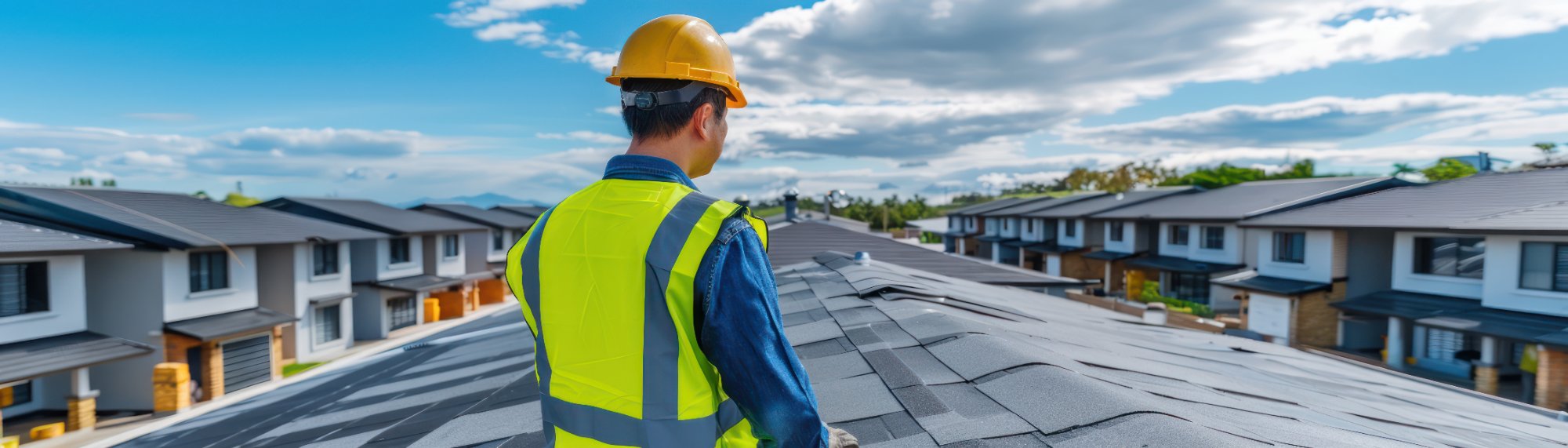
Tower Hamlets Roof Surveys deliver independent, professional roof inspections throughout one of East London's most architecturally diverse boroughs. Our certified surveyors combine drone aerial photography with thermal imaging to assess every roof type found across this densely built landscape — from the long terraced rows of Victorian workers' cottages lining the streets of Bethnal Green and Bow, through the substantial Edwardian villas bordering Victoria Park, the converted wharves and warehouses of Wapping and Limehouse Basin, the post-war council estates of Stepney and Poplar, to the modern apartment developments rising across the Isle of Dogs and Blackwall Reach.
Fast, independent roof surveys from local experts.
Tower Hamlets Roof Surveys exist because this borough's roofing stock is as complex as its history. The tightly packed Victorian terraces of Globe Town and Old Ford sit alongside Edwardian mansion blocks, Peabody Trust estates from the early twentieth century, Brutalist tower blocks dating from the 1960s and 1970s, converted dock buildings repurposed during the 1980s and 1990s, and the glass-and-steel residential towers that continue to reshape the skyline around Canary Wharf. Each building era brought different materials, different construction methods, and different vulnerabilities — and each requires a surveyor who understands those distinctions.
Whether you are buying a terraced house on one of Bow's tree-lined streets, investigating a recurring leak in a Whitechapel flat, building a case for an insurance claim after storm damage in Poplar, or seeking a clear picture of a commercial roof before renewing a lease, Tower Hamlets Roof Surveys provide the documented evidence you need to act with confidence.
Tower Hamlets Roof Surveys were established on the principle that every property owner deserves access to honest, unbiased roof assessments before committing to costly repairs or completing a purchase. Across this borough, we regularly encounter homeowners who have been quoted significant sums for work that a proper inspection reveals to be unnecessary — and, equally, buyers who have exchanged contracts on properties with concealed roof defects that a standard homebuyer report failed to identify. Our service fills that gap.
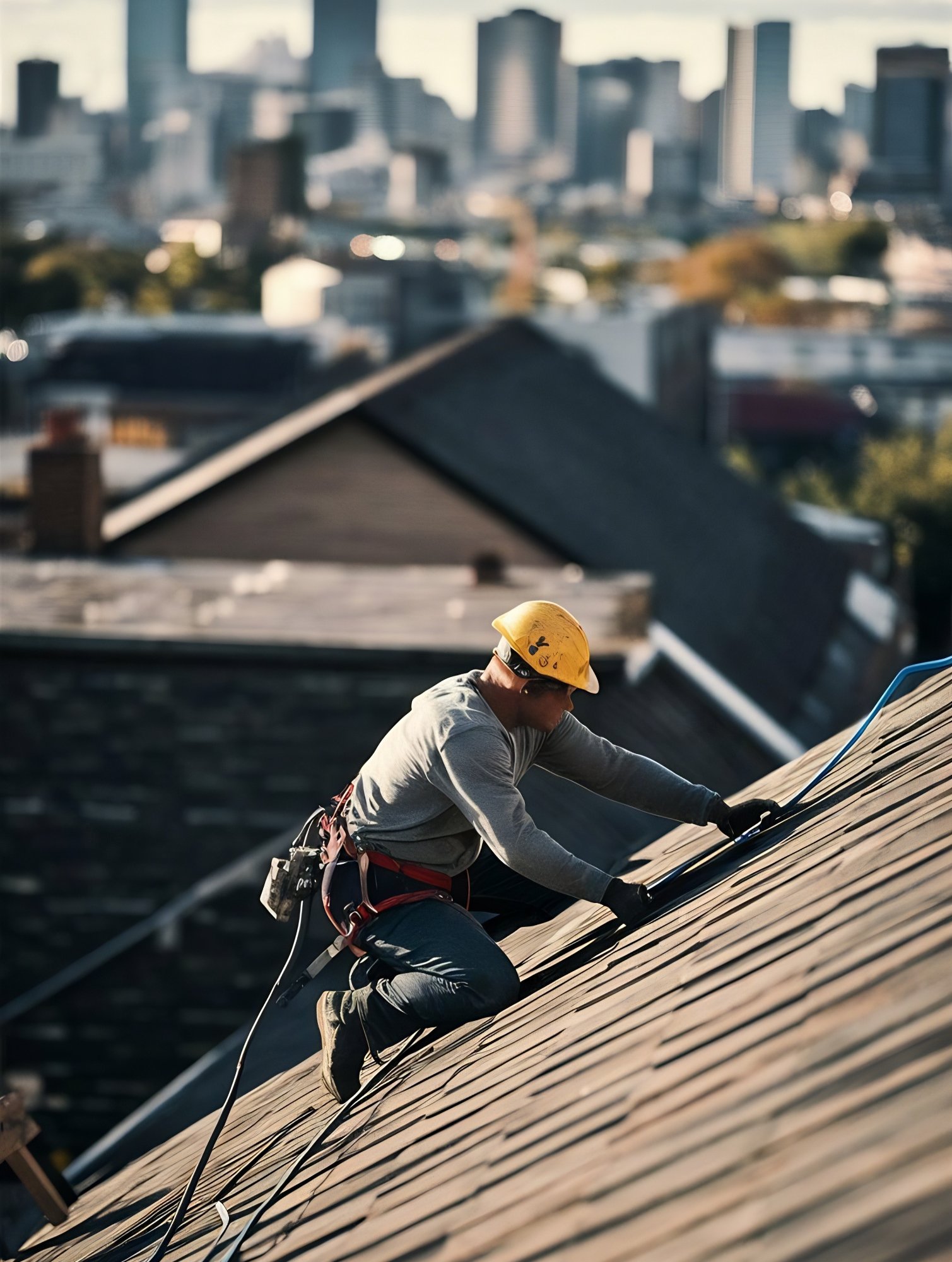
Every inspection follows a structured, repeatable process. We begin with a full perimeter walk at ground level, examining rainwater goods, fascias, soffits, and any visible defects from below. Our DJI Enterprise drone then captures high-resolution imagery of every roof plane, ridge line, valley, hip, flashing detail, and chimney stack. In Tower Hamlets, where rear access is frequently restricted by narrow yards and party wall boundaries, drone technology is not a luxury — it is the only reliable way to assess rear slopes and concealed roof areas on the borough's tightly packed housing.
The variety of roofing across Tower Hamlets demands genuine breadth of knowledge. A Welsh slate terraced roof in Bow shares nothing in common with a single-ply membrane on a converted warehouse in Limehouse, and both differ entirely from the clay-tiled hips of an Edwardian villa near Victoria Park. Tower Hamlets Roof Surveys assess every material and system because the borough requires nothing less.
We maintain complete independence throughout the process. Tower Hamlets Roof Surveys do not undertake repairs, supply materials, or recommend contractors. When our report confirms a roof is performing well, that conclusion is free from commercial motive. When we document a defect, the costings reflect genuine market rates — not figures designed to steer you toward a particular course of action.
Nearby Areas with Similar Properties: The roofing challenges we encounter across Tower Hamlets are mirrored in neighbouring boroughs. Homeowners in Hackney and Southwark face comparable issues with ageing Victorian slate, flat roof failures, and party wall flashing degradation. See our area-specific guides for more detail on your location.
Tower Hamlets Roof Surveys are not roofers, builders, or contractors. We provide independent inspection and reporting only — ensuring every assessment is free from commercial bias.
Tower Hamlets Roof Surveys are ready to inspect your property. Whether it is a Victorian terrace in Bethnal Green, a converted loft apartment in Wapping, or a modern flat in the Isle of Dogs, our team delivers the clarity you need.
What Tower Hamlets Roof Surveys bring to homeowners, buyers, and landlords across the borough
Tower Hamlets is one of London's most tightly built boroughs. Rear yards are narrow, access lanes are restricted, and many terraced properties share party walls that prevent ladder placement. Our DJI Enterprise drone navigates these constraints with ease, capturing high-definition imagery of rear slopes, shared valley gutters, chimney stacks, and concealed flashings that ground-level inspection simply cannot reach. On the taller converted warehouses and modern blocks around the Isle of Dogs, drone access is frequently the only viable method of assessment.
Concealed moisture is a persistent problem in Tower Hamlets housing stock. The borough's Victorian terraces suffer from lead flashing failures that allow water to track along party walls for years before visible damage appears. Flat roof membranes on rear extensions and converted commercial buildings trap moisture beneath the surface layer. Our FLIR thermal cameras detect these temperature anomalies from above, identifying wet areas within the roof structure that remain invisible to conventional visual assessment.
Every Tower Hamlets Roof Surveys report is structured as an actionable document — annotated with high-resolution drone photographs, thermal overlays where applicable, and clear itemised repair costings at current market rates. The report is designed for direct submission to your solicitor during a purchase, to your insurer as claim evidence, or to a roofing contractor as a detailed specification of the works required. No ambiguity, no jargon, just documented facts.
Tower Hamlets Roof Surveys hold full professional indemnity and public liability insurance. Our surveyors carry recognised certifications and CAA-approved drone pilot licences. Every inspection follows a standardised methodology refined across thousands of London properties, ensuring consistent accuracy whether we are assessing a Grade II listed Georgian terrace in Fournier Street or a modern penthouse apartment overlooking the Thames at Canary Wharf.
Tower Hamlets contains one of the widest ranges of building types found in any single London borough. The Georgian weavers' houses of Spitalfields carry handmade clay tiles and original timber structures dating to the early eighteenth century. The Victorian terraces stretching across Bethnal Green, Bow, and Mile End present Welsh slate on steep pitches with lead-dressed party wall junctions and tall chimney stacks. Post-war estates in Stepney and Poplar feature flat roofing systems with limited insulation and drainage designs that struggle with modern rainfall volumes. And the contemporary towers of the Isle of Dogs use engineered membrane systems that require entirely different inspection techniques.
Tower Hamlets Roof Surveys understand these differences because our inspection schedules take us across every neighbourhood in the borough week after week. That direct experience is the difference between a surveyor who recognises an emerging problem and one who simply confirms the roof has tiles on it.
From the Georgian rooftops of Spitalfields to the modern membranes of the Isle of Dogs, Tower Hamlets Roof Surveys know this borough's roofscape inside out.
How Tower Hamlets Roof Surveys have helped local homeowners and property buyers
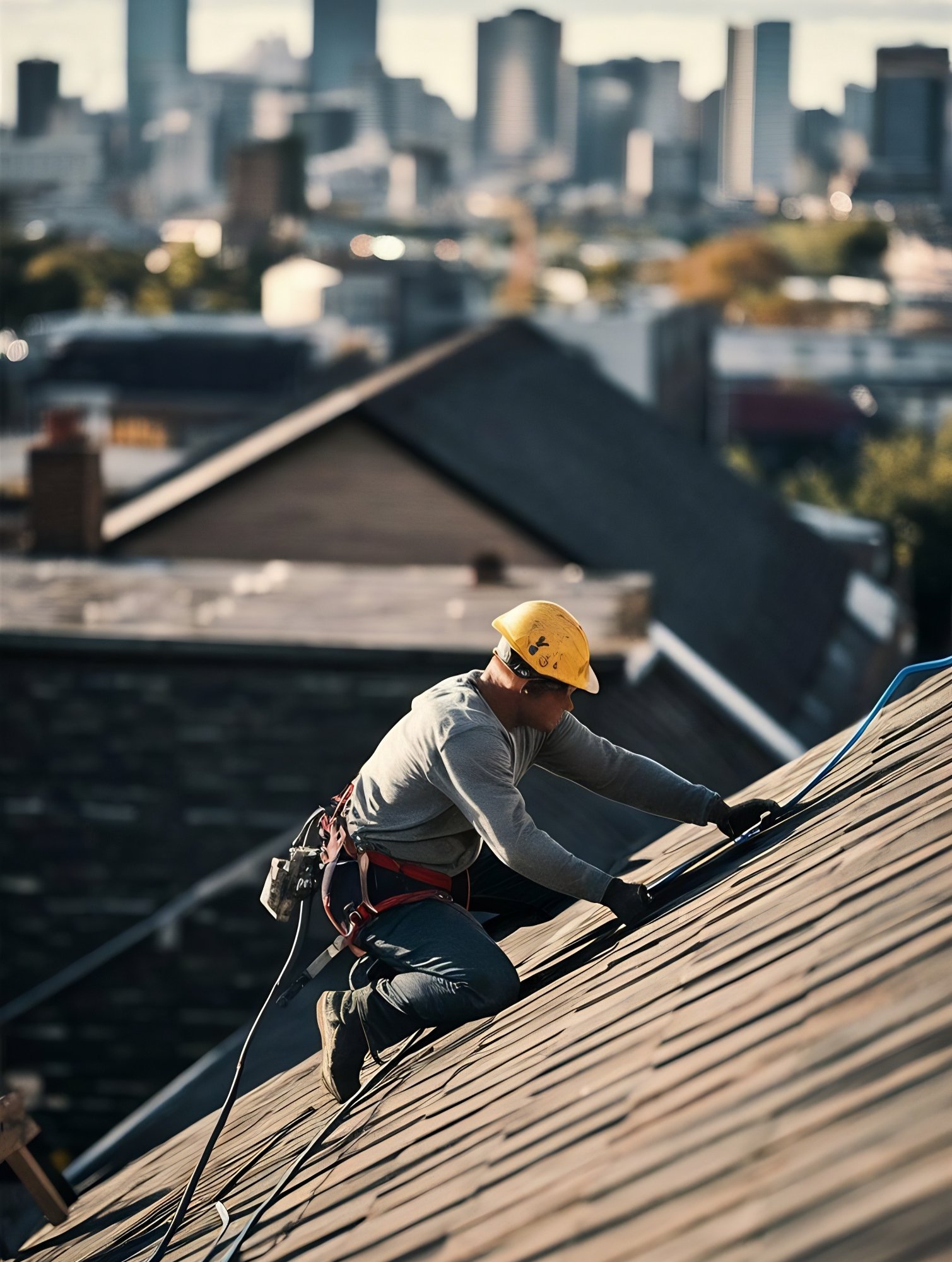
A couple purchasing a three-bedroom Victorian terrace in Bow received a homebuyer report that described the roof as "adequate for a property of this age and type." The seller had recently repointed the front chimney stack and the external brickwork looked fresh. With the asking price at just under nine hundred thousand pounds, the buyers wanted independent confirmation before committing.
Our drone captured the rear elevation — invisible from the street and inaccessible without scaffolding. The lead soakers along the party wall on the right side had pulled away from the brickwork over a length of approximately two metres, leaving an open pathway for rainwater. Thermal imaging confirmed active moisture tracking into the roof timbers beneath. The repointing on the front had been cosmetic only — the front chimney flaunching was cracked and the lead apron at its base had corroded through.
Tower Hamlets Roof Surveys costed the combined remedial works at approximately seven thousand six hundred pounds. The buyer's solicitor presented our report during negotiations and the vendor accepted a price reduction of the full amount. The party wall flashing was repaired within a month of completion, preventing what the surveyor confirmed would have become structural timber damage within two winters.
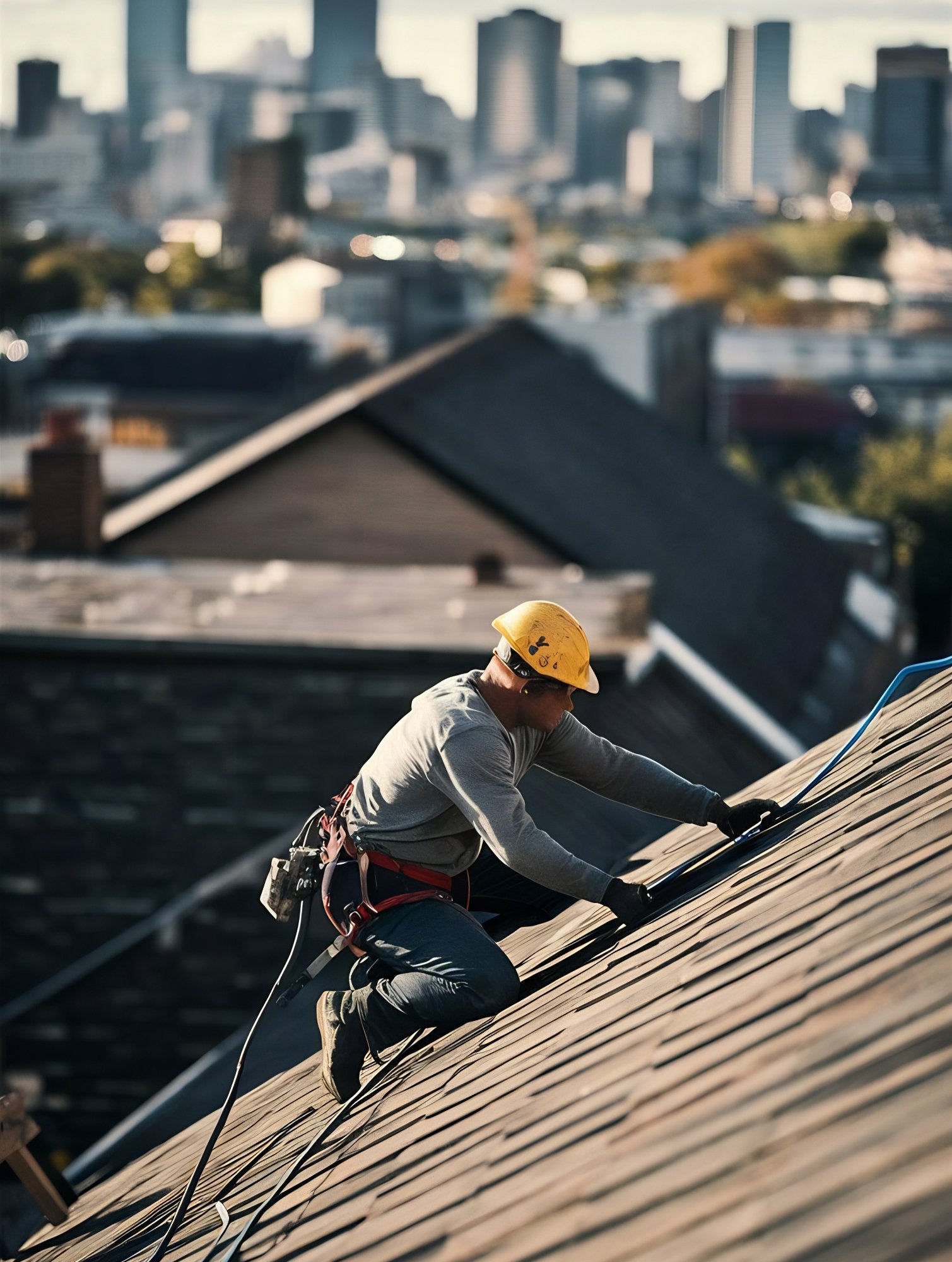
A homeowner near Bethnal Green Road had spent close to three thousand pounds over four years on repeated patch repairs to the flat roof over their rear kitchen extension. Each time the leak returned within months. Two separate roofing firms had applied patches to what they identified as the failure point, yet the damp staining on the kitchen ceiling kept reappearing in the same corner.
Our thermal scan revealed that the actual point of water entry was not on the flat roof membrane at all. Moisture was entering through a failed junction where the flat roof met the original rear wall of the Victorian terrace — a detail concealed beneath a cement fillet that appeared intact from the outside. The patches applied by previous contractors had been placed over perfectly sound membrane. The cement fillet had cracked along its full length, creating a channel that directed rainwater behind the membrane and into the ceiling void below.
The Tower Hamlets Roof Surveys report specified replacement of the cement fillet with a proper lead cover flashing and re-dressing of the wall junction. The repair was completed for under two thousand pounds. The leak has not returned in the eight months since. The homeowner told us the cost of our survey was recovered many times over by ending the cycle of ineffective patching.
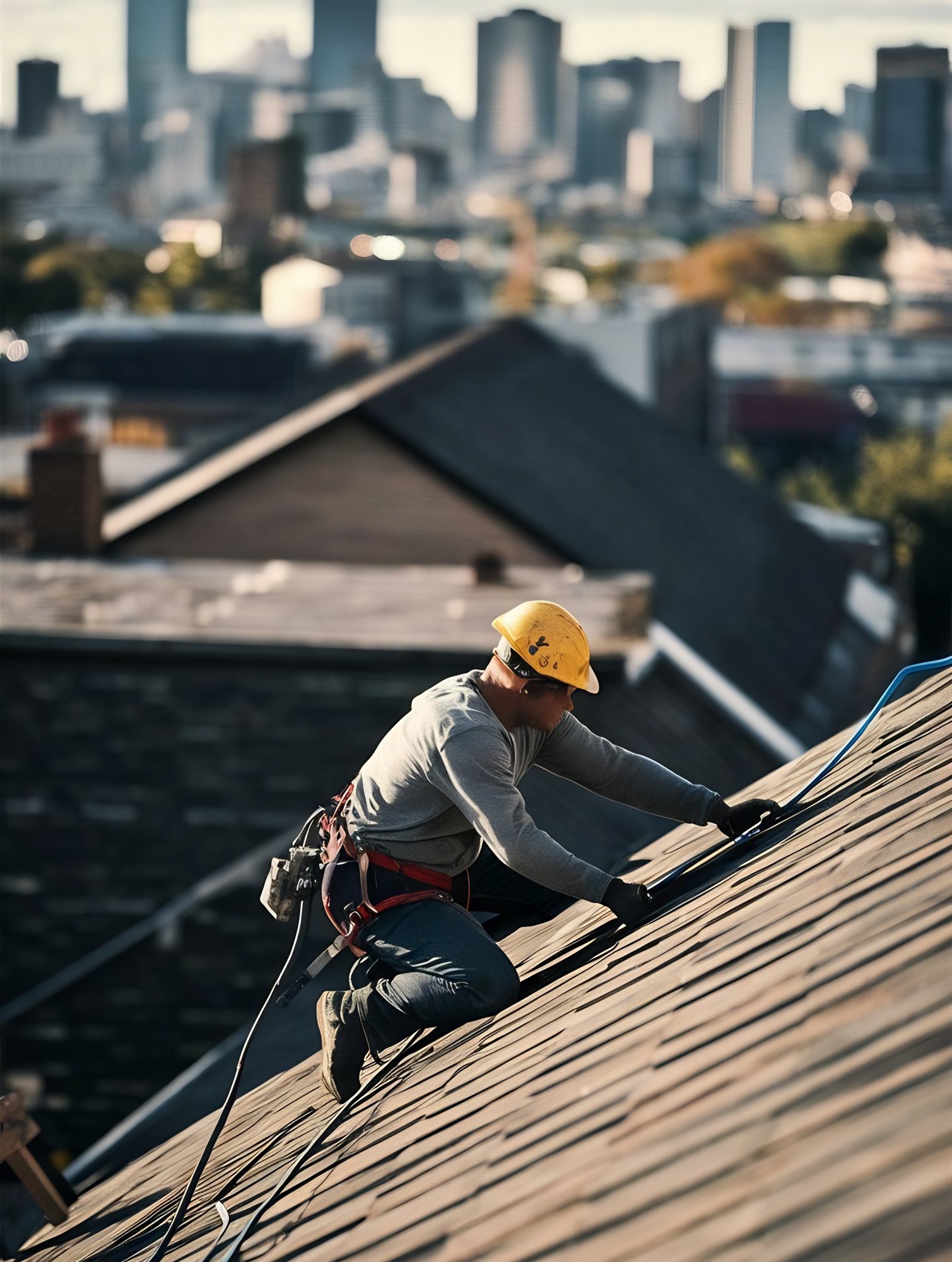
A buyer was in the process of purchasing a top-floor apartment in a converted Victorian wharf building in Wapping at a price above one and a half million pounds. The management company's most recent building survey was three years old and made no mention of roof issues. The buyer's mortgage lender flagged the age of the survey and requested an updated roof condition report before releasing funds.
Our drone inspection documented extensive blistering and splitting across the flat roof membrane directly above the apartment in question. Two drainage outlets were partially blocked with accumulated debris, causing standing water across a significant section of the roof. Thermal imaging identified three areas of active moisture ingress through the membrane into the insulation layer below. The parapet capping stones along the riverside elevation had shifted, opening gaps that allowed wind-driven rain to penetrate the parapet wall from above.
The Tower Hamlets Roof Surveys report estimated the membrane replacement and parapet repairs at approximately twenty-two thousand pounds — a cost to be shared among the building's leaseholders under the service charge. The buyer used our report to negotiate a reduced purchase price reflecting their share of the anticipated works and to require the management company to commission the repairs before completion. Without the inspection, the buyer would have inherited a failing roof with no leverage to share the cost.
A right-to-buy leaseholder in a 1960s low-rise block in Poplar received a Section 20 consultation notice from the local authority proposing a complete re-roof of the block at a total cost exceeding one hundred and forty thousand pounds. The leaseholder's estimated share was over eighteen thousand pounds. They believed the roof was in reasonable condition and suspected the scope of work had been overstated, but lacked the technical evidence to challenge it.
Our comprehensive drone survey of the entire block roof — covering all four sections — confirmed that three of the four roof sections were performing adequately with only localised repairs needed. The fourth section, above the stairwell and bin stores, did require a full membrane replacement due to widespread ponding and failed welded seams. Our thermal scan confirmed that moisture had not penetrated into the concrete deck beneath any of the three sound sections.
Armed with the Tower Hamlets Roof Surveys report, the leaseholder formally challenged the scope of the proposed works through the consultation process. The local authority revised the specification to target only the section requiring replacement, reducing the total project cost significantly. The leaseholder's revised share fell to under five thousand pounds — a saving of more than thirteen thousand against the original estimate.
Need a professional roof survey for your Tower Hamlets property? Get in touch with Tower Hamlets Roof Surveys today for a free consultation.
Feedback from homeowners and buyers who have used Tower Hamlets Roof Surveys
"We were buying a Victorian mid-terrace in Bow and the homebuyer survey barely mentioned the roof. Tower Hamlets Roof Surveys found corroded lead soakers along the party wall and cracked flaunching on both chimney stacks — repairs totalling close to eight thousand pounds that would have come straight out of our pockets after exchange. Their report gave our solicitor exactly the evidence needed to renegotiate. Genuinely essential service for anyone buying in this area."
"Four years of patching our flat roof extension and the leak kept coming back. Tower Hamlets Roof Surveys used thermal imaging to prove the water was entering through a cracked wall junction, not through the membrane at all. Two previous roofers had been patching the wrong area entirely. One survey saved us from spending another penny on pointless repairs. Clear, honest, and completely independent."
"We manage rental properties across Stepney and Mile End. Tower Hamlets Roof Surveys inspected three terraced houses for us in a single day and delivered individual reports for each within forty-eight hours. Two roofs needed only minor maintenance, but the third had a corroded valley gutter that would have caused serious water damage within months. Professional approach and the multi-property rate made it very cost-effective."
Common situations where Tower Hamlets Roof Surveys provide critical insight
Standard homebuyer reports rarely examine the roof in meaningful detail. In Tower Hamlets, where Victorian terraces dominate and rear elevations are hidden from street level, a dedicated roof survey before exchange can uncover defects worth thousands in repair costs — giving you leverage to renegotiate or walk away.
Persistent leaks in terraced housing often originate far from where the staining appears. Water tracks along party walls, beneath flashings, and across timbers before emerging at a point that misleads even experienced roofers. Tower Hamlets Roof Surveys use thermal imaging to trace moisture to its actual entry point — ending the cycle of speculative repairs.
Tower Hamlets faces exposure to easterly gales channelling up the Thames estuary. Storm damage often affects tiles and flashings that are invisible from ground level. A documented survey with timestamped drone photography provides the evidence your insurer needs to process a claim — and distinguishes storm damage from pre-existing wear that insurers will decline to cover.
An independent roof survey provides objective evidence of what actually needs doing — and what does not. We regularly save Tower Hamlets property owners thousands by confirming that a complete re-roof proposed by a contractor is unnecessary when targeted repairs to specific areas will achieve the same result for a fraction of the cost.
The defects Tower Hamlets Roof Surveys encounter most frequently across the borough
The Victorian terraces of Bethnal Green, Bow, Mile End, and Globe Town were roofed predominantly in Welsh slate. After more than a century of exposure, nails corrode, battens shrink, and individual slates slip or crack. The problem accelerates once a single slate is displaced, as wind and rain exploit the gap to dislodge neighbouring slates. On a terraced row, one neglected roof can expose the adjoining property through the shared party wall junction.
Lead is used extensively across Tower Hamlets housing — around chimney stacks, at party wall junctions, in valley gutters, and as apron flashings where roofs meet walls. Over decades, lead fatigues, cracks along thermal expansion lines, and pulls away from mortar beds. In terraced housing, a failed lead soaker on the party wall allows water to migrate silently into the neighbouring property, often causing damage on both sides of the boundary.
Tower Hamlets has a high concentration of flat roofs — on rear kitchen extensions built from the Victorian era onwards, on purpose-built post-war blocks across Stepney and Poplar, and on converted commercial buildings throughout the borough. Felt and early bituminous membranes have a limited lifespan and frequently fail at upstand details and wall junctions rather than across the main surface. Ponding caused by blocked outlets or inadequate falls accelerates the deterioration.
Parapet walls are a defining feature of Tower Hamlets housing — on Victorian terraces, converted warehouses, and flat-roofed blocks alike. Frost action and thermal movement crack mortar joints and displace coping stones, creating pathways for water to enter the wall from above. Once moisture penetrates a parapet, it can travel downward through the wall structure and emerge as damp far from the original point of entry, making diagnosis difficult without thermal imaging.
Tower Hamlets retains thousands of original Victorian chimney stacks — most no longer in use but still standing. Exposed to over a century of London weather, many show eroded mortar joints, cracked render, leaning pots, and saturated brickwork. Redundant flues that have been capped without adequate ventilation trap moisture inside the stack, accelerating decay from within. A failing chimney stack is one of the most expensive roof-related repairs a homeowner can face.
The dense terraced housing across Tower Hamlets means most residential roofs share at least one party wall junction with a neighbouring property. Where one side of the terrace has been re-roofed at a different time to the other, mismatches in flashing details, tile profiles, and mortar lines create weak points that allow water ingress. Disputes about responsibility between neighbours are common, and an independent survey report provides the documented evidence both parties need to resolve the issue fairly.
Common questions answered by Tower Hamlets Roof Surveys
Tower Hamlets Roof Surveys cover the entire borough and its immediate surroundings. Our regular inspection areas include Bethnal Green, Bow, Mile End, Whitechapel, Stepney, Limehouse, Poplar, Wapping, Shadwell, the Isle of Dogs, and the residential streets flanking Victoria Park. We also attend properties within the Spitalfields conservation area, along the Regent's Canal corridor, and in the newer developments around Blackwall Reach and Leamouth.
A typical terraced or semi-detached property in Tower Hamlets takes between one and two hours to inspect on site. Larger buildings — including converted warehouses in Wapping, multi-unit blocks in Poplar, and the bigger Victorian villas near Victoria Park — may require additional time depending on roof complexity and the number of elevations involved. Every client receives their complete written report within forty-eight hours of the site visit.
Converted buildings represent a substantial proportion of our Tower Hamlets work. The borough contains one of London's highest concentrations of former warehouses, wharves, factories, and industrial premises that have been repurposed as residential lofts and apartments. Many retain original flat roof structures or unusual pitched profiles that demand specialist assessment. Our drone technology is particularly effective on these buildings where internal access to the roof space is frequently restricted or entirely absent due to the conversion layout.
Every comprehensive and premium report from Tower Hamlets Roof Surveys includes timestamped drone photography, thermal scan evidence where applicable, detailed damage narratives, and itemised repair costings at current market rates. Insurers require documented photographic evidence rather than verbal accounts when processing roof damage claims, and our reports are structured specifically to meet those standards. We have supported successful claims across Tower Hamlets following storm damage, water ingress events, and instances of subsidence-related roof displacement.
Tower Hamlets sits on London Clay and is exposed to easterly winds channelling along the Thames estuary. The most frequent defects we encounter include slipped and cracked Welsh slates on Victorian terraces across Bethnal Green and Bow, degraded lead flashings at party wall junctions and around chimney stacks, flat roof membrane failures on rear extensions and post-war blocks, parapet wall cracking and displaced coping stones on converted industrial buildings, and widespread mortar erosion along the shared party wall lines that define the borough's terraced streetscape.
We inspect modern buildings throughout the Isle of Dogs, the Canary Wharf periphery, and the newer residential schemes in Poplar and Blackwall. These properties typically feature flat roof systems including single-ply membranes, GRP coverings, and green roof installations that each carry different maintenance requirements. Common issues include ponding caused by inadequate drainage falls, failed upstand details at parapet junctions, and debris accumulation blocking outlet pipes. Our drone inspections are particularly effective on taller modern buildings where access from above is often the only practical survey method.
Have another question? Contact Tower Hamlets Roof Surveys directly.
Tower Hamlets Roof Surveys provide professional roof inspections across the borough and beyond
The dense Victorian terraced streets of Bethnal Green and Globe Town represent some of the borough's most characteristic housing. Welsh slate on steep pitches, tall shared chimney stacks, lead party wall flashings, and narrow rear access yards define the roofing challenges in this neighbourhood.
Bow combines Victorian terraces with Edwardian semis and interwar housing along its wider streets. The properties near Victoria Park are among the most substantial in the borough, with complex multi-pitch rooflines, bay window lead work, and ornate ridge detailing.
The central belt of the borough presents a mix of Victorian terraces, Edwardian mansion blocks, interwar council estates, and post-war tower blocks. Flat roof systems, concrete tile coverings, and asphalt-topped blocks sit alongside traditional slate and tile on the older residential streets.
The riverside and docklands neighbourhoods contain converted wharves, warehouse loft apartments, modern residential towers, and pockets of Georgian and Victorian housing. Flat roof membranes, lead sheet coverings, and engineered single-ply systems present a different set of inspection challenges to the terraced streets further north.
The southern tip of the borough is dominated by modern residential towers and apartment complexes built from the late 1980s onwards. Flat roof membranes, green roof systems, and complex drainage arrangements are standard. Height and restricted access make drone survey the most effective method of inspection.
Tower Hamlets Roof Surveys deliver the independent, thorough roof inspections this architecturally diverse borough demands. Whether you are a first-time buyer concerned about hidden defects on a Victorian terrace in Bow, a leaseholder challenging a disproportionate service charge for roof works in Poplar, a landlord protecting a portfolio of rental properties across Mile End and Stepney, or a homeowner tracing a persistent leak to its source in Bethnal Green, our surveys provide the documented answers you need to make informed decisions.
Every inspection combines certified expertise with advanced technology — drone aerial photography, thermal imaging, and detailed written reporting — to give you a complete, unbiased picture of your roof's condition. We do not carry out repairs. We do not recommend contractors. We provide the facts, the photographs, and the costings, and you make the decisions.
Every report from Tower Hamlets Roof Surveys is independent, detailed, and written to be acted upon — whether you are buying, selling, claiming, or simply protecting your property.
Call us today or complete the form below to arrange your Tower Hamlets roof survey.
Contact Tower Hamlets Roof Surveys today to arrange your roof inspection
Monday - Friday: 7:30 AM - 9:30 PM
Saturday: 7:30 AM - 7:00 PM
Sunday: 9:00 AM - 5:00 PM
For urgent roof inspection needs in Tower Hamlets, please call Tower Hamlets Roof Surveys directly.
Call Now