
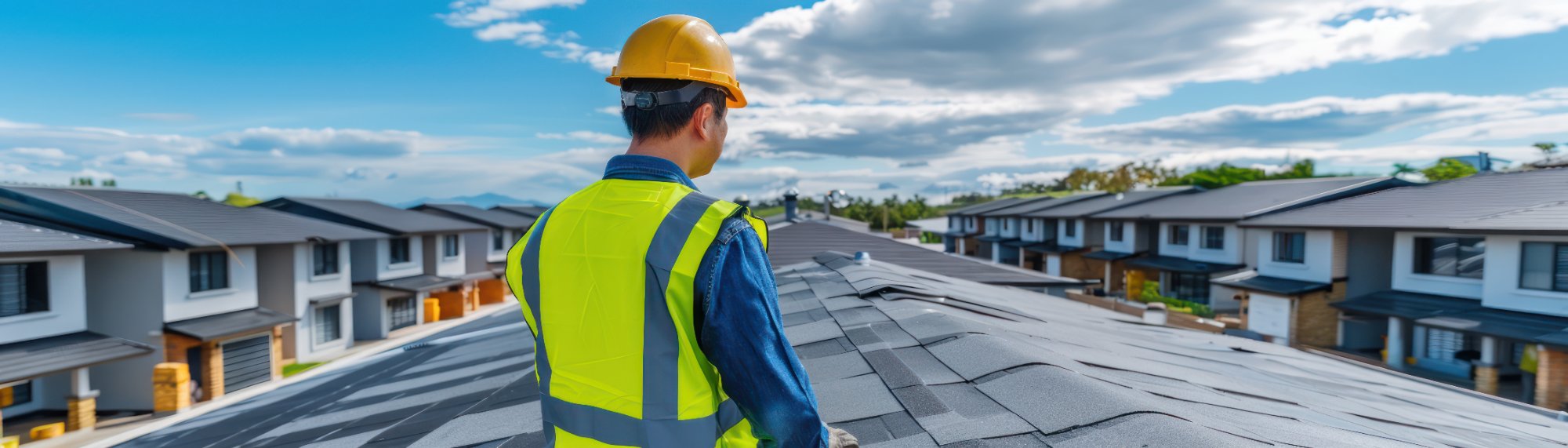
Upper Halliford Roof Surveys provide independent, professional roof inspections across this characterful Surrey village and its surrounding residential streets within the Borough of Spelthorne. Our certified surveyors combine drone aerial photography with thermal imaging to deliver precise assessments of every roof type found in the area — from the handsome period cottages and Georgian-era buildings clustered around the village green conservation area, through the interwar semis and detached homes along Upper Halliford Road and Gaston Bridge Road, to the post-war bungalows and family houses in Birch Grove, the River Ash estate along Felix Lane, and the 1960s developments extending towards Charlton and the A244 bypass.
Fast, independent roof surveys from local experts.
Upper Halliford Roof Surveys exist because this village presents an unusually broad mix of building ages and roofing materials for a settlement of its size. The conservation area around the green contains structures dating to the eighteenth century and earlier — Halliford Manor, Home Farm Cottage, and several listed buildings with handmade clay tile roofs, aged lead work, and historic chimney stacks. Move outward and the housing shifts to Edwardian and interwar properties, followed by substantial post-war development from the 1950s onwards when new building transformed the formerly open land around the village. Each generation of construction brought different roofing methods and materials, and each requires specific inspection knowledge that Upper Halliford Roof Surveys deliver.
Whether you are purchasing a property near the village green, investigating a persistent leak in a bungalow on Birch Grove, documenting storm damage for an insurance claim, or seeking an honest assessment of an ageing roof before committing to an expensive contractor's quote, Upper Halliford Roof Surveys provide the documented evidence you need to act with confidence.
Upper Halliford Roof Surveys were established to give property owners across this part of Spelthorne access to genuinely independent roof assessments. Too many homeowners in the village and its neighbouring streets have been presented with alarming quotes for unnecessary work, or have purchased properties only to discover hidden defects that a competent inspection would have caught beforehand. Our purpose is straightforward: to stand between those two outcomes with honest, evidence-based reporting.
Every inspection begins with a methodical walk around the property perimeter, checking rainwater goods, fascia boards, soffits, and any defects visible at ground level. Our DJI Enterprise drone then ascends to capture high-resolution photographs of every elevation, ridge line, valley, hip, chimney stack, and flashing detail — producing imagery that no ladder or scaffold tower could match, particularly on the taller period properties within the conservation area and the steeply pitched rooflines found along Upper Halliford Road. Where the survey package includes thermal imaging, our FLIR cameras map temperature differentials across the roof surface, exposing moisture trapped beneath tiles and within the timber structure itself.
The village's housing stock spans several centuries. A listed cottage beside the green will carry handmade peg tiles on aged timber battens with lime mortar pointing and lead valley gutters. A 1930s detached on Gaston Bridge Road presents plain clay tiles, cement-mortared ridges, and bay window flashings that degrade after decades of thermal cycling. A 1960s bungalow in Birch Grove uses concrete interlocking tiles with a design life that many have already exceeded. Upper Halliford Roof Surveys understand these distinctions because they define what we inspect every working week.
Independence is fundamental to every report we produce. Upper Halliford Roof Surveys do not carry out repairs, supply materials, or subcontract roofing work. We hold no commercial interest in the outcome of any inspection. When our report confirms a roof is performing well, that conclusion carries genuine authority. When we identify problems, the repair costings reflect current trade rates for labour and materials — not inflated figures designed to create urgency.
Nearby Areas with Similar Properties: The roofing challenges we encounter in Upper Halliford are shared by properties across the Thames-side belt of north Surrey. Homeowners in Shepperton and Sunbury-on-Thames face comparable issues with ageing concrete tiles, flat roof failures, and the damp conditions created by proximity to the river system. See our area-specific guides for information tailored to your location.
Upper Halliford Roof Surveys are not roofers, builders, or contractors. We provide independent inspection and reporting only — ensuring every assessment is free from commercial bias.
Upper Halliford Roof Surveys are ready to inspect your property. Whether it is a period cottage near the village green, a family home on the River Ash estate, or a bungalow in Birch Grove, our team provides the clarity you need.
What Upper Halliford Roof Surveys bring to homeowners, buyers, and landlords across the village
Upper Halliford's roofscape includes everything from low-profile bungalows in Birch Grove cul-de-sacs to tall period cottages within the conservation area where ladder placement risks damaging historic fabric. Our DJI Enterprise drone captures every ridge, valley, hip, flashing, and chimney detail in high-definition — producing imagery that reveals defects invisible from ground level and inaccessible by conventional methods. For heritage buildings near the village green, drone inspection eliminates the need for scaffolding against fragile walls.
The low-lying terrain around Upper Halliford — close to the River Ash and the former gravel workings that created the local ponds and lakes — generates a damp microclimate that takes a particular toll on roofing materials. Our FLIR thermal cameras detect temperature differences caused by moisture trapped beneath tiles, behind flashings, and within roof timbers. This technology is especially critical on the village's bungalows and flat-roofed extensions, where water can travel horizontally beneath membranes without showing any visible sign until significant damage has occurred.
Every Upper Halliford Roof Surveys report arrives as a complete, actionable document — annotated with high-resolution drone photographs, thermal overlays where included, and itemised repair costings reflecting current trade rates. Hand the report to your solicitor during a property transaction, submit it to an insurer as supporting evidence for a claim, or pass it directly to a roofing contractor as a precise brief for the work required. Our reports are designed to be used, not filed.
Upper Halliford Roof Surveys carry full professional indemnity and public liability insurance. Our surveyors hold recognised industry certifications and CAA-approved drone pilot licences. Every inspection follows a standardised methodology refined across thousands of Surrey properties — delivering consistent accuracy whether we are assessing a listed cottage beside the green, a 1950s family home on Gaston Bridge Road, or a modern apartment near Upper Halliford station.
Upper Halliford is compact but architecturally varied. The conservation area around the village green preserves a cluster of pre-1800 buildings — cottages, farmhouses, and the stuccoed Halliford Manor — where handmade clay peg tiles, aged lime mortar, and original lead work demand a delicate, knowledgeable inspection approach. Moving outward along Upper Halliford Road, the housing shifts to Edwardian and interwar semis and detached homes with plain clay tiles, cement ridge mortar, and chimney stacks that have weathered a century of Thames Valley winters. The post-war expansion of the 1950s and 1960s brought bungalows and family houses to Birch Grove, Felix Lane, and the streets towards Charlton — properties now approaching or passing their original roof covering's design life.
Upper Halliford Roof Surveys understand these distinctions intimately. We do not apply a one-size-fits-all inspection template — every assessment is adapted to the specific age, construction method, and roofing materials of the building in front of us. That granular local knowledge separates our reports from generic assessments that note a roof exists without telling you anything useful about its actual condition or remaining service life.
From the listed cottages around the village green to the bungalow estates of Birch Grove, Upper Halliford Roof Surveys know this village's roofscape inside out.
How Upper Halliford Roof Surveys have helped local homeowners and property buyers

A retired couple purchasing a detached bungalow in Birch Grove received a homebuyer report noting the roof was "consistent with a property of this age." No specific defects were mentioned. Given the property's price of over four hundred thousand pounds, they asked Upper Halliford Roof Surveys to provide a more detailed evaluation before exchanging contracts.
Our drone inspection of the pitched roof revealed eleven cracked concrete tiles and widespread ridge mortar erosion on both hips. The flat-roofed rear extension, however, told a more serious story. Thermal imaging showed a large area of trapped moisture beneath the felt covering. Internal access confirmed that water had been pooling for some time, causing soft rot in two structural joists and the chipboard decking above the kitchen.
Upper Halliford Roof Surveys estimated the combined remediation — re-ridging, tile replacement, complete flat roof renewal, and joist repairs — at approximately eight thousand two hundred pounds. The buyers presented our report to the vendor's solicitor and secured a price reduction matching the full repair estimate. The flat roof was replaced with a modern GRP system within six weeks of completion.

The owners of a Georgian cottage within the conservation area near the village green noticed a persistent musty smell in the first-floor bedroom and minor staining on the ceiling. A local roofer climbed a ladder, glanced at the visible roof slopes, and declared the tiles in good order. Unconvinced, they contacted Upper Halliford Roof Surveys for a proper assessment.
Our drone flew over a concealed valley gutter between the main roof and a rear wing — completely invisible from the ground and unreachable from the roofer's ladder position. The lead lining had cracked along a two-metre length, and thermal imaging confirmed an active moisture path tracking from the valley into the bedroom ceiling timbers. We also documented moss accumulation blocking the valley's water flow, compounding the leak.
The lead valley was replaced by a heritage-approved contractor using our specification. Total cost came to approximately three thousand eight hundred pounds — a fraction of what the timber damage would have required had the leak continued through another winter season. The Upper Halliford Roof Surveys report also informed the owners' application for minor listed building consent for the repair work.

After severe winds in early 2025, a homeowner on Upper Halliford Road found water entering the front bedroom through the ceiling. Their insurer sent a loss adjuster who concluded the leak was caused by long-term wear rather than the storm event, and the claim was declined. The homeowner disputed the finding and instructed Upper Halliford Roof Surveys to conduct an independent assessment.
Drone photography documented four freshly displaced clay tiles on the south-west facing slope — the elevation directly exposed to the recorded storm wind direction. The fracture edges were clean with no weathering, ruling out gradual deterioration. Our thermal scan traced a concentrated moisture path from the displaced tile area directly to the bedroom ceiling below. Surrounding tiles showed no pre-existing looseness or nail fatigue.
The Upper Halliford Roof Surveys report — complete with timestamped photography, thermal evidence, and a clear narrative linking the damage to the specific storm event — was submitted as a formal dispute. The insurer reversed their decision within four weeks and approved the full repair cost of three thousand six hundred pounds. Our documentation provided precisely the evidence threshold the claims department required.

A landlord with a 1950s detached property on the River Ash estate received a quote of nineteen thousand pounds for a complete strip and re-tile from a roofing contractor who visited for twenty minutes. Before authorising the expenditure, the landlord asked Upper Halliford Roof Surveys for a second opinion backed by proper evidence.
Our comprehensive drone and thermal survey confirmed that the rear slope was in poor condition — widespread tile delamination, failed ridge mortar, and a cracked verge pointing that was admitting rain. The front slope and both side elevations, however, were structurally sound. Tiles were secure, flashings intact, and thermal imaging showed no concealed moisture. The contractor's blanket recommendation for a full strip was not supported by the actual roof condition.
Upper Halliford Roof Surveys specified a rear slope re-tile and ridge repointing at an estimated cost of eight thousand five hundred pounds — less than half the original quote. The landlord proceeded with the targeted repair and the remaining three elevations continue to perform well. Our report included a prioritised maintenance schedule to extend the front slope's remaining service life by at least ten years.
Need a professional roof survey for your Upper Halliford property? Get in touch with Upper Halliford Roof Surveys today for a free consultation.
Feedback from homeowners and buyers who have used Upper Halliford Roof Surveys
"Purchasing a bungalow in Birch Grove, we wanted more detail than the mortgage valuation could provide. Upper Halliford Roof Surveys identified cracked tiles across both slopes and a flat roof extension concealing trapped water and rotting joists. Their costing gave our solicitor the evidence to renegotiate — saving us over eight thousand pounds. Cannot recommend this service highly enough."
"Two years of worsening damp in the bedroom and two tradesmen with opposing explanations. Upper Halliford Roof Surveys pinpointed a failed lead flashing junction using thermal imaging — something neither roofer had even considered. The repair took a fortnight and the problem has completely disappeared. Money well spent."
"Our period cottage near the village green needed a thorough roof assessment ahead of renovation planning. Upper Halliford Roof Surveys delivered a report so detailed that the conservation officer accepted it without requesting further information. Their understanding of heritage buildings and handmade tile roofing is clearly first-rate."
Common situations where Upper Halliford Roof Surveys make a measurable difference
The concrete interlocking tiles fitted to many of Upper Halliford's post-war bungalows and family houses are now well past the fifty-year mark. Delamination, hairline cracks, and nibs that have weakened with age allow tiles to shift during high winds. Our drone reveals the full extent of displacement across every slope — including rear elevations that are impossible to assess from the ground.
Interior damp is frustratingly common in Upper Halliford's housing stock. Water entering through a failed flashing or cracked tile can travel along rafters and battens before emerging far from the point of entry. Our thermal imaging traces the moisture path back to its origin, eliminating guesswork and preventing the cycle of misdiagnosed repairs that many homeowners have experienced.
Standard homebuyer reports and mortgage valuations rarely examine roofs in meaningful detail. In a village where property prices range from compact flats to substantial detached homes at well over a million pounds, an undisclosed roof defect can represent tens of thousands in unexpected costs. Upper Halliford Roof Surveys deliver the evidence your solicitor needs to negotiate or to proceed with confidence.
Upper Halliford's low-lying position beside the River Ash offers minimal natural shelter from wind-driven rain. After storm events, our drone inspection documents the damage with timestamped photography and thermal evidence — providing the level of documented proof that insurers require to approve claims. Verbal descriptions from a roofer's ladder rarely satisfy a loss adjuster.
Rear extensions on properties throughout Upper Halliford commonly feature flat felt or bitumen roofs installed during the 1970s and 1980s that have long exceeded their expected lifespan. Ponding, blistering, and membrane splits create slow leaks that cause significant hidden damage over time. Our thermal cameras detect moisture beneath the membrane before it progresses to structural timber decay.
The conservation area around Upper Halliford's village green contains buildings with roofing histories spanning centuries. Handmade peg tiles, lime mortar bedding, and aged lead work require specialist knowledge to assess accurately. Upper Halliford Roof Surveys provide heritage-sensitive reporting that satisfies conservation officers and supports listed building consent applications.
Issues Upper Halliford Roof Surveys encounter most frequently across the village
The 1950s and 1960s housing stock across Birch Grove, Felix Lane, and the streets towards Charlton was roofed with concrete interlocking tiles that are now approaching or exceeding their sixty-year design life. Surface erosion exposes the aggregate, tiles become porous, and nibs weaken — leaving the entire covering vulnerable to wind lift and water absorption. We document the extent of deterioration and provide a clear assessment of remaining service life.
Lead flashings around chimney stacks, abutments, and where roof slopes meet walls are a persistent weak point on Upper Halliford's older properties. Decades of thermal expansion and contraction cause the lead to fatigue, crack, and lift from the mortar bed. Once the seal is broken, rain tracks directly into the roof structure. Our drone photography captures every flashing detail, and thermal imaging confirms whether moisture has already entered the building.
Flat-roofed rear extensions are found on properties of almost every era throughout Upper Halliford — from 1930s kitchen extensions to 1980s conservatory bases. Many use original felt or bitumen coverings well past their serviceable life. Water pools in low spots, blisters form as trapped moisture expands in warm weather, and eventually the membrane splits. Thermal imaging reveals the full extent of trapped water beneath the surface before it causes structural damage.
The cement mortar bedding that secures ridge and hip tiles degrades over time through freeze-thaw cycling, thermal movement, and wind exposure. Once it cracks and loosens, ridge tiles rock, admit rain, and eventually dislodge completely during storms. This is one of the most common defects we record on Upper Halliford's post-war housing and is frequently overlooked during basic visual inspections from ground level.
The damp microclimate created by the River Ash and surrounding water features encourages heavy moss growth on north-facing roof slopes throughout the village. Moss traps moisture against the tile surface, accelerates erosion of both concrete and clay tiles, and blocks valley gutters and drainage channels. On bungalows — where the lower roof pitch provides ideal moss habitat — the problem is particularly pronounced and often conceals cracked or displaced tiles beneath a thick green blanket.
The period properties within the conservation area carry handmade clay peg tiles — many original to the building. These tiles rely on oak pegs or nibs hooked over battens, and as both the tiles and the battens age, the fixings weaken. Individual tiles slip, crack, or laminate, and replacement is complicated by the need to source matching handmade tiles that satisfy conservation requirements. Our survey identifies every compromised tile and provides a heritage-appropriate repair specification.
Common questions answered by Upper Halliford Roof Surveys
Upper Halliford Roof Surveys cover the entire village and the surrounding residential areas within the Borough of Spelthorne. Our regular inspection areas include the conservation area around the village green, Upper Halliford Road from the Gaston Bridge to the A244 bypass, Birch Grove and its cul-de-sacs, Felix Lane and the River Ash estate, the streets towards Charlton, and the residential areas south towards Shepperton and Lower Halliford. We also attend properties on the western side of the A244.
Most inspections of an Upper Halliford property take between one and two hours on site. The period cottages within the conservation area tend toward the longer end of that range because their complex roof geometry, multiple chimney stacks, and aged materials require careful, detailed assessment. Standard post-war bungalows and family homes are typically inspected more quickly. Every client receives their written report within forty-eight hours of the site visit.
Heritage and period properties are among the most rewarding inspections in our Upper Halliford schedule. The conservation area contains buildings predating 1800, including structures with handmade peg tile roofs, original lead work, and historic timber framing. Our drone technology eliminates the need for ladders or scaffolding against fragile walls, and our reporting is written with conservation requirements in mind — providing the level of detail that conservation officers expect when reviewing listed building consent applications.
Upper Halliford's proximity to the River Ash and the low-lying terrain of the former gravel workings produces a damp environment that accelerates roofing material deterioration. The issues we encounter most frequently include concrete tile fatigue on post-war bungalows and family houses, failed ridge mortar across interwar and post-war properties, lead flashing breakdown on older homes, flat roof membrane failure on rear extensions, heavy moss growth on north-facing slopes — particularly on bungalow roofs — and slipped handmade tiles on the period cottages within the conservation area.
Every comprehensive and premium report from Upper Halliford Roof Surveys includes timestamped drone photography, thermal scan evidence where the package includes it, detailed damage narratives, and itemised repair costings at current market rates. Insurance providers need documented evidence to process claims, and our reports are structured to meet those standards. We have supported successful claims for Upper Halliford properties following storm damage, wind-driven rain events, and long-term water ingress disputes.
Bungalows represent a substantial share of Upper Halliford's housing, especially in Birch Grove and the streets between the village and Charlton. We inspect both the pitched roof sections and any flat-roofed extensions, which are common across the village. Our assessment covers all flat roof systems including felt, GRP, EPDM, and single-ply membranes. Thermal imaging is particularly valuable on flat roofs because water can sit beneath a membrane without any visible sign until it has caused significant damage to the structure below.
Have another question? Contact Upper Halliford Roof Surveys directly.
Upper Halliford Roof Surveys provide professional roof inspections across the village and wider Spelthorne borough
The historic heart of Upper Halliford centres on the village green, surrounded by buildings dating from the eighteenth century and earlier. Halliford Manor, Home Farm Cottage, Frith Cottage, and The Goat pub anchor a conservation area recognised since 1993 for its concentration of pre-1900 structures and historic road pattern. Handmade clay tiles, aged lead work, and period chimney stacks characterise the roofscape.
The cul-de-sacs and residential streets west of Upper Halliford Road contain a mix of post-war detached bungalows and family houses built from the 1950s through the 1970s. Concrete interlocking tiles, flat-roofed extensions, and original ridge mortar are typical features now approaching the end of their expected service life.
The residential area along Felix Lane and the River Ash estate offers a mix of detached family homes, some on generous plots backing onto the river and green spaces. Properties here range from 1950s builds to modern developments, with a variety of roof types including pitched tile, flat membrane, and some slate coverings.
The streets around Upper Halliford station and the northern stretch of Upper Halliford Road feature a varied housing mix — from interwar semi-detached homes to more recent apartment developments. Properties benefit from direct rail links to London Waterloo via the Shepperton branch line.
Upper Halliford Roof Surveys operate across the wider Borough of Spelthorne and into neighbouring districts. We regularly attend properties in the surrounding towns and villages that share similar housing stock and roofing challenges.
Upper Halliford Roof Surveys deliver the independent, evidence-based roof inspections that this diverse village deserves. Whether you are a buyer examining a period cottage near the village green, a homeowner dealing with persistent damp in a post-war bungalow on Birch Grove, a landlord questioning a contractor's expensive quote on a Felix Lane rental, or simply seeking clarity on an ageing roof before winter, our surveys provide the answers you need to make sound decisions.
Every inspection pairs certified expertise with advanced technology — drone aerial photography, thermal imaging, and comprehensive written reporting — to deliver a complete, unbiased picture of your roof's condition. We do not carry out repairs. We do not recommend contractors. We provide the evidence, the photographs, and the costings, and you decide what happens next.
Every report from Upper Halliford Roof Surveys is independent, detailed, and designed to be acted upon — whether you are buying, selling, claiming, or protecting your property.
Call us today or complete the form below to arrange your Upper Halliford roof survey.
Contact Upper Halliford Roof Surveys today to arrange your roof inspection
Monday - Friday: 7:30 AM - 9:30 PM
Saturday: 7:30 AM - 7:00 PM
Sunday: 9:00 AM - 5:00 PM
For urgent roof inspection needs in Upper Halliford, please call Upper Halliford Roof Surveys directly.
Call Now