
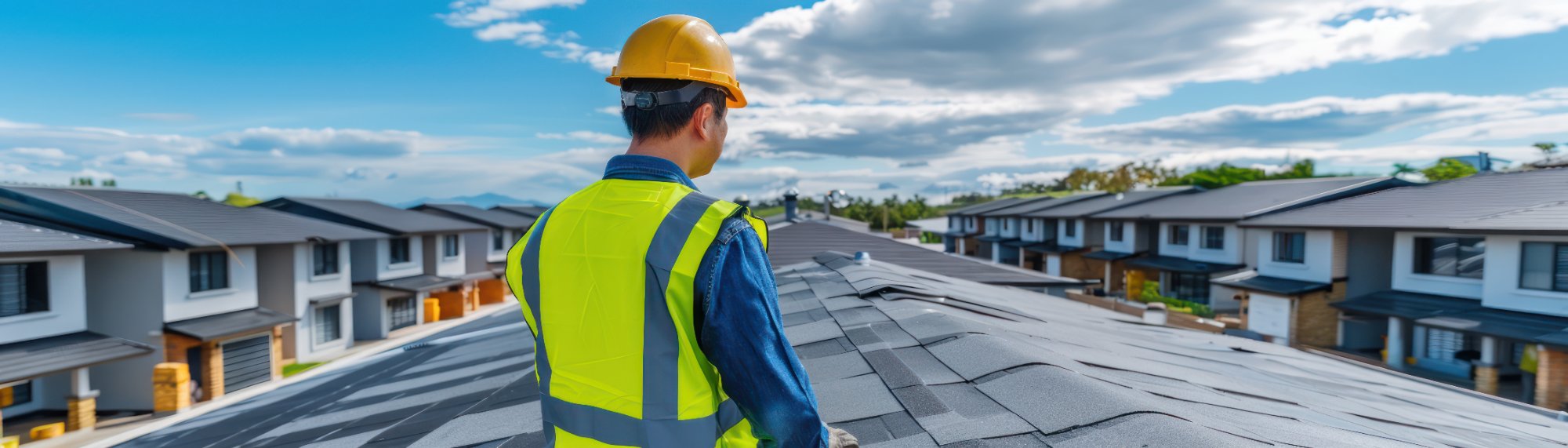
Waltham Forest Roof Surveys deliver professional, independent roof inspections across one of East London's most architecturally varied boroughs. Our certified surveyors combine drone aerial photography with thermal imaging to assess every roof type found between the Lea Valley and Epping Forest — from the tightly packed Victorian terraces lining the streets of central Walthamstow, Leyton, and Leytonstone, through the characterful Warner Estate properties with their distinctive yellow brick and slate rooflines, to the substantial inter-war detached and semi-detached homes of Chingford and Highams Park, and the growing number of new-build developments emerging around Blackhorse Lane and Walthamstow Central.
Fast, independent roof surveys from local experts.
The borough of Waltham Forest was formed in 1965 from the merger of Leyton, Walthamstow, and Chingford — three former Essex towns whose housing stock tells the story of London's eastward expansion. The dense terraces built during the 1880s to 1910s railway boom carry Welsh slate roofs now well past their century mark. The Warner Estate properties dotted across Walthamstow and Highams Park present their own distinctive construction. Further north, the 1920s and 1930s suburban growth of Chingford brought clay tile roofing on steeper pitches with deeper valleys and more complex ridge lines. Waltham Forest Roof Surveys understand every generation of this housing, and we tailor our inspections accordingly.
Whether you are purchasing a Victorian terrace in Walthamstow Village, investigating a persistent leak in a Leyton end-of-terrace, documenting storm damage on an exposed Chingford roofline, or seeking clarity on an ageing roof before committing to expensive repairs, Waltham Forest Roof Surveys provide the hard evidence you need to make confident decisions.
Waltham Forest Roof Surveys were established on a straightforward principle: property owners across this borough deserve access to honest, independent roof assessments before committing to expensive repair work or completing a purchase. Too many homeowners in Walthamstow, Leyton, and Chingford have been steered toward unnecessary full re-roofs by contractors whose income depends on the work they recommend. Our role is to provide the unbiased facts that allow you to make your own informed decisions.
Every inspection follows a structured methodology developed across thousands of East London properties. We begin with a ground-level perimeter walk, checking rainwater goods, fascias, soffits, and any visible defects from street level. Our DJI Enterprise drone then captures high-resolution images of every elevation, ridge, valley, hip, and chimney stack — essential in a borough where rear access to Victorian terraces is often restricted by narrow yards, shared passageways, and single-storey rear additions. Where thermal imaging is part of the survey package, our FLIR cameras identify moisture concealed beneath tiles and within the roof structure that visual inspection alone would miss entirely.
The housing across Waltham Forest varies dramatically over short distances. A Warner Estate terrace built in 1900 has a fundamentally different roof construction from a 1930s Chingford semi, and both differ again from the post-war council housing in parts of Leyton or the recent apartment blocks near Blackhorse Lane. Waltham Forest Roof Surveys work comfortably across every building era because the borough requires that range of expertise.
Independence is central to what we do. Waltham Forest Roof Surveys do not carry out roof repairs and have no commercial interest in the outcome of any inspection. When our report confirms a roof is in good condition, that finding is trustworthy. When we identify a defect, the repair costings we provide reflect genuine current market rates — not figures designed to create urgency or steer you toward a particular contractor.
Nearby Areas with Similar Properties: The Victorian and Edwardian terraces we inspect across Waltham Forest share construction methods and roofing materials with neighbouring boroughs. Homeowners in Hackney and Haringey face comparable challenges with ageing slate, lead flashing degradation, and party wall coping failures. See our area-specific guides for detailed information about your location.
Waltham Forest Roof Surveys are not roofers, builders, or contractors. We provide independent inspection and reporting only — ensuring every assessment is free from commercial bias.
Waltham Forest Roof Surveys are ready to inspect your property. Whether it is a Victorian terrace in Walthamstow, a Warner Estate home in Highams Park, or a 1930s detached in Chingford, our team delivers the answers you need.
What Waltham Forest Roof Surveys bring to homeowners, buyers, and landlords across the borough
Waltham Forest's Victorian terrace streets present a particular access challenge — rear yards are narrow, shared passageways restrict ladder placement, and single-storey rear extensions obscure the main roof from ground level. Our DJI Enterprise drone flies above every obstacle, capturing high-definition imagery of ridges, valleys, hips, flashings, and chimney stacks from angles that conventional inspection methods cannot reach. For the larger detached homes in Chingford and Highams Park, the drone maps complex multi-pitch rooflines in a fraction of the time scaffolding would require.
Concealed moisture is a persistent threat across Waltham Forest's older housing stock. Welsh slate roofs on Victorian terraces and clay tile coverings on inter-war semis can harbour leaks for months before visible staining appears on internal ceilings. Our FLIR thermal cameras detect the temperature differentials caused by moisture ingress beneath tiles, behind flashings, and within the roof structure — identifying problems that visual inspection simply cannot see. Party wall junctions on terraced properties are a particular focus, as water tracking along shared copings can affect multiple homes.
Every Waltham Forest Roof Surveys report is a comprehensive document annotated with high-resolution drone photographs, thermal overlays where applicable, and clear itemised repair costings at current market rates. The report is designed to be shared directly with your solicitor during a property transaction, submitted to your insurer as evidence for a claim, or handed to a roofing contractor as a precise specification for the work required. Each report stands as an independent, verifiable record of your roof's condition on the day of inspection.
Waltham Forest Roof Surveys hold full professional indemnity and public liability insurance. Our surveyors carry recognised certifications and CAA-approved drone pilot licences. Every inspection follows a standardised methodology refined across thousands of London properties, ensuring consistency and accuracy whether we are assessing a Warner Estate terrace in central Walthamstow or a substantial Edwardian villa overlooking Epping Forest in Highams Park.
Waltham Forest is three former towns merged into one borough, and each brought a different era of housing. Central Walthamstow and Leyton are defined by their dense Victorian and Edwardian terraces — built rapidly during the 1880s to 1910s as the railway made commuting to the City viable. These streets carry Welsh slate roofs, lead chimney flashings, brick party wall copings, and rear additions accumulated over a century of ownership. The Warner Estate properties, recognisable by their yellow brick with red detailing and slate roofs, form a distinctive sub-group across Walthamstow and Highams Park.
North of the borough, Chingford developed later as a suburban retreat. The 1920s and 1930s housing here uses clay tiles on steeper pitches with hipped roofs, deeper valleys, and ridge arrangements that accumulate debris more readily than the simpler gable-end terraces further south. The larger plots and mature tree canopy in Highams Park and Snaresbrook add another layer of risk — overhanging branches cause moss growth, blocked gutters, and physical damage during storms.
Waltham Forest Roof Surveys have built our reputation on understanding these distinctions and adjusting our inspection approach to match the specific construction in front of us. A one-size-fits-all checklist does not serve this borough — and we have never worked that way.
From the Warner Estate slate roofs of Walthamstow to the clay tile hips of Chingford, Waltham Forest Roof Surveys know this borough's roofscape from end to end.
How Waltham Forest Roof Surveys have helped local homeowners and property buyers
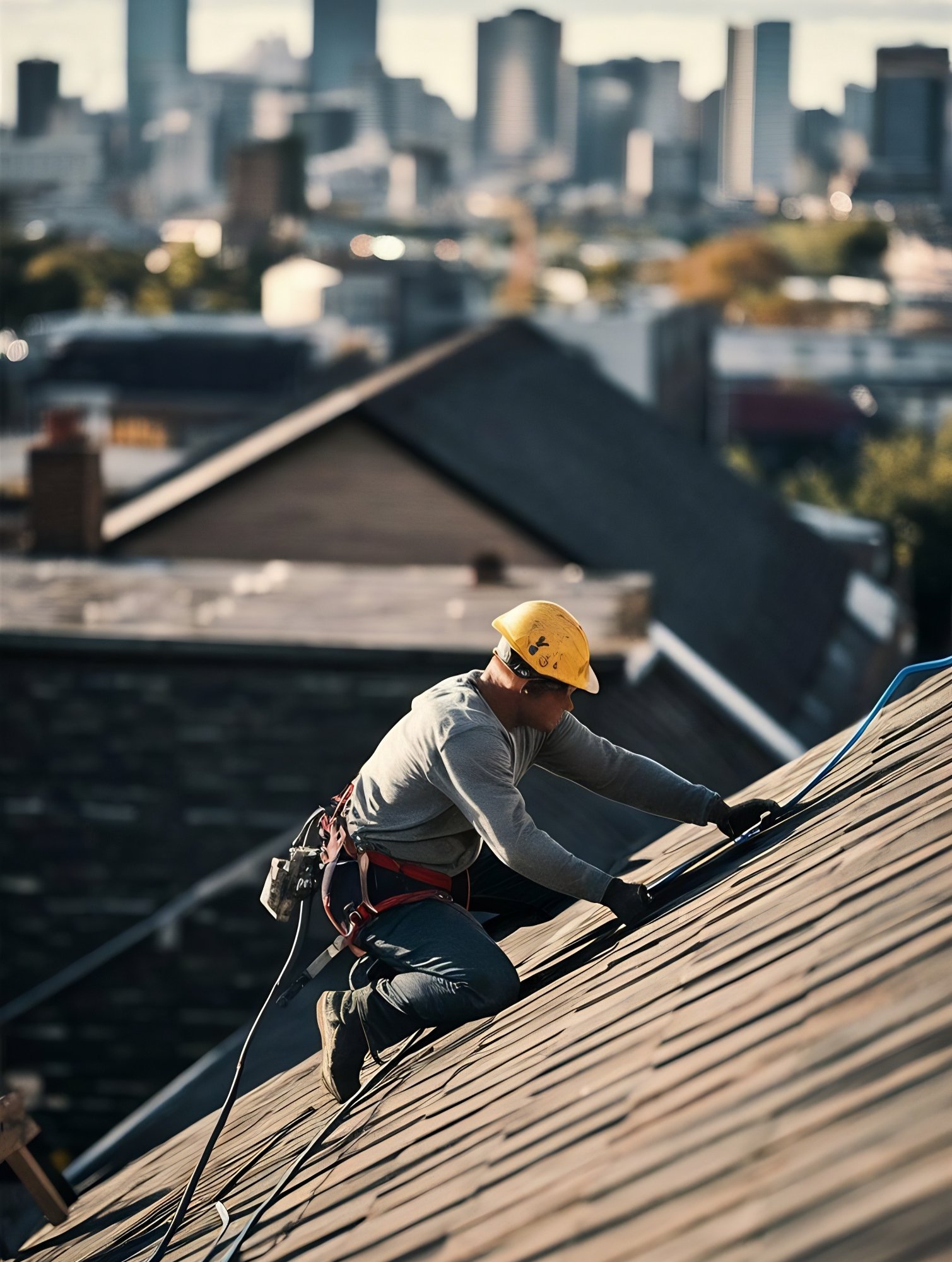
A couple purchasing a three-bedroom Victorian terrace near Orford Road received a homebuyer report describing the roof as "generally satisfactory." Damp staining on the first-floor landing ceiling was noted but attributed to condensation. With properties in this part of Walthamstow regularly exceeding seven hundred thousand pounds, the buyers wanted independent confirmation before exchanging contracts.
Our drone inspection revealed a cracked and displaced party wall coping on the right-hand boundary — completely invisible from street level or from the rear garden. Thermal imaging confirmed a moisture trail running from the coping down through the internal wall, explaining the damp staining the homebuyer surveyor had dismissed. We also identified six slipped Welsh slates on the rear slope and degraded lead soakers where the roof met the party wall on the opposite side.
Waltham Forest Roof Surveys costed the coping repair, slate replacement, and lead soaker renewal at approximately five thousand eight hundred pounds. The buyer's solicitor presented our report and the vendor agreed to reduce the price accordingly. The repairs were completed within four weeks of completion, and the damp staining has not returned since.
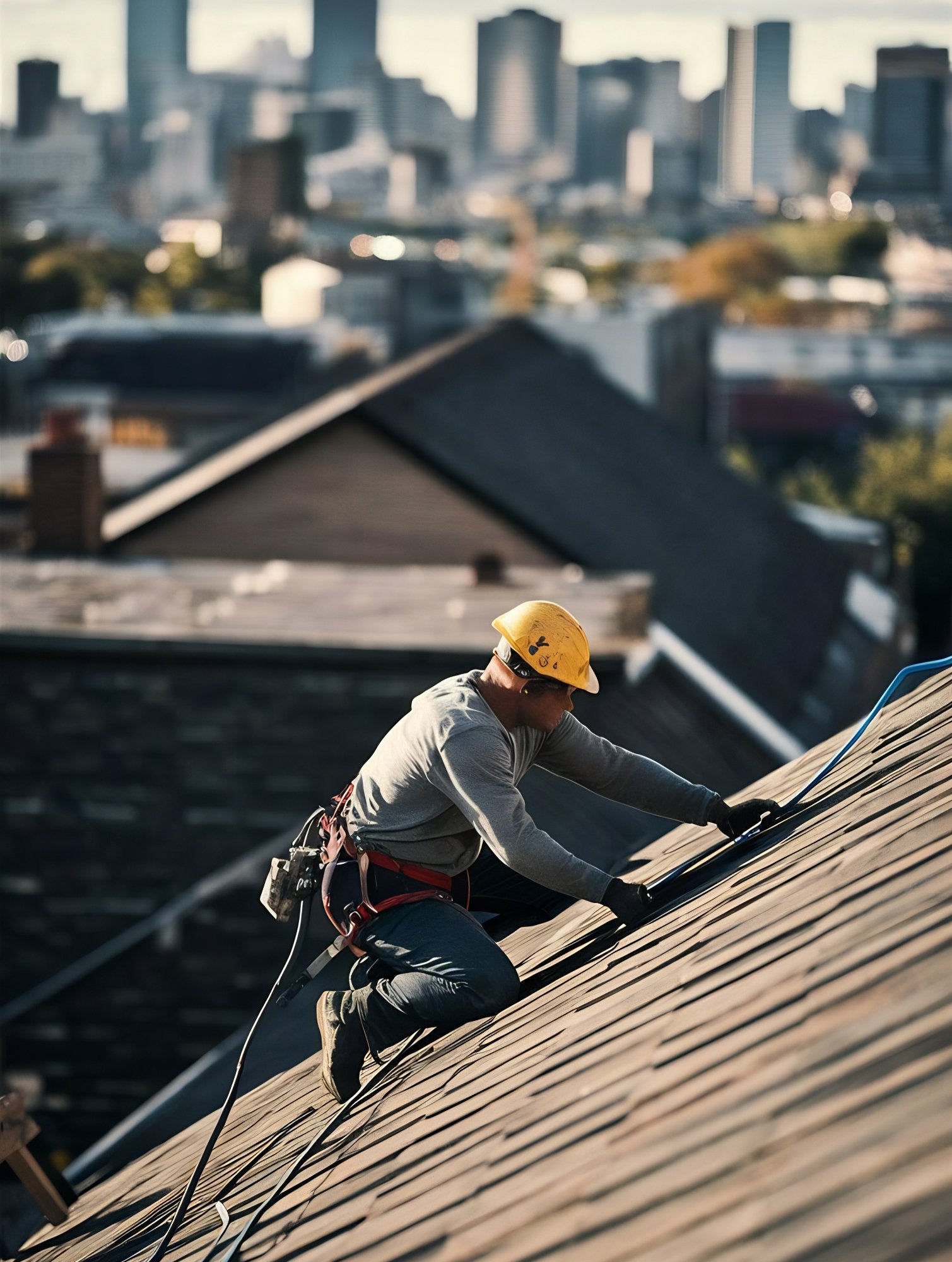
A homeowner in South Chingford received a quote for eighteen thousand pounds to strip and re-tile the entire roof of their 1930s semi-detached after a local roofer spent twenty minutes on a ladder and declared the roof "at end of life." Rather than accept the verdict at face value, the homeowner contacted Waltham Forest Roof Surveys for a second opinion.
Our comprehensive survey — including drone photography of all four elevations and an internal loft inspection — confirmed that the front slope and both hipped sections retained sound clay tiles with secure fixings and intact battens beneath. The rear slope, however, showed significant ridge mortar erosion, twelve cracked tiles allowing rainwater to saturate the felt underlay, and two areas where the hip irons had corroded through. Only the rear elevation and ridge line required intervention.
Waltham Forest Roof Surveys estimated the rear slope re-tile, ridge repointing, and hip iron replacement at approximately eight thousand five hundred pounds — less than half the original quote. The homeowner proceeded with the targeted repair and has a maintenance schedule from our report covering the remaining elevations for the next decade.
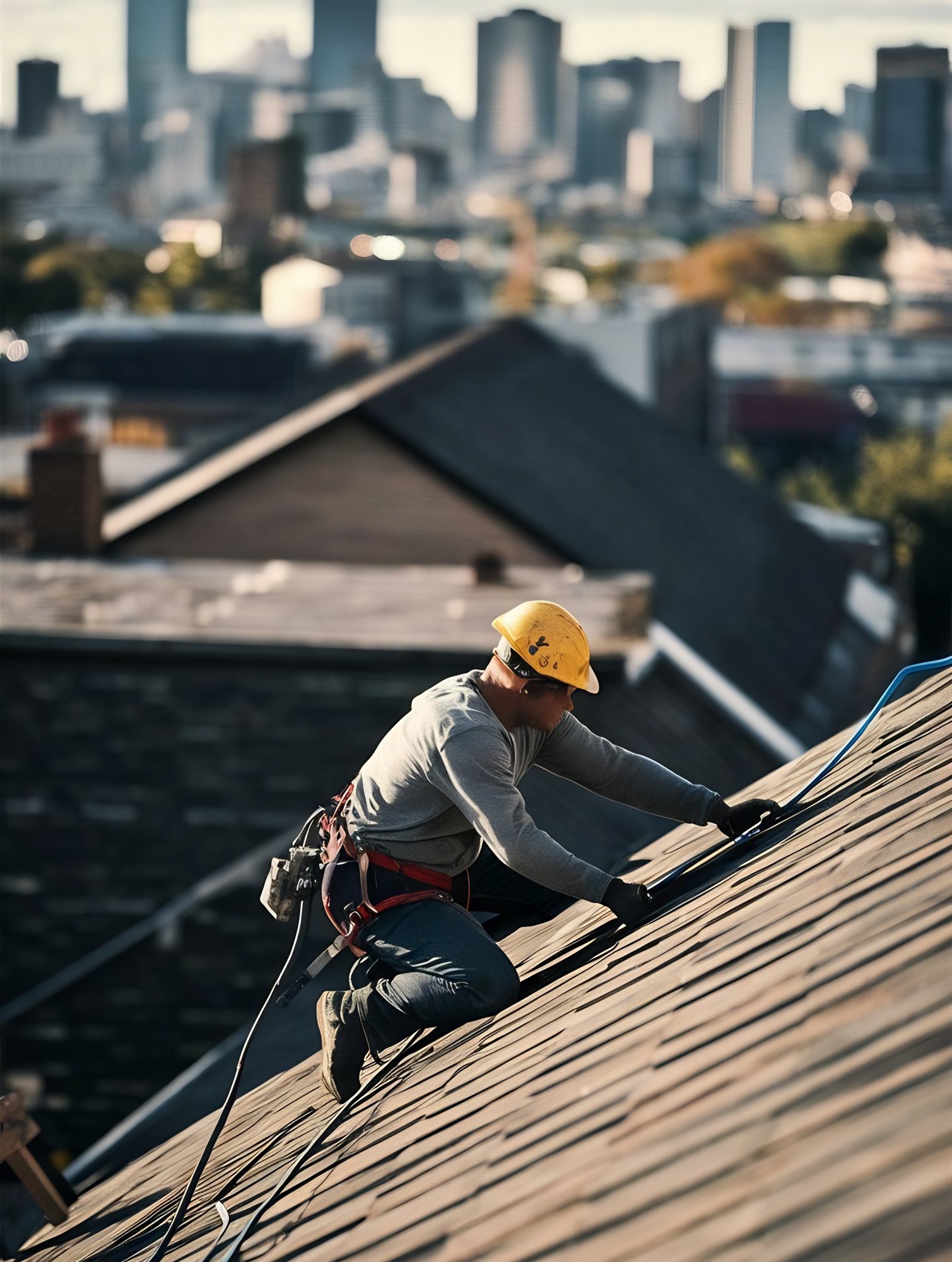
After heavy storms in early 2025, an owner of an Edwardian end-of-terrace near Francis Road discovered water streaming into the rear bedroom. Their insurer's loss adjuster attributed the leak to long-term wear rather than storm damage and rejected the claim. The homeowner disputed the finding and asked Waltham Forest Roof Surveys to provide independent evidence.
Our drone documented seven freshly displaced slates on the south-west facing slope — consistent with the recorded wind direction during the storm. Clean fracture lines on two slates showed no weathering on the exposed edges, confirming recent displacement rather than gradual deterioration. Thermal imaging traced a concentrated moisture path from the displaced area directly through to the bedroom ceiling below, establishing a clear causal link between the storm and the internal damage.
Our timestamped drone photography and thermal evidence was submitted as a formal dispute. The insurer reassessed and approved the claim in full within three weeks, covering repair costs of three thousand six hundred pounds. The Waltham Forest Roof Surveys report provided exactly the documented, dated evidence the insurer required to reverse their original decision.
Need a professional roof survey for your Waltham Forest property? Get in touch with Waltham Forest Roof Surveys today for a free consultation.
Feedback from homeowners and buyers who have used Waltham Forest Roof Surveys
"Purchasing a Victorian terrace near Walthamstow Village, we knew the standard survey wouldn't cover the roof properly. Waltham Forest Roof Surveys found cracked lead flashings on both chimney stacks and slipped slates across the rear slope that our surveyor hadn't flagged at all. Their repair costings gave our solicitor the evidence to renegotiate — saved us over six thousand pounds. Could not have been more thorough."
"A roofing contractor quoted eighteen thousand for a complete strip and re-tile on my Chingford semi. Waltham Forest Roof Surveys demonstrated that only the rear slope needed work — the front and hips were sound for years to come. Saved me close to ten thousand and I have a clear plan for the rest of the roof going forward. Genuinely independent and thorough."
"Damp on the landing ceiling of our Leyton end-of-terrace had been getting worse for months. Two tradesmen gave different explanations. Waltham Forest Roof Surveys traced it with thermal imaging to a failed party wall coping that was invisible from the street. The repair cost under two thousand and the damp has not come back. Exceptional diagnostic work."
Common situations where Waltham Forest Roof Surveys provide essential clarity
Waltham Forest's property market moves quickly, with Victorian terraces in Walthamstow and Leyton attracting intense competition. Standard homebuyer surveys rarely examine the roof in sufficient detail to uncover hidden defects. A dedicated roof survey from Waltham Forest Roof Surveys gives you the evidence to negotiate confidently — or to walk away before committing to a property with concealed problems that could cost thousands to resolve.
East London's relatively flat topography offers little shelter from prevailing south-westerly winds, and Waltham Forest's ageing rooflines are vulnerable to storm displacement. When slates shift, tiles crack, or ridge mortar dislodges, insurers require detailed photographic evidence before approving claims. Waltham Forest Roof Surveys provide timestamped drone imagery and damage narratives that satisfy insurance documentation requirements and support successful claims.
If a roofing contractor has quoted for significant repairs or a full re-roof, an independent assessment from Waltham Forest Roof Surveys confirms whether the proposed scope of work is justified. Our report provides an unbiased second opinion with itemised costings, allowing you to compare the contractor's proposal against our independent findings and avoid paying for work your roof does not need.
Water ingress in terraced properties can be particularly difficult to trace because moisture travels along shared party walls, beneath tiles, and through multiple layers of construction before it appears as a visible stain. Waltham Forest Roof Surveys combine thermal imaging with drone photography to track the source of a leak with precision — even when it originates on a roof slope facing away from the room where the damage is visible.
Common questions answered by Waltham Forest Roof Surveys
Waltham Forest Roof Surveys cover the entire borough and its borders. Our regular inspection areas include central Walthamstow around the High Street, Walthamstow Village, and the Warner Estate streets, Leyton and Leytonstone including the Francis Road area and Harrow Green, Chingford North and South, Highams Park and Hale End, Snaresbrook on the Epping Forest edge, Upper Walthamstow, the Wood Street area, and the regeneration zones around Blackhorse Lane. We also attend properties in the adjacent streets of neighbouring boroughs where Waltham Forest meets Redbridge, Haringey, and Hackney.
A typical Victorian or Edwardian terrace in Walthamstow or Leyton takes between one and two hours on site — the simpler gable-end roof forms and smaller footprints allow efficient inspection. The larger detached and semi-detached properties found across Chingford and Highams Park, with their hipped roofs, deeper valleys, and multiple chimney stacks, generally require closer to two and a half hours for a thorough assessment. Every client receives their completed written report within forty-eight hours of the site visit.
Victorian and Edwardian terraces make up the largest share of our Waltham Forest workload. The borough's dense terrace streets — built between the 1880s and 1910s as the railway enabled commuting from Essex into the City — present Welsh slate roofs, lead chimney flashings, shared party wall copings, and rear additions of varying quality accumulated over more than a century. Our drone technology is particularly valuable on these properties, where restricted rear access through narrow yards and shared passageways makes conventional ladder-based inspection impractical or impossible.
All comprehensive and premium reports from Waltham Forest Roof Surveys include timestamped drone photography, thermal scan overlays where applicable, detailed damage narratives, and itemised repair costings at current market rates. Insurance providers require documented evidence rather than verbal descriptions when assessing claims, and our reports are formatted specifically to satisfy those requirements. We have supported numerous successful claims for Waltham Forest properties, including several where the insurer's initial decision was reversed following submission of our evidence.
The most frequent issues we encounter vary by era of housing. On the Victorian and Edwardian terraces of Walthamstow, Leyton, and Leytonstone, slipped Welsh slates, perished lead flashings around chimney stacks, and failed pointing on party wall copings are the dominant concerns — the last of these is particularly common because water can track from a deteriorated coping into both adjoining properties simultaneously. In Chingford and Highams Park, the inter-war clay tile roofs present cracked tiles on exposed elevations, widespread ridge mortar erosion, and corroded hip irons. Flat roof failures on single-storey rear extensions are endemic across the entire borough regardless of property age.
Commercial inspections are a regular part of our Waltham Forest schedule. We survey the retail units along Walthamstow High Street and adjacent to Europe's longest daily street market, converted commercial buildings along Lea Bridge Road and in Leytonstone, the mixed-use premises in the Blackhorse Lane regeneration area, school buildings, community centres, and the creative workspace conversions that have become a feature of the borough's evolving commercial landscape. All flat roof systems are within our scope, including felt, GRP, EPDM, and single-ply membrane installations.
Have another question? Contact Waltham Forest Roof Surveys directly.
Understanding the roofing challenges specific to this East London borough
Waltham Forest sits on London's north-eastern edge, bordered by the River Lea to the west and Epping Forest to the east — a borough where Victorian railway housing meets suburban inter-war development within the space of a few miles. The three former Essex towns that merged to form the borough in 1965 each contributed a distinct layer of housing, and each presents specific roofing challenges that Waltham Forest Roof Surveys encounter daily.
Walthamstow and Leyton grew rapidly from the 1880s onward as the Great Eastern Railway made commuting affordable for working families. The terrace streets built during this expansion — including the distinctive Warner Estate properties with their yellow brick elevations and slate roofs — now form the core of the borough's housing stock. These roofs are between 110 and 140 years old, and many are entering a critical phase where original materials have reached or exceeded their expected service life. The gentrification of areas like Walthamstow Village has pushed property values past seven hundred thousand pounds for a standard three-bedroom terrace, making a professional roof assessment before purchase an essential investment rather than an optional expense.
Chingford and Highams Park developed later, attracting families seeking suburban space during the 1920s and 1930s. The housing here is larger — semi-detached and detached properties on generous plots — with clay tile roofs, hipped ends, deeper valleys, and multiple chimney stacks. These roofs are now approaching or past their ninety-year mark, and the clay tiles common to this era are showing fatigue, cracking, and delamination on exposed elevations. The mature tree canopy that makes these streets attractive also deposits leaf litter into gutters, valleys, and behind chimney stacks, creating blockages that cause water to back up under tiles.
From 1880s railway terraces to 1930s suburban semis, Waltham Forest's housing spans a century of construction — each era demanding specific inspection knowledge.
Waltham Forest Roof Surveys provide professional roof inspections across the borough and its borders
The heart of the borough around the High Street, Walthamstow Village, and the Warner Estate streets is defined by dense Victorian and Edwardian terraces. Welsh slate roofs, lead chimney flashings, brick party wall copings, and a century of rear additions characterise this area's roofscape.
South of Walthamstow, Leyton and Leytonstone share the same Victorian terrace building stock with additional Edwardian properties on slightly wider plots. The Francis Road area has become a popular destination for buyers seeking period character, making pre-purchase surveys increasingly important.
The northern end of the borough offers a more suburban character with inter-war semi-detached and detached homes on generous plots. Clay tile roofs with hipped ends, deeper valleys, and multiple chimney stacks are typical. Proximity to Epping Forest adds tree-related roofing risks.
Highams Park combines Victorian terraces with 1930s Warner-built housing and Edwardian properties, many with views toward the lake and Epping Forest. Snaresbrook sits on the forest edge with larger period homes. Both areas benefit from mature tree cover that also creates particular roofing challenges.
The streets between central Walthamstow and Chingford mark a transition from Victorian terraces to inter-war housing. Upper Walthamstow and the Wood Street area contain a mix of property eras, with roofing systems spanning slate, clay tile, and concrete tile within a few streets of each other.
Waltham Forest Roof Surveys provide the independent, professional roof inspections that this rapidly evolving East London borough demands. Whether you are a first-time buyer navigating the competitive Victorian terrace market in Walthamstow, a homeowner tracing a stubborn leak through a Leyton party wall, a landlord protecting a portfolio property in Leytonstone, or a Chingford family seeking clarity on an ageing inter-war roof before committing to expensive repairs, our surveys deliver the answers you need.
Every inspection combines certified expertise with advanced technology — drone aerial photography, thermal imaging, and detailed written reporting — to give you a complete, unbiased picture of your roof's condition. We do not carry out repairs. We do not recommend contractors. We provide the facts, the photographs, and the costings, and you make the decisions.
Every report is independent, detailed, and written to be acted upon — whether you are buying, selling, claiming, or simply protecting your property.
Call us today or complete the form below to arrange your Waltham Forest roof survey.
Contact Waltham Forest Roof Surveys today to arrange your roof inspection
Monday - Friday: 7:30 AM - 9:30 PM
Saturday: 7:30 AM - 7:00 PM
Sunday: 9:00 AM - 5:00 PM
For urgent roof inspection needs in Waltham Forest, please call Waltham Forest Roof Surveys directly.
Call Now