
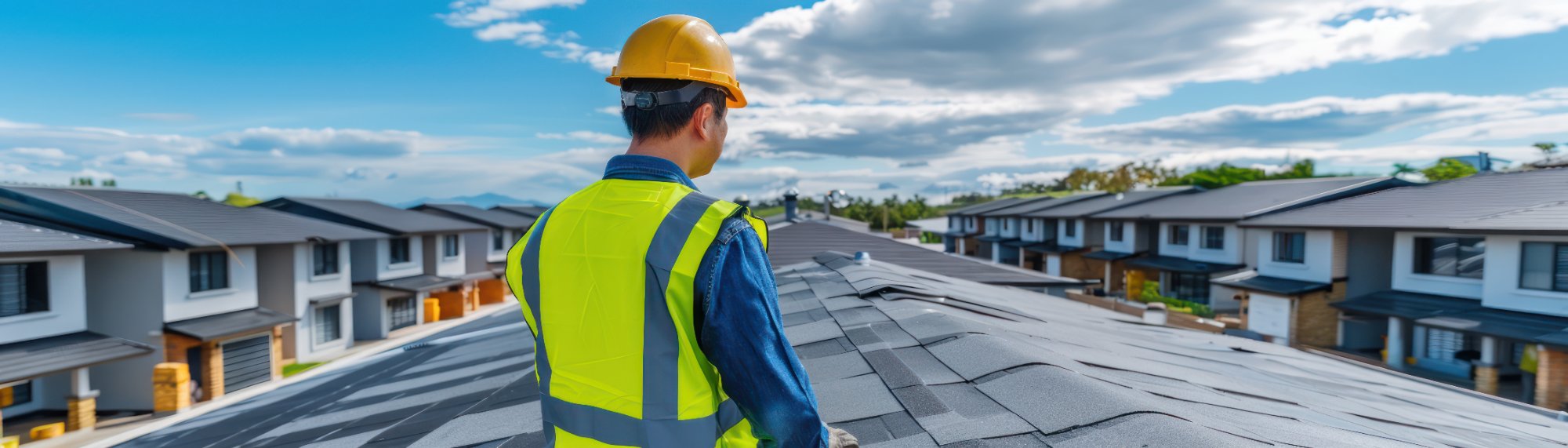
Woking Roof Surveys provide thorough, independent roof inspections across this thriving Surrey commuter town and the surrounding borough. From the characterful Victorian and Edwardian homes of Horsell and Old Woking, through the substantial interwar detached houses scattered across Hook Heath and Pyrford, to the post-war family estates of Goldsworth Park, Sheerwater and Knaphill, and the modern apartment developments clustered around the town centre — our certified surveyors combine drone aerial photography with thermal imaging to deliver precise, unbiased assessments of every roof type found within the borough.
Fast, independent roof surveys from local experts.
Woking's housing stock tells the story of a town transformed by the railway. The original settlement around Old Woking — with its medieval church, Tudor remnants and Georgian cottages along the High Street — sits two miles south of the modern town centre that sprang up from the 1860s onward. The London Necropolis Company's sale of surplus heathland triggered waves of residential development: Victorian terraces around the station, grand Edwardian villas on the sandy ridges of Hook Heath and Mount Hermon, interwar family homes along the Pyrford and Horsell roads, post-war council housing in Sheerwater and Maybury, and the 1970s estates of Goldsworth Park and Kingfield. Woking Roof Surveys understand every chapter of that building history and the roofing materials each generation employed.
Whether you are buying a property anywhere in the borough, chasing the source of a stubborn leak, assessing wind damage after storms sweep in across Horsell Common, or weighing up the true cost of an ageing roof before committing to a contractor's quote, a Woking Roof Surveys inspection gives you the documented evidence to act with confidence.
Woking Roof Surveys exist because too many homeowners across this part of Surrey make significant financial decisions about their roofs without an independent assessment to guide them. Contractors who stand to profit from the work cannot be expected to deliver an unbiased diagnosis, and the standard homebuyer survey rarely ventures beyond a cursory glance at the roofline from ground level. Our service fills that gap — providing detailed, evidence-based roof inspections that property owners, buyers and landlords can rely on.
Every inspection begins with a complete ground-level walk around the property, examining rainwater goods, fascias, soffits and any damage visible from below. Our DJI Enterprise drone then captures high-resolution photographs of every elevation, ridge line, valley, hip, flashing and chimney stack. On the larger properties around Hook Heath and Pyrford — where steep pitches and multiple roof planes create blind spots that no ladder can reach — the drone provides perspectives that would otherwise require expensive scaffolding. When thermal imaging is included, our FLIR cameras map moisture patterns concealed beneath the tile or slate surface, exposing leaks that may have gone unnoticed for months.
The borough presents an unusually broad spectrum of roofing challenges for a single town. A timber-framed cottage beside the River Wey in Old Woking has almost nothing in common with a 1970s concrete-tiled semi on Goldsworth Park, and neither resembles the Arts and Crafts-influenced detached villa perched above Woking Golf Club on Hook Heath. Woking Roof Surveys work comfortably across every era and material because the town's diversity demands that range of expertise.
Independence is central to everything we do. Woking Roof Surveys do not carry out roof repairs, recommend specific contractors, or hold any commercial interest in the outcome of an inspection. When our report states a roof is in good order, that finding is credible. When it identifies a defect, the repair costings reflect genuine current market rates rather than figures inflated to create urgency. That impartiality is why solicitors, mortgage lenders and insurance providers across the borough accept our reports without question.
Nearby Areas with Similar Properties: The roofing challenges we encounter across Woking are mirrored in neighbouring towns where similar housing stock and building eras prevail. Property owners in Guildford and Byfleet face comparable issues with ageing slate, clay tile degradation and exposed ridgelines. See our area-specific guides for information tailored to your location.
Woking Roof Surveys are not roofers, builders, or contractors. We provide independent inspection and reporting only — every assessment is free from commercial bias or conflict of interest.
Woking Roof Surveys are ready to inspect your property. Whether it is a Victorian terrace near the station, an Edwardian villa on Hook Heath, a post-war semi in Goldsworth Park, or a modern build in the town centre, our team has the expertise and equipment to deliver clear answers.
What Woking Roof Surveys bring to homeowners, buyers, and landlords across the borough
Woking's roofscape ranges from tightly spaced Victorian terraces beside the railway — where narrow rear gardens and boundary walls prevent safe ladder positioning — to the expansive multi-pitch rooflines of the detached Edwardian and interwar homes across Hook Heath, Pyrford and the Hockering. Our DJI Enterprise drone photographs every ridge, valley, hip, flashing and chimney stack in high definition, capturing defects that remain invisible from pavement level and inaccessible without costly scaffolding.
Concealed moisture is a recurring concern across Woking's older housing. The natural slate roofs on Victorian properties in Horsell and the clay tile coverings on 1930s homes along the Pyrford Road can harbour slow leaks for months before any visible staining appears on interior ceilings. Our FLIR thermal cameras identify temperature anomalies caused by moisture ingress beneath tiles, behind flashings and within the timber roof structure — locating problems that a purely visual inspection would miss entirely.
Every Woking Roof Surveys report is built around annotated high-resolution drone photography, thermal overlays where applicable, and clearly itemised repair costings at current market rates. The document is structured for practical use — designed to accompany a conveyancing file during a property purchase, to stand as evidence in an insurance claim, or to serve as a precise specification when briefing a roofing contractor on the work required.
Woking Roof Surveys hold full professional indemnity and public liability insurance. Our surveyors carry recognised industry certifications and CAA-approved drone pilot licences. Every inspection follows a standardised methodology refined across thousands of Surrey properties, delivering consistent and accurate results whether we are assessing a period cottage beside the Wey in Old Woking or a modern apartment block overlooking Victoria Way.
Woking is not one uniform housing type — it is a patchwork of distinct neighbourhoods, each with its own building era, roofing materials and characteristic failure modes. The period properties around Old Woking and central Horsell carry Welsh slate, handmade clay tiles, lead valley gutters and tall chimney stacks with decorative pots. The large interwar and Edwardian houses on Hook Heath and along Pyrford Road typically feature plain clay tiles on steep pitches with intricate lead work around bay windows and dormers that corrodes gradually over decades. The post-war and 1970s estates across Goldsworth Park, Sheerwater and Knaphill present concrete interlocking tiles with a finite service life, flat-roofed rear extensions and ridge mortar that weathers faster than most homeowners anticipate.
Woking Roof Surveys have developed our approach around these local distinctions. Rather than running through a generic checklist, we adapt every inspection to the specific age, material and construction method of the roof we are assessing. That granular local awareness is the difference between a report that genuinely informs your decision and one that merely confirms a roof is present above your head.
From the slate roofs of Old Woking to the concrete tiles of Goldsworth Park, Woking Roof Surveys understand the full breadth of this borough's roofscape.
How Woking Roof Surveys have helped local homeowners and property buyers
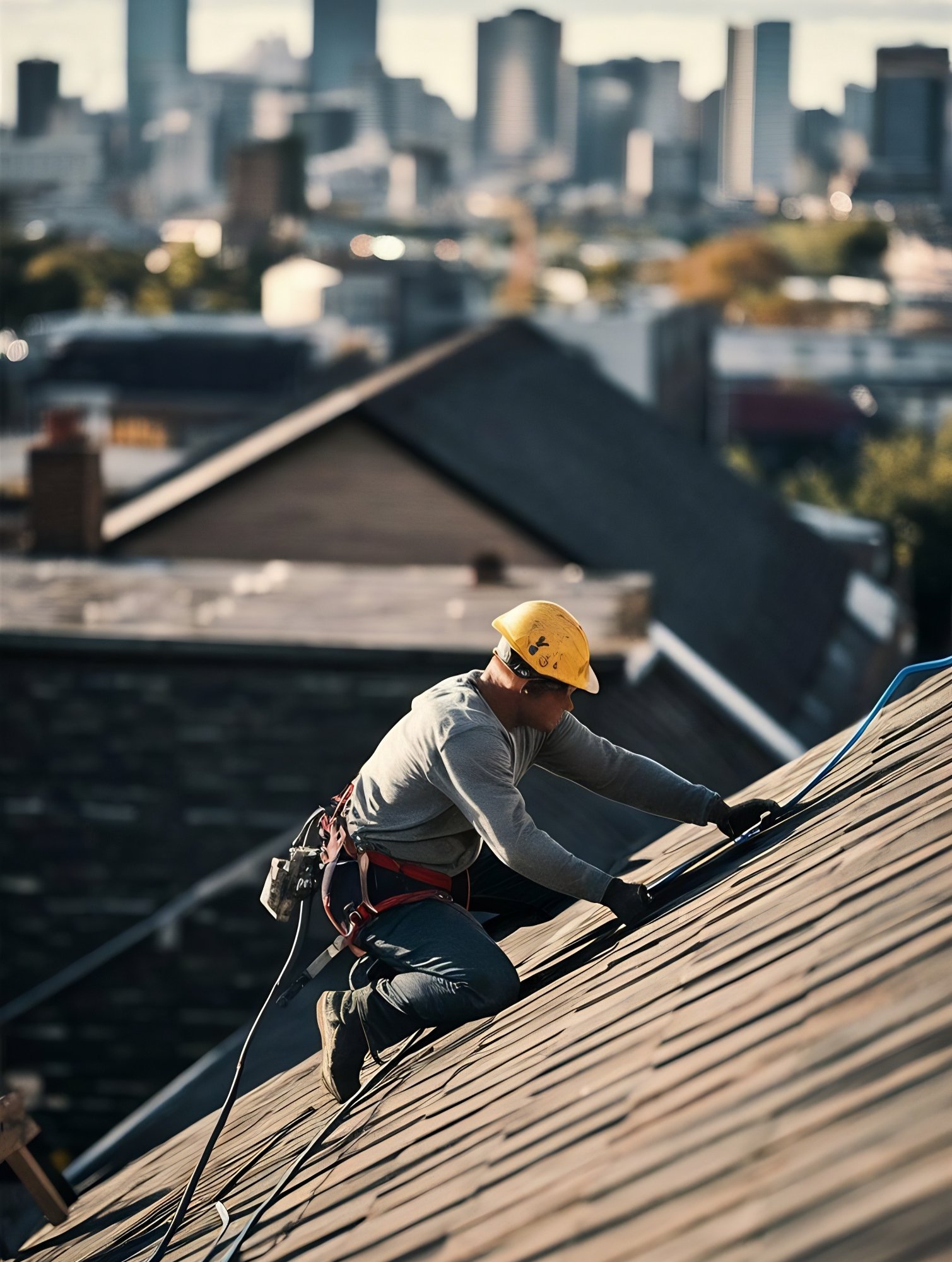
A couple purchasing a four-bedroom detached house on the Hook Heath escarpment received a homebuyer report describing the roof as being in "reasonable condition for its age." With the property priced above eight hundred thousand pounds, they wanted a specialist opinion before committing to exchange. The house featured a complex roofline with three dormers, a central valley and two chimney stacks.
Our drone survey revealed that the lead step flashings around the south-facing dormer had been over-painted, concealing extensive cracking and lifting along the entire cheek. Thermal imaging confirmed active moisture tracking from the dormer into the roof void, and our internal loft inspection discovered wet rot in two rafters and the dormer trimmer beam. We also documented eight displaced clay tiles on the rear slope and deteriorating mortar along the main ridge.
Woking Roof Surveys costed the remedial works at approximately twelve thousand eight hundred pounds, encompassing dormer flashing renewal, rafter splicing, tile replacement and ridge repointing. The buyers' solicitor presented our report and secured a price reduction matching the full estimated repair cost. The dormer work was completed within two months of the sale, preventing further structural deterioration that would have been far more expensive to address.
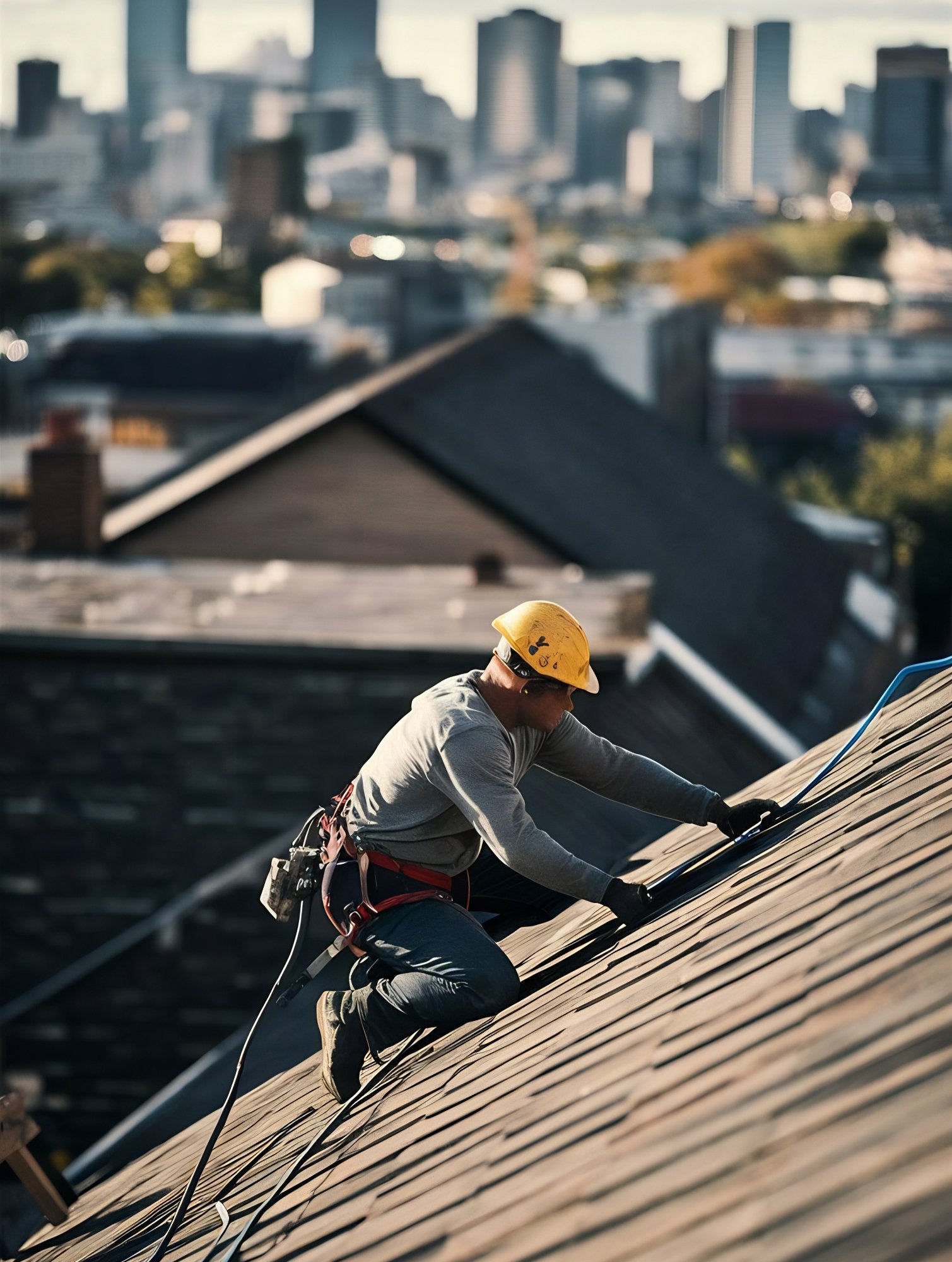
A landlord managing a 1970s semi-detached property in Goldsworth Park noticed the kitchen ceiling had begun to sag. A roofer visited, walked across the flat roof extension and declared it needed a complete felt replacement at a cost of six thousand pounds. The landlord questioned whether the problem might be more extensive and asked Woking Roof Surveys for an independent assessment before approving any work.
Thermal imaging across the flat roof surface revealed that moisture had penetrated far beyond the visible damage. Our inspection confirmed that ponding water had been sitting in a low point caused by a blocked outlet for an extended period. The timber decking beneath the felt had rotted across roughly forty percent of the extension area. The roofer's quote for felt replacement alone would have failed within months because the structural deck could no longer support the covering.
Woking Roof Surveys specified a full deck replacement over the affected area followed by a GRP fibreglass overlay, costed at approximately nine thousand two hundred pounds. While more expensive than the original quote, this addressed the actual problem rather than papering over it. The landlord commissioned the work to our specification, and the extension now carries a twenty-year material warranty. Without the Woking Roof Surveys inspection, six thousand pounds would have been wasted on a repair that was doomed to fail.
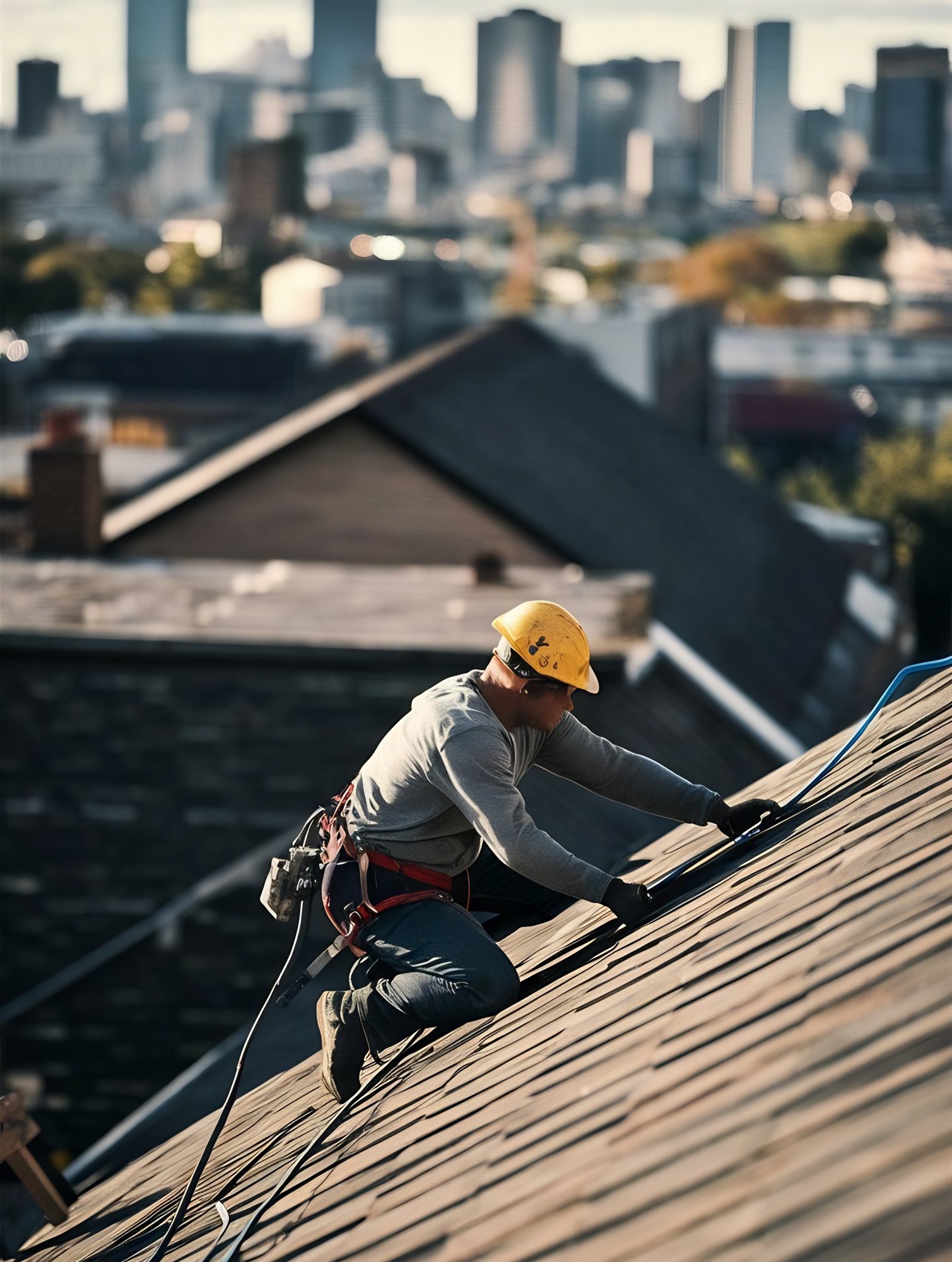
Following severe winter storms, the owners of a Victorian semi on the Horsell village side discovered water running down the party wall between the bedrooms. Their insurer appointed a loss adjuster who concluded the damage resulted from long-term neglect rather than storm action, and the claim was declined. The homeowners disputed the finding and contacted Woking Roof Surveys for independent evidence.
Our drone documented a section of displaced Welsh slates along the party wall abutment — their exposed edges showing clean fracture lines with no weathering, consistent with sudden wind uplift rather than gradual deterioration. Thermal imaging tracked a concentrated moisture path from the displaced slates down through the party wall to the exact locations where internal damp had appeared. We also found freshly lifted zinc soakers along the same section, corroborating the storm damage narrative.
The Woking Roof Surveys report — with its timestamped drone photography, thermal overlays and forensic analysis distinguishing storm damage from pre-existing wear — was submitted to the insurer as a formal dispute. The claim was reassessed and approved in full within four weeks. Repair costs of five thousand six hundred pounds were covered under the policy. Our report provided the evidential standard the insurer required to overturn the original decision.
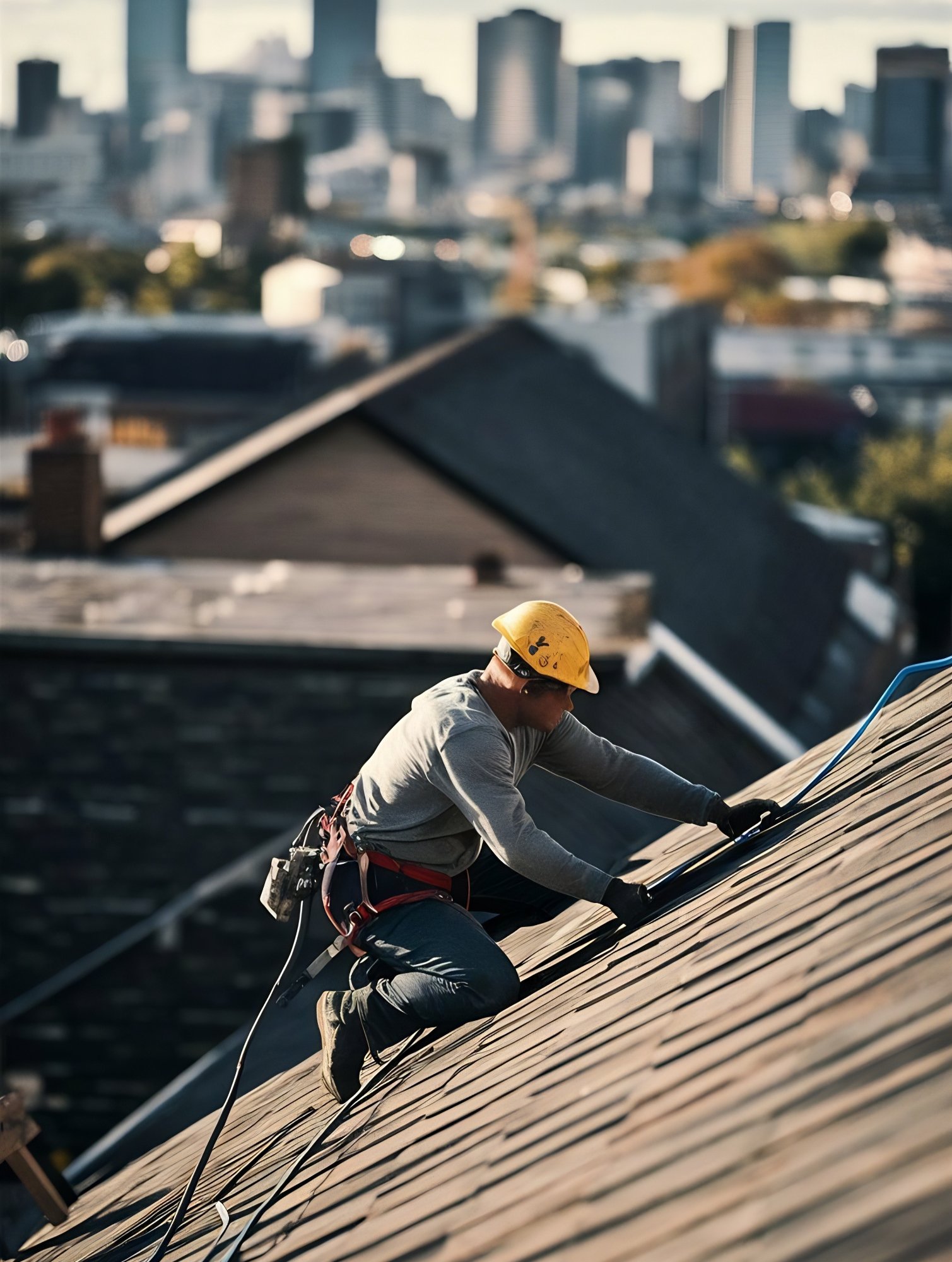
New owners of a Georgian cottage near the Church of St Peter in Old Woking were told during the purchase that the roof had been "completely re-tiled two years ago." Within six months they noticed damp patches spreading across the landing ceiling and a musty smell in the front bedroom. Concerned that the supposedly new roof was already failing, they commissioned Woking Roof Surveys to investigate.
The drone confirmed that new machine-made clay tiles had indeed been laid across both slopes. However, our thermal scan revealed extensive moisture trapped beneath the tiles on the north elevation. Internal loft inspection told the full story: the re-tile had been laid over the original deteriorating battens without replacing the underlay. Moisture was wicking through cracked original battens and pooling against the rafters. Three rafters on the north side showed early-stage wet rot.
Armed with the Woking Roof Surveys report documenting the substandard workmanship, the owners pursued a claim against the original roofing contractor through their solicitor. The north slope required stripping, new battens, breathable membrane underlay and rafter treatment before the tiles could be re-laid properly. Total remediation cost approximately eight thousand five hundred pounds — recovered in full from the contractor. Without our inspection, the hidden rot would have progressed to a point requiring complete rafter replacement.
Need a professional roof survey for your Woking property? Get in touch with Woking Roof Surveys today for a free consultation.
Feedback from homeowners and buyers who have used Woking Roof Surveys
"We were purchasing a 1920s detached property overlooking Woking Golf Club and wanted more detail than the homebuyer report could offer. Woking Roof Surveys identified cracked lead valleys and displaced slates that would have cost thousands to fix after completion. Their itemised costings gave our solicitor the leverage to renegotiate the price. An absolutely essential service for anyone buying an older property in Hook Heath."
"After months of unexplained damp in our upstairs bedroom, we called Woking Roof Surveys. Their thermal camera pinpointed a failed dormer flashing that two other tradesmen had completely missed. The report was clear, the photographs were excellent, and the problem was fixed within two weeks. We only wish we had called them sooner instead of wasting time with guesswork."
"A roofing firm quoted nineteen thousand to strip and re-tile our 1960s semi. Woking Roof Surveys demonstrated that three of the four roof slopes were in perfectly serviceable condition — only the rear elevation and flat extension needed attention. They saved us nearly ten thousand pounds and gave us a maintenance schedule for the years ahead. Honest, thorough and completely independent."
Common situations where a professional Woking Roof Surveys inspection makes the difference
Woking's property market moves quickly, and standard homebuyer reports rarely examine the roof in meaningful detail. Whether you are purchasing an Edwardian villa on Hook Heath, a Victorian semi in Horsell, or a 1970s family home in Goldsworth Park, a Woking Roof Surveys pre-purchase inspection reveals hidden defects, provides repair costings, and gives your solicitor documented evidence to negotiate from a position of strength.
Damp staining on ceilings or walls often indicates a roof defect, but the source can be deceptive — water frequently travels along rafters and battens before emerging far from the point of entry. The older housing across Horsell, Old Woking and Pyrford is particularly susceptible to concealed leak paths. Woking Roof Surveys combine drone photography with thermal imaging to trace moisture to its exact origin, eliminating the guesswork that leads to repeated failed repairs.
Woking's position on the sandy heathlands of northwest Surrey leaves properties exposed to prevailing south-westerly winds that can dislodge tiles, lift flashings and damage ridge mortar. After severe weather, a prompt drone inspection documents every defect with timestamped photography — creating the evidential foundation for an insurance claim. Woking Roof Surveys have supported numerous successful storm damage claims across the borough.
Receiving a large repair or re-roofing quote can be alarming, and without specialist knowledge it is difficult to assess whether the scope of work is justified. Our independent inspection has frequently revealed that a proposed full strip and re-tile was unnecessary — saving Woking homeowners thousands of pounds. Equally, we occasionally confirm that the quoted work is indeed required, giving you confidence to proceed.
Single-storey rear extensions with flat roofs are common across almost every era of Woking housing, from Victorian scullery additions to 1970s kitchen extensions. Felt, GRP and EPDM membranes all have finite lifespans, and ponding water accelerates deterioration. Woking Roof Surveys assess the membrane condition, drainage falls, deck integrity and upstand detailing to determine whether a repair, overlay or complete replacement is the correct course of action.
Many of the Victorian and Edwardian properties across Horsell, Old Woking and Hook Heath retain original chimney stacks with lead flashings that have been weathering for over a century. Mortar erosion, flaunching cracks and lead fatigue are common — and because chimney defects are difficult to assess from ground level, they often go undetected until water damage appears internally. Our drone inspection captures every chimney face and flashing joint in precise detail.
The issues Woking Roof Surveys encounter most frequently across the borough's diverse housing stock
The Victorian and Edwardian properties around Horsell village, Old Woking and the streets near the station were typically roofed in Welsh or Westmorland slate. Over a century of thermal cycling and nail corrosion causes slates to slip, crack or fall entirely. Missing slates expose the underlay — or on older buildings, the bare battens — to rainwater, and once one slate shifts, neighbouring slates lose their support and follow. Woking Roof Surveys document every displaced slate with annotated drone photography.
Lead flashings around chimney stacks, dormer windows, abutment walls and valley gutters have a working life of sixty to eighty years. On the larger properties of Hook Heath and Pyrford — many built between 1900 and 1940 — original lead work is reaching or exceeding that threshold. Thermal expansion causes lead to fatigue, split and lift away from the masonry it was dressed into, creating direct water entry points that are invisible from ground level but clearly visible to our drone and thermal cameras.
The post-war and 1970s housing estates across Goldsworth Park, Sheerwater, Knaphill and Kingfield were predominantly roofed with concrete interlocking tiles. After forty to fifty years of exposure, these tiles absorb moisture, freeze in winter and gradually delaminate — the surface layer crumbles away, exposing the porous core beneath. Once delamination begins, the process accelerates, and individual tile replacement becomes impractical because the entire covering is reaching the end of its serviceable life.
Rear kitchen and bathroom extensions with flat roofs are a feature of Woking housing from the 1950s through to the present day. Felt coverings typically last fifteen to twenty years, and many across the borough are well past that point. Ponding water — often caused by blocked outlets or inadequate falls — accelerates deterioration and can rot the timber deck beneath the membrane. Woking Roof Surveys use thermal imaging to map moisture beneath the surface, revealing the true extent of damage before any covering is stripped.
Ridge tiles and hip tiles across Woking are traditionally bedded in sand and cement mortar. Over decades of weathering — particularly on the exposed elevations that face the prevailing wind across the heathland — this mortar cracks, crumbles and eventually fails entirely. Loose ridge tiles pose a safety hazard and allow rainwater to enter the roof structure directly along the highest point. Modern dry ridge and dry hip systems offer a permanent mechanical fix, and our reports specify whether repair or replacement is more appropriate.
Properties with complex rooflines — particularly the multi-pitch Edwardian and interwar houses on Hook Heath, Pyrford and the Hockering — rely on valley gutters to channel rainwater where two roof slopes meet. Leaf debris from the mature tree canopy across these neighbourhoods blocks valley outlets, causing water to back up beneath the tile covering. Lead valley linings also fatigue over time. Woking Roof Surveys examine every valley from above, identifying blockages and lining defects before they cause internal water damage.
Common questions answered by Woking Roof Surveys
Woking Roof Surveys operate across the entire borough. Our regular inspection areas include the town centre and Maybury, the residential streets of Horsell and its common, the prestigious properties of Hook Heath and Mount Hermon, the period houses of Old Woking, the family homes around Pyrford and West Byfleet, the post-war housing of Goldsworth Park and Sheerwater, and the villages of Knaphill, Brookwood and St Johns. We also attend properties in Mayford, Kingfield and Westfield.
Most residential inspections across Woking take between ninety minutes and two and a half hours depending on the property size, number of roof pitches, and access considerations. The larger detached homes around Hook Heath, Pyrford and the Hockering tend to need more time due to complex multi-pitch rooflines and extensive chimney arrangements. Terraced or semi-detached properties in Horsell or Goldsworth Park are generally assessed more quickly. Full reports are delivered within forty-eight hours.
Woking spans a wide range of building eras, and each brings distinct roof issues. On the Victorian and Edwardian properties around Old Woking and Horsell, slipped natural slates, degraded lead flashings and chimney stack movement are the most frequent findings. The substantial 1920s and 1930s detached homes on Hook Heath and Pyrford commonly present cracked clay tiles, perished bay window lead work and blocked valley gutters. Across the post-war estates of Goldsworth Park and Sheerwater, concrete tile delamination, ridge mortar erosion and flat roof membrane failure dominate our reports.
Every comprehensive and premium report from Woking Roof Surveys includes timestamped drone photography, thermal scan evidence where applicable, detailed written narratives describing each defect, and itemised repair costings based on current market rates. Insurance providers require this standard of documented evidence when processing claims, and our reports are formatted specifically to meet those requirements. We have supported numerous successful claims for Woking properties following storm events and accidental damage.
Commercial inspections form a regular part of our Woking schedule. We survey retail and office units around the town centre, industrial premises along Goldsworth Road, school buildings, community facilities, and the variety of commercial properties across the borough. All flat roof systems fall within our scope including felt, GRP fibre-glass, EPDM rubber, and single-ply membranes. We also assess the flat-roofed extensions that are common on residential properties across almost every neighbourhood in Woking.
In the vast majority of cases, no. Our drone-led inspection approach was developed specifically to avoid the expense, disruption and access limitations of scaffolding. The DJI Enterprise drone captures high-resolution imagery of every elevation, ridge, valley and chimney stack from vantage points that scaffolding cannot replicate. This is particularly valuable on the taller Victorian villas around Horsell, the steeply pitched Edwardian homes on Hook Heath, and properties backing onto Horsell Common or Basingstoke Canal where ground access is restricted.
Have another question? Contact Woking Roof Surveys directly.
Woking Roof Surveys provide professional roof inspections across the borough and surrounding areas
The modern town centre contains a mix of purpose-built apartments, converted commercial buildings and the remaining Victorian terraces that survived the post-war redevelopment. Maybury to the north presents Edwardian and interwar housing with clay tile roofing, lead flashings and original chimney stacks.
Horsell retains a strong village character with a mix of Victorian semis, Edwardian detached homes and interwar housing around the High Street and common. Welsh slate, clay tiles and tall chimney stacks are characteristic. Properties bordering the 880-acre common face particular challenges from overhanging trees and wind exposure.
The elevated sandy ridge of Hook Heath contains some of the borough's most prestigious properties — large Edwardian and interwar detached homes with complex multi-pitch rooflines, deep valleys and extensive lead work. St Johns below the escarpment presents a mix of Victorian workers' cottages and later residential development.
The original settlement of Old Woking along the River Wey contains period cottages, Georgian and Victorian houses, and some of the borough's oldest buildings. Pyrford to the east features generous interwar and post-war detached homes on large plots with mature gardens, where complex rooflines and extensive guttering are common.
The post-war and 1970s residential estates to the north and west of the town centre present concrete interlocking tiles, flat-roofed rear extensions and ridge mortar that has been weathering for decades. These neighbourhoods account for a significant proportion of our re-roofing assessments and flat roof inspections.
Woking Roof Surveys operate across the wider borough and into the surrounding Surrey districts. We regularly attend properties in nearby towns and villages that share similar housing stock and roofing challenges.
Woking Roof Surveys deliver the independent, professional roof inspections that this diverse and fast-growing borough demands. Whether you are a first-time buyer anxious about a Victorian roof in Horsell, a homeowner tracking down a persistent leak on Hook Heath, a landlord protecting a portfolio property in Goldsworth Park, or simply seeking honest advice before committing to an expensive repair, our surveys provide the clarity you need to make sound decisions.
Every inspection pairs certified surveying expertise with the latest technology — drone aerial photography for complete coverage, thermal imaging to detect concealed moisture, and detailed written reporting that stands up to scrutiny from solicitors, insurers and contractors alike. Woking Roof Surveys do not carry out repairs. We do not recommend tradesmen. We present the evidence, the photographs and the costings, and leave the decisions in your hands.
Every report is independent, comprehensive, and written to be acted upon — whether you are buying, selling, claiming, or protecting your property for the years ahead.
Call us today or complete the form below to arrange your Woking roof survey.
Contact Woking Roof Surveys today to arrange your roof inspection
Monday - Friday: 7:30 AM - 9:30 PM
Saturday: 7:30 AM - 7:00 PM
Sunday: 9:00 AM - 5:00 PM
For urgent roof inspection needs in Woking, please call Woking Roof Surveys directly.
Call Now