
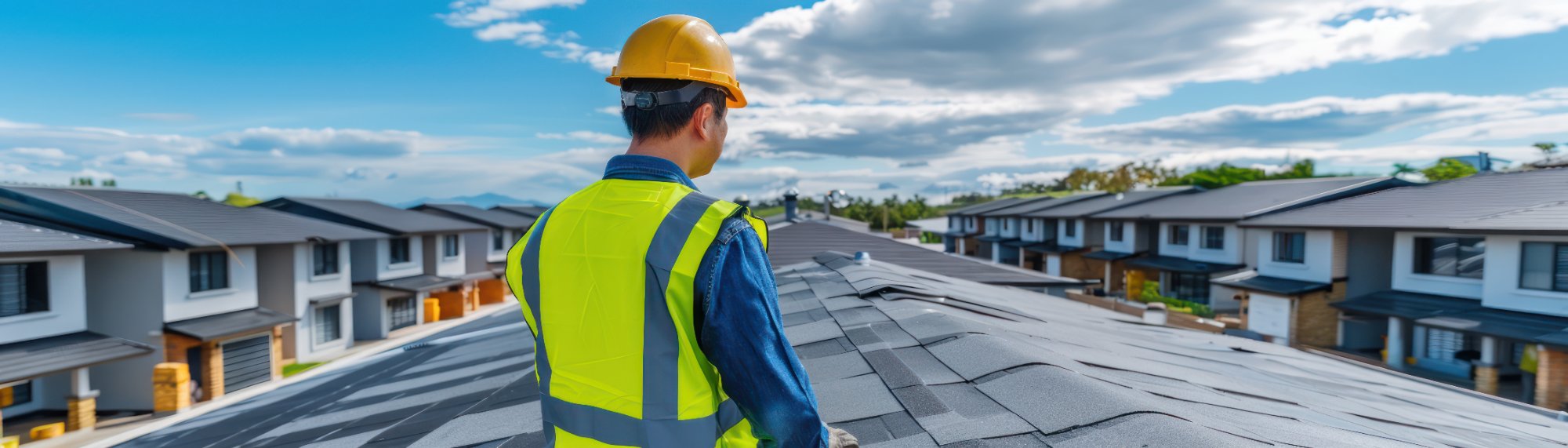
Wraysbury Roof Surveys deliver professional, independent roof inspections across this historic Thames-side village and the surrounding parish within the Royal Borough of Windsor and Maidenhead. Our certified surveyors pair drone aerial photography with thermal imaging to produce detailed, accurate assessments of every roof type found in this characterful Berkshire settlement — from the Victorian cottages and period homes clustered around the High Street and St Andrew's Church, through the substantial interwar detached houses on generous plots along the village lanes, to the 1950s bungalows of Sunnymeads, the riverside homes with private moorings overlooking the Thames towards Windsor Castle, and the modern family houses built on plots where post-war riverside shacks once stood.
Fast, independent roof surveys from local experts.
Our Wraysbury service exists because this village's housing stock is remarkably diverse for a settlement of its size. The medieval origins around the church give way to Victorian expansion along the High Street, the Edwardian and interwar growth that followed the arrival of the railway, the post-war development at Sunnymeads where Londoners built riverside retreats that have since been replaced by substantial permanent homes, and the continuing ribbon of riverside properties stretching through Hythe End towards Staines. Each generation of building brought different roofing materials and methods, and each demands specific inspection expertise. Wraysbury Roof Surveys bring the equipment and knowledge to assess every one of them.
Whether you are purchasing a property in Wraysbury, investigating a persistent leak exacerbated by the village's damp riverside climate, documenting storm damage after winds sweeping across the Thames flood plain, or seeking clarity on an ageing roof before committing to expensive repairs, our surveys provide the hard evidence you need to make confident decisions.
Wraysbury Roof Surveys grew out of a simple conviction: no property owner should have to spend thousands on roof work without first obtaining an honest, independent assessment. Too many homeowners across this part of Berkshire have been talked into unnecessary repairs by contractors with a financial interest in the outcome, or have completed a purchase only to discover hidden damage that a more thorough inspection would have revealed. Our role is to bridge that gap between uncertainty and informed decision-making.
Our inspection process follows a rigorous, repeatable methodology. We begin at ground level, walking the full perimeter to assess rainwater goods, fascias, soffits, and any visible defects from below. Our DJI Enterprise drone then captures high-resolution imagery of every elevation, ridge, valley, hip, and chimney stack — including vantage points that scaffolding and ladders simply cannot replicate on Wraysbury's riverside properties where Thames-side positioning and soft ground conditions make conventional access both difficult and risky. Where thermal imaging is included in the survey package, our FLIR cameras reveal moisture patterns concealed beneath tiles and within the roof structure itself.
Wraysbury's property landscape ranges from compact Victorian terraced cottages near the High Street to expansive riverside detached homes on half-acre plots with private moorings. A 1930s bungalow on Coppermill Road will have an entirely different roofing system from a modern architect-designed home on the riverbank, and both differ again from the post-war chalet bungalows scattered through Sunnymeads. Wraysbury Roof Surveys work across every era and material because the village demands that breadth of knowledge.
We operate with complete independence. Wraysbury Roof Surveys do not carry out roof repairs and hold no financial stake in the findings of any inspection. When we confirm a roof is sound, that assessment carries genuine weight. When we identify a problem, the costings in our report reflect current market rates for the labour and materials required — not inflated figures intended to pressure a quick decision.
Nearby Areas with Similar Properties: The types of roofing challenges we encounter in Wraysbury are shared by properties across the wider Thames corridor. Homeowners in Datchet and Egham face comparable issues with riverside damp, ageing tile coverings, and flat roof failures on extended bungalows. See our area-specific guides for detailed information about your location.
Wraysbury Roof Surveys are not roofers, builders, or contractors. We provide independent inspection and reporting only — ensuring every assessment is free from commercial bias.
Wraysbury Roof Surveys are ready to inspect your property. Whether it is a Victorian cottage in the village centre, a riverside home overlooking the Thames, or a post-war bungalow in Sunnymeads, our team delivers the answers you need.
What Wraysbury Roof Surveys bring to homeowners, buyers, and landlords across the village
Wraysbury's roofscape ranges from compact terraced cottages along the High Street — where narrow rear gardens and neighbouring boundary walls prevent safe ladder placement — to the sprawling multi-pitch rooflines of large riverside detached homes along the Thames. Our DJI Enterprise drone captures every ridge, valley, hip, flashing, and chimney stack in high-definition detail, revealing defects invisible from the ground and unreachable by conventional access methods. The drone is especially valuable on waterside properties where soft riverbank ground makes scaffolding placement hazardous.
Hidden moisture is a persistent concern across Wraysbury's housing stock, amplified by the village's low-lying Thames-side position and the elevated humidity that accompanies river proximity. Clay tile roofs on interwar properties and concrete tile coverings on post-war bungalows can harbour leaks for months before visible staining appears inside. Our FLIR thermal cameras detect temperature differentials caused by moisture ingress beneath tiles, behind flashings, and within the roof structure — pinpointing problems that visual inspection alone cannot identify.
Every Wraysbury Roof Surveys report is a comprehensive document — annotated with high-resolution drone photographs, thermal overlays where applicable, and clear itemised repair costings at current market rates. The report is designed to be shared directly with your solicitor during a property purchase, submitted to an insurance provider as evidence for a claim, or handed to a roofing contractor as a precise specification for the work required.
Wraysbury Roof Surveys hold full professional indemnity and public liability insurance. Our surveyors carry recognised certifications and CAA-approved drone pilot licences. Every inspection follows a standardised methodology honed across thousands of properties, ensuring consistency and accuracy regardless of whether we are assessing a period cottage near St Andrew's Church or a modern riverside home overlooking the Thames towards Windsor Castle.
Wraysbury is not a single housing type — it is several distinct neighbourhoods, each with its own building era, roofing materials, and characteristic problems. The period properties near the village centre carry handmade clay tiles, some natural slate, lead valley gutters, and chimney stacks with traditional pots. The 1930s family homes along the village lanes typically present plain clay tiles on steep pitches with bay window lead work that degrades over time. The post-war bungalows and chalet-style homes around Sunnymeads use concrete interlocking tiles with a shorter service life and ridge mortar that erodes faster than many owners expect. The riverside properties present their own distinct challenges — extensions built on soft ground, flat roof sections over kitchens and conservatories, and the constant battle against the damp climate that living beside the Thames creates.
Wraysbury Roof Surveys have built our reputation on understanding these distinctions. We do not apply a generic checklist — we tailor every inspection to the specific age, material, and construction method of the roof in front of us. That local knowledge is the difference between a report that tells you something useful and one that simply confirms a roof exists.
From the Victorian cottages near St Andrew's Church to the riverside homes along the Thames, Wraysbury Roof Surveys know this village's roofscape inside out.
How Wraysbury Roof Surveys have helped local homeowners and property buyers

A couple purchasing a detached riverside home in Wraysbury received a homebuyer report describing the roof as being in "generally satisfactory condition." The property had been extended twice — once in the 1970s with a flat-roofed kitchen and again in the 1990s with a conservatory-style addition. With an asking price above one million pounds, the buyers wanted certainty before exchanging contracts on a Thames-side property with known flood plain considerations.
Our drone inspection revealed ponding water on the flat roof extension — invisible from any ground-level vantage point due to the parapet wall surrounding it. Thermal imaging confirmed active moisture ingress through the failed felt membrane, and our internal inspection found extensive wet rot in the roof timbers beneath. On the main pitched roof, we documented four areas of cracked clay tiles on the south-facing slope and a deteriorating lead flashing junction where the extension met the original roofline.
Wraysbury Roof Surveys costed the remedial works at approximately eleven thousand eight hundred pounds. The buyer's solicitor presented our report and the vendor agreed to reduce the price by the full amount. The flat roof was replaced with a modern GRP system within eight weeks of completion, and the pitched roof repairs followed shortly after. Without the Wraysbury Roof Surveys inspection, the timber rot would have progressed through another wet winter beside the Thames.

After severe storms in late 2024, a homeowner near the village green discovered water entering the front bedroom through the ceiling. Their insurer sent a loss adjuster who attributed the leak to "gradual wear" rather than storm damage and rejected the claim. The homeowner disputed the finding and contacted Wraysbury Roof Surveys for an independent assessment.
Our drone inspection documented fresh displacement of five clay tiles on the south-west facing slope — consistent with the recorded wind direction during the storm as it swept across the open Thames flood plain. Thermal imaging showed a concentrated moisture path from the displaced tiles through to the bedroom ceiling directly below. We also photographed clean fracture lines on two ridge tiles with no weathering on the exposed edges, confirming recent breakage rather than long-term deterioration.
Our timestamped report and annotated photography was submitted to the insurer as a formal dispute. The claim was reassessed and approved in full within three weeks. Total repair costs of three thousand eight hundred pounds were covered under the policy. The Wraysbury Roof Surveys report provided exactly the documented evidence the insurer required to reverse their original decision.

A retired couple in Sunnymeads received a quote for a complete re-roof at twenty-one thousand pounds after a roofer spent twenty minutes on site and declared the entire covering "past it." Understandably cautious about committing their savings, they asked Wraysbury Roof Surveys for an independent view before signing any contract.
Our comprehensive survey — including drone photography of every elevation and internal loft inspection — confirmed that the front slope and both hips were in serviceable condition with at least a decade of remaining life. The rear slope, however, showed widespread concrete tile delamination, crumbling ridge mortar, and two cracked tiles allowing rainwater to track along the felt underlay. Only the rear elevation required intervention.
Wraysbury Roof Surveys estimated the rear slope re-tile and ridge repointing at approximately nine thousand five hundred pounds — less than half the original quote. The couple commissioned the partial re-roof based on our specification, and the front elevation continues to perform well with no issues. The Wraysbury Roof Surveys report gave them a prioritised maintenance schedule going forward.

The owners of a detached property on Friary Island — accessible only via a bridge over a narrow branch of the Thames — had noticed intermittent damp patches appearing in an upstairs bedroom after heavy rain. Two roofing firms had visited but struggled with access due to the island's narrow lanes and limited space for scaffolding lorries. They contacted Wraysbury Roof Surveys after learning we use drone technology that eliminates the need for heavy access equipment.
Our drone revealed a lead-lined valley gutter running between two roof pitches that had split along a two-metre section — completely invisible from ground level due to the surrounding roofline. Thermal imaging confirmed active moisture tracking from the split down through the roof timbers and into the bedroom wall below. We also documented heavy moss accumulation blocking the upper section of the valley, which had been directing rainwater over the lead edges and accelerating the failure.
Wraysbury Roof Surveys costed the valley gutter replacement and associated tile work at approximately five thousand two hundred pounds. The owners arranged a specialist lead worker who accessed the roof using a lightweight tower scaffold that could be transported across the bridge. The damp has not returned since the repair was completed. Without the drone survey, identifying the exact location and extent of the valley failure would have required expensive scaffolding that the island's access constraints made extremely difficult to arrange.
Need a professional roof survey for your Wraysbury property? Get in touch with Wraysbury Roof Surveys today for a free consultation.
Feedback from homeowners and buyers who have used Wraysbury Roof Surveys
"Buying a 1930s detached near the village green, we knew the homebuyer survey wouldn't cover the roof properly. Wraysbury Roof Surveys found cracked tiles on the rear slope and a failing chimney flashing that would have cost nearly eight thousand to repair. Their report gave our solicitor exactly what she needed to renegotiate. Could not recommend more highly."
"Persistent damp above our kitchen extension had been worsening for months and two roofers gave us contradictory explanations. Wraysbury Roof Surveys traced it with thermal imaging to a flat roof membrane failure beneath standing water that neither tradesman had spotted. A month later the new roof was on and the problem has not returned. Worth every penny."
"One contractor wanted twenty-one thousand for a complete strip and re-tile on our Sunnymeads bungalow. Wraysbury Roof Surveys proved that only the rear slope needed replacing — the front and sides had years of life left. Saved us over ten thousand pounds and gave us a clear maintenance plan. Thorough, honest, and completely independent."
Transparent pricing from Wraysbury Roof Surveys — choose the inspection level that suits your property and your needs
Wraysbury Roof Surveys offer three tiers of inspection to match different property types, budgets, and levels of concern. Every survey is carried out by the same certified team using the same professional methodology — the difference lies in the depth of investigation and the technology deployed. Whether you own a compact bungalow in Sunnymeads or a multi-chimney riverside home overlooking the Thames, there is a package designed for your situation.
Essential visual roof assessment for Wraysbury homeowners needing a clear overview of their roof's current condition
Full drone and thermal imaging inspection — the most requested package for Wraysbury buyers and homeowners
Complete structural roof assessment for Wraysbury's larger detached homes, riverside properties, and commercial premises
Common questions answered by Wraysbury Roof Surveys
Wraysbury Roof Surveys cover the entire village and its surrounding districts. Our regular inspection areas include Wraysbury village centre around the High Street and St Andrew's Church, the residential streets near the village green, the riverside properties along the Thames, the Hythe End area towards Staines, the Sunnymeads neighbourhood, Friary Island, and the lanes running towards Datchet and Old Windsor. We also attend properties on the private roads near the reservoirs and gravel lakes.
Most inspections of a standard Wraysbury property take between ninety minutes and two and a half hours on site. The larger riverside detached homes — with their multiple extensions, complex rooflines, and occasionally restricted access — tend toward the longer end of that range. Smaller post-war bungalows in Sunnymeads or semi-detached houses near the High Street are typically assessed more quickly. Every client receives their full written report within forty-eight hours of the visit.
Period and heritage properties make up a valued part of our Wraysbury workload. We regularly inspect Victorian cottages near the church, characterful interwar homes throughout the village, and the occasional listed building including structures dating back centuries. The Grade II* listed King John's Hunting Lodge at Sunnymeads is among the area's most notable historic buildings. Our drone technology proves especially valuable on these properties, where erecting scaffolding against fragile historic fabric carries a risk of causing damage.
Every comprehensive and premium report from Wraysbury Roof Surveys includes timestamped drone photography, thermal scan overlays, detailed damage narratives, and itemised repair costings at current market rates. Insurers require documented evidence rather than verbal descriptions when processing claims, and our reports are structured specifically to satisfy those requirements. We have supported numerous successful claims for Wraysbury properties — particularly following storm damage events and the flooding incidents that the village's low-lying Thames-side position makes it vulnerable to.
Wraysbury's riverside position and low-lying topography create a damp microclimate that accelerates roof deterioration compared to higher ground. The most frequent issues we encounter include heavy moss and algae growth on north-facing tile slopes, degraded lead flashings around chimney stacks, moisture ingress through ageing felt underlay on interwar and post-war properties, cracked and delaminating concrete tiles on 1950s bungalows, flat roof membrane failures on riverside extensions and kitchen additions, and valley gutter blockages from the mature trees that line many of the village's lanes and riverbanks. Poorly ventilated roof spaces are also common, leading to condensation damage that mimics leak symptoms.
While Wraysbury is primarily residential, we do inspect the commercial and mixed-use premises in the village. This includes the retail units along the High Street, the public houses, converted buildings used for business purposes, school premises, and community buildings including the village hall. We assess all flat roof systems including felt, GRP, EPDM, and single-ply membranes, as well as the pitched roofs that cover many of Wraysbury's older commercial buildings.
Have another question? Contact Wraysbury Roof Surveys directly.
Wraysbury Roof Surveys provide professional roof inspections across the village and wider parish
The historic core around the High Street, St Andrew's Church, and the village green contains a mix of Victorian cottages, period homes, converted buildings, and some listed properties. Handmade clay tiles, natural slate, lead flashings, and traditional chimney stacks are characteristic of the village centre roofscape.
The Thames-side properties and Friary Island homes represent some of Wraysbury's most desirable addresses. These substantial detached residences — many with private moorings — feature complex rooflines, multiple extensions, and the particular challenges that riverside positioning creates for roofing materials.
The Sunnymeads area south of the village centre developed largely in the post-war period, with many original riverside shacks replaced by permanent family homes and bungalows. Concrete interlocking tiles, flat-roofed extensions, and 1950s–1970s construction methods are typical of this neighbourhood.
The Hythe End area towards Staines features a mix of riverside homes, bungalows, and family houses along Staines Road. Properties here face particular exposure to Thames-side damp and flooding risk, with many featuring extended and modified rooflines added over successive decades.
Wraysbury Roof Surveys operate across the wider Royal Borough and into the neighbouring districts. We regularly attend properties in the surrounding towns and villages that share similar housing stock and roofing challenges.
Wraysbury Roof Surveys provide the independent, professional roof inspections that this historic Thames-side village deserves. Whether you are a first-time buyer anxious about a period roof in the village centre, a homeowner dealing with storm damage on a riverside property, a landlord protecting a portfolio property in Sunnymeads, or simply seeking clarity on an ageing roof before committing to costly repairs, our surveys deliver the answers you need.
Every inspection combines certified expertise with advanced technology — drone aerial photography, thermal imaging, and detailed written reporting — to give you a complete, unbiased picture of your roof's condition. We do not carry out repairs. We do not recommend contractors. We provide the facts, the photographs, and the costings, and you make the decisions.
Every report is independent, detailed, and written to be acted upon — whether you are buying, selling, claiming, or simply protecting your property.
Call us today or complete the form below to arrange your Wraysbury roof survey.
Contact Wraysbury Roof Surveys today to arrange your roof inspection
Monday - Friday: 7:30 AM - 9:30 PM
Saturday: 7:30 AM - 7:00 PM
Sunday: 9:00 AM - 5:00 PM
For urgent roof inspection needs in Wraysbury, please call Wraysbury Roof Surveys directly.
Call Now