
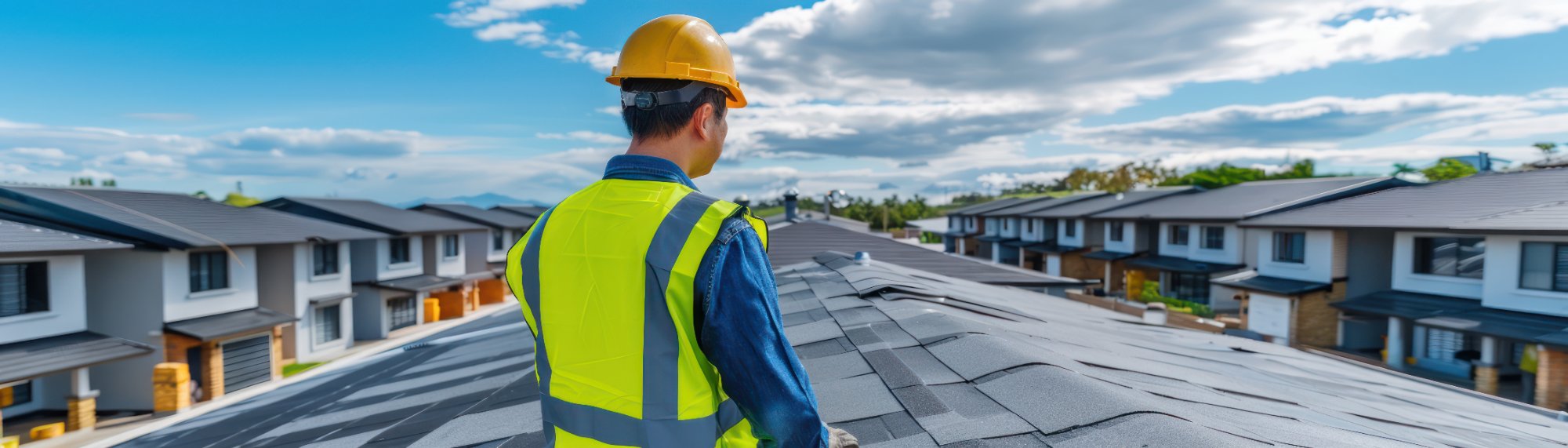
Ascot Roof Surveys provide independent, professional roof inspections across one of Berkshire's most prestigious residential areas. Our certified surveyors combine drone aerial photography with thermal imaging technology to deliver thorough, accurate assessments of every roof type found in this leafy Crown Estate landscape — from the grand Edwardian and interwar houses set behind mature gardens in North Ascot, through the Victorian and early twentieth-century homes of Sunninghill and Sunningdale, to the substantial executive properties along the private roads south of the racecourse and the more modern developments near the High Street.
Fast, independent roof surveys from local experts.
Ascot's housing stock reflects over a century of development shaped by the area's association with the racecourse and the Crown Estate. The earliest residential streets around Sunninghill date from the late Victorian era, followed by substantial Edwardian villas, generous interwar detached homes on large plots, post-war infill developments, and the contemporary executive houses that continue to appear on subdivided land. Each building period introduced different roofing materials and techniques, and each demands a surveyor who understands the particular vulnerabilities that come with age, construction method, and the heavily wooded Berkshire environment. Ascot Roof Surveys bring precisely that knowledge to every inspection.
Whether you are buying a period house in Sunninghill, investigating water ingress in a North Ascot family home, building an insurance claim after storm damage, or simply seeking an honest assessment before committing to costly roof repairs, Ascot Roof Surveys deliver the evidence and clarity you need to act with confidence.
Ascot Roof Surveys exist because too many property owners in this part of Berkshire have been quoted for roof work they did not need, or have exchanged contracts on a house only to discover problems that a competent inspection would have identified weeks earlier. Our service closes that gap by providing fully independent assessments — we do not carry out repairs, we do not recommend specific contractors, and we hold no commercial interest in the outcome of any survey.
Every inspection begins with a thorough ground-level walk around the entire property, examining rainwater goods, fascias, soffits, and any visible anomalies from below. Our DJI Enterprise drone then photographs every ridge, valley, hip, flashing, and chimney stack from multiple angles — capturing detail that scaffolding and ladders cannot match, particularly on the large, multi-elevation rooflines that define so much of Ascot's housing. Where the survey package includes thermal imaging, our FLIR cameras map temperature differentials across the roof surface, identifying moisture trapped beneath tiles and within the timber structure before it becomes visible inside the property.
The Ascot area presents distinctive challenges that a generic surveyor may overlook. Dense tree canopy deposits leaf litter into valleys and gutters throughout the autumn, creating blockages that cause water to back up under tile courses. Overhanging branches keep roof surfaces damp for extended periods, encouraging moss colonisation and accelerating the erosion of pointing and mortar. The sandy Bagshot Formation soils beneath many Ascot properties can also contribute to subtle ground movement that manifests as cracked ridge tiles or displaced hip lines — something we look for specifically during every survey.
Ascot Roof Surveys operate with total independence. When our report confirms that a roof is performing well, you can trust that assessment. When it identifies a defect, the repair costings reflect genuine market rates for skilled tradespeople in this part of Berkshire — not inflated figures designed to pressure a hasty decision.
Nearby Areas with Similar Properties: The roofing challenges we encounter in Ascot are echoed across the broader east Berkshire and Surrey border region. Property owners in Sunningdale and Virginia Water face comparable issues with ageing tile coverings, lead work degradation, and the effects of mature tree canopy on roof condition. See our area-specific guides for more information.
Ascot Roof Surveys are not roofers, builders, or contractors. We provide independent inspection and reporting only — ensuring every assessment is free from commercial bias.
Ascot Roof Surveys are ready to inspect your property. Whether it is a grand Edwardian villa in North Ascot, a period home in Sunninghill, or a modern executive build near the racecourse, our team provides the answers you need.
What Ascot Roof Surveys bring to homeowners, buyers, and landlords across the area
Ascot's properties tend towards the larger end of the scale, with sprawling footprints, multiple roof pitches, deep valleys between wings, and tall chimney stacks that are impossible to assess safely from a ladder. Our DJI Enterprise drone photographs every elevation, ridge line, hip junction, and flashing detail in high definition — providing a complete overhead record that reveals defects hidden behind parapets, dormers, and within otherwise inaccessible roof geometry.
Concealed moisture is one of the most damaging issues affecting Ascot's roofs. Dense woodland and mature garden planting keep many roof surfaces shaded and damp for prolonged periods, creating conditions where leaks develop slowly beneath tiles without any interior warning signs for months. Our FLIR thermal cameras detect temperature variations caused by trapped moisture within the roof structure — identifying problems at an early stage, before they progress to visible ceiling staining or timber decay.
Every Ascot Roof Surveys report is built to serve a practical purpose. Annotated drone photography, thermal overlays where applicable, clear condition assessments for every roof element, and itemised repair costings based on current Berkshire market rates are all included. Whether you need to hand the document to a solicitor during a property purchase, submit it to an insurer as evidence for a claim, or brief a roofing contractor on the exact scope of work required, the report is formatted to do its job.
Ascot Roof Surveys hold full professional indemnity and public liability insurance. Our surveyors carry recognised industry certifications alongside CAA-approved commercial drone pilot licences. Every inspection follows a standardised methodology refined across thousands of properties in Berkshire and the surrounding counties, delivering consistency and accuracy whether we are assessing a Victorian villa in Sunninghill or a newly built house on the edge of Swinley Forest.
Ascot is not one uniform housing type — it is a patchwork of distinct areas, each shaped by the era in which it was developed and the materials available at the time. The Victorian and Edwardian properties around Sunninghill and the older parts of South Ascot carry natural slate, handmade clay tiles, lead valley gutters, and substantial chimney stacks with multiple flues. The interwar houses on generous plots along London Road and Kings Ride present machine-made clay tiles on steep pitches with bay window lead work and rendered chimney stacks. The 1960s and 1970s developments in North Ascot introduced concrete interlocking tiles and flat-roofed garage extensions, while the executive homes built since the 1990s use a mix of modern materials including reconstituted slate, thin-leading, and interlocking concrete tiles with dry ridge systems.
Ascot Roof Surveys understand these differences because the area demands that level of knowledge. A roof survey that applies a one-size-fits-all checklist to this varied housing stock will miss the specific vulnerabilities that each era of building carries. Our surveyors know what to look for on a 1920s clay tile roof in Cheapside and how that differs from a 2005 concrete tile roof in North Ascot — and our reports reflect that depth of understanding.
From the period slate roofs of Sunninghill to the modern executive builds of North Ascot, Ascot Roof Surveys know this area's roofscape inside out.
How Ascot Roof Surveys have helped local homeowners and property buyers

A couple purchasing a five-bedroom Edwardian property in North Ascot received a homebuyer report that rated the roof as "satisfactory with minor maintenance required." With the property priced above two million pounds, they engaged Ascot Roof Surveys for an independent opinion before committing to exchange.
Our drone identified three valley gutters choked with compacted leaf litter from surrounding oak trees — impossible to see from ground level. Beneath the debris, thermal imaging revealed active moisture ingress where the lead lining had corroded under years of standing water. Two further areas showed displaced clay hip tiles and cracked mortar along the main ridge, both masked by heavy moss growth.
Ascot Roof Surveys costed the necessary remediation — valley gutter re-lining, hip tile refixing, and ridge repointing — at approximately thirteen thousand eight hundred pounds. The buyers' solicitor presented the report and secured a price reduction matching the full repair estimate. The work was completed before the family moved in, and the roof is now performing without issues.

Following high winds in early 2025, a Sunninghill homeowner discovered water staining across the landing ceiling and a noticeable draught in the master bedroom. Their insurer dispatched a loss adjuster who concluded the damage resulted from "pre-existing wear" and declined the claim. Unconvinced, the homeowner contacted Ascot Roof Surveys for an impartial assessment.
Our aerial inspection documented eight freshly displaced clay tiles on the south-west facing slope — the elevation most exposed to the recorded storm direction. The tiles had clean break patterns with no moss growth on the exposed surfaces, confirming recent displacement rather than gradual deterioration. Thermal imaging traced a clear moisture path from the exposed area through to the landing ceiling below. A large branch had also struck the ridge, cracking two ridge tiles along a one-metre section.
The Ascot Roof Surveys report — complete with timestamped drone photography and annotated thermal overlays — was submitted as a formal dispute to the insurer. The claim was reassessed and approved in full within four weeks. Total repair costs of five thousand six hundred pounds were covered under the policy, including the ridge tile replacement and internal ceiling redecoration.

The owners of a large 1990s detached property in South Ascot noticed a faint musty odour in the ground-floor study, which sat beneath a flat-roofed rear extension. No visible staining had appeared on the ceiling, but the smell was worsening over several months. They asked Ascot Roof Surveys to investigate before undertaking any speculative repair work.
Our thermal survey of the flat roof section identified a broad area of retained moisture beneath the felt covering. Drone imagery confirmed ponding in two locations where the original falls had flattened over time, and one area where a felt seam had separated along a two-metre length. The trapped moisture had not yet penetrated the ceiling below, but the insulation beneath was saturated and the decking boards were beginning to soften — an early stage of rot that would have escalated rapidly.
Our report recommended a complete flat roof overlay in GRP fibreglass with corrected falls and new upstands — estimated at approximately six thousand three hundred pounds. The owners acted promptly, and the contractor confirmed that the decking would have required full replacement within twelve to eighteen months had the problem continued. The Ascot Roof Surveys inspection caught the issue at the most cost-effective stage of intervention.

A homeowner in Cheapside received a roofing contractor's estimate of twenty-eight thousand pounds for a complete strip and re-tile of their 1930s detached house. The roofer had spent approximately twenty minutes on site and viewed the roof only from the driveway. Before authorising such a significant investment, the homeowner sought a second opinion from Ascot Roof Surveys.
Our comprehensive inspection — combining drone photography of all four elevations with an internal loft examination — confirmed that the front and both side elevations were in sound condition with well-fixed clay tiles and intact underlayment. The rear slope, facing north and shaded by a large beech tree, showed heavy moss accumulation, several cracked tiles, and degraded pointing along the verge. Ridge mortar across the property was eroding but had not yet failed structurally.
Ascot Roof Surveys recommended a partial re-tile of the rear slope, professional moss treatment, verge repointing, and ridge mortar renewal — costed at approximately twelve thousand five hundred pounds. The homeowner saved over fifteen thousand pounds compared to the original blanket quote and now holds a prioritised maintenance plan from our report that maps out future requirements over the next decade.
Need a professional roof survey for your Ascot property? Get in touch with Ascot Roof Surveys today for a free consultation.
Feedback from homeowners and buyers who have used Ascot Roof Surveys
"Purchasing an Edwardian house in North Ascot was exciting but nerve-wracking given the age of the property. Ascot Roof Surveys identified three corroded lead valleys and a deteriorating chimney pot that the homebuyer report had missed entirely. Their detailed costings gave our solicitor the leverage to negotiate almost twelve thousand off the asking price. Absolutely invaluable."
"A persistent damp patch in our utility room had stumped two separate roofers. Ascot Roof Surveys traced the source with their thermal camera to a failed flashing behind a dormer window — completely invisible from the ground. The targeted repair was a fraction of the full re-roof that had been recommended by one contractor. They saved us thousands and solved the problem in weeks."
"After the January storms shifted several tiles on our Sunninghill home, we called Ascot Roof Surveys. They were on site within days, captured the damage with their drone, and produced a report so thorough that our insurer approved the claim without a single query. Full settlement within a month. Could not ask for better service."
Transparent pricing from Ascot Roof Surveys — choose the inspection level that matches your property and requirements
Ascot Roof Surveys offer three tiers of inspection to suit different property sizes, budgets, and levels of concern. Every survey is conducted by the same certified team using the same professional methodology — the distinction lies in the depth of investigation and the technology deployed. Whether you own a compact apartment near the High Street or a substantial detached house on one of Ascot's private roads, there is a package designed for your circumstances.
Essential visual roof assessment for Ascot homeowners seeking a clear overview of their roof's current condition
Full drone and thermal imaging inspection — the package most requested by Ascot buyers and homeowners
Complete structural roof assessment for Ascot's larger detached homes, period properties, and commercial premises
Common situations where Ascot Roof Surveys provide essential answers
Ascot's elevated, wooded setting means properties are exposed to strong winds that funnel between mature trees. After any significant storm, displaced tiles, cracked ridge capping, and shifted hip tiles are among the most common issues. Visible ground-level debris is often only part of the picture — our drone inspection reveals the full extent of displacement across every roof slope, giving you the documented evidence needed for an insurance claim or contractor briefing.
Water marks on a ceiling or damp patches on an upstairs wall are symptoms — not diagnoses. The actual point of failure could be a split lead flashing, a blocked valley gutter, a cracked tile several metres from the stain, or condensation caused by inadequate roof ventilation. Ascot Roof Surveys use thermal imaging to trace the moisture path back to its origin, eliminating guesswork and ensuring any repair is targeted at the actual cause.
Standard homebuyer surveys offer only a general comment on roof condition, typically from ground level. Given the value of property in this area — often running well into seven figures — a dedicated roof inspection is a sensible precaution before exchanging contracts. Ascot Roof Surveys have helped buyers identify defects worth tens of thousands in repair costs that homebuyer reports had overlooked, providing negotiation leverage or the confidence to proceed.
Roofing contractors occasionally overstate the scope of work required. If you have received a large quote and want to be certain the proposed work is necessary, an independent Ascot Roof Surveys inspection provides an unbiased assessment. Our report specifies exactly which areas need attention and which are performing adequately — often saving property owners significant sums by confirming that a partial repair is sufficient.
Ascot's housing stock includes many properties with flat-roofed extensions, garage wings, and single-storey additions. Felt, GRP, and EPDM coverings all have finite lifespans and are prone to ponding, seam failure, and membrane deterioration. Our drone and thermal survey identifies failing flat roof areas before moisture reaches the interior — allowing repairs at the most cost-effective stage before decking and structural timber become involved.
Many Ascot properties sit within or adjacent to mature woodland. Overhanging branches scratch and displace tile surfaces, falling debris blocks gutters and valleys, and prolonged shading encourages moss colonisation that holds moisture against tiles and accelerates decay. Ascot Roof Surveys assess both the current condition and the ongoing risk posed by surrounding vegetation, including recommendations for tree management where it directly threatens roof integrity.
Common questions answered by Ascot Roof Surveys
Ascot Roof Surveys cover the full area and all its neighbouring villages. We regularly attend properties across North Ascot, South Ascot, Sunninghill, Sunningdale, Cheapside, and the private residential estates on Crown Estate land. We also inspect homes along the Winkfield Road corridor, the lanes towards Windlesham, and properties bordering Swinley Forest and Englemere Pond.
Most Ascot inspections take between two and three hours on site. The area's larger detached properties — with their multiple roof pitches, extensive ridge lines, dormer windows, and substantial chimney stacks — naturally require more time than smaller homes. Apartments and terraced properties near the High Street tend to be assessed within ninety minutes to two hours. Full written reports are delivered within forty-eight hours of every visit.
Large detached properties represent the bulk of our Ascot workload. We routinely inspect Edwardian houses with natural slate and handmade clay tiles, substantial interwar properties with machine-made clay tile roofing, 1960s-1970s homes with concrete interlocking tiles and flat-roofed extensions, and modern executive builds using reconstituted materials and dry ridge systems. Our drone technology is especially effective on these larger footprints where traditional access methods cannot safely cover every elevation.
Every comprehensive and premium report from Ascot Roof Surveys includes timestamped drone photography, thermal imaging overlays where applicable, detailed condition narratives for each roof element, and itemised repair costings at current market rates. Insurance providers require documented evidence when processing claims, and our reports are structured to meet those requirements precisely. We have supported successful claims on numerous Ascot properties, particularly following storm events and falling tree damage.
The heavily wooded landscape around Ascot drives a particular set of recurring problems. Blocked valley gutters from accumulated leaf debris, accelerated moss and lichen growth on shaded roof slopes, and clogged rainwater goods from seasonal leaf fall are extremely common across the area. Beyond vegetation-related issues, we frequently document lead flashing deterioration around chimney stacks and dormer windows, cracked clay ridge and hip tiles, eroding mortar beds on older properties, concrete tile delamination on 1960s-1970s housing, and flat roof membrane failures on rear extensions and garage wings.
Commercial inspections are a regular component of our Ascot schedule. We survey retail units along the High Street, office buildings, educational premises, sports and leisure facilities, and the variety of commercial properties across the wider borough. All flat roof systems — felt, GRP, EPDM, and single-ply membranes — are within our scope, alongside the pitched roofing on converted and mixed-use buildings throughout the area.
Have another question? Contact Ascot Roof Surveys directly.
Local property knowledge that informs every Ascot Roof Surveys inspection
Ascot's property market is shaped by its location within the Crown Estate, its proximity to the world-famous racecourse, and the enduring appeal of its heavily wooded, semi-rural setting within easy commuting distance of central London. These factors have attracted successive generations of affluent homeowners, producing a housing stock that is overwhelmingly detached, set on generous plots, and frequently surrounded by mature trees and established gardens.
The Victorian and Edwardian era left a legacy of substantial brick-built houses in Sunninghill and the older parts of South Ascot, many featuring natural slate or handmade clay tile roofing with elaborate chimney stacks and decorative ridge detailing. The interwar period saw the development of large detached family homes along London Road, Kings Ride, and around Cheapside — typically clad in machine-made clay tiles on steep pitches with rendered chimney stacks and leaded bay windows. The 1960s and 1970s brought a wave of concrete tile housing into North Ascot and around Heatherwood, while the most recent decades have seen executive new builds and comprehensive refurbishments of older properties across the entire area.
Property values in Ascot are among the highest in Berkshire, and protecting that investment starts with understanding the condition of the roof above it. Ascot Roof Surveys provide the detailed, independent assessments that this market demands.
Ascot Roof Surveys provide professional roof inspections across the area and wider east Berkshire
The centre of Ascot around the High Street and close to the racecourse includes a mix of period buildings, converted commercial premises, apartments, and some newer developments. Roof types vary from natural slate on older Victorian buildings to modern tile and flat roof systems on more recent construction.
North Ascot features a blend of substantial Edwardian and interwar properties alongside 1960s-1970s housing and more recent executive developments. Many homes sit on large plots surrounded by mature pine and deciduous woodland, creating specific roofing maintenance requirements.
South Ascot and the village of Cheapside contain some of the area's most desirable residential properties, including interwar houses on generous grounds and contemporary executive homes. Dense tree cover from surrounding woodland contributes to persistent roof maintenance demands.
The villages of Sunninghill and Sunningdale contain some of the oldest residential properties in the Ascot area, including Victorian and Edwardian homes with original slate and clay tile roofing. Larger houses along Chobham Road and Ridgemount Road demand comprehensive multi-elevation inspection.
Ascot Roof Surveys operate across the wider east Berkshire area and into the neighbouring Surrey border. We regularly attend properties in the surrounding towns and villages that share similar housing stock and roofing challenges.
Ascot Roof Surveys deliver the independent, professional roof inspections that this prestigious area deserves. Whether you are a buyer assessing a period property in Sunninghill, a homeowner dealing with storm damage in North Ascot, a landlord safeguarding an investment property in South Ascot, or simply seeking clarity on an ageing roof before committing to a contractor's quote, our surveys provide the evidence and answers you need.
Every inspection combines certified expertise with advanced technology — drone aerial photography, thermal imaging, and detailed written reporting — to build a complete, unbiased picture of your roof's condition. We do not carry out repairs. We do not recommend contractors. We provide the facts, the photographs, and the costings, and you make the decisions.
Every report from Ascot Roof Surveys is independent, detailed, and written to be acted upon — whether you are buying, selling, claiming, or simply protecting your property.
Call us today or complete the form below to arrange your Ascot roof survey.
Contact Ascot Roof Surveys today to arrange your roof inspection
Monday - Friday: 7:30 AM - 9:30 PM
Saturday: 7:30 AM - 7:00 PM
Sunday: 9:00 AM - 5:00 PM
For urgent roof inspection needs in Ascot, please call Ascot Roof Surveys directly.
Call Now