
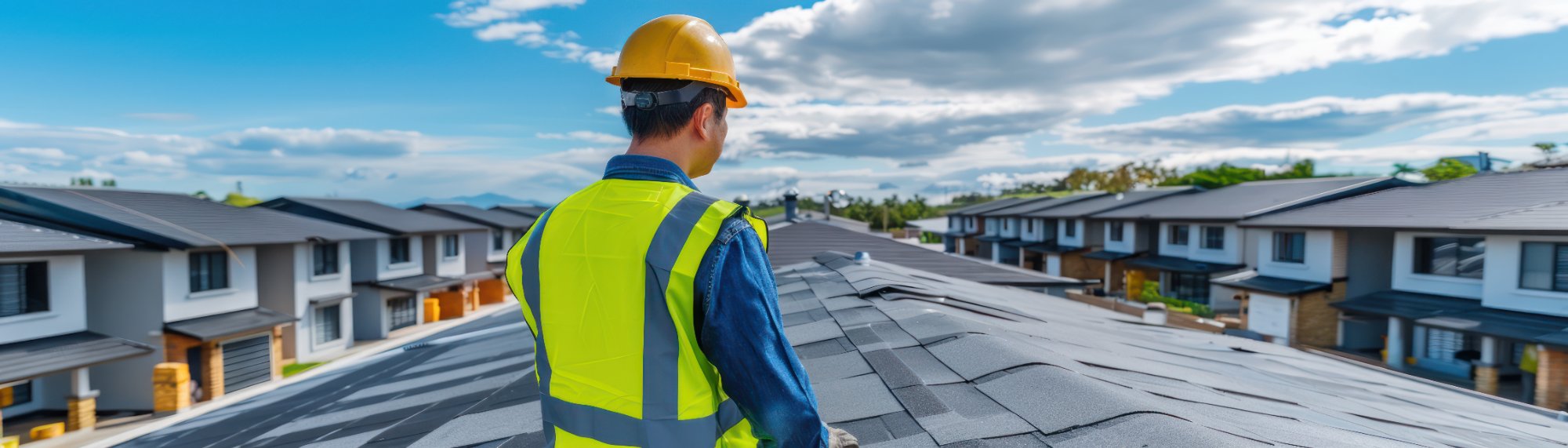
Positioned where the South Downs meet the English Channel, Eastbourne presents a roofing environment shaped by coastal exposure, heritage architecture, and a century of varied building development. Eastbourne Roof Surveys specialise in assessing this unique housing stock — from the grand Victorian seafront terraces facing constant salt spray and Channel gales, through the Edwardian villas of Meads with their complex roof valleys and decorative ridge detailing, to the interwar estates spreading north from the railway line, the extensive post-war housing of Langney and Hampden Park with their ageing concrete tiles, and the modern apartment developments at Sovereign Harbour where flat roofing systems demand specialist knowledge.
Fast, independent roof surveys from local experts.
Coastal roofing is not simply inland roofing near the sea — it is a distinct discipline requiring different assessment criteria and deeper understanding of material degradation patterns. Salt-laden air accelerates corrosion of metal components. Prevailing south-westerly winds generate uplift forces that inland properties never experience. Moisture ingress occurs through pathways invisible to conventional ground-level inspection. Eastbourne Roof Surveys bring the equipment, the certifications, and the experience to identify these issues before they escalate into structural damage or insurance disputes.
Whether you are purchasing a converted flat in a seafront villa, investigating persistent leaks in an Old Town terrace, documenting storm damage after winter gales, or simply seeking clarity on the condition of an ageing roof before committing to major expenditure, our surveys deliver the documented evidence you need to proceed with confidence.
Eastbourne Roof Surveys emerged from a straightforward observation: property owners in this coastal town were being poorly served by generic roof inspections that failed to account for the specific challenges of Channel-facing buildings. Too many buyers discovered hidden defects after exchange, too many homeowners paid for unnecessary work based on contractor recommendations, and too many insurance claims failed due to inadequate documentation. We established our service to change that.
Our methodology begins with comprehensive external assessment — walking the full building perimeter, photographing rainwater disposal systems, examining fascias and soffits, noting any visible defects from ground level. Our DJI Enterprise drone then captures high-definition imagery of every roof plane, ridge line, valley gutter, hip, dormer, and chimney stack. This aerial perspective reveals issues completely invisible from below — displaced tiles hidden by parapet walls, corroded lead work behind chimney stacks, cracked ridge tiles concealed by overhanging trees, and wind damage to elevations inaccessible by ladder.
Where thermal imaging forms part of the survey package, our FLIR cameras detect temperature differentials indicating moisture presence beneath tile coverings and within the roof structure. This technology proves invaluable on Eastbourne's older properties where leaks may track horizontally for metres before manifesting as visible staining in the rooms below.
Eastbourne's architectural diversity demands broad expertise. A Victorian terraced house converted to flats near the Winter Garden presents entirely different roofing from a 1930s bungalow in Meads, which differs again from a 1960s semi in Langney or a modern townhouse at Sovereign Harbour. Eastbourne Roof Surveys assess every era and construction type because the town's housing stock demands that breadth.
We maintain absolute independence. Eastbourne Roof Surveys do not undertake roof repairs and hold no financial interest in the outcome of any inspection. When we confirm a roof remains serviceable, that assessment carries genuine weight. When we identify defects, the repair costings in our report reflect current South Coast labour and material rates — not inflated figures designed to encourage panic spending.
Nearby Areas with Similar Properties: The coastal roofing challenges faced by Eastbourne properties extend along the Sussex coast. Homeowners in Seaford and Hastings encounter identical issues with salt corrosion, wind uplift, and heritage building assessment. Consult our area-specific guides for detailed local information.
Eastbourne Roof Surveys are not roofers, builders, or contractors. We provide independent inspection and reporting only — ensuring every assessment remains free from commercial bias.
Eastbourne Roof Surveys are ready to inspect your property. Whether it is a Victorian seafront conversion, an Edwardian villa in Meads, or a modern apartment at Sovereign Harbour, our team delivers the answers you need.
What Eastbourne Roof Surveys deliver for homeowners, property buyers, and landlords across the town
Eastbourne's roofscape spans from tightly packed Victorian conversions where rear access is impossible, to sprawling detached properties in Meads with multiple roof planes and dormer configurations that defeat conventional ladder inspection. Our DJI Enterprise drone captures every ridge, valley, hip, flashing, and chimney stack in high-definition detail. This technology proves essential on seafront properties where scaffolding is prohibitively expensive and ladder placement risks damage to heritage fabric.
Concealed moisture represents the greatest threat to roof longevity — particularly in Eastbourne where coastal humidity accelerates timber decay once water penetrates the covering. Our FLIR thermal cameras reveal temperature variations caused by moisture beneath tiles, behind lead work, and within the roof structure itself. This capability identifies active leaks months before visible staining appears on ceilings, allowing intervention before minor defects escalate into major structural repairs.
Every Eastbourne Roof Surveys report functions as a comprehensive reference document — annotated with high-resolution drone photographs, thermal overlays where moisture is detected, and precise repair costings based on current South Coast market rates. The report is formatted for direct submission to solicitors during property purchase, to insurance providers as documented evidence for claims, or to roofing contractors as an exact specification for required remedial work.
Eastbourne Roof Surveys carry full professional indemnity and public liability insurance. Our surveyors hold recognised industry certifications and CAA-approved drone pilot licences. Every inspection follows a standardised methodology refined across thousands of South Coast properties, ensuring consistency and accuracy whether we are assessing a listed Georgian terrace in Old Town or a modern flat-roofed commercial unit at Sovereign Harbour.
Eastbourne is not a homogeneous town — it comprises distinct neighbourhoods, each with characteristic building eras, roofing materials, and predictable failure patterns. The Victorian and Edwardian seafront properties carry Welsh slate on steep pitches with ornate lead valley gutters and multiple chimney stacks. The substantial homes of Meads present clay plain tiles, decorative ridge detailing, and complex roof geometries. The interwar estates feature concrete interlocking tiles with shallow pitches and flat-roofed rear extensions. The post-war housing of Langney and Hampden Park uses mass-produced concrete tiles that show widespread delamination after sixty years of coastal exposure.
Eastbourne Roof Surveys have built our reputation on understanding these distinctions. We do not apply generic checklists — we tailor every inspection to the specific age, material, construction method, and coastal exposure of the roof being assessed. That local knowledge differentiates between a superficial assessment and one that delivers genuinely actionable intelligence.
From Victorian slate roofs facing Channel gales to modern flat roofs at Sovereign Harbour, Eastbourne Roof Surveys understand this town's coastal roofscape comprehensively.
How Eastbourne Roof Surveys have helped local homeowners and property buyers

A couple purchasing a top-floor flat in a converted Victorian seafront villa received a homebuyer report stating the roof was "in generally acceptable condition given its age." With an asking price of three hundred and seventy thousand pounds and service charge concerns already flagged, the buyers wanted absolute certainty before proceeding.
Our drone revealed a lead-lined valley gutter hidden behind decorative parapet work on the rear elevation. The lead had corroded through in two locations, and thermal imaging confirmed active moisture ingress affecting the roof structure serving three separate flats including the buyer's intended purchase. We also documented extensive nail failure across the south-facing slope — twelve slates visibly slipped with many more showing movement — and severely corroded hip iron fixings on both main hips.
Eastbourne Roof Surveys estimated the remedial works at approximately fourteen thousand eight hundred pounds split between three leaseholders. The buyers' solicitor presented our report and the vendor agreed to a fifteen-thousand reduction in price to cover the full repair cost. The lead valley was replaced within eight weeks of completion, preventing what would have become significant structural timber damage through another coastal winter. The buyers avoided potential liability disputes with other leaseholders.

Following severe Channel gales in February 2024, a homeowner discovered water entering through the ceiling in two bedrooms of her Meads bungalow. The insurance loss adjuster attributed the leak to "progressive wear and ageing tiles rather than storm damage" and declined the claim. The homeowner disputed this assessment and contacted Eastbourne Roof Surveys for an independent inspection.
Our drone inspection documented fresh displacement of nine clay tiles on the south-west facing elevation — consistent with the recorded wind direction during the storm event. Thermal imaging showed concentrated moisture paths from the displaced tiles directly to the affected bedroom ceilings below. We photographed clean fracture lines on three ridge tiles with no weathering on the exposed edges, confirming recent breakage. Crucially, adjacent tiles showed no similar damage, contradicting the adjuster's "progressive wear" conclusion.
Our timestamped report with annotated drone photography and thermal evidence was submitted as a formal dispute. The insurer reassessed the claim and approved it in full within nineteen days. Total repair costs of six thousand three hundred pounds were covered under the policy. The homeowner's excess was waived due to the strength of our evidence. Eastbourne Roof Surveys provided exactly the documented proof required to overturn the original decision.
Need a professional roof survey for your Eastbourne property? Get in touch with Eastbourne Roof Surveys today for a free consultation.
Feedback from homeowners and buyers who have used Eastbourne Roof Surveys
"Buying a top-floor flat in a converted seafront villa, we knew the standard survey would not cover the roof adequately. Eastbourne Roof Surveys identified corroded lead valley work and extensive nail failure that would have cost nearly fifteen thousand to repair. Their detailed report gave our solicitor everything needed to renegotiate. Quite possibly saved us from a nightmare with the other leaseholders."
"Our bungalow in Meads suffered storm damage but the insurance assessor refused the claim. Eastbourne Roof Surveys provided timestamped drone evidence and thermal scans proving the damage was storm-related not wear and tear. The claim was approved within two weeks of submitting their report. Outstanding professionalism when we really needed it."
"A contractor quoted thirty-eight thousand for complete re-roofing of our Langney semi. Eastbourne Roof Surveys proved with drone photography that only the south slope needed work and gave us a maintenance plan for the rest. Saved us over twenty-three thousand pounds. Cannot recommend highly enough for anyone facing major roofing decisions."
Transparent pricing from Eastbourne Roof Surveys — choose the inspection level suited to your property and requirements
Eastbourne Roof Surveys offer three tiers of inspection to accommodate different property types, budgets, and levels of concern. Every survey is conducted by the same certified team using identical professional methodology — the distinction lies in the depth of investigation and the technology deployed. Whether you own a modest flat-roofed extension in Langney or a substantial Victorian villa in Old Town, there is a package designed for your circumstances.
Essential visual roof assessment for Eastbourne homeowners requiring a clear overview of current roof condition
Full drone and thermal imaging inspection — the most requested package for Eastbourne buyers and homeowners
Complete structural roof assessment for Eastbourne's larger detached homes, heritage properties, and commercial premises
Common questions answered by Eastbourne Roof Surveys
Eastbourne Roof Surveys operate across the entire town from Beachy Head to Pevensey Bay. Our inspection territory encompasses the Victorian and Edwardian seafront properties along the promenade, the historic buildings within Old Town around the Lamb Inn and St Mary's Church, the substantial detached homes of Meads and Upperton with their Downs views, the interwar estates between the railway and the A22, the post-war housing developments of Langney and Hampden Park, and the modern apartment complexes at Sovereign Harbour. We also survey properties in the rural villages to the north including Willingdon, Polegate, Westham, and Stone Cross.
Inspection duration depends on property complexity and roof configuration. A standard two-bedroom flat in a converted Victorian villa typically requires seventy-five to ninety minutes on site. Larger detached properties in Meads with multiple roof slopes, dormer windows, and complex valley arrangements generally take two to three hours. Multi-storey apartment blocks and commercial premises demand more extensive assessment time. Regardless of property size, every client receives their complete written report within forty-eight hours of the site visit.
Coastal exposure defines the majority of our Eastbourne workload. Properties directly facing the Channel experience accelerated deterioration of metal fixings, lead work, and mortar due to salt-laden prevailing winds and driving rain. Our inspections specifically assess corrosion patterns in nail fixings, degradation of lead flashings, erosion of ridge and hip mortar, and the impact of wind uplift forces on tiles along exposed elevations. We understand the unique challenges coastal properties face and structure our assessment criteria and reports accordingly.
Every comprehensive and premium survey from Eastbourne Roof Surveys includes timestamped drone imagery, thermal scan evidence where moisture is suspected or detected, detailed damage descriptions with precise locations, and current South Coast market repair costings. Insurance providers require documented proof rather than verbal assertions, and our reports are formatted specifically to meet those industry standards. We have successfully supported numerous storm damage claims for Eastbourne properties following Channel gales and winter storms.
Coastal exposure drives the majority of roofing issues across Eastbourne. Salt-laden air accelerates corrosion of nail fixings on clay and concrete tiles, particularly on south-facing slopes receiving the full force of prevailing winds. Wind uplift from Channel storms displaces tiles and degrades ridge fixings. Lead flashings corrode significantly faster than their inland counterparts. The Victorian and Edwardian housing stock along the seafront presents ageing Welsh slate with perished nail fixings and corroded hip irons. Post-war concrete tiles across Langney and Hampden Park exhibit widespread delamination after six decades of coastal exposure. Flat roof failures on rear extensions remain common across every era of Eastbourne housing.
Commercial inspections represent a significant proportion of our Eastbourne schedule. We survey hotels and guesthouses along the seafront promenade, retail premises in the Arndale Centre and Terminus Road, converted office buildings throughout the town centre, schools, care homes, and industrial units at Sovereign Harbour and the Lottbridge Drove estate. Heritage property inspections require particular sensitivity — our drone technology avoids the need for intrusive scaffolding on listed buildings while still capturing comprehensive roof condition data. We have assessed numerous Grade II listed properties throughout Old Town, Meads, and along Grand Parade.
Have another question? Contact Eastbourne Roof Surveys directly.
Eastbourne Roof Surveys provide professional roof inspections across the town and wider borough
The Victorian and Edwardian properties lining the promenade from the Wish Tower to the Redoubt represent some of Eastbourne's most architecturally significant buildings. Welsh slate roofs, ornate lead valley gutters, multiple chimney stacks, and decorative ridge tiles define this zone. Constant salt spray and Channel gales accelerate deterioration of all metal components.
Historic Old Town contains Eastbourne's oldest surviving buildings including Georgian terraces, Victorian conversions, and numerous listed properties. The modern town centre features retail premises, office conversions, and apartment blocks above commercial units — each requiring specialist flat roof assessment.
The elevated residential areas of Meads and Upperton contain substantial Edwardian and interwar detached properties on generous plots with commanding Downs views. Complex multi-pitch roofs, dormer windows, clay tile coverings, and decorative ridge work are characteristic of this prestigious zone.
The extensive post-war housing estates east of the railway comprise predominantly semi-detached and terraced properties built between 1950 and 1980. Concrete interlocking tiles showing widespread delamination, flat-roofed extensions, and eroded ridge mortar characterise this zone.
Eastbourne's modern marina development features contemporary apartment blocks, townhouses, and waterfront properties built predominantly from the 1990s onwards. Flat roofing systems using EPDM, GRP, and single-ply membranes require specialist assessment distinct from traditional pitched roofing.
Eastbourne Roof Surveys operate throughout the wider borough and into the adjacent Wealden district. We regularly attend properties in the surrounding towns and villages sharing similar housing stock and coastal exposure challenges.
Eastbourne Roof Surveys deliver the independent, professional roof inspections that this coastal town demands. Whether you are a first-time buyer concerned about a seafront conversion, a homeowner dealing with storm damage in Meads, a landlord protecting portfolio properties in Langney, or simply seeking clarity on an ageing roof before committing to costly repairs, our surveys provide the answers you need.
Every inspection combines certified expertise with advanced technology — drone aerial photography, thermal imaging, and detailed written reporting — to give you a complete, unbiased assessment of your roof's condition. We do not undertake repairs. We do not recommend contractors. We provide the facts, the photographs, and the costings, and you make the informed decisions.
Every report is independent, comprehensive, and written to be acted upon — whether you are buying, selling, claiming, or simply protecting your coastal property investment.
Call us today or complete the form below to arrange your Eastbourne roof survey.
Contact Eastbourne Roof Surveys today to arrange your roof inspection
Monday - Friday: 7:30 AM - 9:30 PM
Saturday: 7:30 AM - 7:00 PM
Sunday: 9:00 AM - 5:00 PM
For urgent roof inspection needs in Eastbourne, please call Eastbourne Roof Surveys directly.
Call Now