
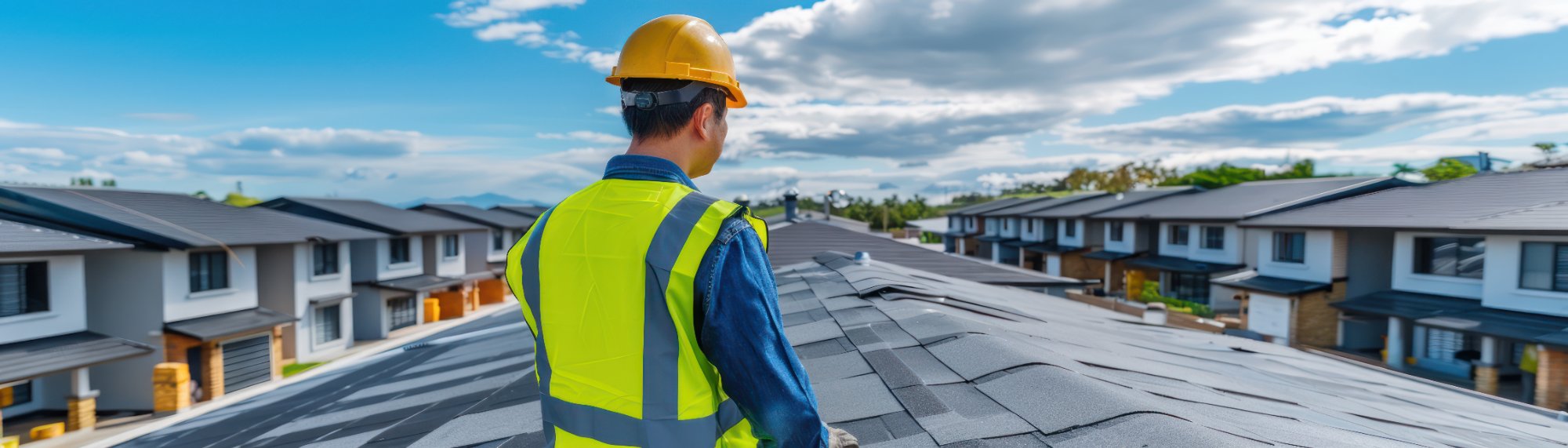
Nestled in the Ouse valley where the river cuts through the South Downs, Lewes presents one of England's most architecturally significant roofscapes. Lewes Roof Surveys bring specialist knowledge to this historic county town, where Saxon foundations support medieval timber frames, Georgian elegance lines steep cobbled streets, and Victorian expansion created distinctive terraced neighbourhoods climbing the chalk hillsides. Our certified surveyors combine traditional inspection methods with cutting-edge drone technology and thermal imaging to assess every roof type found within the conservation area — from handmade clay peg tiles on fifteenth-century timber frames through Welsh slate on Victorian terraces to the concrete interlocking tiles of twentieth-century estates in Landport and South Malling.
Fast, independent roof surveys from local experts.
The concentration of listed buildings and structures within Lewes conservation area demands inspection expertise that goes beyond standard practice. Properties along the High Street, School Hill, Keere Street, and the lanes of Cliffe carry roofing systems installed by craftsmen working to pre-industrial standards. Clay peg tiles fixed to riven oak laths, hand-dressed Welsh slate laid to diminishing courses, lead work formed using traditional bossing techniques — these historic elements require assessment by surveyors who understand their construction, recognise appropriate repair methods, and can articulate conservation requirements to planning officers. Lewes Roof Surveys operate with that specialist knowledge because the town's architectural heritage demands it.
Whether you are purchasing a period townhouse within the castle's shadow, investigating moisture ingress in a Victorian villa in Southover, documenting storm damage after winds funnelling through the Downs gap, or seeking an honest second opinion before committing to expensive repairs on a family home in Nevill or South Malling, Lewes Roof Surveys deliver the documented evidence needed for confident decision-making. We extend our service to the surrounding villages — Ringmer, Glynde, Kingston near Lewes, and Iford — where similar building traditions and materials present comparable roofing challenges.
Lewes Roof Surveys exist because this town's property market operates differently from anywhere else in Sussex. The density of heritage assets, the prevalence of conservation area restrictions, and the complexity of historic roofing systems mean that generic inspection approaches fail to provide the detail that buyers, owners, and lenders require. A standard homebuyer survey might note that a roof is "original" or "of the period" — but that observation tells you nothing about whether the clay tiles are sound, the lead flashings are intact, or the timber structure beneath is suffering from decades of undetected moisture ingress.
Our methodology addresses that gap. Every Lewes Roof Surveys inspection begins with archival research where appropriate — understanding the property's construction date, identifying historic alterations, and recognising what materials should be present. We then conduct a systematic external assessment using DJI Enterprise drone technology to capture ultra-high-resolution imagery from angles impossible to achieve with ladders. The steep gradients of streets like School Hill and Keere Street make conventional access hazardous; drone photography eliminates that risk while providing superior diagnostic information.
Internal loft inspection follows where access permits. We examine the condition of historic timbers, assess insulation and ventilation adequacy, identify biological decay or insect infestation, and trace moisture ingress patterns that external inspection alone cannot reveal. Where thermal imaging is included in the survey package, our FLIR cameras detect temperature differentials caused by trapped moisture, missing insulation, or concealed structural defects.
Complete independence defines our operation. Lewes Roof Surveys do not undertake repair work, do not recommend specific contractors, and hold no financial interest in the outcome of any inspection. When we confirm a roof is serviceable, that assessment carries weight because we gain nothing from declaring otherwise. When we identify necessary repairs, our costings reflect realistic market rates rather than inflated figures designed to generate fear or urgency.
Similar Properties in Nearby Towns: The roofing challenges we encounter in Lewes mirror those found throughout the South Downs market towns. Property owners in Brighton and Eastbourne face comparable heritage conservation requirements and similar weather exposure. Explore our area-specific guidance for detailed information about your location.
Lewes Roof Surveys bring specialist knowledge of historic construction methods, traditional materials, and conservation requirements to every inspection.
From medieval timber-framed buildings in the High Street to Victorian villas in Southover, Lewes Roof Surveys deliver the specialist inspection your property deserves.
What Lewes Roof Surveys bring to homeowners, buyers, and landlords across this historic South Downs town
Lewes streets climb steep chalk slopes where ladder placement against period buildings risks damage to historic fabric and presents serious safety concerns. Keere Street drops one-in-four in places; School Hill presents similar gradients. Our DJI Enterprise drone eliminates these risks while capturing detail impossible from ground level — every clay peg tile, every section of lead work, every chimney pot and hip iron photographed in ultra-high resolution without touching the building. Conservation officers actively prefer this non-invasive approach for listed structures.
Historic buildings conceal moisture problems behind decorative plasterwork and beneath seemingly intact roof coverings. A Georgian townhouse might show no external evidence of trouble while the roof structure beneath slowly degrades from decades of rainwater tracking along ancient timbers. Our FLIR thermal cameras reveal these hidden issues by detecting temperature differentials caused by moisture saturation, missing insulation, or compromised weatherproofing. This technology has prevented catastrophic timber decay on numerous Lewes heritage properties.
Every Lewes Roof Surveys report combines annotated drone photography, thermal imaging overlays, historical construction notes, and precise repair specifications written to conservation standards. Reports include references to appropriate heritage repair methods, recommended materials that match original specifications, and guidance on listed building consent requirements where applicable. Solicitors, conservation officers, mortgage surveyors, and insurance assessors all recognise and accept our reporting format.
Lewes Roof Surveys carry full professional indemnity and public liability insurance appropriate for heritage property work. Our surveyors hold recognised qualifications in historic building conservation alongside standard roofing inspection credentials. CAA-approved drone pilots operate under strict safety protocols within Lewes conservation area and near the castle scheduled monument. Every inspection follows documented methodology that has evolved over hundreds of Sussex heritage property assessments.
Lewes defies simple categorisation. The medieval core around the castle carries timber-framed buildings with clay peg tile roofs unchanged since Tudor times. Georgian expansion created formal terraces with handmade plain tiles and delicate lead valley gutters. Victorian prosperity built substantial villas in Southover with Welsh slate and elaborate ridge detailing. Edwardian development spread onto the hillsides with machine-made clay tiles. Post-war infill introduced concrete interlocking tiles that age poorly in Lewes's damp microclimate.
Understanding these distinctions matters because each construction method presents specific failure modes and requires tailored assessment techniques. A Victorian slate roof inspected using methods appropriate for twentieth-century concrete tiles will miss critical defects. Lewes Roof Surveys have built our reputation on recognising these differences and applying inspection protocols appropriate to what stands before us — not what a generic checklist assumes.
From Saxon-era foundations to twentieth-century housing estates, Lewes Roof Surveys understand this town's building history intimately.
How Lewes Roof Surveys have protected heritage properties and saved buyers thousands

A young family were purchasing a four-storey Georgian townhouse on the steep gradient of Keere Street. Their structural survey mentioned the roof in passing as "original handmade tiles, condition consistent with age." With an asking price approaching nine hundred thousand pounds and aware of the property's listed status, they commissioned Lewes Roof Surveys for a detailed assessment before exchange.
Our drone revealed extensive peg tile slip across the rear elevation — approximately forty tiles displaced or missing. More seriously, thermal imaging detected a concealed lead-lined valley gutter between the main house and a later extension. The lead had split along a two-metre section and was actively leaking into the roof structure. Internal loft inspection confirmed advanced wet rot in three principal rafters where moisture had tracked along the timbers for what appeared to be several winters.
Lewes Roof Surveys costed the required repairs — including listed building consent application, specialist heritage contractor, handmade replacement tiles, new code 6 lead valley gutter, and structural timber repairs — at fourteen thousand eight hundred pounds. The vendor agreed to reduce the purchase price by the full amount. The buyers completed the works within four months under conservation officer supervision. Our report had prevented them purchasing a property with imminent structural roof failure.

The owners of a substantial Victorian detached villa in Southover had suffered persistent damp staining in their main bedroom for over a year. Two roofing contractors had inspected the property and provided contradictory diagnoses — one blaming the chimney flashing, the other suggesting slate failure. Both quoted expensive repairs but neither could definitively locate the source of ingress. Frustrated and losing confidence, the owners contacted Lewes Roof Surveys.
Our comprehensive survey included full thermal imaging of the roof structure. The thermal camera immediately revealed a concealed valley gutter hidden beneath the Welsh slate covering — a common Victorian construction detail that both contractors had failed to consider. The lead lining had corroded through at a junction point, allowing water to track horizontally along the sarking boards before appearing forty feet away as ceiling damp in the bedroom below. Drone photography confirmed biological growth patterns consistent with long-term moisture exposure around the affected valley.
With the precise location identified, a specialist heritage roofer replaced the failed section of valley gutter for five thousand two hundred pounds — substantially less than either of the original quotes. The ceiling was replastered once dried out and no further damp has occurred. The property owners described our thermal imaging as "worth ten times the survey fee" for finally solving a problem that had baffled two experienced contractors.
Need a professional roof survey for your Lewes property? Contact Lewes Roof Surveys today for expert assessment.
Feedback from homeowners and buyers who have used Lewes Roof Surveys
"Purchasing a Grade II listed property on Keere Street, we needed far more detail than the basic homebuyer survey provided. Lewes Roof Surveys found serious issues with peg tile slip and a failing lead valley that would have cost over twelve thousand to repair. Their report gave us the evidence to renegotiate and we completed the repairs properly with heritage specialists. Cannot recommend highly enough for period property purchases."
"After two roofers gave us completely different explanations for a persistent leak, Lewes Roof Surveys used thermal imaging to pinpoint the exact problem — a hidden valley gutter we didn't even know existed. The repair was completed quickly and we've had no issues since. Their technology and expertise solved what local contractors couldn't diagnose."
"Faced with an eighteen thousand pound quote for complete re-roofing, we asked Lewes Roof Surveys for an independent view. Their drone survey proved that only one slope needed replacement and the rest had years of life remaining. Saved us nearly ten thousand pounds and gave us a proper maintenance schedule. Honest, thorough, and genuinely independent."
Transparent pricing from Lewes Roof Surveys — inspection packages designed for heritage and modern properties
Lewes Roof Surveys offer three inspection tiers tailored to different property types and client needs. Whether you own a modest Victorian terrace in Cliffe, a substantial period villa in Southover, or a listed building within the conservation area, there is a survey package appropriate for your circumstances. Every package uses the same professional methodology and certified surveyors — the difference lies in the technology deployed and the depth of investigation.
Essential visual roof assessment for Lewes homeowners requiring a clear condition overview
Full drone and thermal imaging inspection — the most requested package for Lewes period properties
Complete structural assessment for listed buildings, large period properties, and complex roofs
Common questions answered by Lewes Roof Surveys
Heritage and listed properties form the core of our Lewes practice. The town's conservation area contains hundreds of structures dating from medieval times through Victorian expansion. We regularly inspect timber-framed buildings with clay peg tiles, Georgian townhouses with handmade plain tiles, Victorian terraces with Welsh slate, and Edwardian villas with decorative ridge work. Our drone methodology avoids placing ladders against fragile historic fabric, making it the preferred inspection method for conservation officers and heritage-conscious property owners.
Lewes Roof Surveys operate across the entire historic town and surrounding parishes. Regular inspection areas include the High Street and medieval core, Cliffe with its Georgian terraces and Victorian workers' cottages, Southover and its substantial Victorian villas, Landport, South Malling, Nevill, and the outlying villages of Ringmer, Glynde, Kingston near Lewes, and Iford. We cover all postcode districts within BN7 and BN8 where they fall within our service territory.
Inspection duration depends on property type and complexity. A standard Victorian terrace in Cliffe might require ninety minutes, while a large detached period house in Southover with multiple chimneys, valleys, and historic roof coverings can take three hours on site. Listed buildings with restricted access or conservation constraints sometimes need longer. All clients receive their full written report within forty-eight hours regardless of property size or complexity.
Dating historic roof materials forms a core part of our Lewes inspection service. Handmade clay peg tiles display distinctive wear patterns, firing marks, and fixing methods that indicate their era. Welsh slate can be identified by quarry origin and cutting style. Victorian machine-made tiles differ markedly from earlier handmade examples. We document these findings with close-up drone photography and include dating assessments in our reports — information that proves valuable for conservation area consent applications and heritage grant funding requirements.
Lewes sits in a valley beneath the South Downs escarpment, creating a microclimate prone to moisture retention and wind funnelling. Common issues include biological growth on north-facing slopes, clay peg tile slip on medieval and Tudor buildings, Welsh slate delamination on Victorian properties, lead flashing failure around the numerous chimney stacks, valley gutter corrosion on complex multi-pitch roofs, and concrete tile degradation on mid-twentieth century housing. Properties in Cliffe near the River Ouse face additional moisture challenges due to proximity to water and the valley's natural dampness.
Every comprehensive and premium report meets the evidential requirements of insurance providers, mortgage lenders, and solicitors. Reports include timestamped drone imagery, thermal overlays where moisture is detected, detailed damage descriptions with precise locations, and itemised repair costings at current contractor rates. We have supported numerous mortgage applications and insurance claims for Lewes properties, particularly following storm events that affect the exposed hilltop areas around Lewes Castle and the South Downs slopes above the town.
Have another question? Contact Lewes Roof Surveys directly.
Lewes Roof Surveys provide professional roof inspections across the historic town and surrounding South Downs villages
The medieval core around Lewes Castle and the High Street contains the town's most significant heritage assets — timber-framed buildings dating from the fifteenth century, Georgian townhouses with handmade clay tiles, and Victorian conversions. Steep gradients, narrow streets, and conservation area restrictions make drone inspection essential.
Cliffe developed as Lewes's working district across the River Ouse, creating a neighbourhood of Georgian terraces, Victorian workers' cottages, and later industrial conversions. Properties face particular moisture challenges due to river proximity and the valley microclimate.
Southover represents Victorian prosperity — substantial detached and semi-detached villas with Welsh slate roofs, elaborate ridge detailing, multiple chimney stacks, and complex multi-pitch rooflines. These properties require comprehensive inspection due to their scale and architectural complexity.
The hillside developments of South Malling and Nevill combine Edwardian housing with post-war estates and modern infill. Properties range from substantial Edwardian semis with clay tiles through 1950s terraces with concrete tiles to recent developments with modern roofing systems.
The villages surrounding Lewes — Ringmer, Glynde, Kingston near Lewes, and Iford — share similar building traditions and materials with the town centre. Medieval churches, period cottages, Georgian farmhouses, and Victorian estate housing all require specialist heritage inspection approaches.
Lewes Roof Surveys deliver the specialist heritage inspection expertise this historic South Downs town demands. Whether you are purchasing a listed townhouse in the conservation area, investigating persistent damp in a Victorian villa in Southover, documenting storm damage after winds funnelling through the Ouse gap, protecting a period cottage in one of the surrounding villages, or simply seeking honest answers before committing to expensive repairs, our surveys provide the documented evidence needed for confident decision-making.
Every inspection combines certified heritage expertise with advanced technology — drone aerial photography that respects delicate historic fabric, thermal imaging that reveals concealed moisture problems, and detailed written reporting formatted to conservation standards. We do not carry out repairs. We do not recommend contractors. We provide the facts, the photographs, the costings, and the conservation guidance — you make the informed decisions.
Every report is independent, comprehensive, and written to be acted upon — whether you are buying, selling, claiming, or protecting your Lewes property.
Call us today or complete the form below to arrange your Lewes roof survey.
Contact Lewes Roof Surveys today to arrange your roof inspection
Monday - Friday: 7:30 AM - 9:30 PM
Saturday: 7:30 AM - 7:00 PM
Sunday: 9:00 AM - 5:00 PM
For urgent roof inspection needs in Lewes, please call Lewes Roof Surveys directly.
Call Now