
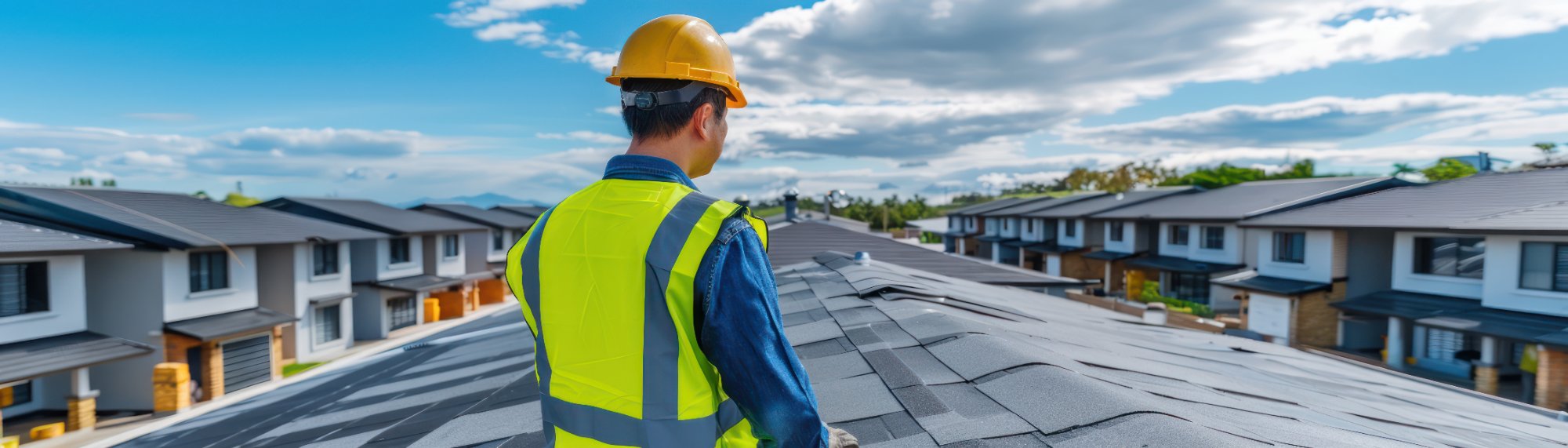
Havering Roof Surveys deliver professional, independent roof inspections across this expansive outer London borough and every neighbourhood within it. Our certified surveyors combine drone aerial photography with thermal imaging to produce thorough, accurate assessments of every roof type found across the borough — from the architect-designed garden suburb houses of Gidea Park and the substantial executive homes lining the private roads of Emerson Park, through the 1930s bay-fronted semis of Ardleigh Green and Hornchurch, the post-war council-built estates of Harold Hill and Elm Park, the Victorian terraces flanking Romford's town centre streets, to the older village properties around Havering-atte-Bower and the riverside developments transforming Rainham.
Fast, independent roof surveys from local experts.
Our Havering service reflects the sheer diversity of the borough's housing stock. As London's easternmost borough, Havering stretches from the busy commercial centre of Romford through leafy suburban avenues to genuinely rural pockets at its northern and eastern fringes. The building eras span Victorian terraces in the old market town core, Edwardian villas around Gidea Park, the 1920s and 1930s private estates that defined Hornchurch and Upminster, large-scale post-war public housing across Harold Hill and parts of Rainham, and the continuing wave of modern apartment developments reshaping central Romford. Each generation brought different roofing systems, materials, and maintenance demands, and Havering Roof Surveys carry the equipment and expertise to assess every one of them.
Whether you are purchasing a property in the borough, chasing a persistent leak through an ageing flat roof, gathering evidence for a storm damage insurance claim, or simply seeking an honest assessment before committing to an expensive re-roofing quote, Havering Roof Surveys provide the documented evidence you need to act with confidence.
Havering Roof Surveys were established on a straightforward principle: property owners across this borough deserve access to honest, independent roof assessments before spending thousands on repair work or completing a purchase. Too many Havering homeowners have committed to unnecessary full re-roofs on the word of a contractor with a financial incentive to recommend the most expensive option, or have exchanged on a property only to discover defects that a thorough roof inspection would have revealed weeks earlier. Our purpose is to close that knowledge gap.
Every inspection follows a structured, repeatable methodology. We begin with a full perimeter walk at ground level, assessing rainwater goods, fascias, soffits, and any visible defects from below. Our DJI Enterprise drone then captures high-resolution imagery of every elevation, ridge, valley, hip, and chimney stack — reaching vantage points that ladders cannot safely access on the taller properties of Emerson Park or the steeply pitched rooflines characteristic of Gidea Park's 1910s exhibition houses. Where the survey package includes thermal imaging, our FLIR cameras map moisture patterns hidden beneath tiles and within the roof structure itself.
Havering's property landscape is remarkably broad for a single borough. A Victorian terrace off South Street in Romford shares almost nothing in roofing terms with a five-bedroom detached home on Nelmes Way in Emerson Park, and both differ entirely from a 1950s council-built semi on Harold Hill. Havering Roof Surveys operate confidently across every era and material because the borough's diversity demands exactly that breadth of knowledge.
We maintain complete independence at every stage. Havering Roof Surveys do not undertake roof repairs and hold no financial interest in the findings of any inspection. When we confirm that a roof is sound, that assessment carries genuine credibility. When we identify a problem, the costings in our report reflect current market rates — not figures calculated to create urgency or push a particular contractor.
Nearby Areas with Similar Properties: The roofing challenges we encounter in Havering are shared by properties across the neighbouring east London and Essex borders. Homeowners in Barking and Dagenham and Redbridge face comparable issues with interwar tile fatigue, post-war concrete roof deterioration, and flat roof failures. See our area-specific guides for detailed local information.
Havering Roof Surveys are not roofers, builders, or contractors. We provide independent inspection and reporting only — ensuring every assessment is free from commercial bias.
Havering Roof Surveys are ready to inspect your property. Whether it is an executive detached in Emerson Park, a 1930s semi in Hornchurch, a post-war house on Harold Hill, or a modern apartment in central Romford, our team delivers the answers you need.
What Havering Roof Surveys bring to homeowners, buyers, and landlords across the borough
Havering's roofscape ranges from compact Victorian terraces in central Romford — where rear access is restricted by narrow yards and party walls — to the sprawling multi-pitch rooflines of Emerson Park's executive homes, some exceeding five thousand square feet. Our DJI Enterprise drone captures every ridge, valley, hip, flashing, and chimney stack in high-definition detail, reaching areas that scaffolding and ladders simply cannot access safely or economically on the borough's larger and taller properties.
Concealed moisture is a recurring concern across Havering's older housing stock. The 1930s bay-fronted semis of Hornchurch and Ardleigh Green carry lead work around bay windows that degrades silently over decades. Post-war concrete tile roofs in Harold Hill and Elm Park trap water beneath delaminating tiles long before staining appears on bedroom ceilings. Our FLIR thermal cameras detect temperature differentials caused by moisture ingress — pinpointing problems that a purely visual inspection would miss entirely.
Every Havering Roof Surveys report is a working document — annotated with high-resolution drone photographs, thermal overlays where applicable, and clearly itemised repair costings at current market rates. The report is designed to be handed directly to your solicitor during a property transaction, submitted to an insurance company as supporting evidence for a claim, or given to a roofing contractor as a precise written specification for the work required.
Havering Roof Surveys carry full professional indemnity and public liability insurance. Our surveyors hold recognised industry certifications and CAA-approved drone pilot licences. Every inspection follows a standardised methodology refined across thousands of properties, delivering consistent accuracy whether we are assessing a conservation-area exhibition house in Gidea Park or a new-build apartment block beside Romford station.
Havering is not one housing type — it is a patchwork of distinct neighbourhoods, each with its own building era, materials, and characteristic roof problems. The architect-designed exhibition houses of Gidea Park carry handmade clay tiles, decorative ridge cresting, and complex dormer arrangements that demand specialist understanding. The interwar semi-detached housing stretching from Ardleigh Green through Hornchurch to Upminster Bridge typically presents plain clay tiles on steep pitches with bay window lead work that fails gradually over decades. Harold Hill's post-war estates use concrete interlocking tiles with a finite lifespan and ridge mortar that crumbles faster than many homeowners anticipate. Emerson Park's executive homes add another layer of complexity with their multi-valley rooflines, extensive lead work, and modern membrane flat roof sections.
Havering Roof Surveys have built a reputation across the borough by understanding these distinctions in detail. We do not apply a one-size-fits-all checklist — every inspection is calibrated to the specific age, material, and construction method of the roof we are examining. That local knowledge is the difference between a report that gives you actionable information and one that simply confirms your property has a roof.
From the exhibition houses of Gidea Park to the post-war estates of Harold Hill, Havering Roof Surveys understand this borough's roofscape inside and out.
How Havering Roof Surveys have helped local homeowners and property buyers
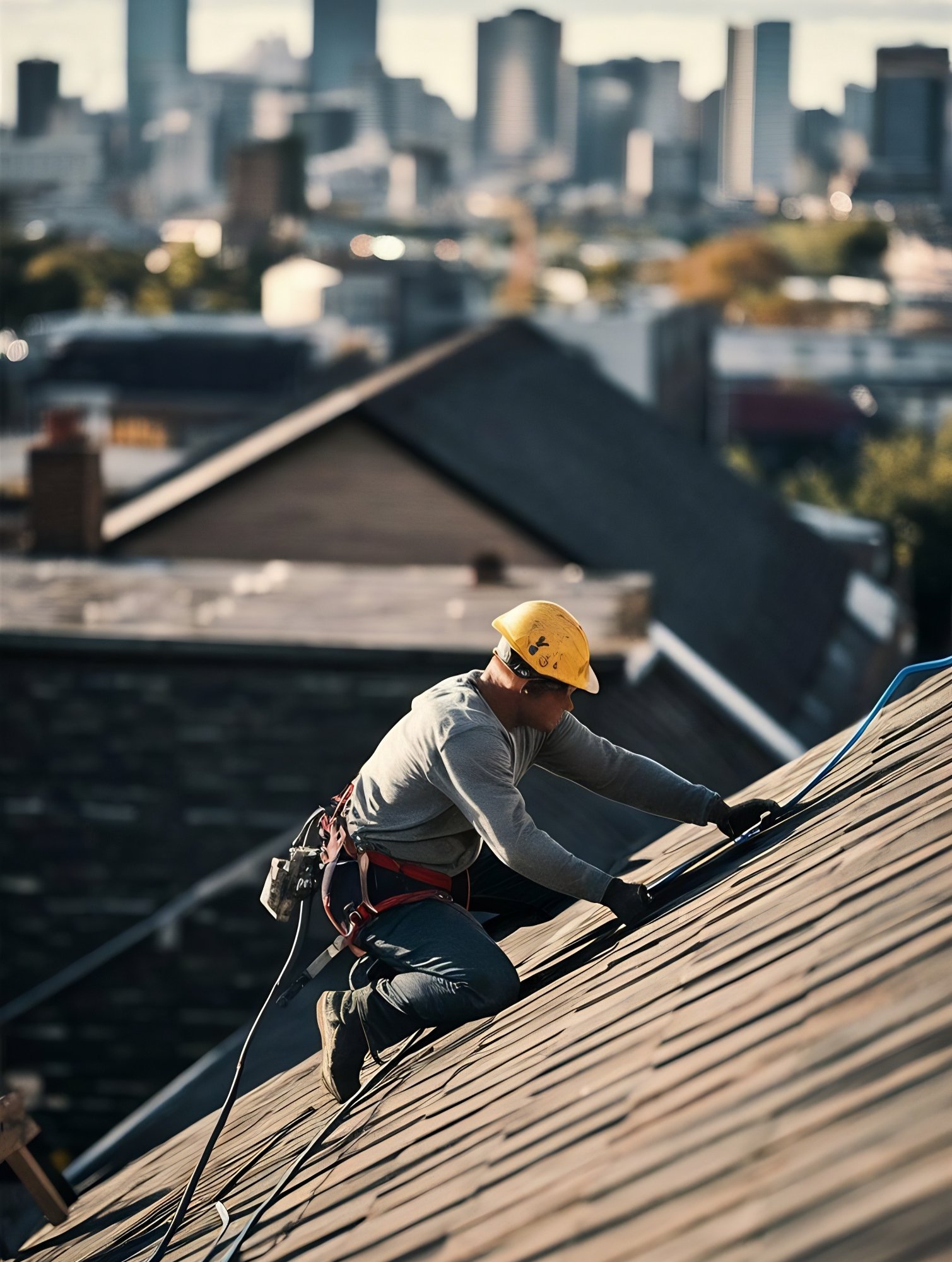
A couple purchasing a five-bedroom detached home on one of Emerson Park's premium roads received a homebuyer report describing the roof as "satisfactory with minor maintenance recommended." With an asking price north of one and a half million pounds, they wanted certainty before exchanging contracts on a property of that scale and complexity.
Our drone identified three separate valley gutter runs between the multiple roof pitches. One valley — concealed behind a parapet extension at the rear — showed cracking along a two-metre section of lead lining. Thermal imaging confirmed active moisture tracking into the timber structure below. We also documented a failed EPDM membrane on the flat-roofed rear extension, with ponding water visible in the drone photography and corresponding cold spots on the thermal scan beneath.
Havering Roof Surveys costed the combined valley lead replacement and flat roof membrane renewal at approximately twelve thousand eight hundred pounds. The buyer's solicitor presented our report to the vendor, and the purchase price was reduced by the full remediation cost before exchange. Both defects were addressed within two months of completion.
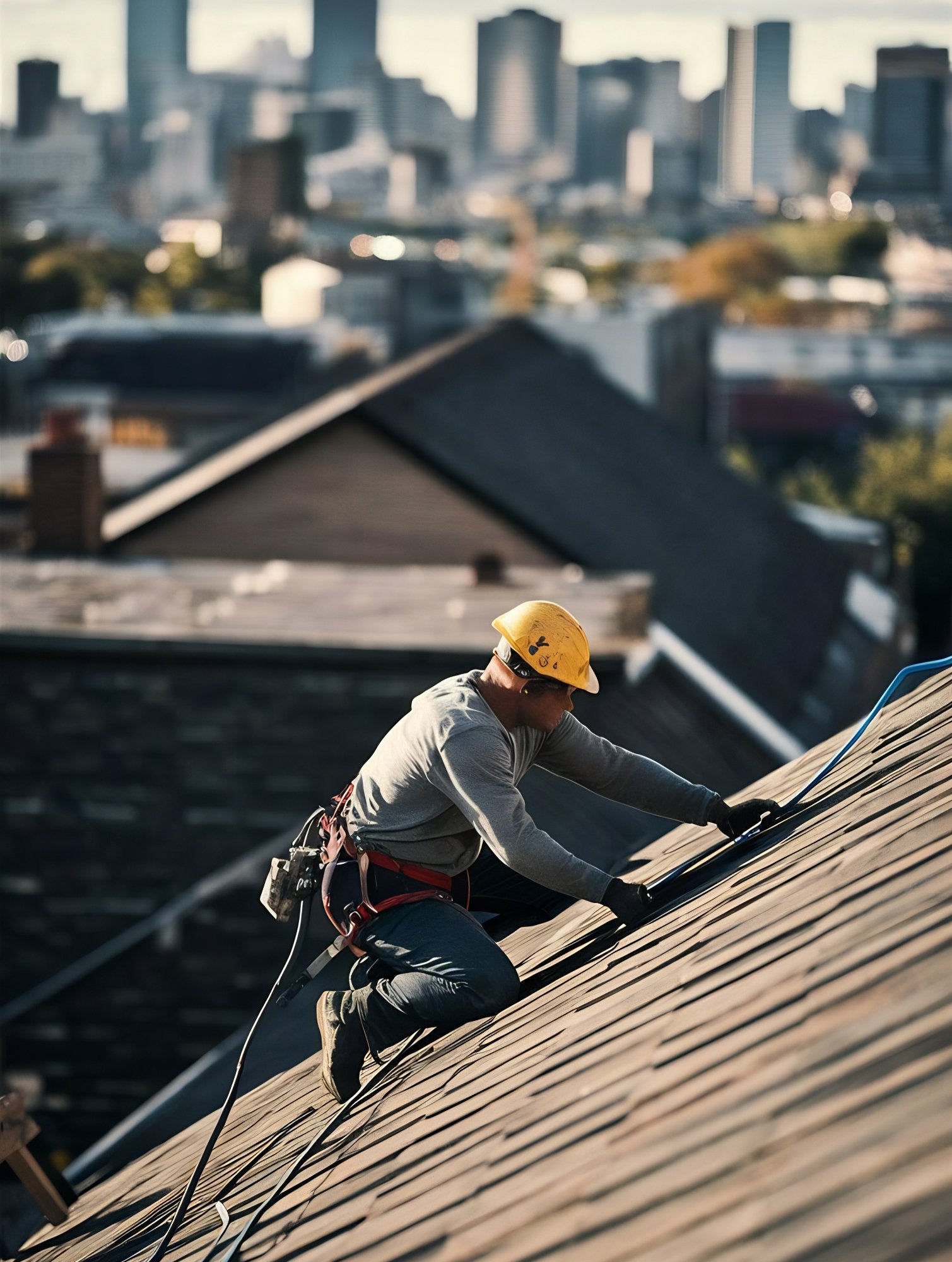
After severe winds in early 2025, a homeowner in Harold Wood found water entering the front bedroom through the ceiling. Their insurer dispatched a loss adjuster who attributed the damage to long-term deterioration rather than storm impact and declined the claim. The homeowner disputed the decision and asked Havering Roof Surveys for independent evidence.
Our drone inspection documented eight displaced concrete tiles on the south-west facing slope — the elevation most exposed to the recorded wind direction. Several tiles showed clean fracture edges with no weathering or moss growth, consistent with sudden impact rather than gradual decay. Thermal imaging mapped a concentrated moisture path from the displaced tiles straight through to the ceiling below. We also photographed fresh mortar debris at the base of the chimney stack where the wind had dislodged flaunching around three pots.
Our timestamped report — including annotated drone photography and thermal evidence — was submitted as a formal dispute to the insurer. The claim was reassessed and approved in full within four weeks. The total repair cost of five thousand six hundred pounds was covered under the policy. The Havering Roof Surveys report gave the insurer the documented proof they needed to reverse their original decision.
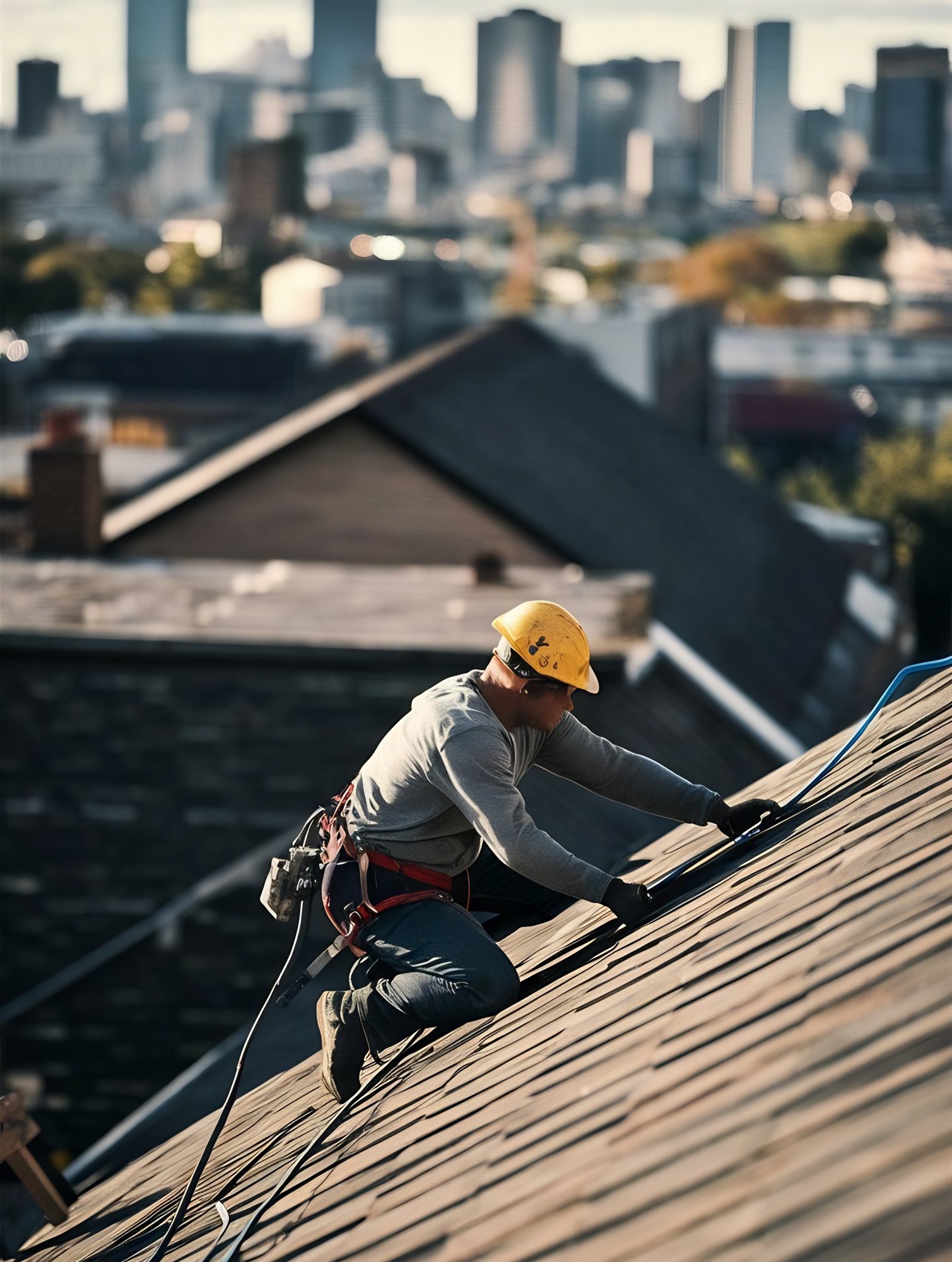
The owner of a 1910 exhibition house within Gidea Park's conservation area had been told by two separate roofing contractors that the entire roof needed stripping and recovering — quotes of twenty-six thousand and thirty-one thousand pounds respectively. The handmade clay tiles were original and the owner was reluctant to lose them without independent confirmation that replacement was genuinely necessary.
Our comprehensive survey — combining high-resolution drone photography of every elevation with internal loft inspection and thermal scanning — established that the original handmade tiles were in broadly sound condition across the main roof slopes. The problems were localised: three areas of slipped tiles totalling around four square metres, degraded mortar bedding along the main ridge, and a failed lead soaker at the junction between the main roof and a side projection. The loft timbers showed no moisture damage.
Havering Roof Surveys specified targeted repairs at an estimated cost of four thousand two hundred pounds — approximately one sixth of the cheapest full re-roof quote. The owner commissioned the localised work and the original handmade tiles were preserved. Our report provided the conservation-area-sensitive approach the property required and saved the owner over twenty thousand pounds in unnecessary expenditure.
A first-time buyer purchasing a 1930s semi in Elm Park was reassured by the estate agent that the rear flat roof extension had been "recently felted." The homebuyer survey described it as being in "reasonable condition." Wanting certainty before committing, the buyer contacted Havering Roof Surveys for a focused inspection of the extension and main roof.
The main pitched roof was in fair order with only minor ridge repointing needed. The flat roof, however, told a different story. Our thermal imaging revealed extensive cold spots across the entire flat roof section, indicating saturated insulation and standing moisture beneath the felt. When we inspected the internal ceiling from below, we found soft spots consistent with decayed timber joists. The "recent felting" had been laid directly over the failed original covering without addressing the water damage beneath.
Havering Roof Surveys estimated the complete flat roof rebuild — including joist replacement, new decking, insulation, and a GRP membrane finish — at approximately seven thousand three hundred pounds. The buyer renegotiated the purchase price accordingly. Without the thermal scan evidence, the timber decay would have continued beneath the cosmetic felt covering until the ceiling failed.
Need a professional roof survey for your Havering property? Get in touch with Havering Roof Surveys today for a free consultation.
Feedback from homeowners and buyers who have used Havering Roof Surveys
"Purchasing a 1930s detached in Gidea Park and the homebuyer report barely mentioned the roof. Havering Roof Surveys found cracked hip tiles, failed bay window lead work, and a blocked valley gutter behind the front dormer that was directing water into the timber frame. Total repair estimate came to nearly eight thousand pounds and our solicitor negotiated the full amount off the price. Exceptional detail and professionalism."
"Our insurer refused a storm damage claim on our Harold Wood semi, calling it wear and tear. Havering Roof Surveys proved with timestamped drone photos and thermal scans that the tile displacement was acute and storm-related. The claim was overturned and paid in full. Without their evidence we would have been left with a four-figure repair bill and no recourse. Cannot recommend them highly enough."
"A contractor quoted eighteen thousand for a complete strip and re-tile on our Hornchurch house. Havering Roof Surveys demonstrated that only the rear slope was failing — front and sides had years of life remaining. Saved us well over ten thousand pounds and provided a proper maintenance plan for the years ahead. Completely independent, totally honest, and genuinely knowledgeable about local housing."
How Havering Roof Surveys help property owners navigate insurance claims and professional reporting
Filing a successful roof damage insurance claim requires more than a phone call and a verbal description. Insurers assess claims against documented evidence — timestamped photography showing the extent of damage, thermal imaging data confirming moisture ingress paths, detailed narratives explaining how the damage occurred, and itemised repair costings from an independent source. Havering Roof Surveys produce reports specifically formatted to satisfy those requirements.
Across this borough, storm damage is the most frequent trigger for roof-related insurance claims. Havering sits in the exposed Thames estuary corridor where south-westerly and easterly winds accelerate across flat terrain with little shelter. The post-war concrete tile roofs in Harold Hill, Elm Park, and South Hornchurch are particularly vulnerable to wind uplift, while the older clay tile and slate roofs across Hornchurch, Gidea Park, and Romford sustain damage from flying debris and the sheer force of sustained gusts.
When an insurer rejects a claim or a loss adjuster attributes damage to gradual wear rather than a storm event, our evidence often provides the basis for a successful appeal. Timestamped drone photography showing clean fracture lines on displaced tiles, thermal scans confirming a concentrated moisture path consistent with sudden water ingress, and annotated reports distinguishing acute damage from pre-existing wear — these are the elements that reverse declined claims.
Havering Roof Surveys have supported successful insurance claims across every part of the borough. Our reports carry weight precisely because we are independent — we have no commercial interest in the repair work that follows. Insurers recognise that distinction, and it strengthens every claim we support.
Every Havering Roof Surveys comprehensive and premium report includes the documented evidence insurers require: timestamped imagery, thermal data, damage narratives, and independent repair costings.
Common questions answered by Havering Roof Surveys
Havering Roof Surveys cover the entire borough and we regularly inspect properties in every neighbourhood. Our schedule takes us across Romford town centre, Hornchurch, Upminster and Cranham, Emerson Park, Gidea Park, Ardleigh Green, Harold Wood, Harold Hill, Collier Row, Rise Park, Elm Park, Rainham, South Hornchurch, and the semi-rural areas around Havering-atte-Bower and North Ockendon. We also attend properties just beyond the borough boundary where Havering meets Brentwood, Thurrock, and the Barking and Dagenham border.
Most Havering properties require between ninety minutes and two and a half hours on site. The larger executive homes in Emerson Park — with their multi-pitch rooflines, multiple chimney stacks, and extensive flat roof sections — generally sit at the upper end of that range. Standard three-bedroom semis across Hornchurch, Collier Row, or Elm Park are typically completed more quickly. Every client receives their full written report within forty-eight hours of the site visit, regardless of property size.
Our comprehensive and premium reports are structured specifically to meet insurer evidence requirements. They include timestamped drone photography, thermal imaging data where applicable, precise damage narratives that distinguish storm damage from pre-existing wear, and itemised repair costings at current market rates. We have supported numerous successful claims across Havering — including overturned rejections where our evidence demonstrated that damage was acute rather than the result of gradual deterioration.
The borough's housing covers nearly every decade of the twentieth century, so problems differ by area and era. Interwar semis across Hornchurch, Ardleigh Green, and Upminster Bridge commonly present clay tile fatigue, eroded bay window lead flashings, and crumbling chimney mortar. Post-war estates in Harold Hill, Elm Park, and South Hornchurch frequently show concrete tile delamination, failed ridge bedding, and flat roof membrane failures on rear extensions. Victorian terraces around central Romford suffer from slipped slates and ageing lead valley work. Across almost every era, rear flat roof extensions remain the single most common source of water ingress we identify.
These two areas generate a significant share of our Havering workload. The executive detached homes in Emerson Park — many exceeding four thousand square feet with complex multi-valley rooflines, multiple chimney stacks, dormer windows, and a mix of pitched and flat roof sections — require extended inspection times but are ideally suited to our drone methodology. Gidea Park's conservation-area exhibition houses, with their original 1910s handmade clay tiles and architect-designed roof geometries, benefit from our non-invasive approach that avoids the risk of damage from ladders and scaffolding against historic fabric.
Commercial inspections form a growing part of our Havering schedule. We survey retail premises across Romford town centre, office buildings, schools, medical centres, light industrial units along the A12 and A13 corridors, and commercial properties throughout the wider borough including the Rainham riverside commercial area. All flat roof systems — felt, GRP, EPDM, and single-ply membranes — fall within our scope, alongside the pitched roofs covering many of Havering's converted commercial buildings.
Have another question? Contact Havering Roof Surveys directly.
Havering Roof Surveys provide professional roof inspections across the entire borough
The commercial and residential heart of the borough. Romford's residential streets contain a mix of Victorian terraces near the town centre, Edwardian semis, interwar housing, and the growing number of modern apartment developments around the station and Brewery quarter. Roofing materials range from original Welsh slate to concrete interlocking tiles and contemporary flat roof membranes.
Hornchurch offers a broad mix of interwar semis and detached homes with clay tile roofs, bay window lead work, and multiple chimney stacks. Emerson Park is among the borough's most prestigious addresses, with executive detached homes on large plots featuring complex multi-pitch rooflines, extensive lead work, and modern membrane flat roof sections.
Gidea Park is a designated conservation area celebrated for its architect-designed 1910s exhibition houses with original handmade clay tiles and distinctive roof geometries. Harold Wood provides a mix of interwar housing and more recent developments with good access to the Elizabeth line. Both areas present varied roofing challenges requiring specialist knowledge.
Upminster and Cranham form the borough's eastern residential core with a strong mix of 1920s-1940s detached and semi-detached housing on generous plots. Clay tile roofs predominate, many now approaching the end of their original service life. Upminster's higher property values make professional roof assessment particularly worthwhile before committing to major works.
These areas represent Havering's large-scale twentieth-century housing developments. Harold Hill's post-war estates use concrete interlocking tiles now reaching end-of-life. Elm Park was planned as a garden suburb in the 1930s with clay tile roofs. Rainham includes older village housing and extensive new riverside development with modern roofing systems.
Havering Roof Surveys operate across the wider borough boundary and into the neighbouring districts. We regularly attend properties in the surrounding areas that share similar housing stock and roofing challenges.
Havering Roof Surveys deliver the independent, professional roof inspections that this diverse outer London borough requires. Whether you are a first-time buyer anxious about a 1930s roof in Hornchurch, a homeowner building an insurance claim after storm damage in Harold Wood, a landlord safeguarding a portfolio property in Collier Row, or the owner of an executive home in Emerson Park seeking clarity on a complex multi-pitch roofline, our surveys provide the answers you need to act with confidence.
Every inspection combines certified expertise with advanced technology — drone aerial photography, thermal imaging, and detailed written reporting — to give you a complete, unbiased picture of your roof's condition. We do not carry out repairs. We do not recommend specific contractors. We deliver the facts, the photographs, and the costings, and you make the decisions.
Every report from Havering Roof Surveys is independent, detailed, and written to be acted upon — whether you are buying, selling, claiming, or simply protecting your property investment.
Call us today or complete the form below to arrange your Havering roof survey.
Havering Roof Surveys are proud to maintain a five-star rating across all review platforms
Havering Roof Surveys have earned the trust of homeowners, buyers, landlords, and commercial property managers across every part of the borough. Our five-star reviews consistently highlight three qualities: the thoroughness of our inspections, the clarity and usefulness of our reports, and the genuine independence that gives our findings credibility with solicitors, insurers, and contractors alike.
We believe that trust is built through transparency. Every client receives the same rigorous inspection methodology, the same high-resolution drone photography, and the same honest assessment — regardless of whether the property is a studio flat in central Romford or a multi-million-pound executive home in Emerson Park. That consistency is reflected in the feedback we receive and the repeat business and referrals that sustain our Havering operation.
Havering Roof Surveys maintain a five-star average across independent review platforms, reflecting our commitment to thorough, honest, and professional roof inspections.
Contact Havering Roof Surveys today to arrange your roof inspection
Monday - Friday: 7:30 AM - 9:30 PM
Saturday: 7:30 AM - 7:00 PM
Sunday: 9:00 AM - 5:00 PM
For urgent roof inspection needs in Havering, please call Havering Roof Surveys directly.
Call Now