
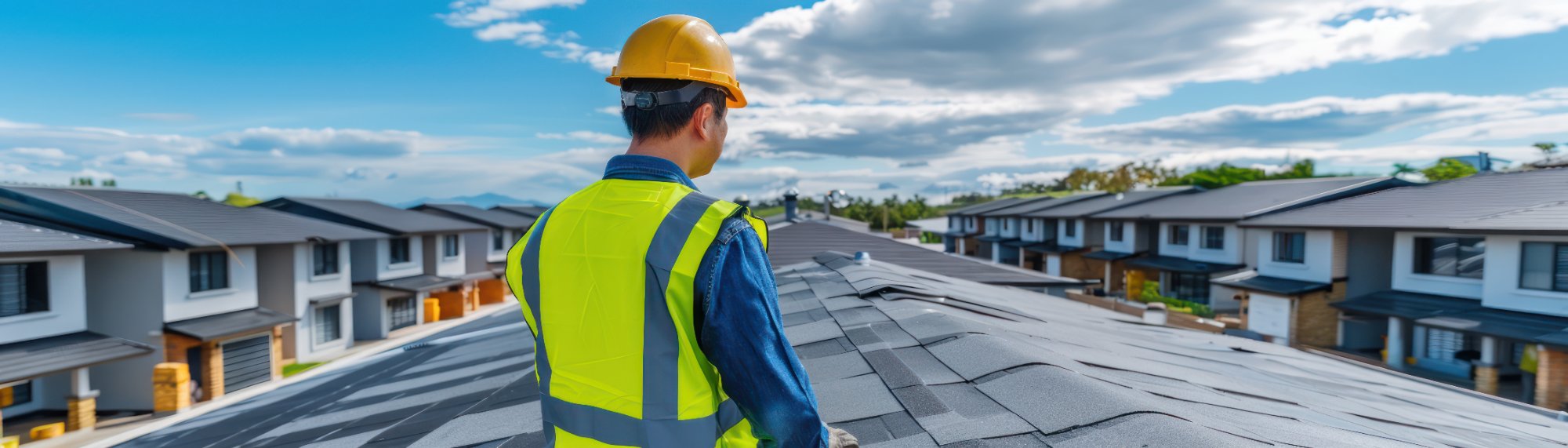
Hillingdon Roof Surveys provide independent, professional roof inspections across London's largest borough by area — from the leafy residential avenues of Ickenham and the 1930s semis lining the roads around Hillingdon village, through the dense terraced housing of Hayes and Yiewsley, to the commercial centres of Uxbridge and the scattered rural properties near Harefield and the Colne Valley. Our certified surveyors combine drone aerial photography with FLIR thermal imaging to deliver precise, unbiased reports on every roof type found across this diverse western London borough.
Fast, independent roof surveys from local experts.
The borough of Hillingdon stretches from the semi-rural fringes of Harefield in the north to the Heathrow perimeter in the south, taking in a remarkable range of building eras along the way. Interwar housing dominates the central belt — thousands of semi-detached and detached homes built during the 1920s and 1930s boom that followed the arrival of the Metropolitan and Piccadilly lines. South of the A40, post-war council estates, 1950s terraces, and modern apartment developments create a different set of roofing demands entirely. Hillingdon Roof Surveys bring the equipment and the local knowledge to assess every one of them accurately.
Whether you are buying a family home in Ickenham, chasing a persistent leak through a flat roof extension in Hayes, preparing a storm damage claim for your insurer, or questioning a contractor's recommendation to strip and re-tile your entire property, a Hillingdon Roof Surveys inspection provides the documented evidence you need to act with confidence.
Hillingdon Roof Surveys exist because property owners across this sprawling borough deserve better than guesswork when it comes to the condition of their roof. Too many families in Hillingdon have paid thousands for repair work that was either unnecessary or inadequate — persuaded by contractors whose income depends on the size of the job. Our role is to stand between the homeowner and the sales pitch with an impartial, evidence-based assessment that serves nobody's interest except the client's.
Every inspection begins with a full perimeter walk to assess rainwater goods, fascias, soffits, and ground-level defects visible without equipment. Our DJI Enterprise drone then captures high-resolution imagery of every slope, ridge, valley, hip, chimney, and flashing — including angles that ladders cannot reach safely on the steep-pitched 1930s roofs that characterise much of the borough. Where thermal imaging is part of the survey, our FLIR cameras identify moisture patterns trapped beneath tiles and within the roof structure, catching problems that would otherwise remain hidden until interior damage becomes visible.
Hillingdon's housing is unusually varied for a single London borough. An Edwardian villa near Hillingdon village church sits streets away from a 1930s semi on the Oak Farm estate, which in turn differs entirely from a 1960s flat-roofed maisonette in Hayes or a converted barn on the edge of Harefield. Hillingdon Roof Surveys work across every construction era and roofing material because the borough demands that breadth of competence.
We carry no financial interest in the outcome of any inspection. Hillingdon Roof Surveys do not undertake roof repairs and do not recommend specific contractors. When our report confirms a roof is in good condition, that conclusion has credibility. When we identify a defect, the costings we provide reflect genuine current market rates for the remedial work — not figures inflated to create urgency.
Nearby Areas with Similar Properties: Many of the roofing challenges we encounter across Hillingdon — particularly on interwar and post-war housing — are shared by properties in neighbouring boroughs. Homeowners in Ealing and Hounslow face comparable issues with ageing clay tiles, flat roof degradation, and chimney stack deterioration. See our area-specific guides for more detail.
Hillingdon Roof Surveys are not roofers, builders, or contractors. We provide independent inspection and reporting only — ensuring every assessment is free from commercial bias.
Hillingdon Roof Surveys are ready to inspect your property. Whether it is a 1930s semi near the village, a detached family home in Ickenham, or a flat-roofed extension in Hayes, our team provides the clarity you need.
What Hillingdon Roof Surveys bring to homeowners, buyers, and landlords across the borough
Hillingdon's roofscape includes everything from steeply pitched 1930s hipped roofs in Ickenham — where rear access is blocked by conservatories and mature gardens — to sprawling multi-pitch detached homes along Swakeleys Road and the tight terraced rows of Hayes where safe ladder placement is impossible. Our DJI Enterprise drone captures every ridge, hip, valley, flashing, and chimney in high-definition detail, exposing defects that remain completely invisible from ground level.
Concealed moisture is a recurring issue across Hillingdon's ageing housing stock. The plain clay tile roofs on interwar semis and the concrete tile coverings on post-war estates can harbour slow leaks for months before ceiling stains appear inside. Our FLIR thermal cameras detect temperature differences caused by moisture beneath tiles, behind flashings, and within timber structures — catching problems at an early stage when repair costs are still manageable.
Every Hillingdon Roof Surveys report is built around annotated drone photography, thermal overlays where included, and clear itemised repair costings based on current market rates. The document is designed for immediate practical use — share it with your solicitor during a purchase negotiation, submit it to your insurer as documented claim evidence, or hand it to a roofing contractor as a precise specification for the works needed.
Hillingdon Roof Surveys hold professional indemnity and public liability insurance. Our surveyors carry recognised qualifications and CAA-approved drone pilot licences. Every inspection follows a standardised methodology refined across thousands of properties — ensuring the same rigorous approach whether we are assessing a period cottage near Harefield or a modern apartment block beside Uxbridge station.
Hillingdon is not one neighbourhood — it is a patchwork of communities spread across more than forty-four square miles, each with its own building character. The Edwardian villas and cottages clustered around Hillingdon village church carry clay tile roofs, decorative ridge detailing, and chimney stacks with original pots. The vast belt of 1930s semis built after the Metropolitan line reached Uxbridge and Ickenham presents plain clay tiles on steep hipped roofs, bay window lead work that perishes over decades, and mortar bedding that has been eroding since before the war ended. Further south, the post-war housing estates in Hayes, West Drayton, and Yiewsley use concrete interlocking tiles with shorter service lives and valley gutter designs prone to blockage.
Hillingdon Roof Surveys understand these differences because we inspect them week after week. We do not apply a one-size-fits-all checklist — we adjust every inspection to the specific age, material, and construction method of the property. That targeted knowledge is what separates a genuinely useful report from one that simply confirms a roof is present.
From the clay-tiled semis of North Hillingdon to the flat-roofed maisonettes of Hayes, Hillingdon Roof Surveys understand this borough's roofing challenges inside out.
How Hillingdon Roof Surveys have helped local homeowners and property buyers

A couple purchasing a 1930s semi-detached house near Hillingdon Circus were told by their homebuyer surveyor that the roof was "satisfactory for its age." A passing comment from a neighbour about the chimney "looking different after last winter's storms" prompted them to seek a more detailed assessment before exchanging contracts.
Our drone inspection revealed the shared chimney stack had tilted approximately three degrees towards the neighbouring property. Closer examination showed cracked render, eroded mortar joints through the full depth of the stack, and lead flashing that had separated from the brickwork on two sides. Thermal imaging confirmed active moisture ingress along the party wall below the chimney, tracking into the loft timbers.
Hillingdon Roof Surveys costed the chimney rebuild, reflashing, and associated timber treatment at approximately seven thousand eight hundred pounds. The buyer's solicitor negotiated a price reduction matching the full remedial cost. The work was completed within eight weeks of completion, preventing what the structural engineer confirmed would have become a far more serious problem within two to three winters.

A homeowner in Hayes had paid three different roofers to patch a persistent leak on their rear kitchen extension over four years. Each repair held for a few months before the leak returned, always in a slightly different position. Frustrated and facing a fourth winter of buckets beneath the ceiling, they contacted Hillingdon Roof Surveys for an independent diagnosis.
Thermal imaging from above revealed that the felt covering had failed across roughly sixty per cent of the roof area — not just at the points where water was entering the kitchen. The previous patches had simply redirected the water to new entry points rather than addressing the underlying failure. Our drone photography also documented ponding in two areas where the original timber deck had sagged, creating permanent pools that no patch could withstand long-term.
Our report recommended a complete strip and replacement with a GRP fibreglass system, including correction of the timber deck falls. Hillingdon Roof Surveys estimated the works at approximately three thousand nine hundred pounds — less than the homeowner had already spent on ineffective patches over four years. The new roof was installed within two weeks and carries a twenty-year manufacturer guarantee.

Owners of a detached 1930s property in Ickenham received a quote for a complete re-tile at fourteen thousand pounds after a roofing contractor spent twenty minutes walking around the garden with binoculars. With three children at home and a budget already stretched, they wanted certainty before committing to that level of expense.
Our comprehensive inspection — drone photography of all four elevations combined with a full loft survey — confirmed that the south-facing slope had significant tile deterioration, with delamination affecting roughly a third of the covering and three areas of slipped tiles exposing the felt underlay beneath. However, the north and east elevations were in serviceable condition with at least another ten to twelve years of functional life, and the west elevation required only localised repointing of the hip mortar.
Hillingdon Roof Surveys specified a partial re-tile of the south slope and hip mortar repairs at an estimated cost of six thousand two hundred pounds — less than half the original quote. The family commissioned the targeted work and received a prioritised maintenance plan from our report covering the remaining elevations over the coming decade.

Following severe autumn storms, a homeowner in West Drayton discovered water pouring through the upstairs bedroom ceiling. Their insurer sent a loss adjuster who classified the damage as "pre-existing wear" and rejected the claim outright. The homeowner disputed the finding and asked Hillingdon Roof Surveys to provide an independent assessment.
Our drone captured eight displaced concrete tiles on the west-facing slope — consistent with the recorded wind direction during the storm event. Fresh fracture edges on the tiles showed no weathering or moss growth, confirming recent breakage. Thermal imaging traced a concentrated moisture path from the displaced area through to the bedroom ceiling below. We also documented a section of ridge capping that had lifted and rotated, exposing the mortar bed beneath.
The timestamped drone photography and thermal evidence from Hillingdon Roof Surveys was submitted as a formal dispute package. The insurer reassessed the claim and approved it in full within four weeks. Repair costs of three thousand six hundred pounds were covered under the policy. Without our documented evidence, the homeowner would have borne the full cost themselves.
Need a professional roof survey for your Hillingdon property? Get in touch with Hillingdon Roof Surveys today for a free consultation.
Feedback from homeowners and buyers who have used Hillingdon Roof Surveys
"Purchasing a 1930s semi on Royal Lane and the homebuyer report barely mentioned the roof. Hillingdon Roof Surveys flew their drone over and found cracked tiles, a fractured hip, and lead flashing pulling away from the chimney. Their detailed costings gave our solicitor the evidence to negotiate a significant price reduction. Superb professionalism from start to finish."
"Our flat roof kitchen extension in Hayes had been patched three times and still leaked every winter. Hillingdon Roof Surveys showed us with thermal imaging that the damage went far beyond the patched spots — the felt had failed across most of the roof. We replaced the entire covering and the problem is finally solved. Should have called them four years ago."
"A contractor told us we needed a full re-tile at fourteen thousand pounds. Hillingdon Roof Surveys proved that only the south slope was failing — the other three elevations had years of life remaining. They saved us roughly eight thousand and gave us a clear plan for the future. Completely independent and completely trustworthy."
Common situations where a Hillingdon Roof Surveys inspection makes the difference
If you can see displaced or damaged tiles from the garden, the reality above is almost always worse. Across Hillingdon's interwar housing, one visible crack usually accompanies several hidden ones. A professional drone inspection reveals the full extent before water ingress causes internal damage that costs significantly more to repair.
Ceiling stains and damp walls do not always indicate the entry point. Water can travel considerable distances along rafters, battens, and felt before emerging as a visible mark. Hillingdon Roof Surveys use thermal imaging to trace moisture paths back to their source — eliminating the guesswork that leads to ineffective repairs.
Standard homebuyer surveys devote minimal attention to the roof — typically a brief ground-level glance. In a borough where the average property is approaching a century old, that level of assessment is insufficient. Hillingdon Roof Surveys give buyers the detailed evidence needed to negotiate with confidence or walk away before committing.
Hillingdon's western position in London leaves it exposed to prevailing weather systems sweeping in from the west. High winds regularly displace tiles, lift ridge capping, and fracture hip tiles across the borough. A prompt post-storm survey provides the timestamped evidence your insurer requires to process a claim before temporary repairs obscure the original damage.
Felt-covered flat roofs on rear extensions are among the most common failure points across Hillingdon's housing stock. Many were built in the 1960s and 1970s with materials that have a twenty to twenty-five year lifespan. Repeated patching typically delays the inevitable rather than solving the problem. Our thermal imaging reveals the true extent of deterioration beneath the surface.
When a roofing company recommends a full strip and re-tile, an independent survey determines whether the entire roof genuinely requires replacement or whether targeted repairs to specific slopes or sections will achieve the same result at a fraction of the cost. Across Hillingdon, our assessments regularly save homeowners thousands by identifying the work that is actually necessary.
The most frequent roofing defects Hillingdon Roof Surveys encounter across the borough
The plain clay tiles used on the thousands of interwar semi-detached homes across Hillingdon village, North Hillingdon, and Ickenham were manufactured to last sixty to eighty years. Many are now well past that mark. Surface delamination — where the face of the tile flakes and separates — allows water to penetrate the tile body, accelerating decay through frost action each winter. Individual tile replacement becomes impractical when delamination is widespread across an entire slope.
Sand-and-cement mortar bedding on ridge and hip tiles deteriorates steadily over decades. Across Hillingdon's interwar and post-war housing, crumbling mortar is almost universal — leaving ridge capping vulnerable to wind lift and creating direct pathways for rainwater into the roof structure. The hipped roof design common on 1930s semis makes this especially problematic, as hip mortar failure allows water to penetrate at the most structurally significant junction.
Most interwar homes in Hillingdon retain their original chimney stacks, many of which are no longer in active use. Without the drying effect of regular flue use, moisture accumulates within the brickwork, degrading mortar joints and expanding through freeze-thaw cycles. Lead flashings around the base perish over time, creating a secondary entry point for water. Hillingdon Roof Surveys frequently identify chimney issues that have been slowly worsening unnoticed for years.
Across Hayes, Yiewsley, West Drayton, and the broader southern half of the borough, thousands of rear and side extensions were built between the 1960s and 1980s with felt flat roofs. The original felt has long exceeded its expected service life, and poorly executed patches often mask deeper problems including sagging timber decks, inadequate falls causing ponding, and moisture trapped between layers that rots the structure from within.
The concrete interlocking tiles used extensively across post-war housing in Hayes, West Drayton, and Yiewsley were engineered for a forty to fifty year lifespan. Many have now reached or exceeded that threshold. Surface erosion reduces waterproofing performance, nibs weaken and snap causing tiles to slip, and the tiles themselves become brittle and fracture under foot traffic or impact from falling branches.
Properties in the southern reaches of the borough — particularly around Hayes, Harlington, and Cranford — sit beneath or near Heathrow flight paths. The cumulative vibration from aircraft can loosen mortar bedding on ridges and hips, accelerate the deterioration of already-weakened pointing, and cause tiles to shift incrementally over time. Hillingdon Roof Surveys pay particular attention to mortar condition on properties in these areas.
Common questions answered by Hillingdon Roof Surveys
Hillingdon Roof Surveys cover the entire London Borough of Hillingdon. Our regular inspection areas include Hillingdon village around the church and Royal Lane, the residential streets of North Hillingdon south of Hillingdon Circus, Uxbridge town centre and its surrounding neighbourhoods, the village of Ickenham including the Swakeleys area, Hayes, West Drayton, Yiewsley, Cowley, Eastcote, Ruislip, and Harefield. We also attend properties in the more rural edges of the borough near the Colne Valley.
A standard residential inspection across the Hillingdon borough typically takes between ninety minutes and two and a half hours on site. The larger detached properties in Ickenham and North Hillingdon — with their complex hipped rooflines, multiple chimney stacks, and rear extensions — tend toward the upper end. Compact terraced homes in Hayes and Yiewsley are generally quicker to assess. Every client receives their complete written report within forty-eight hours of the site visit.
Many 1930s plain clay tile roofs across Hillingdon continue to function, but at ninety-plus years old the materials are approaching or exceeding their designed lifespan. Tile delamination, crumbling ridge and hip mortar, perished lead flashings, and deteriorating felt underlay are widespread. The question is not whether these roofs will eventually need attention but how much life remains and where the most urgent problems lie. A professional survey from Hillingdon Roof Surveys provides that clarity, helping you plan expenditure over years rather than facing an emergency repair.
Every comprehensive and premium report from Hillingdon Roof Surveys includes timestamped drone photography, thermal imaging evidence where applicable, detailed written damage descriptions, and itemised repair costings at current market rates. These elements satisfy the documented evidence requirements that insurers mandate when processing roof damage claims. We have supported numerous successful claims across the borough, including disputed cases where our independent evidence overturned initial rejections.
Hillingdon's housing stock is overwhelmingly interwar and post-war, which concentrates the defects we encounter into a recognisable pattern. The most frequent issues include clay tile delamination on 1930s semi-detached homes, eroded ridge and hip mortar across almost every era, perished lead flashings around chimney stacks, felt flat roof failures on 1960s-1980s extensions, and concrete tile fatigue on post-war estates in Hayes and West Drayton. Properties near Heathrow flight paths also experience accelerated mortar loosening from cumulative vibration exposure.
Commercial inspections form a regular part of our Hillingdon workload. We survey industrial units in the Hayes and West Drayton commercial zones, retail premises in Uxbridge town centre, office buildings along the A40 and Western Avenue corridor, school buildings, community centres, and converted commercial properties. All flat roof systems including felt, GRP, EPDM, and single-ply membranes fall within our scope, alongside the pitched roofs covering many of the borough's older commercial buildings.
Have another question? Contact Hillingdon Roof Surveys directly.
Hillingdon Roof Surveys provide professional roof inspections across the borough and beyond
The historic core around Hillingdon village church and Royal Lane contains Edwardian villas and characterful older homes, while the wider North Hillingdon area south of Hillingdon Circus is dominated by 1930s semi-detached houses built during the interwar suburban boom. Clay tiles, hipped roofs, and original chimney stacks are the defining features.
The sought-after village of Ickenham features spacious 1930s detached and semi-detached homes on generous plots, many with complex multi-pitch rooflines, mature gardens restricting access, and period architectural detailing. The Swakeleys estate area adds further variety with homes from the 1920s to 1960s.
Uxbridge town centre and the surrounding residential areas present a broad mix of Victorian terraces, Edwardian semis, interwar housing, post-war council estates, and modern apartment developments. Cowley to the south adds further variety with housing spanning multiple decades and construction methods.
The southern half of the borough features dense terraced housing, post-war council estates, and 1960s-1980s developments with flat-roofed extensions. Concrete interlocking tiles, felt flat roofs, and proximity to Heathrow flight paths create a distinct set of roofing challenges compared to the northern borough.
The northern tip of the borough around Harefield retains a semi-rural character, with period cottages, converted agricultural buildings, and detached country homes. Exposure to weather across the Colne Valley and overhanging tree cover create specific roofing challenges distinct from the suburban centre.
Hillingdon Roof Surveys deliver the independent, professional inspections that London's largest borough demands. Whether you are a first-time buyer worried about the roof on a 1930s semi near Hillingdon village, a landlord managing a portfolio property in Hayes, a homeowner dealing with a flat roof failure in West Drayton, or simply seeking clarity before committing to a costly repair quote, our surveys provide the hard evidence you need to make confident decisions.
Every inspection pairs certified expertise with advanced technology — drone aerial photography, thermal imaging, and comprehensive written reporting — to give you a complete, unbiased picture of your roof's condition. We do not carry out repairs. We do not recommend contractors. We provide the facts, the photographs, and the costings, and you decide what happens next.
Every report from Hillingdon Roof Surveys is independent, detailed, and written to be acted upon — whether you are buying, selling, claiming, or simply protecting your property.
Call us today or complete the form below to arrange your Hillingdon roof survey.
Contact Hillingdon Roof Surveys today to arrange your roof inspection
Monday - Friday: 7:30 AM - 9:30 PM
Saturday: 7:30 AM - 7:00 PM
Sunday: 9:00 AM - 5:00 PM
For urgent roof inspection needs in Hillingdon, please call Hillingdon Roof Surveys directly.
Call Now