
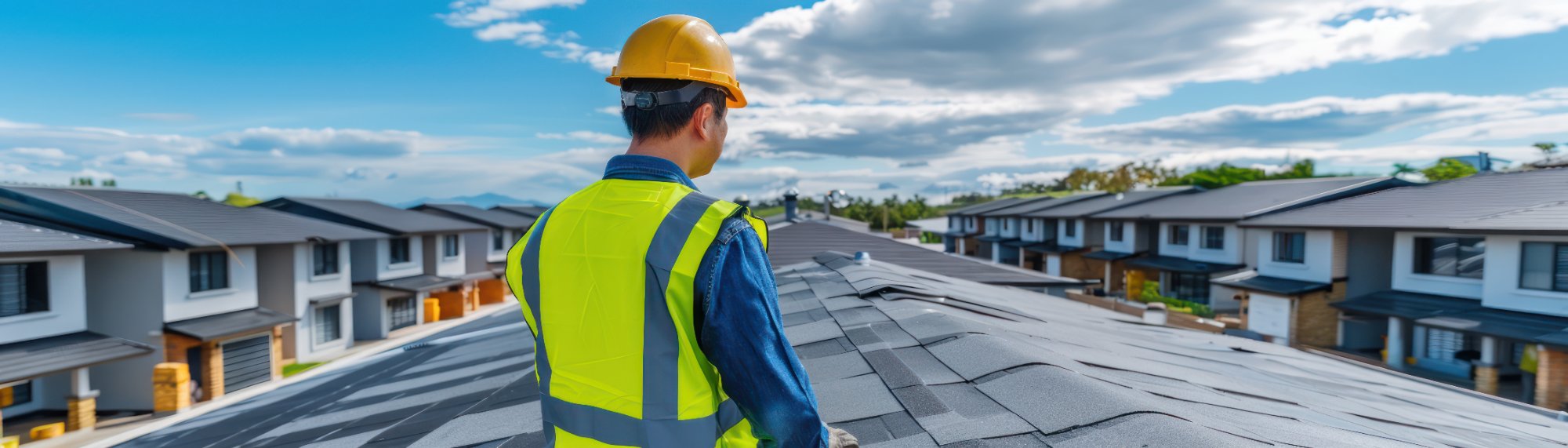
Sonning Roof Surveys provide professional, independent roof inspections across one of Berkshire's most celebrated Thames-side villages and the surrounding parish. Our certified surveyors combine drone aerial photography with thermal imaging to produce thorough, accurate assessments of every roof type found in this historic settlement — from the Grade II listed cottages lining Thames Street and the High Street, through the substantial Georgian and Victorian family homes set behind mature gardens along Sonning Lane, to the Edwardian and interwar properties along Pound Lane, the characterful dwellings near St Andrew's Church, and the more recent housing extending towards Charvil and the Bath Road.
Fast, independent roof surveys from local experts.
Our Sonning Roof Surveys service exists because this village demands a level of roofing expertise that generic inspection firms rarely possess. The conservation area alone contains buildings spanning six centuries of construction — from medieval timber-framed structures near the church through to the handsome red-brick Victorian villas that line the approaches to Sonning Bridge. Each generation brought different roofing materials and methods, and each presents distinct failure patterns that only experienced local surveyors can reliably identify and assess.
Whether you are acquiring a period property in the village centre, investigating damp that recurs after heavy rainfall near the river, documenting wind damage following storms that funnel along the Thames corridor, or simply seeking clarity on an ageing roof before committing to expensive restoration, Sonning Roof Surveys deliver the impartial evidence you need to act with confidence.
Sonning Roof Surveys were established on the principle that property owners in this village deserve access to genuinely independent roof assessments — free from the commercial pressures that can colour the advice of roofing contractors with a vested interest in securing repair work. Too many homeowners across the Thames Valley have committed to unnecessary expense based on a roofer's quick glance from a ladder, or have completed a property purchase only to discover defects that a specialist inspection would have caught before contracts were exchanged.
Our methodology is built around precision. Every inspection begins with a full perimeter walk, assessing rainwater goods, fascias, soffits, and any visible anomalies from ground level. Our DJI Enterprise drone then captures high-resolution photography of each elevation, ridge line, valley, hip, flashing detail, and chimney stack — accessing vantage points that are physically impossible to reach with ladders on many of Sonning's taller period homes and properties set within tightly bounded plots. Where the survey package includes thermal imaging, our FLIR cameras map temperature differentials across the roof surface, revealing moisture paths concealed beneath tiles and within the structural timbers.
What distinguishes our work in Sonning is an intimate familiarity with the village's building fabric. A seventeenth-century cottage near the churchyard will carry handmade peg tiles bedded in lime mortar on split oak laths — a roofing system that behaves entirely differently from the machine-made clay tiles on a 1930s detached along the Bath Road corridor. Sonning Roof Surveys understand these distinctions because the village has been part of our regular inspection territory for years.
We maintain complete independence throughout. Sonning Roof Surveys do not undertake roof repairs, do not subcontract to roofers, and hold no commercial interest in the outcome of any inspection. When our report confirms that a roof is performing well, that conclusion carries genuine authority. When we document a defect, the costings in our report reflect current trade rates for the specific materials and labour involved — not inflated figures designed to create urgency.
Properties Across the Thames Valley: The roofing challenges common in Sonning — ageing handmade clay tiles, lead flashing deterioration on period chimneys, and moisture issues linked to riverside proximity — are shared by properties throughout the wider area. Homeowners in Reading and Henley-on-Thames face comparable concerns with period roofing stock. See our area-specific guides for detailed local information.
Sonning Roof Surveys are not roofers, builders, or contractors. We provide independent inspection and reporting only — ensuring every assessment is free from commercial bias.
Sonning Roof Surveys are ready to inspect your property. Whether it is a listed cottage on Thames Street, a Georgian residence near the church, or a family home along Pound Lane, our team delivers the answers you need.
What Sonning Roof Surveys bring to homeowners, buyers, and property investors across the village
Sonning's historic core presents a dense fabric of period buildings — many with steeply pitched roofs, narrow access between neighbouring properties, and conservation restrictions that make scaffolding impractical or unwelcome. Our DJI Enterprise drone captures every ridge, valley, hip, flashing junction, and chimney stack in high-definition detail, producing imagery that reveals cracked tiles, displaced lead work, and moss-blocked gutters that remain invisible from ground level and inaccessible by ladder.
The Thames creates a damp microclimate around Sonning that accelerates moisture-related roof problems. Handmade clay tile roofs on the village's older cottages and lead-dressed valleys on the larger Victorian properties can harbour hidden leaks for years before internal staining becomes visible. Our FLIR thermal cameras detect the temperature signatures of trapped moisture beneath tiles, behind flashings, and within roof timbers — identifying active ingress pathways that a visual survey alone would miss entirely.
Every Sonning Roof Surveys report is a comprehensive record of your roof's condition — illustrated with annotated drone photography, thermal overlays where applicable, and itemised repair costings at current market rates. The document is formatted to be shared directly with solicitors during property transactions, submitted to insurers as supporting evidence for a claim, or presented to a roofing contractor as a precise specification for remedial works.
Sonning Roof Surveys carry full professional indemnity and public liability insurance. Our surveyors hold recognised professional certifications and CAA-approved drone operator licences. Every inspection follows a structured methodology refined across thousands of properties in the Thames Valley, ensuring consistent, reliable results whether we are assessing a Grade II listed cottage beside the river or a modern family home on the village outskirts.
Sonning is not a uniform housing stock — it is a layered accumulation of centuries of building. The oldest structures near St Andrew's Church and along Thames Street carry handmade peg tiles on oak lath, with lime mortar bedding and lead-dressed abutments that pre-date any modern roofing convention. The Georgian and Regency houses that grace the approaches to Sonning Bridge present Welsh slate or handmade tile on timber trusses with valley gutters lined in rolled lead. The Victorian and Edwardian villas further along Sonning Lane and into Pound Lane typically show machine-made clay tiles with ornate ridge detailing and brick chimney stacks fitted with decorative pots.
Sonning Roof Surveys understand that each of these systems requires a different eye. A lime mortar bedding that is performing well on a seventeenth-century cottage would be a concern on a Victorian villa — and vice versa. Our inspectors assess every roof against the standards appropriate to its age, material, and method of construction, providing conclusions that are genuinely useful rather than generically cautious.
From the listed cottages along Thames Street to the family homes of Pound Lane, Sonning Roof Surveys know this village's roofscape inside out.
How Sonning Roof Surveys have helped local homeowners and property buyers

Prospective buyers of a Grade II listed red-brick cottage on Thames Street had received a homebuyer valuation describing the roof as being in "reasonable condition for its age." With the property on the market at well over one million pounds, they commissioned Sonning Roof Surveys for a specialist opinion before their solicitor exchanged contracts.
Our drone captured close-range imagery of the entire roof surface, revealing that a number of the original handmade peg tiles had been replaced over the years with incompatible machine-made tiles that sat poorly against their neighbours, creating gaps through which rainwater was tracking inward. Thermal imaging from above confirmed concentrated moisture signatures along two principal rafters on the south-facing pitch. Our internal loft inspection then documented active fungal decay in both timbers — concealed beneath a modern felt underlay that had been laid without addressing the underlying tile defects.
Sonning Roof Surveys costed the necessary tile reinstatement — using reclaimed handmade tiles to satisfy listed building requirements — and the structural timber repairs at approximately twelve thousand five hundred pounds. The buyers' solicitor presented the report and secured a price reduction of the full amount. The remedial work was completed within two months of completion, and the rafter decay was halted before it spread to adjacent timbers.

Following a particularly violent autumn storm that drove rain horizontally across the Thames floodplain, a homeowner on Sonning Lane discovered water cascading into their loft space through a section of displaced ridge tiles. Their insurer appointed a loss adjuster who attributed the damage to "pre-existing deterioration" rather than storm action and rejected the claim. The homeowner engaged Sonning Roof Surveys for an independent assessment to challenge the decision.
Our drone inspection documented clean fracture lines across four ridge tiles on the windward elevation — fractures showing no weathering, algae colonisation, or accumulated debris in the breaks, all of which confirmed recent displacement rather than gradual decline. We also photographed intact mortar beds on the leeward ridge line, demonstrating that the overall installation had been sound before the storm event. Thermal imaging traced a distinct moisture corridor from the displaced section directly to the loft area where the leak had been reported.
Our timestamped, annotated report was submitted as a formal dispute to the insurer. The claim was reversed and settled in full within four weeks, covering repair costs of approximately five thousand two hundred pounds including ridge re-bedding in a lime-based mortar appropriate to the property's age and character. The Sonning Roof Surveys report gave the insurer the documented evidence they needed to overturn the original assessment.

The owners of a substantial 1920s detached property on Pound Lane had been told by a local roofing company that their entire clay tile roof needed stripping and replacing — a project quoted at over nineteen thousand pounds. Reluctant to commit without a second opinion, they contacted Sonning Roof Surveys to examine the roof before proceeding.
Our comprehensive inspection — drone photography of all four elevations, internal loft examination, and thermal scan — confirmed that the north-facing rear pitch had significant tile erosion with surface delamination and failing nibs, requiring full replacement. However, the front, east, and west elevations showed sound tiles with intact fixings and no signs of moisture penetration. Ridge mortar needed attention along one section, and a single lead flashing around the rear chimney had cracked, but neither issue justified wholesale replacement.
Sonning Roof Surveys specified a targeted rear-slope re-tile and selective ridge repointing at an estimated cost of eight thousand five hundred pounds — less than half the original contractor's quote. The homeowners commissioned the work on this basis, and the remaining three elevations continue to perform well. Our report included a maintenance timeline, advising a follow-up inspection of the front slope in approximately five years.

The owner of a Georgian riverside property near Sonning Bridge had spent over three thousand pounds on damp-proofing treatments after a surveyor diagnosed rising damp in a first-floor bedroom wall — an unusual location for such a diagnosis. When the staining returned within months, they suspected a different cause and asked Sonning Roof Surveys to examine the roof and upper structure.
Our thermal scan identified a pronounced cold spot running from the parapet junction at roof level directly down the affected wall. Drone imagery then revealed that the lead parapet gutter had developed a split at a soldered seam — invisible from below and completely unrelated to ground-level dampness. Rainwater had been entering at roof height and running within the wall cavity, mimicking the symptoms of rising damp.
A specialist leadworker replaced the failed seam and dressed a new section of code five lead along the parapet gutter at a cost of approximately two thousand eight hundred pounds. The damp staining dried out completely over the following weeks. Sonning Roof Surveys had identified in one visit what a previous surveyor and a damp-proofing contractor had both misdiagnosed, saving the owner from further unnecessary treatment.
Need a professional roof survey for your Sonning property? Get in touch with Sonning Roof Surveys today for a free consultation.
Feedback from homeowners and buyers who have used Sonning Roof Surveys
"We were purchasing a listed cottage on Thames Street and needed certainty about the roof before exchanging at the asking price. Sonning Roof Surveys found concealed tile slippage and saturated rafters that our homebuyer valuation had completely overlooked. The report allowed our solicitor to secure a significant price reduction. An essential service for anyone buying in Sonning."
"Two tradesmen told us the damp above our bedroom window was condensation. Sonning Roof Surveys proved it was a failed lead flashing at the junction between the old house and the Victorian extension. Pinpointed with thermal imaging, repaired within a fortnight, and the damp has not returned. We should have called them months earlier."
"Told we needed a full re-roof at nearly twenty thousand pounds. Sonning Roof Surveys demonstrated that three of the four roof slopes were sound and only the rear pitch required replacement. Saved us over ten thousand and provided a clear timetable for when the remaining slopes will need attention. Completely trustworthy."
How Sonning Roof Surveys reports support insurance claims and property transactions
Property transactions in Sonning regularly involve substantial sums, and the village's riverside location means that storm damage, wind-driven rain, and flood-adjacent moisture issues generate a higher-than-average volume of insurance claims. Sonning Roof Surveys produce reports that are specifically formatted to satisfy the evidence requirements of both insurance underwriters and property solicitors.
Every comprehensive and premium report includes timestamped high-resolution drone photography of every defect, thermal imaging overlays showing moisture ingress patterns, a detailed written narrative describing the condition of each roof element, and itemised repair costings calculated at current contractor rates for the materials and labour required. This level of documentation transforms a verbal description of a problem into verifiable, actionable evidence.
For insurance claims, the distinction between "gradual wear" and "storm damage" often determines whether a policy pays out. Sonning Roof Surveys document the forensic indicators — clean fracture lines, absence of weathering on exposed edges, directional displacement consistent with recorded wind data — that insurers require to classify damage as an insured event. We have helped numerous Sonning homeowners overturn initial claim rejections by providing exactly this calibre of supporting evidence.
For property transactions, our reports give solicitors and conveyancers the factual ammunition to negotiate price reductions, request remedial works, or advise clients on the true cost of ownership before exchange. In a village where properties routinely exceed a million pounds, the cost of a specialist roof survey represents a negligible fraction of the financial risk of proceeding without one.
Sonning Roof Surveys reports are designed to satisfy insurers, solicitors, and lenders — providing the documented evidence that verbal descriptions cannot.
Common questions answered by Sonning Roof Surveys
Sonning Roof Surveys cover every part of this riverside village and the surrounding parish. Our regular inspection areas include properties along Thames Street, the High Street, Sonning Lane, Pound Lane, and Charvil Hill. We also attend homes near St Andrew's Church, around the King George's Field, along the Bath Road corridor, and in neighbouring Charvil. Properties in Sonning Eye, across the bridge in Oxfordshire, also fall within our operating area.
Listed and period properties form a core part of our Sonning workload. The conservation area is home to dozens of Grade II listed buildings, many with handmade clay peg tile roofs, lead-dressed valleys, lime mortar bedding, and chimney stacks that pre-date the industrial era. Our drone-based approach is particularly well suited to these structures because it avoids placing ladders or scaffolding against delicate historic fabric. We provide heritage-sensitive assessments and, where repairs are identified, our reports include recommendations appropriate to the property's listed status.
Most inspections in Sonning take between ninety minutes and two and a half hours on site. The larger detached houses along Sonning Lane and the substantial riverside properties — with their multiple roof slopes, complex valley arrangements, and tall chimney stacks — require the longer end of that range. Smaller terraced and semi-detached cottages in the village centre are assessed more quickly. Every client receives their full written report within forty-eight hours of the visit.
Every comprehensive and premium report from Sonning Roof Surveys includes timestamped drone photography, thermal imaging overlays, detailed condition narratives, and itemised repair costings. Insurance providers processing claims require documented evidence of this standard, and our reports are formatted specifically to meet those requirements. We have supported multiple successful claims for Sonning properties — including storm damage disputes and river-proximity moisture cases where initial assessments had incorrectly attributed the damage to gradual deterioration.
The Thames creates elevated humidity levels around Sonning that accelerate certain types of roof deterioration. We frequently encounter cracked and slipping handmade clay tiles on the village's period cottages, degraded lead flashings around chimney stacks — particularly where original lead has thinned over decades of thermal cycling — moss and lichen colonisation blocking valley gutters on multi-pitch roofs, and softened or decayed roof timbers in older properties where insulation has been added without maintaining adequate ventilation. On the interwar and post-war housing towards Charvil and the Bath Road, concrete tile fatigue and eroded ridge mortar are the most common findings.
Pre-purchase roof inspections are the single most requested service in our Sonning schedule. Transactions in this village often involve sums exceeding a million pounds, and the standard homebuyer valuation rarely devotes more than a glance to the roof. Our surveys identify concealed defects, quantify the cost of any remedial work, and give solicitors documented evidence they can present to the vendor's side during negotiations. Several Sonning clients have recovered the full cost of our survey many times over through price reductions secured on the basis of our findings.
Have another question? Contact Sonning Roof Surveys directly.
Understanding the unique roofing challenges across this historic Berkshire village
Sonning's building history stretches back to Saxon times, and the village's position in a gentle bend of the Thames has shaped its development over more than a thousand years. The oldest surviving structures — clustered around St Andrew's Church and along Thames Street — date from the sixteenth and seventeenth centuries, with handmade peg tile roofs bedded in lime mortar on split oak laths. These roofing systems are remarkably durable when maintained, but they demand specialist understanding when defects arise.
The Georgian and Regency period brought larger, more formally designed houses to the village, many of which survive along the High Street and near Sonning Bridge. These properties typically carry Welsh slate or high-quality handmade clay tiles, with rolled lead valley gutters and dressed lead flashings around chimney stacks and parapet walls. The lead work on buildings of this era is often approaching or exceeding its expected service life, and failure is rarely dramatic — instead, it manifests as slow, insidious moisture ingress that can damage structural timbers for years before becoming visible internally.
Victorian and Edwardian expansion — accelerated by the arrival of the railway at nearby Twyford — introduced larger detached family homes along Sonning Lane and the surrounding roads. Machine-made clay tiles on steep pitches, ornamental ridge tiles, and tall brick chimney stacks with decorative terracotta pots are characteristic of this era. Common issues include cracked tiles caused by frost action on porous clay, corroded hip irons, and mortar erosion at ridge and hip junctions.
The interwar and post-war housing that extends towards Charvil, the Bath Road, and the edges of the parish presents the familiar pattern of plain clay or concrete interlocking tiles, with simpler roof geometries but shorter material lifespans. Sonning Roof Surveys encounter concrete tile delamination, flat roof membrane failures on rear extensions, and ridge mortar breakdown as the most frequent concerns in this part of the housing stock.
Sonning's conservation area contains buildings from six centuries of construction, each with its own roofing materials and characteristic defects. Sonning Roof Surveys bring the knowledge to assess every one.
Sonning Roof Surveys provide professional roof inspections across the village and wider parish
The historic heart of Sonning around St Andrew's Church, the High Street, and Thames Street contains the village's highest concentration of listed buildings. Red-brick cottages, Georgian houses, and converted period properties predominate, with handmade clay tile, slate, and lead roofing systems requiring specialist assessment.
The properties lining the Thames near Sonning Bridge and Sonning Lock include some of the village's most valuable residences. Georgian and Victorian riverfront homes face particular challenges from elevated humidity, flood-zone proximity, and wind-driven rain channelling along the river corridor.
The residential roads extending south and east from the village centre contain a mix of Victorian, Edwardian, and interwar detached family homes on generous plots. Plain clay tiles, ornamental ridges, and multiple chimney stacks are typical of this part of Sonning's housing stock.
The southern portion of the parish around Sonning Golf Club and the Bath Road corridor includes larger detached homes, some modern developments, and properties bordering Reading Blue Coat School. Housing here spans the 1920s through to contemporary new builds, with a corresponding range of roofing materials.
The neighbouring village of Charvil — historically part of the wider Sonning parish — contains a mix of 1970s and 1980s housing alongside more recent developments. Concrete interlocking tiles, flat roof extensions, and ridge mortar erosion are the most common roofing concerns in this area.
Sonning Roof Surveys operate across the wider Thames Valley area and into the surrounding Berkshire and Oxfordshire towns. We regularly attend properties in the nearby settlements that share similar housing stock and roofing challenges.
Sonning Roof Surveys deliver the independent, specialist roof inspections that this extraordinary Thames-side village deserves. Whether you are a buyer negotiating a period cottage in the conservation area, a homeowner confronting persistent damp in a riverside residence, a landlord safeguarding a high-value investment property, or simply seeking clarity on a roof that has served your family home for decades, our surveys provide the documented evidence you need to make sound decisions.
Every inspection pairs certified expertise with advanced technology — drone aerial photography, thermal imaging, and detailed professional reporting — to give you an unbiased, complete picture of your roof's condition. We do not carry out repairs. We do not recommend contractors. We provide the facts, the photographs, and the costings, and you decide what happens next.
Every Sonning Roof Surveys report is independent, detailed, and written to be acted upon — whether you are buying, selling, claiming, or simply protecting your property.
Call us today or complete the form below to arrange your Sonning roof survey.
Sonning Roof Surveys are proud to maintain a five-star reputation across the Thames Valley
Our reputation in Sonning has been built one property at a time — through thorough inspections, honest reporting, and a consistent refusal to recommend work that is not genuinely necessary. In a village where word of mouth travels quickly and neighbours know one another, the quality of our work speaks for itself.
Sonning Roof Surveys maintain a five-star average across independent review platforms. Our clients consistently highlight the clarity of our reports, the professionalism of our on-site inspectors, and the financial savings our findings have made possible — whether through negotiated price reductions during property purchases, successful insurance claims, or the avoidance of unnecessary repair expenditure.
We encourage every client to leave an honest review after their inspection. Transparency is the foundation of trust, and trust is what an independent surveyor ultimately sells. If you would like to read what previous Sonning clients have said about their experience, our reviews are available on Google and Trustpilot.
Sonning Roof Surveys maintain a five-star average across independent review platforms — built on honest, thorough work across the Thames Valley.
Contact Sonning Roof Surveys today to arrange your roof inspection
Monday - Friday: 7:30 AM - 9:30 PM
Saturday: 7:30 AM - 7:00 PM
Sunday: 9:00 AM - 5:00 PM
For urgent roof inspection needs in Sonning, please call Sonning Roof Surveys directly.
Call Now