
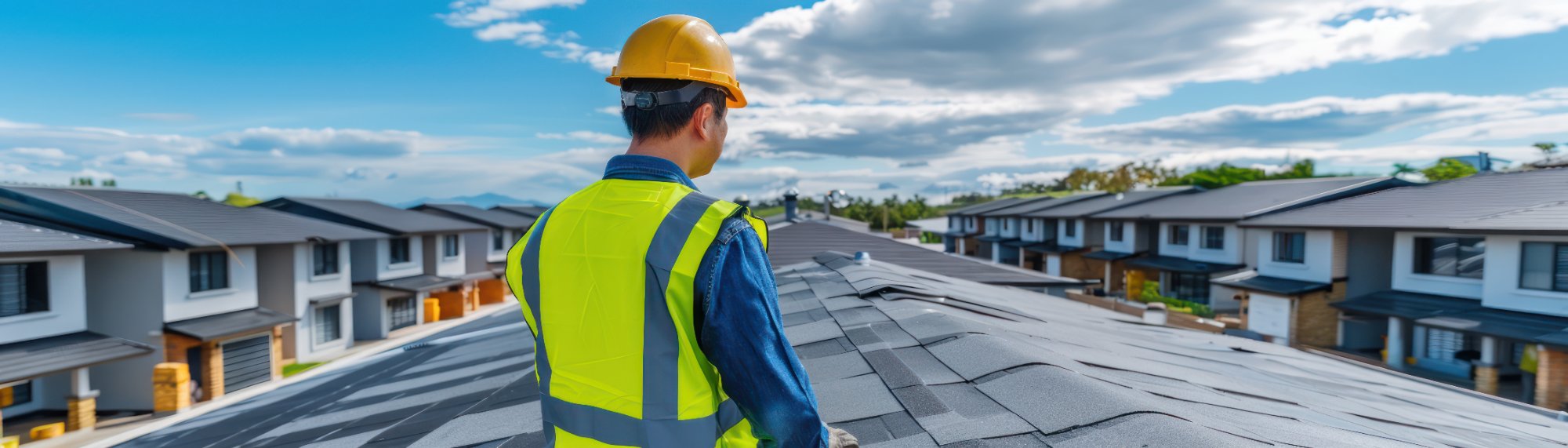
Thatcham Roof Surveys provide professional, independent roof inspections across this historic West Berkshire market town and its surrounding parishes. Our certified surveyors combine drone aerial photography with thermal imaging technology to deliver accurate, detailed assessments of every roof type found along the Kennet Valley — from the characterful period cottages and Victorian terraces lining the Broadway and Chapel Street, through the solid Edwardian and interwar family homes scattered across the older residential streets, to the extensive post-war estates of Dunstan Park and The Moors, the modern developments at Kennet Heath and Lambourn Meadows, and the substantial detached properties set along the hillside roads of Cold Ash and Ashmore Green.
Fast, independent roof surveys from local experts.
Our Thatcham service reflects the remarkable variety of housing stock concentrated within this compact town. Thatcham claims to be the oldest continuously inhabited settlement in Britain, and that deep history is visible in its buildings. The medieval and Tudor fabric near the church and Bath Road gives way to Georgian and Victorian expansion prompted by the coaching trade, early twentieth-century growth following the railway, the substantial post-war housing that transformed the town's southern half, and the modern estate developments that continue to extend its boundaries. Each generation of construction brought different roofing materials and techniques, and each demands specific inspection knowledge. Thatcham Roof Surveys bring the equipment and expertise to assess every one of them.
Whether you are buying a property in Thatcham, investigating a persistent leak after heavy rain in the Kennet Valley, documenting storm damage for an insurance claim, or seeking clarity on an ageing roof before committing to expensive repairs, our surveys provide the hard evidence you need to make confident decisions.
Thatcham Roof Surveys were established on a straightforward principle: property owners deserve an honest, independent assessment before spending thousands on roof work. Across West Berkshire, too many homeowners have committed to unnecessary repairs on the advice of contractors with a financial stake in the outcome, or completed a purchase only to discover hidden defects that a more detailed inspection would have caught. Our purpose is to close that gap between guesswork and informed decision-making.
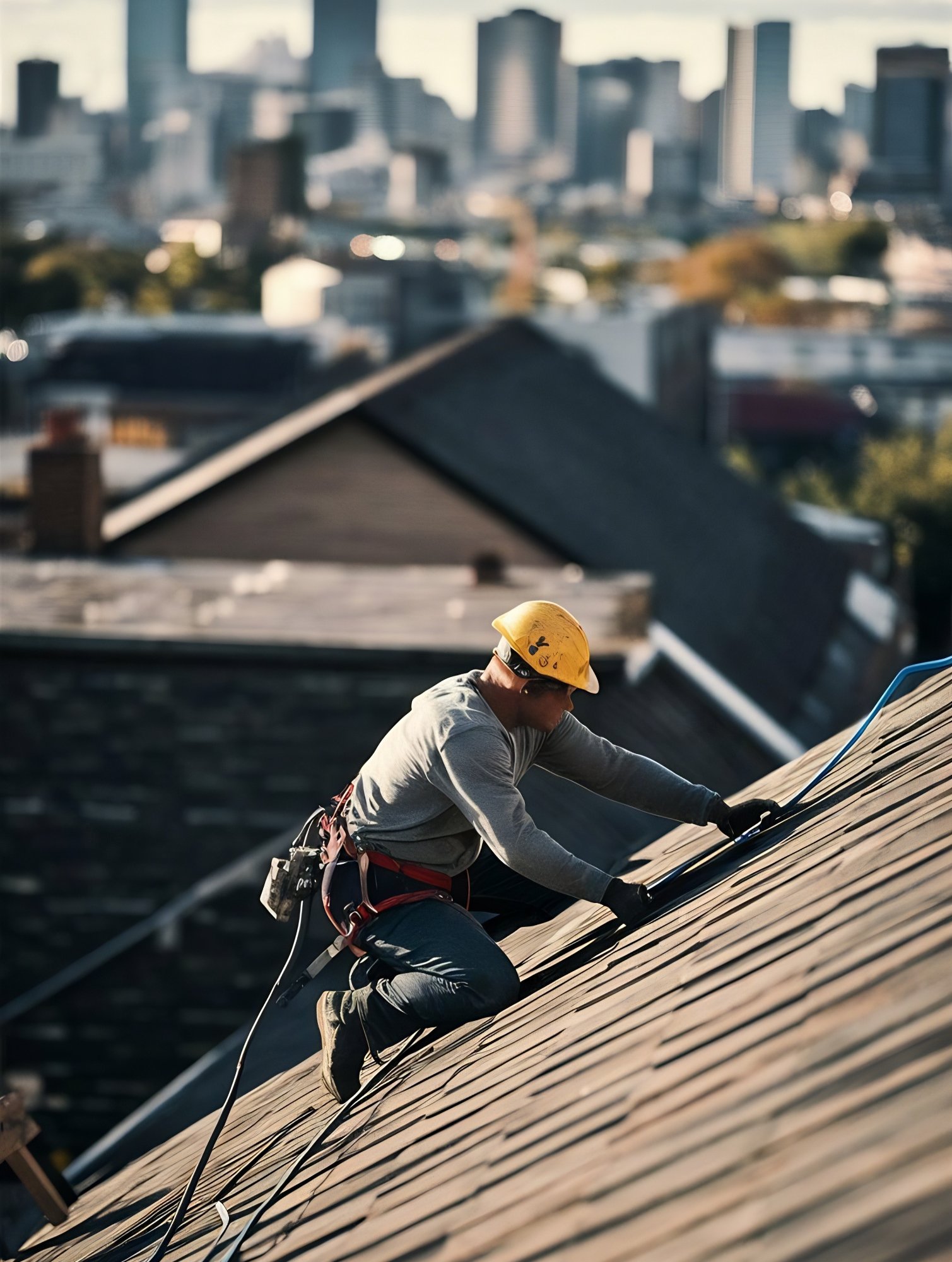
Every inspection follows a structured, repeatable process. We start at ground level, walking the full perimeter to assess rainwater goods, fascias, soffits, and visible defects from below. Our DJI Enterprise drone then photographs every elevation, ridge, valley, hip, and chimney stack in high resolution — capturing angles that scaffolding and ladders cannot replicate, particularly on the taller period properties near the Broadway and the steeply pitched rooflines found in Cold Ash. Where the survey package includes thermal imaging, our FLIR cameras map temperature differentials caused by moisture beneath tiles and within the roof structure itself.
Thatcham's housing ranges from seventeenth-century timber-framed cottages with handmade clay tiles to brand-new developments roofed in modern interlocking concrete. A thatched cottage near Crookham requires an entirely different inspection approach from a 1970s semi on The Moors, and both differ again from a large Edwardian detached overlooking Cold Ash Hill. Thatcham Roof Surveys work across every era and material because this town's building stock demands that breadth.
We operate with complete independence. Thatcham Roof Surveys do not carry out roof repairs and have no commercial interest in the outcome of any inspection. When we confirm a roof is sound, that finding carries weight. When we identify a problem, the costings in our report reflect current market rates for materials and labour — not figures inflated to pressure a quick commitment.
Nearby Areas with Similar Properties: The roofing challenges common in Thatcham are mirrored across much of the Kennet Valley and wider West Berkshire. Homeowners in Newbury and Reading face comparable issues with ageing concrete tiles, interwar clay tile fatigue, and period property maintenance. See our area-specific guides for information tailored to your location.
Thatcham Roof Surveys are not roofers, builders, or contractors. We provide independent inspection and reporting only — ensuring every assessment is free from commercial bias.
Thatcham Roof Surveys are ready to inspect your property. Whether it is a period cottage in the town centre, a detached family home in Cold Ash, a post-war semi on Dunstan Park, or a modern build at Kennet Heath, our team delivers the answers you need.
What Thatcham Roof Surveys bring to homeowners, buyers, and landlords across the town
Thatcham's roofscape includes everything from tight Victorian terraces along Chapel Street — where narrow rear yards prevent safe ladder placement — to the sprawling multi-pitch rooflines of large detached homes climbing the slopes towards Cold Ash and Ashmore Green. Our DJI Enterprise drone captures every ridge, valley, hip, flashing, and chimney stack in high-definition detail, documenting defects invisible from the ground and unreachable by conventional access methods.
Concealed moisture is a particular concern across the Kennet Valley, where the river, canal, and low-lying water meadows create elevated humidity levels that accelerate roofing deterioration. Concrete tile roofs on Thatcham's post-war estates and clay tile coverings on the interwar housing can harbour leaks for months before internal staining appears. Our FLIR thermal cameras detect temperature differentials caused by moisture ingress beneath tiles, behind flashings, and within the roof structure — identifying problems that visual inspection alone would miss.
Every Thatcham Roof Surveys report is a comprehensive document — annotated with high-resolution drone photographs, thermal overlays where applicable, and clear itemised repair costings at current market rates. The report is designed to be shared directly with your solicitor during a property purchase, submitted to an insurance provider as evidence for a claim, or handed to a roofing contractor as a precise specification for the work required.
Thatcham Roof Surveys hold full professional indemnity and public liability insurance. Our surveyors carry recognised certifications and CAA-approved drone pilot licences. Every inspection follows a standardised methodology refined across thousands of properties, ensuring consistency whether we are assessing a listed cottage near the parish church or a modern apartment overlooking the canal.
Thatcham is not one housing type — it is several distinct neighbourhoods, each with its own construction era, roofing materials, and characteristic defects. The period properties clustered around the town centre carry handmade clay tiles, natural slate, lead flashings, and tall chimney stacks with traditional lime mortar pointing. The 1920s and 1930s housing along the older residential roads typically presents machine-made clay tiles on steep pitches with bay window lead work that corrodes over decades. The post-war estates on Dunstan Park and The Moors use concrete interlocking tiles whose service life is often shorter than homeowners expect, and ridge mortar that weathers faster in the damp Kennet Valley climate.
Thatcham Roof Surveys have built our reputation on understanding these differences. We do not apply a one-size-fits-all checklist — we adapt every inspection to the specific age, material, and construction method of the roof in front of us. That local knowledge separates a report that tells you something actionable from one that simply confirms a roof is present.
From the handmade clay tiles on period cottages near the Broadway to the concrete interlocking tiles across Dunstan Park, Thatcham Roof Surveys know this town's roofscape thoroughly.
How Thatcham Roof Surveys have helped local homeowners and property buyers
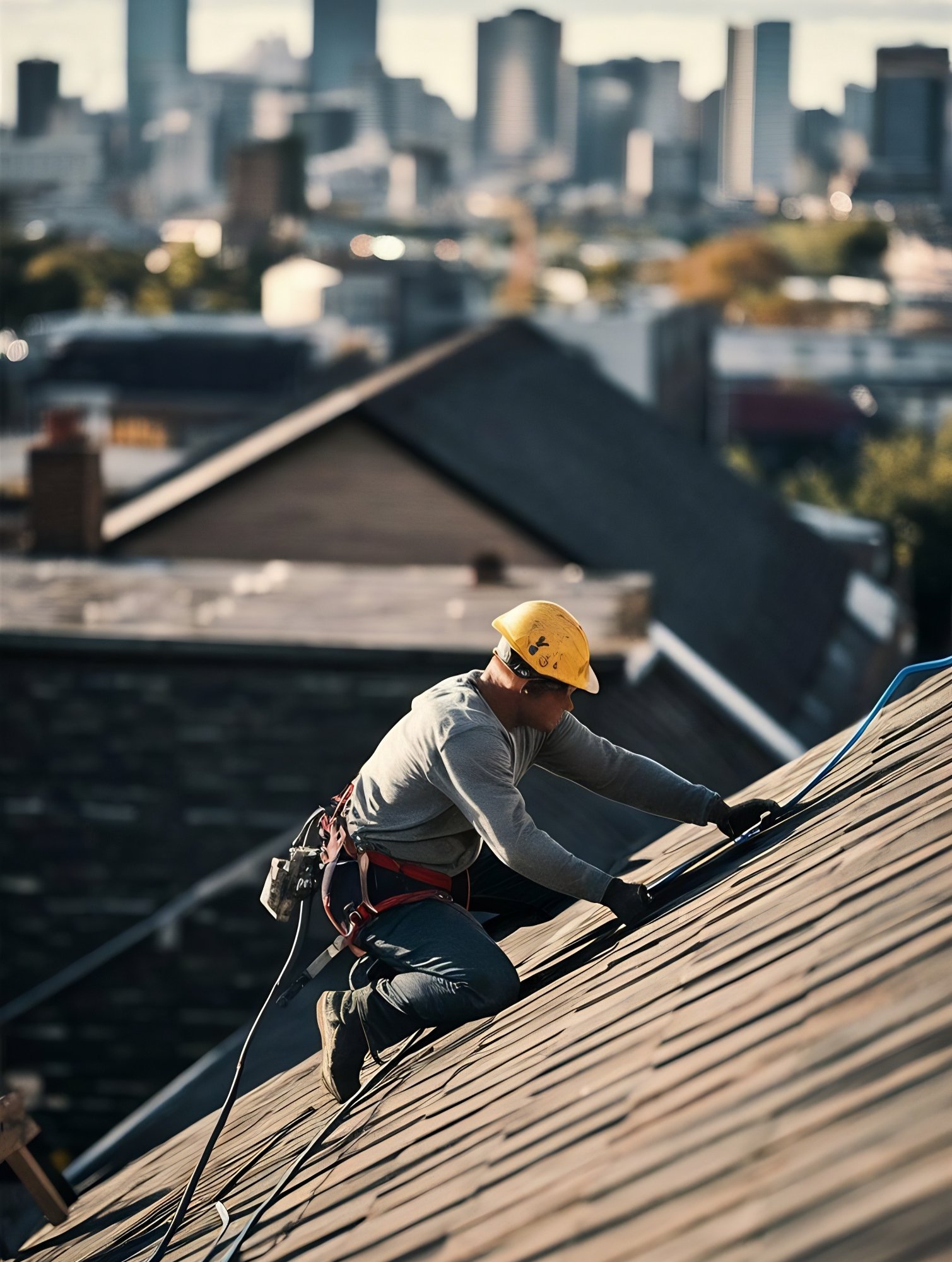
A couple purchasing an eighteenth-century cottage close to the Broadway received a homebuyer report that described the roof as "consistent with the age and type of building." The cottage had been re-roofed with machine-made clay tiles at some point in its history, and the report offered no further detail about the structure beneath. With an asking price above four hundred thousand pounds, the buyers contacted Thatcham Roof Surveys for a more thorough investigation.
Our drone captured three areas where tiles had shifted out of alignment on the rear slope, suggesting movement in the timber framework below. Internal loft inspection confirmed that two principal rafters and a purlin had significant wet rot, fed by moisture tracking inward from a perished lead chimney flashing. Thermal imaging mapped the moisture path from the flashing through the timbers to the ceiling below, where staining had been painted over by the vendor.
Thatcham Roof Surveys costed the necessary structural timber repairs, flashing replacement, and tile reinstatement at approximately eleven thousand two hundred pounds. The buyer's solicitor presented the report and the vendor reduced the price by the full amount. Without the Thatcham Roof Surveys inspection, the timber decay would have worsened through another damp winter and required far more extensive structural work.
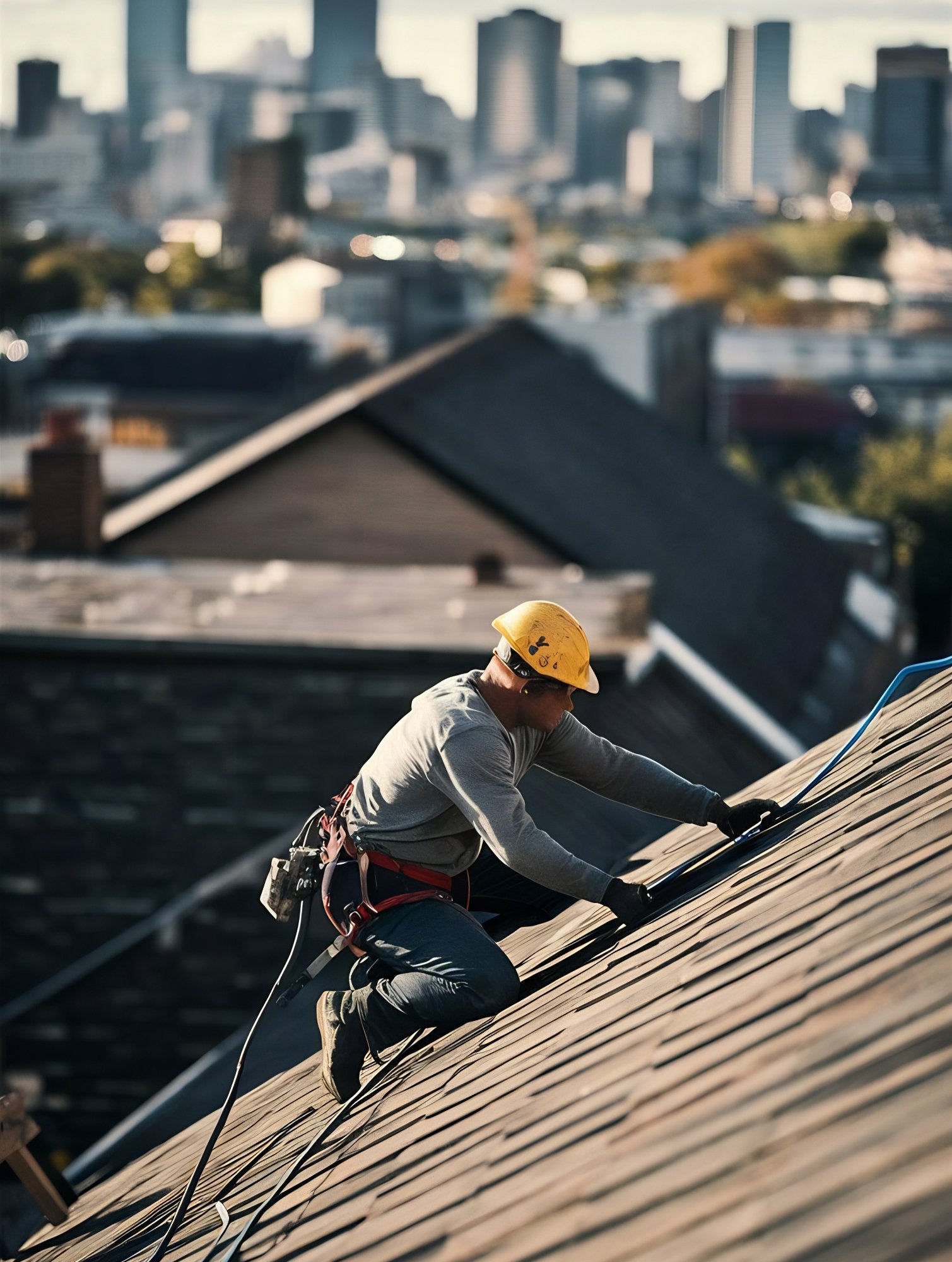
Following a period of heavy rain and strong winds in early 2025, a Dunstan Park homeowner discovered water penetrating the master bedroom ceiling. Their insurer dispatched a loss adjuster who concluded the damage was caused by long-term deterioration rather than storm conditions, and the claim was rejected. The homeowner challenged the finding and instructed Thatcham Roof Surveys for an independent opinion.
Our drone inspection documented eight recently displaced concrete tiles on the west-facing slope — consistent with the recorded wind direction during the storm. Two ridge tiles had clean fracture lines with no weathering on the broken edges, confirming fresh breakage. Thermal imaging traced a concentrated moisture channel from the exposed area directly through to the bedroom ceiling, ruling out any pre-existing leak pathway. We cross-referenced our findings with Met Office data for the storm period.
The Thatcham Roof Surveys report — complete with timestamped photography, thermal overlays, and weather data correlation — was submitted as a formal dispute. The insurer reassessed the claim and approved it in full within four weeks. The repair costs of approximately three thousand eight hundred pounds were covered under the policy. Our documentation gave the insurer no grounds to maintain their original decision.
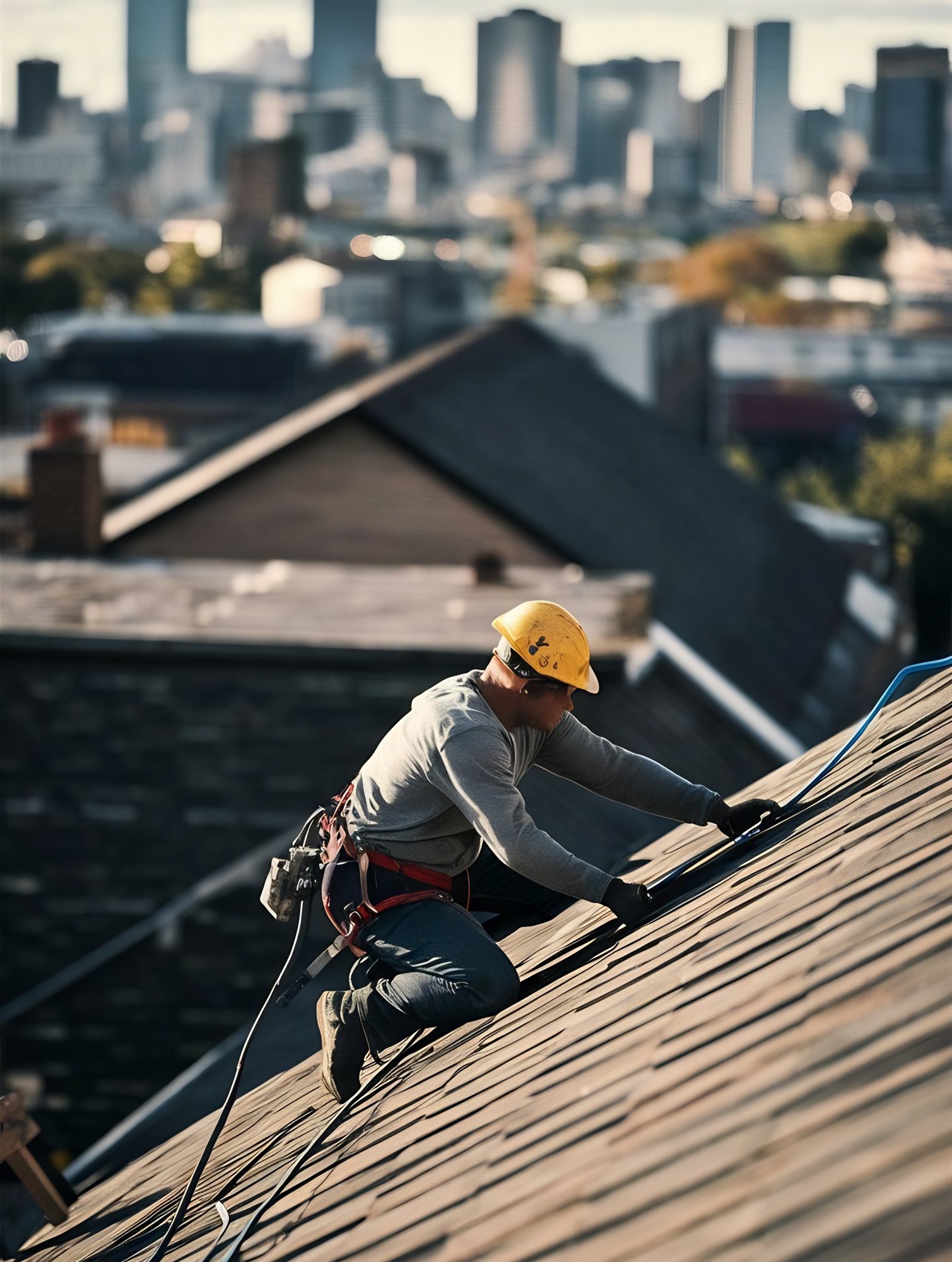
A homeowner in Cold Ash received a quote of nineteen thousand five hundred pounds for a complete strip and re-tile after a roofing contractor spent twenty minutes surveying from a ladder and declared the entire concrete tile covering "at end of life." The homeowner wanted a second opinion before committing and asked Thatcham Roof Surveys to carry out an independent assessment.
Our full drone survey — covering all four elevations, every ridge line, both hip junctions, and the chimney stack — confirmed that the south-west facing slope showed significant concrete tile delamination, crumbling verge mortar, and three cracked tiles admitting rainwater. However, the remaining three slopes were in sound condition with no evidence of moisture ingress. Internal loft inspection supported this finding, with moisture readings elevated only beneath the south-west slope.
Thatcham Roof Surveys costed the south-west slope re-tile and associated verge and ridge work at approximately eight thousand pounds — less than half the original quote. The homeowner commissioned the targeted repair and the remaining slopes continue to perform well. Our report provided a maintenance timetable for the whole roof going forward, allowing the homeowner to plan and budget for future work rather than pay for it all at once.
The owners of a detached house on the Kennet Heath development, built in 2015, noticed persistent damp patches appearing on the gable wall after rainfall. The developer insisted the NHBC warranty inspection had found nothing wrong and refused to investigate further. With the ten-year structural warranty approaching expiry, the owners needed independent evidence and contacted Thatcham Roof Surveys.
Our drone inspection identified that the lead flashing where the roof met the gable wall had been dressed incorrectly during construction — lapped in the wrong direction, allowing wind-driven rain to track behind the flashing and into the wall cavity. Thermal imaging confirmed a clear moisture path corresponding exactly with the internal damp patches. We also documented insufficient tile overhang at the verge, contributing to water reaching the wall face.
Armed with our photographic evidence and technical report, the homeowners submitted a formal claim under the NHBC warranty before it expired. The developer was required to rectify the flashing installation and verge detailing at their own cost. Total remediation value was approximately five thousand pounds. Without the Thatcham Roof Surveys inspection, the warranty would have lapsed and the homeowners would have borne the full cost.
Need a professional roof survey for your Thatcham property? Get in touch with Thatcham Roof Surveys today for a free consultation.
Feedback from homeowners and buyers who have used Thatcham Roof Surveys
"Purchasing a period cottage near the Broadway, we knew the standard homebuyer survey would skim over the roof. Thatcham Roof Surveys identified concealed timber rot and a failing lead flashing that would have cost over eleven thousand to repair. Their report gave our solicitor the evidence needed to renegotiate the price. Outstanding work from a genuinely independent team."
"Storm damage to our Dunstan Park roof was dismissed by the insurer as wear and tear. Thatcham Roof Surveys produced drone photography and thermal evidence proving it was storm-related. The claim was reversed and paid in full. Without their report we would have been out of pocket by nearly four thousand pounds."
"A contractor quoted nearly twenty thousand for a complete re-roof on our Cold Ash detached. Thatcham Roof Surveys demonstrated that only one slope needed replacement — the rest had years of serviceable life remaining. Saved us over eleven thousand and provided a clear plan for future maintenance. Thorough, professional, and entirely independent."
Transparent pricing from Thatcham Roof Surveys — choose the inspection level that suits your property and your needs
Thatcham Roof Surveys offer three tiers of inspection to suit different property types, budgets, and concerns. Every survey is carried out by the same certified team using the same professional methodology — the difference lies in the depth of investigation and the technology deployed. Whether you own a compact flat-roofed extension on The Moors or a multi-chimney period property near the town centre, there is a package designed for your situation.
Essential visual roof assessment for Thatcham homeowners needing a clear overview of their roof's current condition
Full drone and thermal imaging inspection — the most requested package for Thatcham buyers and homeowners
Complete structural roof assessment for Thatcham's larger detached homes, period properties, and commercial premises
Common questions answered by Thatcham Roof Surveys
Thatcham Roof Surveys cover the entire town and all surrounding districts. Our regular inspection areas include Thatcham town centre along the Broadway, Cheap Street and Chapel Street, the Dunstan Park development, The Moors, Kennet Heath, the village of Cold Ash and Ashmore Green, Crookham and Crookham Common, Henwick, and Colthrop. We also attend properties in the surrounding villages including Midgham, Bucklebury, Upper Bucklebury, and towards Hermitage.
A typical Thatcham property inspection takes between one and two and a half hours on site, depending on roof size, pitch count, and access. The larger detached homes in Cold Ash and Ashmore Green — with their multiple elevations, complex ridge arrangements, and steeply pitched slopes — tend toward the upper end. Smaller post-war semis on The Moors or modern homes on Kennet Heath are generally assessed more quickly. Every client receives their full written report within forty-eight hours of the site visit.
Thatcham has over fifty listed buildings and a conservation area, and period properties make up a significant part of our local workload. We regularly inspect the timber-framed cottages along the Bath Road, the Victorian and Edwardian houses in the older parts of town, the characterful country properties around Cold Ash and Bucklebury, and the occasional thatched cottage in the surrounding villages. Our drone-based approach is particularly valuable on these buildings, where conventional ladder or scaffolding access risks damaging historic brickwork, lime mortar joints, or delicate tile coverings.
Every comprehensive and premium report from Thatcham Roof Surveys includes timestamped drone photography, thermal scan overlays where applicable, detailed damage narratives, and itemised repair costings at current market rates. Insurance providers need documented evidence rather than verbal descriptions when processing claims, and our reports are structured to satisfy those standards. We have supported numerous successful claims for Thatcham properties — particularly after the severe weather events that the exposed Kennet Valley is prone to, including the significant flooding Thatcham experienced in 2007.
Thatcham sits in the Kennet Valley and its low-lying position creates a damp microclimate that accelerates roofing deterioration. The most frequent issues we encounter include concrete tile delamination and ridge mortar erosion on the extensive post-war and 1970s housing stock, cracked and slipping clay tiles on interwar properties, degraded lead flashings around chimney stacks, blocked valley gutters on older multi-pitch rooflines, and widespread flat roof failures on rear kitchen and bathroom extensions built across almost every era of Thatcham housing. Moss and algae growth is particularly aggressive on north-facing slopes close to the river and canal corridor.
Commercial inspections form a regular part of our Thatcham schedule. We survey the retail and office premises along the Broadway and Bath Road, converted period buildings in the town centre, industrial and warehouse units at Colthrop Business Park, school buildings including local primary schools, and commercial premises across the wider West Berkshire area. All flat roof systems including felt, GRP, EPDM, and single-ply membranes fall within our scope, alongside the traditional pitched roofs found on many of Thatcham's converted commercial buildings.
Have another question? Contact Thatcham Roof Surveys directly.
Thatcham Roof Surveys provide professional roof inspections across the town and wider West Berkshire
The historic core along the Broadway, Cheap Street, and Chapel Street contains a mix of period cottages, Victorian and Edwardian terraces, converted commercial buildings, and some listed properties within the conservation area. Handmade clay tiles, natural slate, lead flashings, and traditional chimney stacks are characteristic of the town centre roofscape.
The popular Dunstan Park development west of the town centre is one of Thatcham's largest residential areas, built primarily from the 1960s through to the 1990s. Concrete interlocking tiles, flat-roofed garage extensions, and ridge mortar approaching the end of its serviceable life are common across this neighbourhood.
South of the town centre, The Moors and the newer Kennet Heath development provide a mix of post-war housing and modern builds close to Thatcham railway station. Concrete tiles on the older properties and modern interlocking tiles on the newer estates present different maintenance profiles and inspection needs.
The elevated villages of Cold Ash and Ashmore Green sit on the hillside north of Thatcham, home to substantial detached properties on generous plots with far-reaching views. Larger rooflines, multiple chimney stacks, and exposure to wind-driven rain from the west create particular inspection demands.
South of Thatcham, Crookham and Crookham Common offer a more rural character with scattered properties, period cottages, and some homes bordering the former Greenham Common airfield. Tree cover, exposed positions, and older roofing materials create specific challenges.
Thatcham Roof Surveys operate across the wider West Berkshire district and beyond. We regularly attend properties in the surrounding towns and villages that share similar housing stock and roofing challenges.
Thatcham Roof Surveys provide the independent, professional roof inspections that this historic Kennet Valley town deserves. Whether you are a first-time buyer assessing a period cottage near the Broadway, a homeowner dealing with storm damage on Dunstan Park, a landlord managing a portfolio property on The Moors, or simply seeking clarity on an ageing roof before committing to costly repairs, our surveys deliver the answers you need.
Every inspection combines certified expertise with advanced technology — drone aerial photography, thermal imaging, and detailed written reporting — to give you a complete, unbiased picture of your roof's condition. We do not carry out repairs. We do not recommend contractors. We provide the facts, the photographs, and the costings, and you make the decisions.
Every report is independent, detailed, and written to be acted upon — whether you are buying, selling, claiming, or simply protecting your property.
Call us today or complete the form below to arrange your Thatcham roof survey.
Contact Thatcham Roof Surveys today to arrange your roof inspection
Monday - Friday: 7:30 AM - 9:30 PM
Saturday: 7:30 AM - 7:00 PM
Sunday: 9:00 AM - 5:00 PM
For urgent roof inspection needs in Thatcham, please call Thatcham Roof Surveys directly.
Call Now