
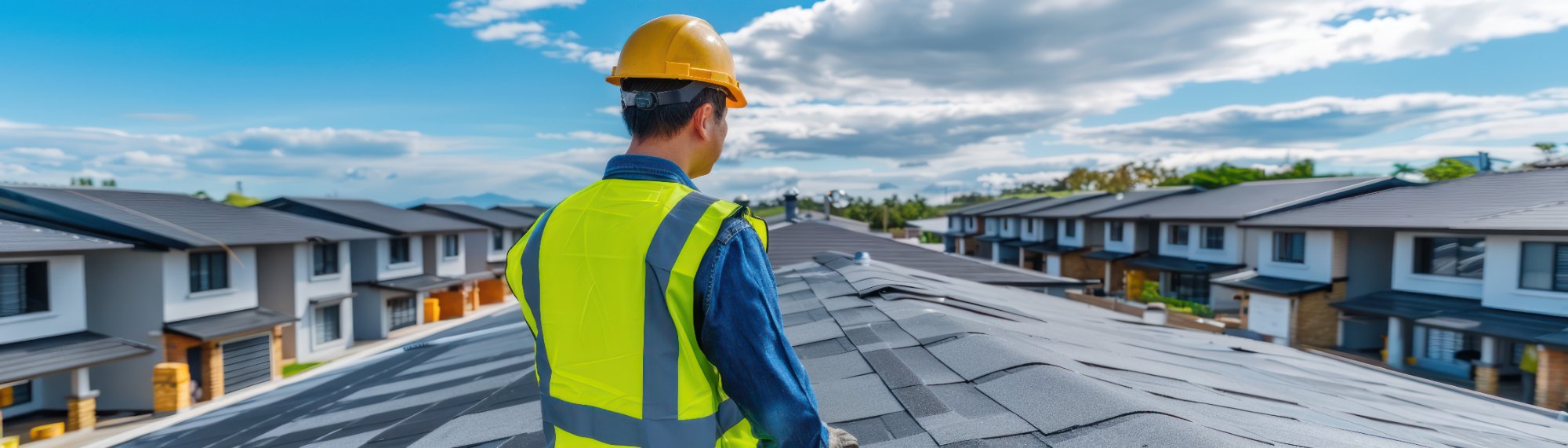
Nestled in the Cuckmere River valley beneath the rolling chalk escarpment of the South Downs, Alfriston is one of East Sussex's most architecturally significant villages. Alfriston Roof Surveys specialise in the inspection of this unique building heritage — from the medieval timber-framed houses and thatched cottages clustered around the ancient market cross and the parish church of St Andrew, through the flint-walled Georgian and Victorian properties lining High Street and North Street, to the converted barns and farm buildings scattered across the surrounding downland parishes of Litlington, Berwick, and Wilmington.
Fast, independent roof surveys from local experts.
Our inspection service exists because Alfriston's roofscape cannot be properly assessed using conventional methods designed for modern housing estates. A fifteenth-century timber-framed cottage with Horsham stone slates, oak pegs, and lime mortar demands entirely different expertise from a twentieth-century barn conversion with concrete tiles. Thatched properties require non-invasive assessment techniques that preserve the delicate thatch layers while revealing hidden moisture and structural issues beneath. Alfriston Roof Surveys bring both the technology and the heritage building knowledge that this conservation village demands.
Whether you are purchasing a period property within the conservation area, investigating water ingress in a thatched cottage, documenting storm damage for an insurance claim, seeking pre-works assessment for listed building consent, or simply concerned about an ageing roof on a cherished family home, Alfriston Roof Surveys provide the detailed, independent evidence you need to make informed decisions about your South Downs property.
Alfriston Roof Surveys operate on a straightforward principle: heritage properties deserve heritage-appropriate inspection. Too many historic buildings in this part of East Sussex have been subjected to cursory visual surveys that miss concealed defects, or to invasive inspections that damage delicate historic fabric in the process of assessment. Our role is to deliver thorough, accurate roof surveys using modern technology while respecting the age, materials, and architectural significance of every building we inspect.
Our methodology begins with detailed historical research — we establish when a property was built, what materials were originally used, what alterations have occurred over the centuries, and what issues are characteristic of that building type and era. Our DJI Enterprise drone captures every elevation, ridge, valley, chimney, and dormer window from multiple angles, revealing defects invisible from ground level and inaccessible without scaffolding. FLIR thermal cameras detect moisture patterns concealed beneath thatch, tiles, or slates. Internal loft inspections document timber condition, structural movement, and previous repair quality.
Alfriston's building stock spans nearly a millennium. The village core contains some of the finest medieval domestic architecture in southern England — timber-framed halls with crown-post roof structures, jettied upper floors, and original Horsham stone slate coverings. The Tudor period brought brick chimneys, clay peg tiles, and the thatched cottages that define much of the village's character today. Georgian prosperity added elegant flint-faced properties with Welsh slate roofs. Victorian expansion introduced red brick terraces with plain tiles. Twentieth-century barn conversions created modern homes within medieval agricultural shells.
Alfriston Roof Surveys work across all of these building types because the village demands that breadth of knowledge. We understand the difference between water reed and long straw thatch, between Horsham stone and Collyweston slate, between oak pegs and modern fixings. We recognise appropriate repair methods and can identify inappropriate twentieth-century interventions that may be causing current problems.
Similar Properties in Nearby Areas: The roofing challenges we encounter in Alfriston are mirrored across the South Downs conservation villages. Property owners in Seaford and Lewes manage comparable heritage buildings with similar roof problems. See our dedicated guides for detailed area information.
Alfriston Roof Surveys use non-invasive drone and thermal technology specifically to avoid damaging the delicate historic fabric we are assessing. Every inspection respects the building's age and character.
Alfriston Roof Surveys are ready to inspect your property. Whether it is a thatched cottage in the village centre, a converted flint barn near Litlington, or a farmhouse on the Downs, our team delivers the answers you need.
What Alfriston Roof Surveys bring to homeowners, buyers, and heritage property owners across the South Downs
Alfriston's thatched cottages and medieval timber frames cannot tolerate heavy foot traffic or ladder pressure against delicate walls. Our DJI Enterprise drone captures every ridge line, valley gutter, chimney stack, and roof slope in high-definition without physical contact — preserving historic fabric while revealing defects that traditional climbing inspections would miss or damage in the process of discovering.
Water penetration beneath thatch, behind lime-pointed tiles, or within ancient oak roof timbers often remains invisible until serious decay has occurred. Our FLIR thermal cameras detect temperature differentials caused by hidden moisture — identifying problems months or years before they manifest as visible staining, rot, or structural failure. This early detection capability is particularly valuable in heritage properties where repair costs escalate rapidly once timber decay begins.
Every Alfriston Roof Surveys report is structured to meet the specific requirements of heritage property transactions. We document existing materials, construction methods, and historic significance alongside defect identification and repair costings. Our reports are formatted for submission to conservation officers, planning authorities, and listed building consent applications — as well as satisfying mortgage lenders, insurance assessors, and solicitors during property purchases.
Alfriston Roof Surveys hold full professional indemnity and public liability insurance. Our surveyors carry recognised qualifications in historic building assessment and CAA-approved drone pilot licences. We follow conservation principles established by Historic England and work regularly with local authority conservation officers across East Sussex. Every inspection respects both the building's heritage value and current building regulations.
Alfriston is not simply a collection of old buildings — it is a working conservation village where people live, work, and raise families in structures that have sheltered families for centuries before them. The thatched cottage on High Street faces entirely different roofing challenges from the converted flint barn near Litlington, and both differ again from the Victorian terrace on Winton Street. Generic roof surveys written for modern housing estates simply do not apply here.
Alfriston Roof Surveys have built our reputation on recognising these distinctions. We tailor every inspection to the specific age, materials, construction methods, and heritage constraints of the property in front of us. That specialised knowledge is the difference between a report that tells you your roof is old and one that tells you precisely what is wrong, why it happened, what it will cost to repair, and what maintenance approach will preserve your property for the next generation.
From medieval hall houses to thatched cottages, from flint barns to Georgian slate roofs, Alfriston Roof Surveys understand this village's architectural heritage in depth.
How Alfriston Roof Surveys have helped heritage property owners and buyers across the South Downs

A couple purchasing a fifteenth-century cottage on High Street received a homebuyer report describing the thatched roof as "in good external condition with recent ridge work." With an asking price exceeding eight hundred thousand pounds and listed building status complicating any future repairs, they commissioned Alfriston Roof Surveys for a comprehensive pre-purchase assessment before proceeding to exchange.
Our drone survey captured extensive mouse damage to the thatch ridge invisible from ground level. More significantly, thermal imaging revealed moisture patterns tracking along three principal oak rafters. Internal loft inspection confirmed substantial decay in the rafter feet where they met the wall plate — the result of water tracking behind defective lead soakers at the thatch-to-wall junction. The beautiful external appearance concealed serious structural deterioration requiring urgent intervention.
Alfriston Roof Surveys documented the defects with annotated photography and provided detailed repair costings totalling approximately fourteen thousand three hundred pounds for timber repair and lead work replacement. The buyer's solicitor used our report to negotiate a price reduction matching the full repair cost. The thatch ridge was replaced and the structural timbers repaired within four months of completion. Without the survey, the oak decay would have progressed undetected until visible sagging occurred — at vastly greater cost to remedy.

Following severe October storms that battered the exposed Cuckmere valley, a homeowner discovered water pouring through her bedroom ceiling. Her insurance company sent a loss adjuster who attributed the leak to "gradual deterioration of the clay tile covering" and rejected the storm damage claim outright. Frustrated and facing a growing damp problem, she contacted Alfriston Roof Surveys for an independent assessment.
Our drone inspection documented fresh displacement of eleven clay peg tiles on the south-west facing slope — entirely consistent with the recorded wind direction and speed during the storm. Thermal imaging showed a concentrated moisture path from the displaced tiles directly through to the affected bedroom ceiling. We also photographed clean fracture lines on three tiles with no weathering on the exposed edges, confirming recent breakage during a single event rather than progressive long-term deterioration.
Our timestamped report with annotated drone photography and thermal evidence was submitted to the insurer as a formal dispute. Within eighteen days the claim was reassessed and approved in full. Total repair costs of six thousand seven hundred pounds were covered under the policy. The Alfriston Roof Surveys report provided exactly the documented evidence that overturned the adjuster's original decision and prevented the homeowner from bearing the entire cost herself.
Need a professional roof survey for your Alfriston property? Get in touch with Alfriston Roof Surveys today for a free consultation.
Feedback from heritage property owners and buyers who have used Alfriston Roof Surveys
"Purchasing a timber-framed cottage on High Street, we needed certainty about the roof before committing such a large sum. Alfriston Roof Surveys found rafter decay and mouse damage that the standard survey had missed completely. Their detailed report enabled us to negotiate fourteen thousand off the asking price. Could not have proceeded without their expertise."
"Our listed cottage suffered storm damage and the insurance company initially refused to pay claiming poor maintenance. Alfriston Roof Surveys provided the timestamped evidence and thermal imaging that proved otherwise. The claim was approved within three weeks. Their report was worth far more than we paid for it."
"Converting a flint barn near Litlington, we needed detailed roof documentation for planning consent. Alfriston Roof Surveys delivered exactly what the conservation officer required — annotated drone photography, heritage assessment, appropriate repair specifications. Their report was instrumental in securing our listed building approval. Thoroughly professional throughout."
Transparent pricing from Alfriston Roof Surveys — tailored packages for heritage properties and South Downs homes
Alfriston Roof Surveys offer three inspection tiers designed specifically for the village's diverse building stock. Whether you own a thatched cottage requiring non-invasive assessment, a converted barn needing structural documentation, or a Georgian property with slate roofing, there is a package matched to your property type and inspection requirements. Every survey is carried out by the same certified team using the same professional methodology — the difference lies in the depth of investigation and the technology deployed.
Essential visual assessment for Alfriston homeowners needing a clear overview of their roof's current condition
Full drone and thermal imaging inspection — the most requested package for heritage property buyers
Complete structural assessment for listed buildings, thatched cottages, and large heritage properties
Common questions answered by Alfriston Roof Surveys
Alfriston Roof Surveys cover the historic village centre along High Street, North Street, and West Street, the thatched cottages scattered throughout the conservation area, properties around Dean's Place and The Tye, homes along Winton Street extending toward Berwick, and the isolated farmhouses and barn conversions across the surrounding South Downs landscape. We regularly attend properties in Frog Firle, Litlington, the Long Man of Wilmington area, and along the Cuckmere River valley. Our service extends to neighbouring villages including West Dean, Arlington, and Wilmington.
Most Alfriston properties take between two and three hours to survey properly on site. The medieval timber-framed buildings with complex roof structures, thatched cottages requiring careful assessment without disturbing the thatch layers, and listed buildings where detailed photography and documentation are essential all demand longer inspection periods than standard modern housing. We deliver reports within seventy-two hours given the heritage-sensitive nature of much of our Alfriston work and the need for thorough documentation.
Thatched roofs represent a significant proportion of our Alfriston workload. We assess water reed and long straw coverings using drone photography that avoids physical contact with delicate thatch layers, thermal imaging to detect moisture penetration beneath the thatch surface, and internal inspection of the timber structure and chimney arrangements. Our reports document ridge condition, sparrow and vermin damage, wire netting integrity, fixings, and provide realistic costings for maintenance or re-thatching based on current specialist contractor rates across East Sussex.
Many Alfriston properties hold Grade I, Grade II*, or Grade II listings, and our comprehensive reports are structured specifically to support planning and listed building consent applications. We document existing materials, construction methods, heritage significance, and provide repair specifications that respect historic fabric and follow conservation principles. Our reports have been submitted successfully to Wealden District Council and East Sussex County Council for numerous heritage property projects throughout the South Downs conservation area.
Alfriston's medieval and Tudor properties present characteristic issues including timber decay in oak roof frames exposed to centuries of moisture cycling, degraded lime mortar between Horsham stone slates or clay peg tiles, lead flashing failures around chimneys and parapet gutters, inadequate ventilation causing condensation beneath modern felt underlays applied during inappropriate twentieth-century repairs, and structural movement in cob walls affecting roof plate alignment. Thatched properties commonly show ridge deterioration, wire mesh corrosion from decades of weather exposure, vermin damage, and moisture tracking at wall-head junctions where thatch meets masonry.
Barn conversions, agricultural buildings, and farm structures form a regular part of our South Downs survey schedule. We assess traditional clay tile and slate roofs on converted flint barns, corrugated metal and fibre-cement coverings on working agricultural buildings, and the complex roof arrangements where residential conversions meet retained agricultural spaces. Our drone technology proves particularly valuable on these larger footprint buildings where access can be challenging and where internal roof structures often span substantial distances without intermediate support.
Have another question? Contact Alfriston Roof Surveys directly.
Alfriston Roof Surveys provide professional roof inspections across the village and surrounding South Downs parishes
The historic core around High Street, North Street, and the market cross contains the finest concentration of medieval and Tudor timber-framed buildings in East Sussex. Thatched cottages, Horsham stone slates, clay peg tiles, and flint walls with lime mortar define the conservation area roofscape.
Properties around Dean's Place and The Tye include Georgian and Victorian additions to the village — elegant flint-faced cottages with Welsh slate roofs, brick terraces with plain tiles, and substantial family homes overlooking the water meadows toward the Cuckmere River.
The lanes extending east toward Berwick and south toward Frog Firle feature scattered cottages, converted farm buildings, and individual properties set within the South Downs landscape — each with unique roofing challenges shaped by exposure and isolation.
The neighbouring hamlet of Litlington and the lanes toward Wilmington contain numerous flint barns converted to residential use — substantial structures where traditional agricultural roofing meets modern domestic requirements.
Properties in the neighbouring downland villages of West Dean and Arlington share similar heritage building characteristics — medieval churches, thatched cottages, flint construction, and the roofing challenges that come with exposed South Downs locations.
Alfriston Roof Surveys operate across the wider South Downs region and Wealden district. We regularly attend properties in the surrounding towns and villages where heritage buildings and challenging exposures demand specialist inspection expertise.
Alfriston Roof Surveys provide the specialist, heritage-appropriate roof inspections that this conservation village demands. Whether you are purchasing a thatched cottage in the village centre, investigating moisture problems in a timber-framed medieval building, documenting storm damage for an insurance claim on a flint property, seeking pre-works assessment for listed building consent, or simply concerned about an ageing roof on a cherished family home, our surveys deliver the detailed, independent evidence you need.
Every inspection combines certified heritage building expertise with advanced technology — drone aerial photography, thermal moisture detection, and comprehensive written reporting — to give you a complete, unbiased understanding of your roof's condition. We do not carry out repairs. We do not recommend contractors. We provide the facts, the photographs, the costings, and you make the decisions.
Every report is independent, heritage-appropriate, and written to be acted upon — whether you are buying, claiming, planning works, or protecting your property for future generations.
Call us today or complete the form below to arrange your Alfriston roof survey.
Contact Alfriston Roof Surveys today to arrange your roof inspection
Monday - Friday: 7:30 AM - 9:30 PM
Saturday: 7:30 AM - 7:00 PM
Sunday: 9:00 AM - 5:00 PM
For urgent roof inspection needs in Alfriston, please call Alfriston Roof Surveys directly.
Call Now