
West Sussex · London and the South East
New Roof Snagging in Colgate
Checking a new or replacement roof for snags in Colgate, using drones and thermal imaging where applicable. Get in touch for a price.
- Vents that weren’t fitted or are covered
- Cracked lower roofs or marked walls after the work
- Gutters blocked by building debris
How new roof snagging works in Colgate
A new roof is a big spend, so it makes sense to check the work before you pay the final bill. Our new roof snagging inspection looks for faults and unfinished work on the new roof and around it. You get a written report with photos that you can pass to your roofer. We’re independent of the roofer who did the job. If you’ve noticed cracked or slipped new tiles or slates and missing or blocked roof ventilation, we can find out what’s behind it.
Some older homes in villages like Colgate are listed or sit in a conservation area. If so, re-roofing in different materials may need consent, so check with the council before work starts. Whether you’re buying or signing off new roofing, it’s worth knowing where you stand. England has around 10,000 conservation areas and about 500,000 listed buildings.
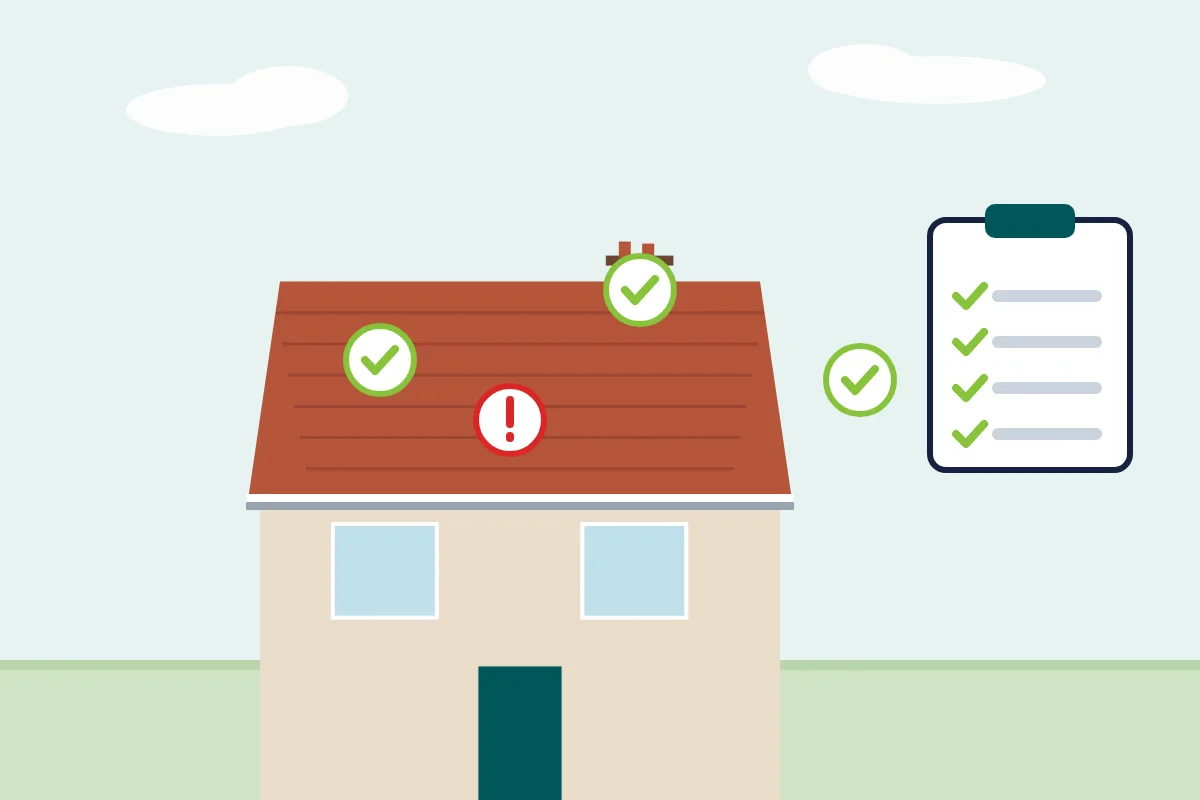
The report works through the roof section by section, from the coverings down to the gutters. You will see the good as well as the bad.
- Place
- Colgate (RH13, RH12)
- Wider area
- West Sussex
- Price
- From £150 inc. VAT
- Reports
- Emailed report with photos and recommendations
- Appointments
- Weekdays, Saturdays and Sundays
- Insurance
- Professional indemnity and public liability
- Call
- 07833 053749
- Updated
- 27 October 2026
Colgate questions
Is my home in Colgate listed or in a conservation area?
For listing, use Historic England’s list; for conservation areas, ask the council. It matters most if you’re planning to re-roof in a different material.
Do you cover Colgate?
Yes, Colgate is one of the places we work. The survey and report are the same in Colgate as anywhere else, and visits run on weekdays and weekends.
How much time does a snagging visit need?
Most house visits take about 1–2 hours with commercial roofs nearer 3–4 hours.
Which parts of the roof does snagging cover?
Everything we can see safely, from the ridge and verges down to the eaves and gutters. We look in the loft where it is safe and check for damage left by the job.
Does someone need to be in?
If the survey includes the loft or the inside of the building, someone needs to let us in. Access is agreed with you as you book.
How soon after the work should I book a snagging inspection?
Before the final payment is best so snags can be raised while the job is still open. Otherwise, book before your defects or warranty period runs out.
Does the weather affect the survey?
It depends on the weather and the survey. Strong wind or heavy rain can make access unsafe and ground a drone, and we’d agree another day.
Prices for new roof snagging in Colgate
All our prices include VAT. What changes the price is:
- The shape of the roof and its details
- The height of the building and how the roof can be seen safely
- Whether you choose the Basic, Standard or Premium Survey
- The size of the roof
Every price we give includes VAT, and the written report is part of the package. New roof snagging starts from £150, including VAT. Size, height and access decide where your roof falls.
Helping us price your survey
What helps most when you contact us:
- What kind of property and roof it is
- The property’s address and postcode
- Where water is showing inside, if it is
- When you need the report by
If you have photos of the roof, send them over. Pictures from ground level or a window are fine, and please don’t climb up for a closer look. To send them or to book, ring 07833 053749 or use the contact form.
Landlord and commercial surveys in Colgate
Where a roof is shared: we need access agreed with whoever owns or manages the building. Tell us about it when you book and we’ll plan the visit with that in mind.
A roof problem in a let property affects your tenants as well as the building. A survey shows what needs attention, so you can plan the work.
New roof snagging in Colgate: local notes
The wider area around Colgate has a long history of building, with Tyes Place about 4.5 miles south-east. Older homes in the wider area often have features worth a closer look, such as lead valleys, tall stacks and roofs that have been patched over the years, and the council can say whether a home is in a conservation area. Many older homes in Sussex have handmade clay tiles and tile-hung walls. A few old Sussex buildings still carry heavy Horsham stone slabs. Whether you are buying or checking new roofing work, knowing the materials helps make sense of what the inspection finds.
The streets around a church like St. Saviour's Church are frequently among the oldest in a place, and if your house is among the older ones nearby, ask the seller about past roof repairs, because older roofs frequently have patched valleys, replaced slates and reset ridges.
Colgate is about 3 miles south-west of Crawley, in West Sussex. We cover Colgate and the rest of West Sussex, as part of our work across London and South East England. Colgate is one of the towns and villages in West Sussex where we work.
Postcode districts we cover here for new roof snagging: RH13 and RH12. You will find streets like Forest Road, Vicarage Close and Blackhouse Road, and we cover them all. Nearby, we also carry out new roof snagging in Kilnwood Vale (1 mile north), Faygate (1 mile north-west), Broadfield (2 miles north-east), Roffey (2 miles west) and Handcross (3 miles south-east). We also work in nearby towns like Crawley (3 miles north-east), Horsham (4 miles west), Haywards Heath (9 miles south-east), Burgess Hill (10 miles south-east), East Grinstead (11 miles east) and Storrington (14 miles south-west).
Landmarks near Colgate
Around Colgate, our work takes us to homes and buildings near The Dragon pub, Target Hill Park and Cottesmore School and the streets around them. The nearest railway station is Faygate station, roughly 1.3 miles north-west of the centre. Nearby you’ll also find Crawley Museum (3.4 miles north-east) and County Mall (3.4 miles north-east). The countryside around Colgate includes Tilgate Lake and Warnham LNR.
How the survey works
Where it is relevant and can be reached safely, the loft space is checked as well as the outside. In the loft, the signs we look for are staining, damp, daylight and sagging, as far as the space allows. All in, the survey usually takes roughly 1–2 hours on an ordinary house, and more on a big or complicated roof. Somewhere as small as Colgate, access is often the only tricky part. Mention any outbuildings, barns or garages you want included, and anything about the roof you already know. Weekday and weekend visits are available.
- You let us know what work was done and when.
- We check the coverings, ridges, hips and verges from safe vantage points.
- Valleys, flashings, gutters and visible underlay at the eaves are checked.
- We check the loft where safe and look for debris or damage.
- You get a photo report of each snag.
Before the survey
- Let us know about any leaks, stains or damp patches you know of
- Have any questions written down, so nothing gets missed
- Let us know about parking near the property
Arrange a survey
To book a survey, call 07833 053749 or send us an email and let us know the address and what’s prompted the survey. You will know the price before anything is booked.
Advice
Do you need new roof snagging in Colgate?
Ventilation is sometimes missed or blocked during re-roofing. Poor ventilation can lead to condensation in the loft.
Most people get in touch when they’ve noticed one of these:
- Cracked lower roofs or marked walls after the work
- Gutters blocked by building debris
- Flashings not properly dressed or fixed
- Signs of condensation in the roof space
Landlords with a home close to Faygate station may find that a survey before purchase, or before signing off a new roof, saves surprises once a tenant moves in.
Choosing a roof surveyor
- How much experience they have with roofs like yours
- Are they insured for the work?
- If they fly a drone, whether they hold a CAA Flyer ID and Operator ID
- Which viewpoints they use to see the roof
What we look for on each type of roof
Slate roofs
Broken slates left on a new roof are a common snag. They’re photographed for the report.
Flashings
Flashings close the gap where the roof meets walls and stacks. We check they’re dressed, fixed and pointed where they can be seen.
Should I look at the roof myself first?
Your own check is a good start, but it isn’t a survey. You won’t see flashings, valleys or the backs of chimneys properly from ground level, and those are details a survey looks at closely.
It helps to keep a record: dates of leaks, photos from ground level and any work done on the roof. Send it with your enquiry and it will help the survey.