
Kent · London and the South East
New Roof Snagging in How Green
Get a clear view of the new roof at a property in How Green from an independent roof surveyor. Visits run on weekdays and weekends, in the daytime.
- Underlay not dressed into the gutter
- Flashings not properly dressed or fixed
- Ridge and hip tiles not properly fixed
New roof snagging in How Green: what you get
A snag is a fault or unfinished detail left when work is done. On a roof, snags are frequently at the edges and junctions where the work is most fiddly. We inspect as far as can safely be seen and photograph each snag. Loose ridges, untidy verges, badly dressed flashings and leftover debris are typical snags. We survey new flat roofs, flashings and valleys and ridges and verges, and common reasons people get in touch are gaps at new flashings and tiles or slates sitting out of line.
Somewhere as small as How Green, older cottages, farmhouses and converted buildings often sit beside a few newer homes. Older roofs there may have clay tiles, slate, stone or, in some places, thatch. Each covering has its own weak points, whether the roof is old or newly laid, and thatch is a specialist material, so we report on what can be seen. What’s under the coverings, from old felt to the battens and nails, matters too.
The report doesn’t just list problems. For each finding, it explains what it is, why it matters and what we’d recommend, so you can decide what to do next.
- Where
- How Green (TN8)
- Wider area
- Kent
- Prices
- From £150 inc. VAT
- Report
- Written, with photos, emailed to you
- Appointments
- Monday to Sunday, daytime
- Cover
- Professional indemnity and public liability
- Call
- 07833 053749
- Updated
- 27 October 2026
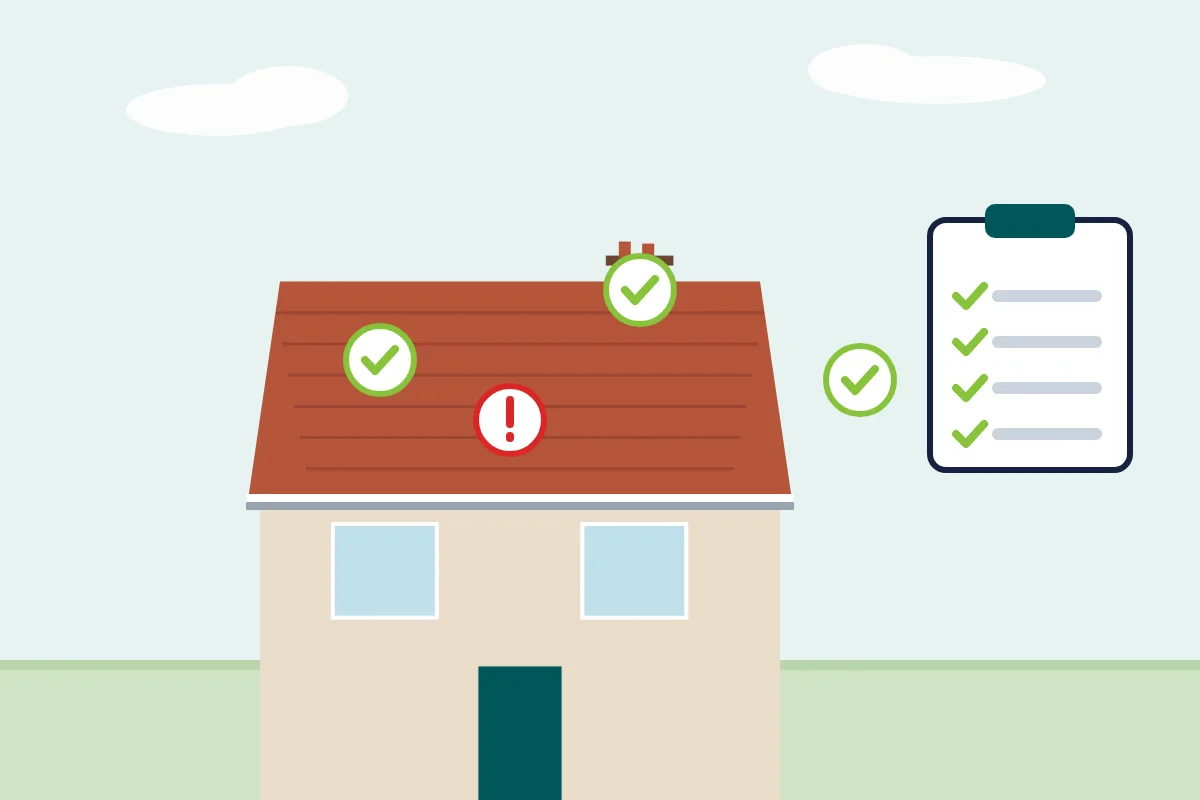
The survey, step by step
We don’t take risks to get a closer look. We inspect everything that’s safely in view, and anything we cannot see is noted in the report. Most visits take an hour or two for most houses, with bigger or more complicated roofs taking longer. Rural addresses near How Green can be hard to find from a postcode alone, so a few directions are welcome. The visit itself is the same as anywhere else.
- We agree what to focus on, such as a payment date or a warranty period ending.
- We inspect as far as safe access allows.
- Each detail at ridges, verges, valleys and flashings is looked at.
- We check the gutters, lower roofs and walls for debris or damage.
- We send a written report you can pass on.
Preparing for the visit
- Leave a clear route to the loft
- If the roof is shared, arrange access with whoever manages the building
- Find any records of previous roof work
Arrange a survey
Our phone lines are open seven days a week, including Saturdays and Sundays. For a price or to book, phone 07833 053749 or send us an email.
Read more
Before and after the survey
Over many surveys, some simple habits stand out as worth the effort:
- Send the snagging report to your roofer
- Keep warranty papers safe
- Look for debris left in gutters from ground level
- Tell your roofer the work will be inspected
Once the snags have been dealt with, keep the report with your roof paperwork. It records the roof’s condition at that point.
Watch for leaks, damp or loose pieces in the first months. It is simpler to raise problems soon after the job.
Do you need new roof snagging in How Green?
Scaffolding and materials can damage other parts of a building. We look for knock-on damage, not just the new roof.
Typical things we are asked to look at include:
- Untidy or loose verge details
- Gutters or fascias damaged during the job
- Cracked or slipped new tiles or slates
- Loose or badly finished ridge tiles
The streets around a church like Church of St Peter are often among the oldest in a place, and if your house is among the older ones nearby, older patch repairs can hide behind a tidy front slope, and the survey looks past them.
Before booking any roof surveyor
- How they plan to inspect the roof safely
- Their insurance cover
- What follow-up you get after the report
- How much experience they have with roofs like yours
Rented homes, blocks and businesses
Roof problems in a rented home affect tenants as well as the building. A survey helps you spot issues early and plan the work with less disruption.
We survey roofs for landlords and letting agents as well as homeowners. The report gives you a dated record of the new roof, with photographs, useful for planning maintenance.
Places near How Green
Also in How Green
Why get it checked now?
Defects and warranty periods have an end date. A snagging inspection before then leaves time to act. Where a roof is exposed, as many are in small places like How Green, driving rain gets into any weakness, and damp in older walls is slow to dry out.
A small, low roof with good viewpoints takes less time than a tall, complicated one, and the package matters as well. The price is always agreed first.
Why book with us
- Surveys on weekdays, Saturdays and Sundays
- A report with photos
- Thermal imaging and drone inspection where they help
- Two decades and more of roof surveys
See what a roof survey costs and two real surveys.
Common questions in How Green
Is How Green within the area you cover?
Yes. How Green is within the area we cover, which takes in towns, villages and rural addresses. We work right across London and the South East. Just mention lanes, gates or anything else about the route when booking.
Is How Green in the area you cover?
We do. The survey and report are the same in How Green as anywhere else.
How soon after the work should I book a snagging inspection?
Before the final payment is best, while the roofer is still on hand. Otherwise, book before your defects or warranty period runs out.
How long will you be on site?
Most house visits take about 1–2 hours with commercial roofs nearer 3–4 hours.
Can you tell me if my roof has asbestos?
No. Asbestos surveys and testing are not part of what we do. We flag materials that could contain asbestos, like cement sheets or soffits on pre-2000 buildings.
Will you go up on the roof?
Only where it’s safe to do so. We look at everything that can safely be seen: from ground level, from windows, from inside the roof space, from the roof where it is safe and by drone where applicable. The report says if anything couldn’t be seen.
Will you fly a drone over my roof?
Where it’s applicable and safe, yes. We’re a CAA-registered drone operator (Flyer ID and Operator ID), flying a sub-250g drone. Drone inspection is part of the Drone Roof Survey and the Premium Survey, where applicable.
How Green homes and their roofs
Handmade clay tiles, including Kent peg tiles hung on pegs through two holes, are typical of older Kent buildings. Oast houses and timber-framed Wealden hall houses are part of the county’s older buildings too. Material and age explain a lot of what turns up on the day, whether the roof is old or brand new. About 0.7 miles south lies Hever Castle, a reminder of how long the area around How Green has been built on. Older homes in the wider area often have features worth a closer look, such as lead valleys, tall stacks and roofs that have been patched over the years.
If you own a rental within reach of Hever station, a written report helps before buying a rental or paying for a new roof on one.
How Green is about 7 miles south-west of Sevenoaks, in Kent. Wherever you are in How Green, we can come and survey your property. How Green is one of the places in Kent where we work. Crawley is in our area too.
New roof snagging in TN8 are booked the same way as anywhere else. We offer new roof snagging to properties on Hever Road and How Green Lane. We also cover the places around How Green: Hever (1 mile south), Newtown (2 miles south), Markbeech (2 miles south), Chiddingstone Causeway (3 miles east) and Chiddingstone Hoath (3 miles south-east). We also work in nearby towns like Sevenoaks (7 miles north-east), Royal Tunbridge Wells (8 miles south-east), Tonbridge (7 miles east), Swanley (14 miles north), Kings Hill (14 miles east) and Paddock Wood (12 miles east).
Local landmarks in How Green
We work in homes and buildings around The Wheatsheaf Public House and Chiddingstone Castle Park and Gardens, among other places. For rail, the closest station is Hever station, about 1.3 miles south-west of the centre. Well-known places in the area include Tandridge Priory (5.4 miles north-west) and Hever Castle (0.7 miles south).
DIY checks: what’s safe
You can learn a lot from ground level. With binoculars, look for slipped or missing slates and tiles, gaps along the ridge and leaning chimneys. Never climb onto the roof to look.
During heavy rain, look at the gutters from the ground or a window. Overflowing water can point to a blockage or a sagging run.