
West Sussex · London and the South East
Lower Horncroft New Roof Snagging
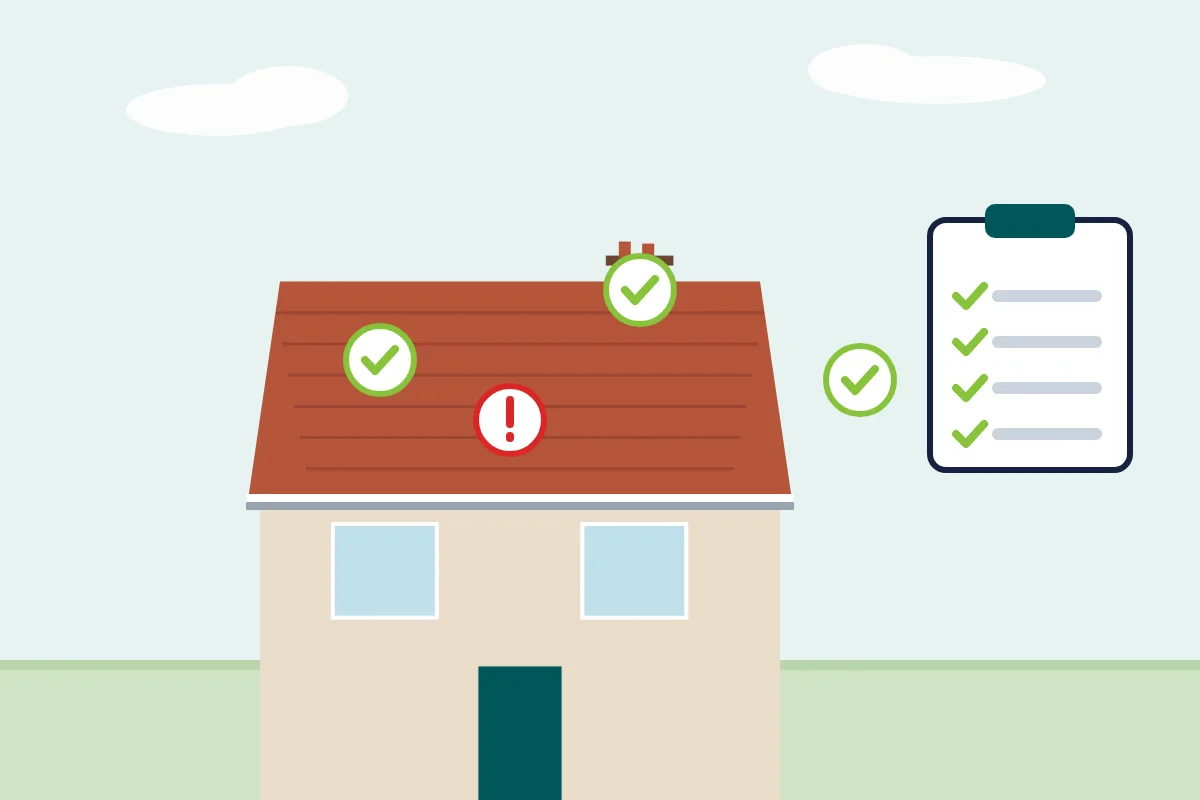
Checking a new or replacement roof for snags in Lower Horncroft, carried out by an experienced roof surveyor. Every survey comes with a written report and photos.
- Gutters or fascias damaged during the job
- Offcuts and broken tiles left behind
- Cracked mortar at the ridge or hips
Practical tips
There’s plenty you can do without going near the roof. Here’s what helps most:
- Raise snags in writing with your roofer
- Check the roof before you pay in full
- File all paperwork for the new roof
- Check lower roofs and walls after scaffolding comes down
Keep the report with any warranty papers from your roofer. It records the roof’s condition at that point.
Keep paperwork for the new roof together. Add the snagging report to it.
New roof snagging in Lower Horncroft
We report on what we see with photos and plain descriptions. Any dispute about the work is between you and your roofer or builder. Our report gives you an independent record to refer to. The report doesn’t price repairs or settle who is responsible, but it describes what we saw in plain terms. We survey new-build homes, new flat roofs and flashings and valleys, and people most frequently book us about cracked mortar at the ridge or hips and tiles or slates sitting out of line.
Older buildings in small places like Lower Horncroft may be listed or in a conservation area. If so, re-roofing in different materials may need consent, so check with the council before work starts. Whether you’re buying or signing off new roofing, it’s worth knowing where you stand, as well as what condition the roof is in. England has around 10,000 conservation areas and about 500,000 listed buildings.
You can share the report with anyone who needs it: your solicitor, the seller, your insurer, a roofer or the building’s managing agent, whichever applies.
- Where
- Lower Horncroft (RH20)
- Wider area
- West Sussex
- Price
- From £150 inc. VAT
- Your report
- Emailed report with photos and recommendations
- Survey days
- Monday to Sunday, daytime
- Cover
- Professional indemnity and public liability
- Phone
- 07833 053749
- Page updated
- 27 October 2026
How the survey works
You do not need to do much on the day. Point out anything you’ve noticed, such as stains, drips or loose pieces, and we will get on with the inspection. A typical survey takes between one and two hours for most homes, depending on how much new work there is to check. In a small place like Lower Horncroft, access is usually the main thing to plan. Mention any outbuildings, barns or garages you want included, and anything about the roof you already know. Visits can be on weekdays, Saturdays or Sundays.
- First, we note any deadlines and concerns.
- We inspect as far as safe access allows.
- Each detail at ridges, verges, valleys and flashings is looked at.
- Debris and damage to other parts are recorded.
- You receive a report to share with your roofer.
How to prepare
- Check we can get to the back of the property
- Dig out any old roof reports or invoices
- Keep pets in another room
How to book
Buyers should book once an offer has been accepted, so there is time to use the report before exchange. For any other survey, just ring 07833 053749 or email us when you are ready.
Advice
For landlords and managing agents
Managing agents and residents’ management companies use roof surveys to plan maintenance. Recommendations are set out in order of urgency where relevant.
If you own several properties, you can book surveys for several addresses. To discuss a number of properties, call 07833 053749 or use the contact form with the addresses.
Questions from Lower Horncroft
Do you cover Lower Horncroft?
Yes, Lower Horncroft is one of the places we work. Every survey there gets the same written report with photographs.
How do I find out if my home in Lower Horncroft is listed?
For listing, use Historic England’s list; for conservation areas, ask the council. The answer matters most when a change of material is on the cards.
Do you get involved if the roofer disagrees with the report?
No, we report on the roof and do not take sides. Any dispute stays between you and your roofer or builder, and you may want legal advice for that.
Can you inspect the roof on a new-build home?
Yes, new-build roofs are checked in the same way as replacement roofs. The report lists snags with photos for you to pass to your builder.
Do you need to get into the loft?
Typically, if there is one and it can be reached safely. From inside, the underside of the roof often shows damp, staining or daylight that can’t be seen from outside.
Do I have to be there for the survey?
Not necessarily. An outside-only look can be arranged beforehand, but the loft and any rooms with damp need someone to let us in.
Do you lift tiles to check the fixings?
No. We do not open up the new roof, so fixings under the coverings cannot be checked. The report says what could and couldn’t be seen.
How the survey changes by roof type
Slate roofs
Cracked slates are sometimes left in place. We record any we can see.
Underlay and ventilation
From the loft, we check the underlay and look for condensation.
Why act early in Lower Horncroft
A clear list of snags makes the conversation with your roofer easier. It keeps the focus on what can be seen. Older cottages and farmhouses around Lower Horncroft can have roof timbers that have been there a very long time, where water from a failed roof can cause rot if it’s left.
Prices start from £150, inc. VAT, for a Basic Survey. The Standard Survey starts from £250 and the Premium Survey from £400, both with VAT included. We confirm the price for your roof before you book.
What you get with us
- Customer satisfaction of 98%
- More than 5,000 surveys completed
- Plain-English reports with photos
- Two decades and more of roof surveys
Take a look at our cost guide or our case studies.
Places near Lower Horncroft
Also in Lower Horncroft
Common roof problems in Lower Horncroft
Flashings at walls and chimneys often need attention. Loose or badly fitted flashings can let water in sooner rather than later.
A survey makes sense if you’ve noticed:
- Cracked lower roofs or marked walls after the work
- Verge tiles or slates not secured
- Debris left in gutters or valleys
- Loose flashings at walls or chimneys
If you let a flat or house near Pulborough station, the roof is worth checking before you add another property to a portfolio or pay a roofer in full.
Questions to ask before booking
- What experience they bring
- Whether you can ask questions once you have the report
- When you will get the report
- Will the report include photos?
Buying a home or a new roof in Lower Horncroft
Handmade clay tiles and tile-hung upper walls are typical of older Sussex houses. A few old Sussex buildings still carry heavy Horsham stone slabs. Whether you’re buying or checking new roofing work, knowing the materials helps make sense of what the inspection finds. Bignor Roman Villa, about 2.2 miles south-west, is one of the historic houses in the wider area around Lower Horncroft. If you own one of the older houses, expect a mix of original materials and later repairs on the roof, and any change of roofing material on a listed home needs checking with the council first.
For an older house near a landmark like Church of St Agatha, a survey will show how the roof has been repaired before, which helps you judge what’s coming.
Lower Horncroft is about 10 miles north of Littlehampton, in West Sussex. Lower Horncroft gets the same service as everywhere else we work: a proper look at what can be seen safely, photos and a clear written report. Our West Sussex coverage includes Lower Horncroft and the places around it. For surveys nearby, see our Crawley page.
Here we cover the RH20 postcode area for new roof snagging. Nearby, we also carry out new roof snagging in Coates (1 mile west), Fittleworth (1 mile north), Watersfield (1 mile south), Coldwaltham (1 mile south-east) and Bedham (1 mile north). We also work in nearby towns such as Horsham (13 miles north-east), Worthing (11 miles south-east), Bognor Regis (12 miles south-west), Chichester (12 miles south-west), Littlehampton (10 miles south) and Shoreham-by-Sea (15 miles south-east).
Landmarks near Lower Horncroft
Around Lower Horncroft, our work takes us to homes and buildings near The Swan Hotel and Lodge Hill Residential Centre, among other places. The closest station to Lower Horncroft is Pulborough station, about 2.3 miles east of the centre. Nearby you’ll also find Coates Castle (0.9 miles west) and Coultershaw Heritage Site (2.4 miles north-west). Green spaces nearby include Amberley Wildbrooks RSPB Reserve and Bignor Hill.