
East Sussex · London and the South East
New Roof Snagging in Penhurst
Checking a new or replacement roof for snags around Penhurst, with a written report you can act on. Weekday and weekend visits available.
- Loose flashings at walls or chimneys
- Cracked mortar at the ridge or hips
- Damage to other parts of the building
Penhurst: your questions answered
Do you cover Penhurst?
Yes, Penhurst is one of the places we work. The survey and report are the same in Penhurst as anywhere else.
Is Penhurst within the area you cover?
Yes. Penhurst is within the area we cover, which takes in towns, villages and rural addresses. We work right across London and the South East. Let us know about access, parking and anything unusual about getting there when you book.
How soon after the work should I book a snagging inspection?
As soon as the work is finished, and before the final payment if you can. That gives time for any snags to be put right.
Do you get involved if the roofer disagrees with the report?
No, our role is to record the roof’s condition. Any dispute stays between you and your roofer or builder, and you may want legal advice for that.
What do you check on a new roof?
Coverings, ridges, verges, hips, valleys and flashings are all checked plus gutters, ventilation and visible underlay at the eaves. We look for leftover debris and knock-on damage too.
How much is new roof snagging?
Our price is from £150, including VAT. The price depends on the size of the roof and the access. For a price, phone 07833 053749 or email us.
What insurance do you have?
Professional indemnity and public liability insurance cover our surveys. If you need details for a managing agent or a building owner, just ask.
New roof snagging in Penhurst: what you get
Our report records what we see, with photos and clear descriptions. Any dispute about the work is between you and your roofer or builder. What we provide is an independent record of the roof’s condition. The report doesn’t price repairs or settle who is responsible, but it describes what we saw in plain terms. If you’ve noticed underlay at the eaves left exposed and loose flashings at walls or chimneys, we can find out what’s behind it.
Older buildings in small places like Penhurst may be listed or in a conservation area. If so, re-roofing in different materials may need consent, so check with the council before work starts. Whether you are buying or signing off new roofing, it’s worth knowing where you stand. There are about 500,000 listed buildings and around 10,000 conservation areas in England.
The report is written in plain words, so you do not need to be a roofer to follow it. Photographs show what each point refers to, with the urgent items made clear.
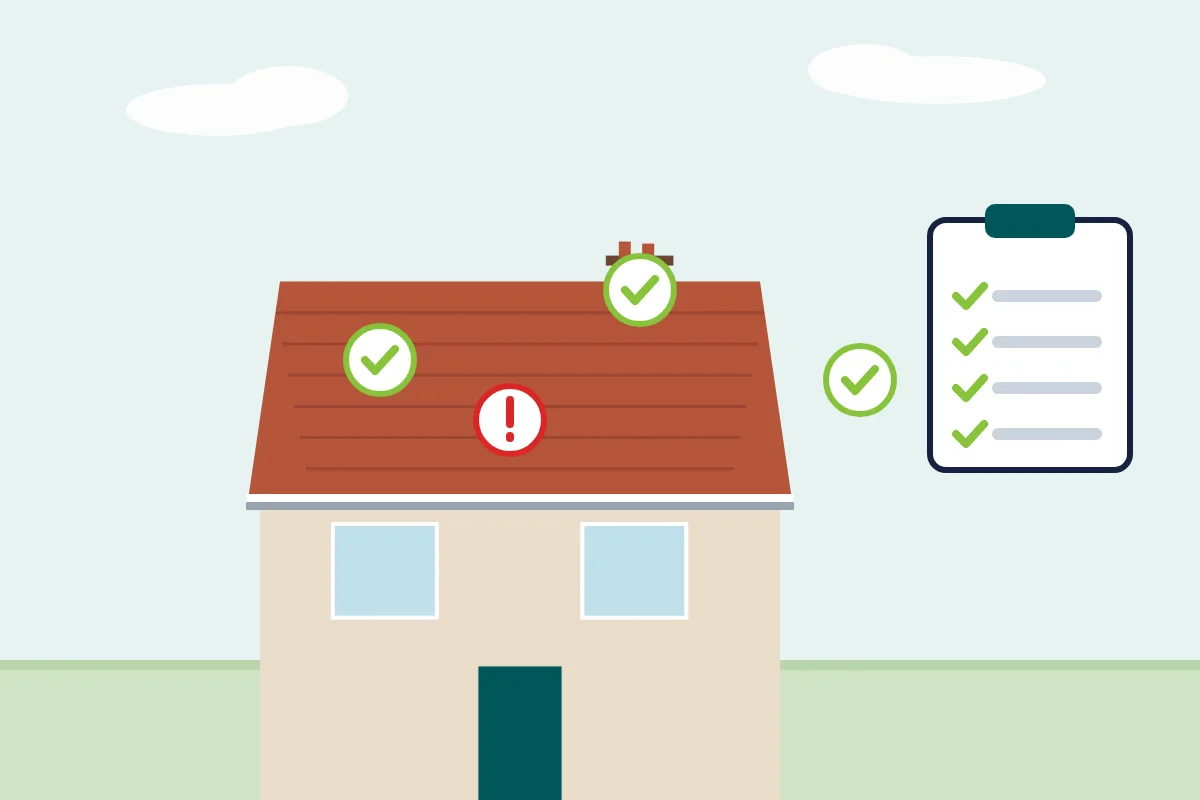
- Place
- Penhurst (TN33)
- Wider area
- East Sussex
- Prices
- From £150 inc. VAT
- Your report
- Emailed report with photos and recommendations
- Survey days
- Weekdays, Saturdays and Sundays
- Insurance
- PI and public liability insurance
- Phone
- 07833 053749
- Updated
- 27 October 2026
Towns and villages near Penhurst
What else we do in Penhurst
Signs you need new roof snagging in Penhurst
Debris left behind is common after roof work. Offcuts and broken pieces often end up in the gutters or damage lower roofs.
A survey makes sense if you’ve noticed:
- Underlay at the eaves left exposed
- Gutters blocked by building debris
- Gutters or fascias damaged during the job
- Cracked or slipped new tiles or slates
Take an older house close to The Parish Church of St Michael: ask the seller about past roof repairs, because older roofs often have patched valleys, replaced slates and reset ridges.
What to check before booking
- How they’ll see the roof: from ground level, the loft, the roof or by drone
- If they fly a drone, whether they hold a CAA Flyer ID and Operator ID
- What experience they bring
- Whether VAT is in the quoted price
What new roof snagging looks like in Penhurst
Older houses across Sussex frequently have handmade clay tiles, and many have tile-hanging on their upper walls. Some old buildings in Sussex have Horsham stone slab roofs, and oast houses and timber-framed Wealden hall houses are part of East Sussex’s older buildings. For a purchase or a newly finished roof, the materials decide which details matter most. With Bateman's about 4.7 miles north, Penhurst sits in an area with a long building history. If you own one of the older houses, expect a mix of original materials and later repairs on the roof.
If you let a flat or house near Battle station, a roof report gives you a clear picture before you buy or settle up with a roofer.
Penhurst is about 6 miles north-west of Bexhill-on-Sea, in East Sussex. Whether the building in Penhurst is a house, a flat or a commercial unit, we can survey the roof. Across East Sussex, we cover Penhurst and the places around it. You can also see our page for Brighton.
Here we cover the TN33 postcode area for new roof snagging. We also cover the places around Penhurst: Steven's Crouch (2 miles south-east), Netherfield (2 miles north-east), Twelve Oaks (2 miles north), Hollingrove (3 miles north) and Brightling (3 miles north). Within a short drive, we also cover Eastbourne (11 miles south-west), Hastings (8 miles south-east), Bexhill-on-Sea (6 miles south-east), Hailsham (8 miles south-west), Crowborough (14 miles north-west) and St Leonards (8 miles south-east).
Around Penhurst
Typical jobs here are in homes near Ashburnham Park, among other places. The nearest railway station is Battle station, about 3.8 miles east of the centre. Other landmarks nearby include Battle Museum of Local History (3.2 miles east) and Bexhill Hospital (5.8 miles south-east). For a walk, there’s Senlac Hill.
Tips that help
Nothing here needs a ladder. A few suggestions:
- Watch for gutters overflowing in rain
- Agree snagging with your roofer at the start
- Diary the defects period end date
- Look for new stains after a downpour
The report gives your roofer a clear list to work through. Any disagreement about the work is between you and them; we report on what we see.
Agree the snagging inspection with your roofer before the job starts. Everyone then knows what to expect and time is set aside for snags.
For landlords and managing agents
With a portfolio of properties, you can book surveys for several addresses. To discuss a number of properties, phone 07833 053749 or drop us an email with the addresses.
Surveys can also be booked by buyers’ agents acting for a client. The report is emailed, so it can go straight to your client, photographs included.
The survey, step by step
The aim of the visit is simple: to look at the new roof as closely as is safe and record what we find. Everything we note and photograph goes into the written report. It normally takes roughly 1–2 hours for a typical new house roof, longer where the roof is large or complicated. In a hamlet or village like Penhurst, a postcode doesn’t always lead to the right gate, so a few directions are welcome. The visit itself is the same as anywhere else.
- We ask what work was done and when it was finished.
- The new coverings, ridge, hips and verges are inspected where it’s safe to see them.
- We check valleys, flashings and gutters, and the underlay at the eaves where it is visible.
- The roof space is looked at where safe, along with any mess or damage left after the work.
- You get a photo report listing the snags we found.
Getting ready for the survey
- If you’re buying, let the agent know when we’re coming
- Move anything stored under the loft hatch
- Tell us about any leaks, stains or damp patches you know of
Booking a survey
To arrange a survey, call 07833 053749 or drop us an email with the address and what you’d like to know about the roof. You’ll know the price before anything is booked.
Read more
How the survey changes by roof type
Valleys
Valleys carry a lot of water, so it needs to be finished well. We look at the valley lining and the cut tiles or slates beside it.
Underlay and ventilation
The underlay should be dressed into the gutter at the eaves to carry water off. We check it where it’s visible.
Should I look at the roof myself first?
If you have a loft with safe access, take a look inside. Take a torch and only step on boards or joists, and look for staining, damp timber or daylight coming through.
Watch the gutters in a downpour, from a window or the ground. Water spilling over the edge can be a sign of a blockage or a gutter that has dropped.