
Essex · London and the South East
New Roof Snagging in Rayne
Find out the condition of the new roof at your property in Rayne. We visit on weekdays and at weekends.
- Gaps at new flashings
- Underlay not dressed into the gutter
- Verge tiles or slates not secured
About our new roof snagging in Rayne
Replacing a roof costs a lot, so it is worth having it checked before the final payment. Our new roof snagging inspection looks for faults and unfinished work on the roof and around the property. You get a report with photographs to share with your roofer. It’s an independent check, separate from the roofer who did the work. If you are worried about missing or blocked roof ventilation and damage to other parts of the building, we can find out what’s behind it, whatever the roof.
Older buildings in small places like Rayne may be listed or in a conservation area. That can affect what materials a new roof may use, so check with the council and Historic England’s list. For a buyer or someone with a newly finished roof, it’s worth knowing which applies. There are about 500,000 listed buildings and around 10,000 conservation areas in England.
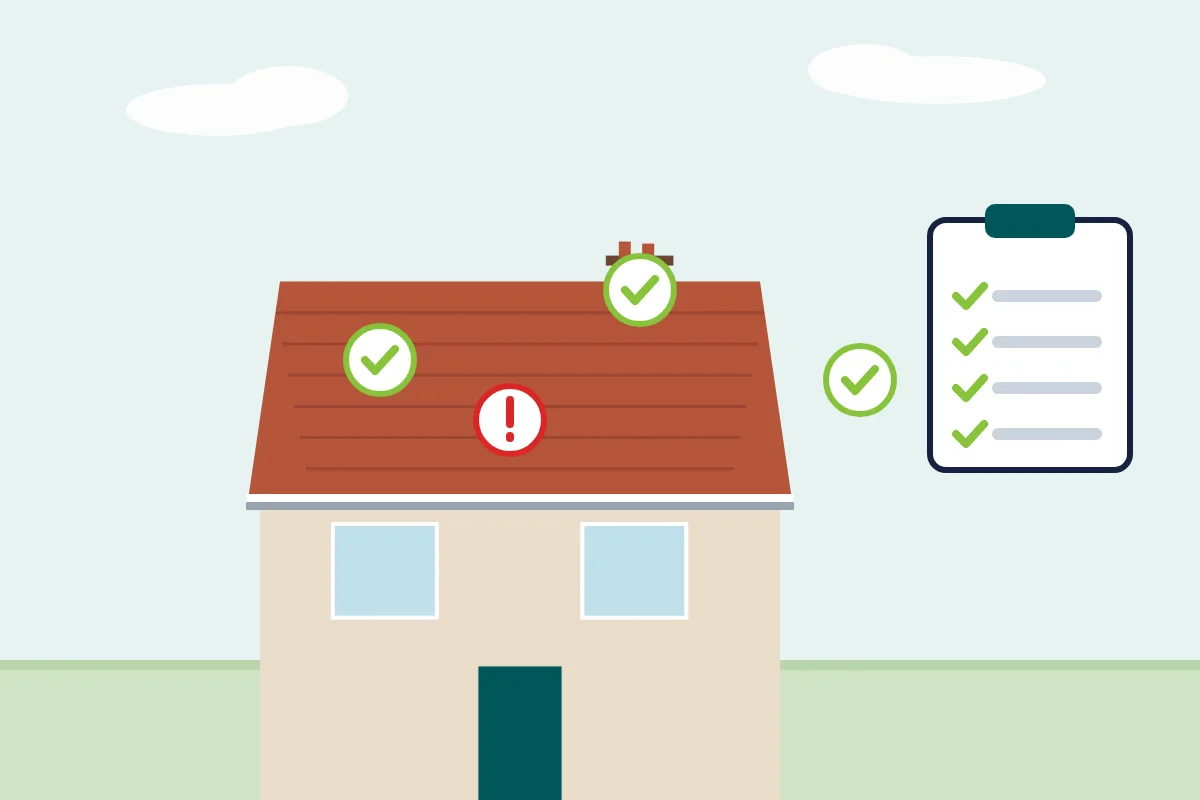
Findings are set out part by part, from the main slopes down to the gutters and outlets, with a note and a photo for each point. It records what’s sound as well as what isn’t.
- Where
- Rayne (CM77)
- Wider area
- Essex
- Cost
- From £150 inc. VAT
- Reports
- Written, with photos, emailed to you
- Appointments
- Monday to Sunday, daytime
- Insured
- Professional indemnity and public liability
- Phone
- 07833 053749
- Updated
- 27 October 2026
Tips that help
Over many surveys, some simple habits stand out:
- Agree snagging with your roofer at the start
- Walk round the house to look for knock-on damage
- Check that gutters weren’t left full of offcuts
- Keep the contract and invoices together
After the snags are sorted, watch the roof in the next heavy rain. Raise any new signs of water with your roofer promptly.
Tell your roofer at the start that the work will be inspected. It sets clear expectations and time is set aside for snags.
Honest limits
To be straight with you, there are limits to any roof survey:
- Parts of the roof we cannot see safely
- Legal advice on your contract
- Repair costs for putting snags right
If you are not sure which survey you need, ring 07833 053749 or use the contact form and we’ll give you a straight answer. What a survey covers and does not.
Roof types and parts we check
- Ridges and verges
- Flashings and valleys
- Loft conversions and dormers
- Replacement roofs
- New-build homes
- New flat roofs
Also in Rayne
DIY checks: what’s safe
Keep a simple record: dates of leaks, photos from ground level and any work done on the roof. Share it with us when you book.
Look up at the roof after a storm, from ground level: broken slates or tiles in the garden, gaps along the ridge or loose lead are signs to note. Do not go up yourself.
What happens on the day
On the day, we start by asking what you’ve noticed and what you need to know. We then inspect everything that can be seen safely. Most surveys take an hour or two at most homes, rising to roughly 3–4 hours on a commercial building. In a small place like Rayne, access is typically the main thing to plan. Mention any outbuildings, barns or garages you want included, and anything about the roof you already know. Weekday and weekend visits are available.
- You tell us what work was done and when.
- The new coverings and roof edges are inspected as far as can safely be seen.
- Valleys, flashings, gutters and visible underlay at the eaves are looked at.
- The loft space and the rest of the property are checked for problems.
- You get a photo report of each snag.
How to prepare
- Leave side gates unlocked
- Leave a clear route to the loft
- For flats, make sure roof access has been agreed
How to book
Buyers should book once an offer has been accepted, so you have the findings in time to act on them before you exchange. Otherwise, simply ring 07833 053749 or send us an email whenever suits you.
Advice
Leave it or get it looked at?
A clear list of snags makes the conversation with your roofer easier. It keeps things factual. For older village homes like those around Rayne, the right replacement materials aren’t always easy to find quickly. Spotting a problem early leaves room to find them.
New roof snagging starts from £150, including VAT. What you pay depends on how big and how high the roof is, how it can be seen safely and the package you choose.
Why us?
- Drone and thermal imaging surveys available
- A sub-250g drone, flown with a CAA Flyer ID and Operator ID
- Prices that include VAT
- An independent view of the roof
See what a roof survey costs and two real surveys.
Rayne questions
Do you carry out roof surveys in Rayne?
Yes, Rayne is within the area we cover. We work right across London and South East England. Just ring 07833 053749 or drop us an email and let us know about the property, and we will talk through which survey suits.
Is Rayne within the area you cover?
We do. A small place gets exactly the same survey as a big one.
How experienced are you?
More than 5,000 surveys over 20+ years.
Can you survey a shared roof?
Yes, as long as access is agreed. The roof of a block or converted house is often shared, so the freeholder or managing agent needs to agree access. We can only inspect what we’re given access to.
Will you go up on the roof?
Only when it’s safe. Some roofs are too steep or fragile to walk on safely. Safe viewpoints, the loft and a drone where it applies let us see the rest.
Which parts of the roof does snagging cover?
All the parts of the roof we can see safely, from the ridge and verges down to the eaves and gutters. The roof space is looked at where there is safe access and check for damage left by the job.
Will you fly a drone over my roof?
Yes, where applicable and safe. We fly a sub-250g drone and we are a CAA-registered drone operator (Flyer ID and Operator ID). It’s included in the Drone Roof Survey and, where it applies, the Premium Survey.
What we look for on each type of roof
Ridges, hips and verges
Verge details can be rushed, so we check them carefully.
Slate roofs
Good natural slate is very long-lasting, so a new slate roof should be laid well. Cracked, slipped or uneven slates are noted.
Rayne homes and their roofs
Weatherboarded walls and clay tile roofs are typical of older Essex buildings, with post-war and more recent estates making up much of the newer housing. The covering on a house you’re buying, or on a roof just finished, tells us where to look hardest. If your home is older, it’s worth knowing whether it’s listed or in a conservation area before planning roof work. Listed building consent covers changes to a listed building’s special interest, and an Article 4 direction can bring extra controls in a conservation area.
For landlords with property near Braintree station, a survey before purchase, or before signing off a new roof, saves surprises once a tenant moves in. Take an older house close to Church of All Saints: the roof’s history matters as much as its looks, and a survey brings the past repairs to light.
Rayne is about 2 miles west of Braintree, in Essex. Surveys in Rayne work the same way as everywhere we cover: a proper look at what can safely be seen, photographs and a clear written report. Our Essex coverage includes Rayne and the places around it. Chelmsford is in our area too.
All of CM77 is covered for new roof snagging. Whether your property is on The Street, Foundry Way and Vaughan Close or a nearby road, we can survey it. Close by, we survey roofs in Little Common (1 mile south-west), Great Notley (1 mile south-east), Panfield (2 miles north), Row Green (2 miles south-east) and Bocking (2 miles east). Within a short drive, we also cover Chelmsford (10 miles south), Maldon (13 miles south-east), Witham (7 miles south-east), Saffron Walden (15 miles north-west), Halstead (7 miles north-east) and Great Dunmow (6 miles west).
Around Rayne
Typical jobs here are in homes near 47 The Street pub, Tabor Academy and Cuckoo Wood. The nearest railway station is Braintree station, roughly 2.1 miles east. A little further out are Tudor House Museum (Braintree) (2.3 miles north-east) and Braintree Community Hospital (1.3 miles east). Not far away are Phyllis Currie Nature Reserve.