
Hertfordshire · London and the South East
New Roof Snagging in The Flints
Find out what’s going on with the new roof before you spend money on it. New roof snagging in The Flints, with photos and a clear written report.
- Debris left in gutters or valleys
- Underlay ending short at the eaves
- Cracked mortar at the ridge or hips
When you need someone else
It helps to know what a survey won’t do before you book:
- Nails and clips under the slates or tiles
- Details hidden from sight
- Legal advice on your contract
If you are not sure which survey you need, ring 07833 053749 or use the contact form and we will give you a straight answer. What a survey covers and doesn’t.
What we look at
- New-build homes
- Loft conversions and dormers
- Ridges and verges
- Flashings and valleys
- Replacement roofs
- New flat roofs
About our new roof snagging in The Flints
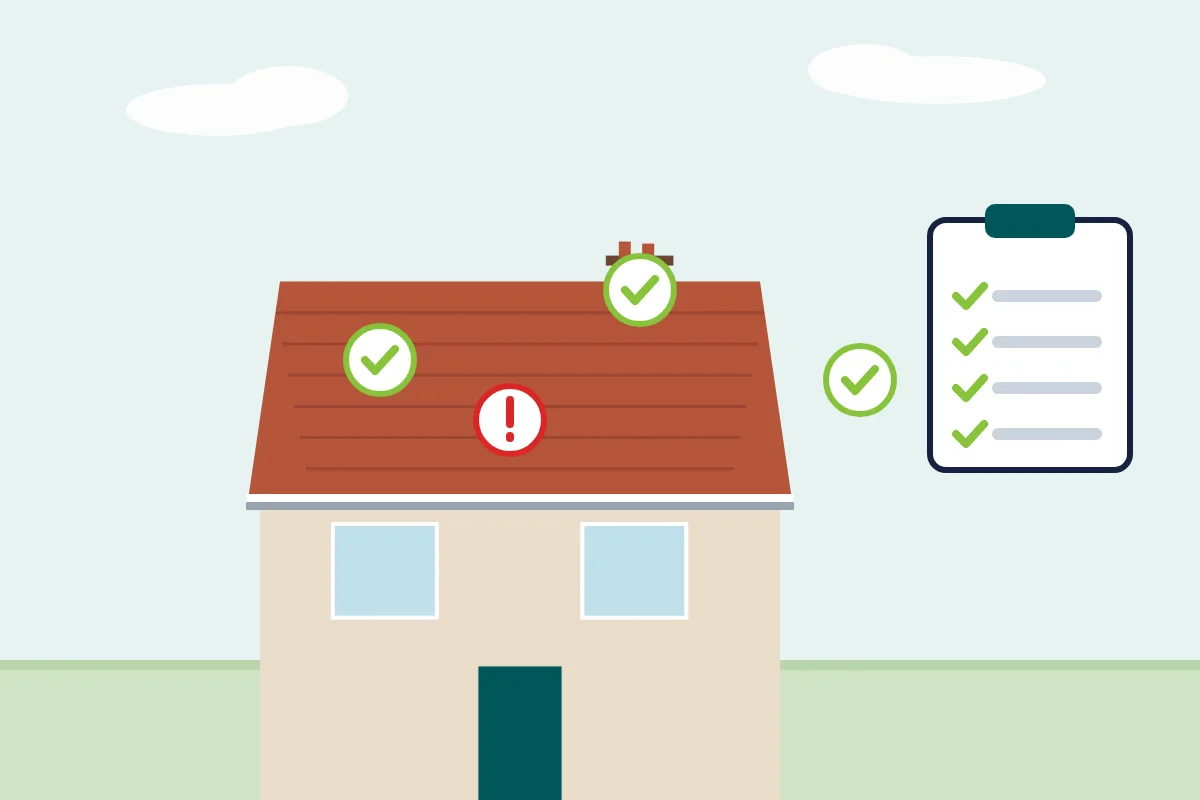
Snagging means finding the small faults and loose ends left at the end of a job. Roof snags frequently show at ridges, verges, valleys and flashings, where the detailing is hardest. We check everything we can see safely and record what we find. Loose ridges, untidy verges, badly dressed flashings and leftover debris are typical snags. Typical surveys look at cracked mortar at the ridge or hips and cracked lower roofs or marked walls after the work, across ridges and verges, new flat roofs and loft conversions and dormers.
Some older homes in villages like The Flints are listed or sit in a conservation area. If so, re-roofing in different materials may need consent, so check with the council before work starts. For a buyer or someone with a newly finished roof, it’s worth knowing which applies, as well as what condition the roof is in. England has around 10,000 conservation areas and about 500,000 listed buildings.
We write the report in plain English, so it makes sense without any roofing background. Photographs show what each point refers to.
- Place
- The Flints (SG5)
- Region
- Hertfordshire
- Cost
- From £150 inc. VAT
- Reports
- A written report with photos, by email
- Appointments
- Weekdays, Saturdays and Sundays
- Insurance
- PI and public liability insurance
- Phone
- 07833 053749
- Page updated
- 27 October 2026
Tips from our surveys
A survey works best with a little help from you, before and after. Tips:
- Book snagging before the final payment
- Diary the defects period end date
- Look for new stains after a downpour
- Look for debris left in gutters from the ground
Your roofer can use the report to put the snags right. Any disagreement about the work is between you and them, and our part is to report what we see.
File the contract, invoices and warranty papers in one place. The report belongs with them.
Your questions about new roof snagging in The Flints
Does a conservation area affect roof work in The Flints?
The council and Historic England’s list are the places to check. It’s worth checking before planning roof work, as both can affect what’s allowed.
Is The Flints in the area you cover?
Yes, The Flints is within the area we cover. We cover the whole of London and South East England. You can call 07833 053749 or send us an email with the address and a few details, and we’ll talk through which survey suits.
Can you inspect my roof with a drone?
Where it helps and the rules allow, yes. We hold a CAA Flyer ID and Operator ID and fly a drone under 250g, and every flight depends on the airspace and the weather.
How much is new roof snagging?
Our packages start from £150 for Basic, £250 for Standard and £400 for Premium, including VAT. For a price for your roof, phone 07833 053749 or email us.
What does a new roof inspection include?
All the parts of the roof we can see safely, from the ridge and verges down to the eaves and gutters. The loft space is checked where there’s safe access and check for damage left by the job.
Can you inspect the roof on a new-build home?
Yes, the inspection works the same as for a re-roof. You get a photo report of any snags to raise with the builder.
Can you tell me if my roof has asbestos?
No. Asbestos surveys and testing are not part of what we do. If we see materials that could contain asbestos, such as cement roof sheets or soffits on buildings from before 2000, we flag them and suggest a specialist asbestos surveyor checks them before any work.
Prices for new roof snagging in The Flints
Several things affect the price of a survey:
- How big the roof is
- The use of thermal imaging or a drone
- Commercial roofs and larger buildings
- The package you choose: Basic, Standard or Premium
Prices quoted always include VAT, and the report is not charged as an extra. New roof snagging starts from £150, including VAT. Where your roof sits in the range depends on its size, height and access.
Booking your survey
You don’t need to know any roofing terms. It is enough to tell us:
- The reason for the survey, like buying, a leak or storm damage
- How the loft is reached, if there is one
- What kind of property and roof it is
- The address and postcode of the property
If you are buying, it helps to book soon after your offer is accepted, so there is time to use the report before exchange. For any other survey, just call 07833 053749 or use the contact form when you’re ready.
Why it’s worth a survey now in The Flints
A defects or warranty period does not last for ever. A snagging inspection before then leaves time to act. Outbuildings and barns around The Flints are easy to forget, but a failed roof there can spoil what’s stored inside. It is worth including them in a survey before a winter does the damage.
The Premium Survey includes thermal imaging and drone inspection where it applies, which starts from £400, inc. VAT. We can help you choose the package that fits what you’d like to know.
Why book with us
- More than 20 years surveying roofs
- 5,000+ surveys completed
- PI and public liability insurance
- CAA-registered drone operator (Flyer ID and Operator ID)
Also near The Flints
Also in The Flints
How it works
We’ll ask a few questions first, about the roof’s history, any leaks and past repairs. Then the inspection itself takes about 1–2 hours at most homes, rising to roughly 3–4 hours on a commercial building. In a hamlet or village like The Flints, a postcode doesn’t always lead to the right gate, so a few directions are welcome. After that, the survey runs as it would anywhere.
- You let us know what work was done and when.
- The new coverings and roof edges are inspected as far as can safely be seen.
- We look at valleys, flashings, gutters and the underlay at the eaves.
- The loft space and the rest of the property are checked for problems.
- You get a photo report of each snag.
Preparing for the visit
- Make sure we can get to the back of the property
- Let us know about any leaks, stains or damp patches you know of
- Keep pets inside or away from the areas we’re looking at
Arrange a survey
To book a survey, phone 07833 053749 or email us with the address and what you’d like to know about the roof. We’ll confirm the price before booking.
Read more
What you can safely check yourself
After heavy rain, check ceilings and the tops of walls for new stains. Photograph them and note the date, which helps when we look at the roof.
The one thing to avoid is getting up close. Slates, tiles, flat roofs and rooflights can give way, and a fall can be serious. That is where a survey comes in, using safe viewpoints and a drone where it applies.
What new roof snagging looks like in The Flints
Across the South East, older homes tend to have slate or clay tiles, and many later ones concrete tiles, with flat-roofed extensions, dormers and garages common everywhere. Material and age explain a lot of what turns up on the day, whether the roof is old or brand new. If your home is older, it is worth knowing whether it is listed or in a conservation area before planning roof work. Listed building consent covers changes to a listed building’s special interest, and an Article 4 direction can bring extra controls in a conservation area.
The streets around a church such as Church of St Mary Magdalene are often among the oldest in a place, and if yours is one of the older homes nearby, the roof’s history matters as much as its looks, and a survey brings the past repairs to light. Landlords with a home close to Luton station may find that a written report helps before buying a rental or paying for a new roof on one.
The Flints is about 4 miles south-west of Hitchin, in Hertfordshire. Roofs in The Flints get the same thorough look as anywhere else in Hertfordshire. Our area takes in places right across Hertfordshire, from the larger towns to small villages. Milton Keynes is in our area too.
All of SG5 is within our area for new roof snagging, from the main roads to the quietest streets. Neighbouring places we cover for new roof snagging include Great Offley (1 mile east), Temple End (2 miles east) and Ley Green (2 miles south-east). Larger places within reach include Hemel Hempstead (13 miles south), Stevenage (7 miles east), St Albans (12 miles south), Welwyn Garden City (11 miles south-east), Harpenden (8 miles south) and Hitchin (4 miles north-east).
Landmarks near The Flints
Typical jobs here are in homes near The Bull Public House. The Flints’s nearest station is Luton station, about 4.1 miles south-west. A little further out are Ravensburgh Castle (2.7 miles north-west) and John Dony Field Centre (2.9 miles south-west). For a walk, there’s Markham's Hill and Pegsdon Hills.