
East Sussex · London and the South East
Roof leak investigation in Isfield, East Sussex
Get a clear view of the leaking roof at a property in Isfield. Visits run on weekdays and weekends, in the daytime.
- Damp patches next to the stack
- Water that shows only in certain storms
- Wet patches high on an inside wall
What we look for on each type of roof
Chimney stacks
Damp on a chimney breast inside frequently starts at the top of the stack. Open, unused pots let rain fall down the flue.
Valleys
Valleys collect water from two roof slopes. Worn or split linings and slipped valley tiles let it under the coverings.
About our roof leak investigation in Isfield
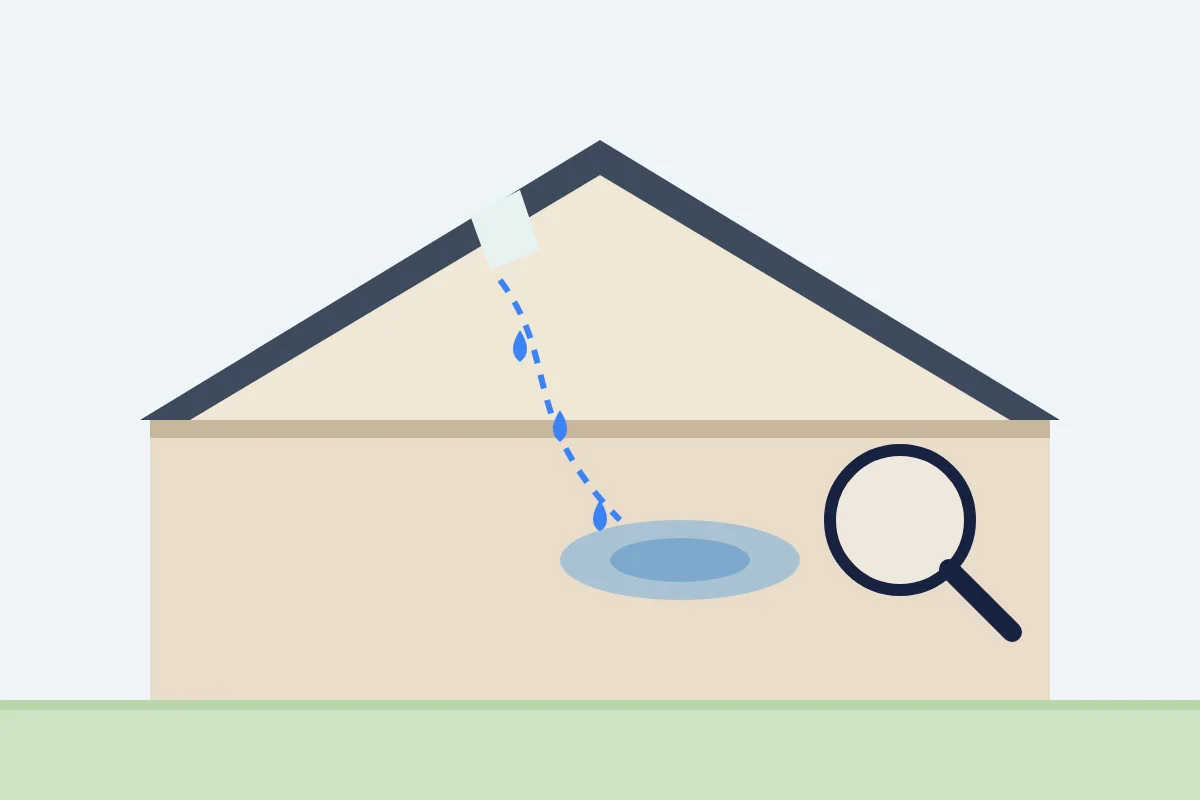
Water is good at hiding where it gets in. It can run along a rafter, a batten or the underlay before it drips, so the stain on your ceiling is seldom right under the hole. We follow it back towards where it starts. A repair aimed only at the stain can miss the cause entirely. Finding the route first lets the repair go where it’s needed. Common reasons to book are water through the ceiling under a flat roof and water that shows only in certain storms, on the roof space, chimney stacks and rooflights and dormers.
In a village or hamlet like Isfield, older cottages and farmhouses frequently have roofs that have been patched over many years. That makes it hard to tell new damage from old wear, and the difference matters, particularly to an insurer. We look at whatever is safely visible and set out what we find. Damp in old walls and timbers is slow to dry, so the sooner the cause is found the better.
The report doesn’t just list problems. For each finding, it explains what it is, why it matters and what we’d recommend, so you can plan your next steps.
- Where
- Isfield (TN22)
- Region
- East Sussex
- Price
- From £150 inc. VAT
- Report
- Written, with photos, emailed to you
- Survey days
- Weekdays, Saturdays and Sundays
- Insurance
- PI and public liability insurance
- Phone
- 07833 053749
- Last updated
- 27 October 2026
Should I look at the roof myself first?
Inside, the loft is a good place to look, with care. Use a torch and stay on the joists or boards, and look for staining, damp timber or daylight coming through.
Look up at the roof after a storm, from the ground: pieces of tile or slate on the ground, a gap in the ridge or a lifted flashing are all worth noting. Do not go up yourself.
What affects the price in Isfield
All our prices include VAT. What changes the price is:
- How big the roof is
- How complicated the roof is, with its valleys, chimneys and parapets
- The number of roofs, including extensions and garages
- Whether thermal imaging or a drone is needed
To find out what your survey will cost, ring 07833 053749 or use the contact form with the address and a few details. The price is agreed before a date is set.
What to let us know when you get in touch
We will normally ask about:
- Anything about access we should know
- The reason for the survey, such as buying, a leak or storm damage
- Pictures from the garden or a window, if you have them
- The type of building and roof, like pitched or flat
For a price for roof leak investigations in Isfield, phone 07833 053749 or send us an email. The address, the type of property and what you need to know help us give you an accurate price.
When to book a survey in Isfield
When a slate slips or a tile cracks, the underlay takes the water. Ageing felt underlay eventually tears and lets water through, while some very old roofs have nothing under the coverings. On slate roofs, slipping is frequently caused by corroded nails.
A survey makes sense if you’ve noticed:
- Leaks that appear only in driving rain
- Water coming in around a roof light or dormer
- Damp on a chimney breast
- Water marks that spread in wet weather
If you let a flat or house near Uckfield station, a tenant living with a leak needs the cause found, not just the stain painted over.
Questions to ask before booking
- How long the report takes to arrive
- How long they’ve been surveying roofs
- How they’ll see the roof: from ground level, the loft, the roof or by drone
- What happens after the report arrives
Leaks and storm damage in Isfield
Older houses across Sussex often have handmade clay tiles, and many have tile-hanging on their upper walls. Horsham stone slab roofs survive on some old Sussex buildings, alongside oast houses and timber-framed Wealden hall houses. Each of these roof types has its own typical places for water to get in. About 4.1 miles south lies Glyndebourne, a reminder of how long the area around Isfield has been built on. On older houses around here, roofs often carry the marks of earlier repairs, from replaced slates to new lead, and any change of roofing material on a listed home needs checking with the council first.
If yours is one of the older homes in the streets near The Parish Church of St Margaret, the leak may come from a chimney, a valley or tired lead rather than the covering itself.
Isfield is about 3 miles south-west of Uckfield, in East Sussex. We cover Isfield and the rest of East Sussex, as part of our work across London and South East England. We cover towns and villages across East Sussex, large and small. There’s also a page for Brighton.
We work across TN22 for roof leak investigations. Local streets include Station Road, Lavender Fields and Horsted Lane, all of which we cover. If you’re just outside Isfield, we cover Rose Hill (1 mile south-east), Little Horsted (1 mile north-east), Mount Pleasant (2 miles west), Barcombe Mills (2 miles south-west) and Barcombe Cross (2 miles south-west). Within a short drive, we also cover Eastbourne (14 miles south-east), Seaford (11 miles south), Lewes (5 miles south-west), Hailsham (10 miles south-east), Crowborough (9 miles north-east) and Uckfield (3 miles north-east).
What’s near Isfield
In Isfield, that means homes and buildings near The Laughing Fish pub, among other places. For rail, the closest station is Uckfield station, about 2.7 miles north-east. Other landmarks nearby include Tickerage Castle (4.4 miles north-east) and Museum of Agricultural Bygones (3.1 miles south-east). Open spaces near Isfield include Cliffe Hill and Malling Down.
Towns and villages near Isfield
What else we do in Isfield
How it works
A survey visit follows a simple order: we listen to what’s been worrying you, inspect the roof from each safe vantage point, photograph what we find and make notes for the report. It typically takes roughly 1–2 hours, more where the leak is intermittent or the roof is large. Cottages and farmhouses around Isfield often have roofs at several levels, with lean-tos and outbuildings attached. Each part is looked at from wherever it can be seen safely, and anything we cannot see is noted.
- We help you choose the package that suits the leak.
- A visit is booked for a weekday, Saturday or Sunday.
- The investigation works from the stain back to the roof.
- Moisture detection and thermal imaging are used where your package includes them and they help.
- The report explains the likely entry point and what needs attention.
Before the survey
- For flats, make sure roof access has been agreed
- Let us know about parking near the property
- Unlock side gates and any roof access doors
How to book
Buyers should book once an offer has been accepted, so there is time to use the report before exchange. Otherwise, simply ring 07833 053749 or email us whenever suits you.
Read more
FAQs for Isfield
Will you come out to Isfield?
We do. A small place gets exactly the same survey as a big one.
Do you carry out roof surveys in Isfield?
We do. The survey and report are the same in Isfield as anywhere else.
Can you survey at the weekend?
We survey seven days a week: weekdays, Saturdays and Sundays. Just tell us the days that suit you.
What does the report include?
It sets out what we found, why it matters and what we recommend, backed by photographs. It also says if any part of the roof couldn’t be seen safely, so you know exactly what was covered.
Can thermal imaging help find my roof leak?
It can, when the conditions are right. The best results come after a sunny day, on a dry roof with little wind. Wet insulation holds heat longer than dry, which can show up on the image. Its findings are confirmed with a moisture check.
Do you use drones?
Yes, where applicable and safe. We are a CAA-registered drone operator (Flyer ID and Operator ID), flying a sub-250g drone. Drone inspection is part of the Drone Roof Survey and the Premium Survey, where it applies.
Can you give me structural calculations?
No. We point out what can be seen, such as sagging or deflection, but we don’t carry out calculations or give an engineer’s opinion. If we think you need an engineer, the report says so.
Why get it checked now?
Damp loft insulation loses much of its value. Insulation can soak up water quietly before anything shows below. The sooner the cause is found, the less needs replacing. Older cottages and farmhouses around Isfield can have roof timbers that have been there a very long time, and water through a failed covering can rot timber if it’s left.
A Basic Survey starts from £150, with VAT included. The Standard Survey starts from £250 and the Premium Survey from £400, both including VAT. We confirm the exact price before booking.
What you get with us
- Thermal imaging and drones used where they help
- 20+ years’ experience
- We hold a CAA Flyer ID and Operator ID
- Surveys on any day of the week
See our cost guide and our case studies.