
Essex · London and the South East
Langenhoe Roof Leak Investigation
Roof leak investigations in Langenhoe, with over 20 years’ experience behind it. You get a clear report with photographs.
- Damp on a chimney breast
- Leaks at a dormer or roof window
- Damp ceilings under a flat roof
Roof leak investigation in Langenhoe: what you get
Leaks tend to begin where one part of a roof meets another. Flashings at chimneys and walls, valleys, gutters, parapets and flat roof upstands and outlets are the usual suspects. We check each likely route and we follow where the evidence leads. Chimneys, dormers and roof lights each add joints of their own. We check all of them, from every safe vantage point. Common reasons to book are a leak that comes and goes with the weather and wet patches high on an inside wall, across the roof space, slate and tile slopes and chimney stacks.
Being in a small place like Langenhoe makes no difference to how a leak or storm damage is looked at: the journey and access are just planned ahead of time. It’s useful to know where the water appears, in what weather, and what you’ve seen outside, plus any earlier repairs. Photographs of the stain and of the roof from outside are helpful too.
What you get is a clear record of the leaking roof on the day we saw it. That makes it useful now and a handy reference later, for instance when you want to check whether anything has changed.
- Location
- Langenhoe (CO5)
- Region
- Essex
- Prices
- From £150 inc. VAT
- Reports
- Written, with photos, emailed to you
- Survey days
- Weekdays, Saturdays and Sundays
- Cover
- PI and public liability insurance
- Call
- 07833 053749
- Last updated
- 27 October 2026
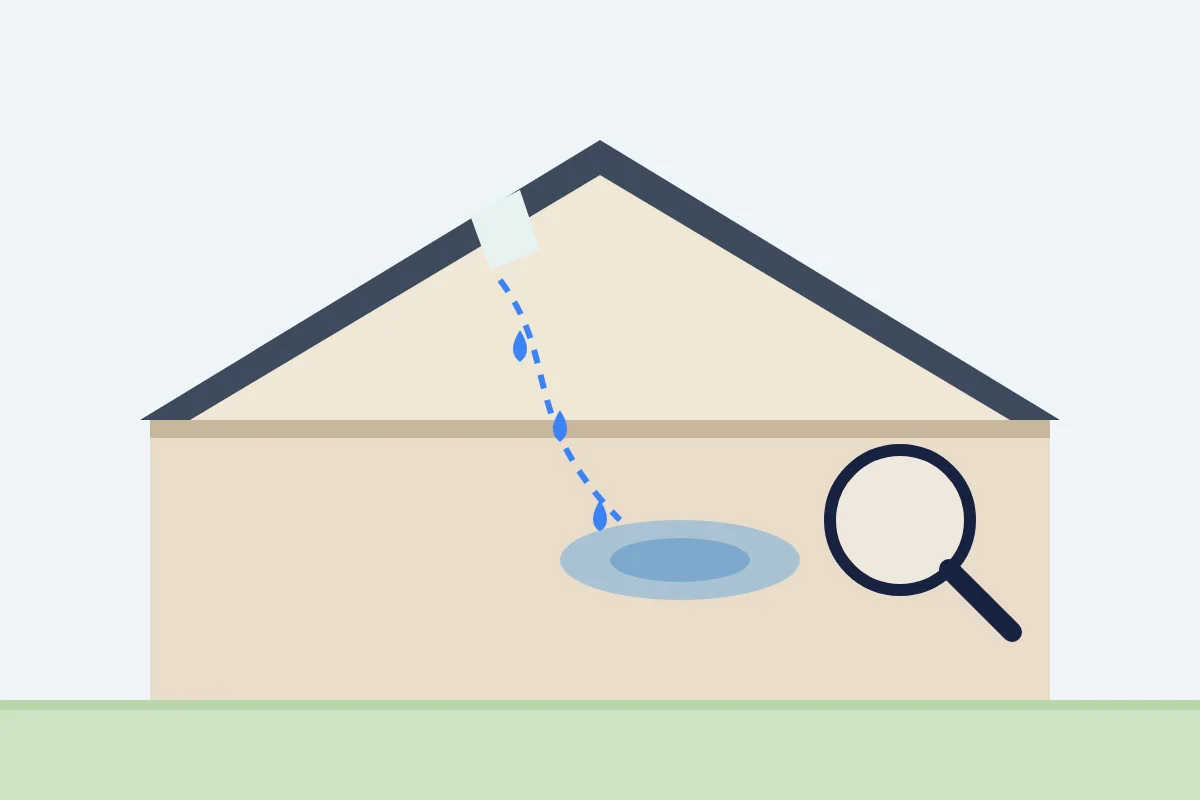
What this survey can’t tell you
Some things can’t be seen without opening up the roof, and that sets some limits:
- What’s under the covering or behind the plaster
- A promise to find every leak on a single visit
- The repair itself (the investigation finds and reports the cause)
If in doubt, phone 07833 053749 or use the contact form and we will suggest the right survey. What our survey covers.
Roof types and parts we check
- The roof space
- Slate and tile slopes
- Rooflights and dormers
- Chimney stacks
- Flat roof details
- Valleys and parapet gutters
- Lead flashings
Places near Langenhoe
What else we do in Langenhoe
How it works
We do not take risks to get a closer look. We inspect whatever is safely visible, and anything we can’t see is noted in the report. Most visits take an hour or two for most houses, and longer for a large or complex roof. Somewhere like Langenhoe needs a little journey planning: let us know about lanes, gates and parking. The roof is looked at from ground level, from windows, from the loft where there’s safe access and from the roof where it’s safe.
- We start with what you’ve seen: where the stain is and when it gets worse.
- We check the stain, the ceiling and the loft above it.
- Outside, we check every likely route in.
- Moisture readings and thermal imaging are used where they help.
- We email a report with photographs, the likely entry point and recommendations.
Before we arrive
- If you’re buying, check with the agent that we can get in
- Leave side gates unlocked
- Let us know about parking near the property
Booking a survey
If you’re buying, it helps to book soon after your offer is accepted, so you have the findings in time to act on them before you exchange. Otherwise, simply phone 07833 053749 or drop us an email whenever suits you.
Read more
Should I look at the roof myself first?
During heavy rain, look at the gutters from the ground or a window. Overflowing water can be a sign of a blockage or a gutter that has dropped.
The one thing to avoid is getting up close. Roofs are fragile and slippery, and a fall can be serious. That’s where a survey comes in.
Roof leak investigations in Langenhoe: local notes
The coast is about 2 miles or less from Langenhoe, and places near the sea get more salt in the air and more wind than inland. In a coastal gale, rain is driven sideways into laps, verges and flashings. The wider area around Langenhoe has a long history of building, with Layer Marney Tower about 4.9 miles west. Period homes nearby can have lead valleys, tall chimneys and a patchwork of past repairs, and any change of roofing material on a listed home needs checking with the council first.
Take a building like Langenhoe Community Primary School and Pre-School: water through a big roof can travel a long way before it drips, so the search covers more than the obvious spot. If you live in an older home near Church of St Andrew, leaks on older roofs often start at lead flashings, valleys or around old chimney stacks.
Langenhoe is about 4 miles south of Colchester, in Essex. We survey roofs in Langenhoe as part of our work across London and the South East. Langenhoe is one of the places in Essex we cover for roof leak investigations. For surveys nearby, see our Chelmsford page.
Surveys in CO5 work the same way as everywhere else we cover. We cover properties on Mersea Road, Langenhoe Park and Colchester Road and the roads around them. We also cover Abberton (1 mile north), Fingringhoe (1 mile north-east), Berechurch (2 miles north), East Donyland (2 miles north-east) and High Park Corner (2 miles north-east). Further out, we also cover Colchester (4 miles north), Braintree (15 miles west), Clacton-on-Sea (10 miles east), Maldon (12 miles south-west), Witham (12 miles west) and Camulodunum (4 miles north-west).
Local landmarks in Langenhoe
Typical jobs here are in homes near The Lion pub. Langenhoe’s nearest station is Wivenhoe station, about 2.7 miles north-east. Well-known places in the area include Wivenhoe Chapel Museum (3.2 miles north-east) and Birch Castle (4 miles west). Open spaces near Langenhoe include Abberton Reservoir.
FAQs for Langenhoe
Do roofs near the sea, like those around Langenhoe, take more of a battering?
Generally, yes: wind and salt air take more of a toll near the sea. Exposed details such as ridges, verges, flashings and metal fixings are the ones to watch.
Is Langenhoe within the area you cover?
Yes, Langenhoe is on our map. Villages and rural addresses get the same survey as a town house.
How experienced are you?
We have more than 20 years’ experience and have completed over 5,000 surveys across London and South East England.
How long does a roof leak investigation take?
On site, it typically takes roughly 1–2 hours for most houses, and about three to four hours for a commercial roof. The report follows within 48 hours for Basic, 24 to 48 hours for Standard and the same day for Premium.
What happens next?
You will receive the report by email, and what you do next is up to you: raise it with a seller, send it to an insurer, brief a roofer or share it with a managing agent.
Is there anything I need to do before the visit?
Make sure the loft can be reached. Gather any photos and notes about when it leaks, plus details of past repairs. In the meantime, catch the water and keep it clear of lights and sockets.
Do you need to get into the loft?
If there is a loft and safe access to it, yes. From inside, the underside of the roof often shows damp, staining or daylight that can’t be seen from outside.
For landlords and managing agents
A roof problem in a let property affects your tenants as well as the building. A survey shows what needs attention, so you can plan the work.
If you own several properties, you can book surveys for several addresses. To discuss a number of properties, ring 07833 053749 or drop us an email.
Tips from our surveys
Most of what helps is simple and safe from the ground. Our suggestions:
- Have an electrician check any wet fittings
- Put a bucket under the drip and move valuables
- Take dated photos of the leak
- Don’t climb onto the roof to look
If the leak turns out to be condensation, the report says so, and suggest how the roof space could be better ventilated. It saves chasing a leak that isn’t there.
Don’t block the vents at the eaves. Air movement keeps condensation down, and condensation is a common false alarm. Keep insulation clear of the eaves.
Common roof problems in Langenhoe
Condensation is frequently mistaken for a leak. Moist air from bathrooms and kitchens condenses on the cold underside of the roof, particularly in lofts with blocked eaves. Drips from nails and damp underlay are typical signs.
Problems we come across frequently include:
- Damp patches next to the stack
- Water dripping from rafters or underlay
- Wet patches high on an inside wall
- Damp ceilings under a flat roof
If you own a rental within reach of Wivenhoe station, finding the cause of a leak fast keeps a tenant’s home dry and the work focused.
What to check before booking
- How much experience they have with roofs like yours
- When you will get the report
- Which limits apply to the survey
- Whether the loft space is looked at, where there is one