
Essex · London and the South East
Storm damage roof report in Mayland, Essex
Know where you stand with the roof before you spend money on it. Storm damage roof reports in Mayland.
- Torn or lifted flat roof coverings
- Lead lifted at abutments
- New damp or leaks inside
Storm damage roof reports for homes and businesses in Mayland
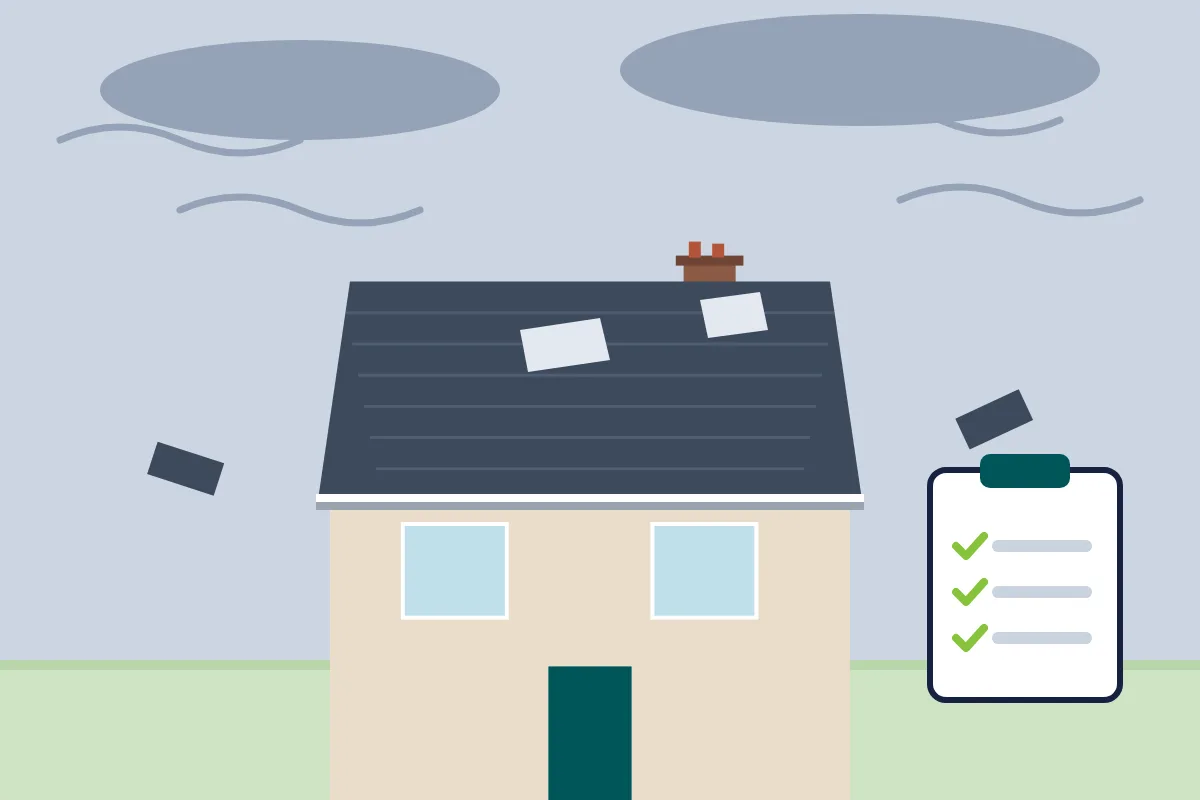
High winds usually affect the parts of a roof that are already exposed or loose. Slates and tiles slip or blow off, ridge and hip tiles lift, flashings pull away and flat roof coverings can tear. Falling branches can cause damage too. Our report records what has happened to your roof, with photos. Any older wear we can see is recorded as well. Common reasons to book are slipped or missing slates or tiles and damage from fallen branches or debris, on slate and tile slopes, chimney stacks and ridges and hips.
Somewhere as small as Mayland, older roofs have often been repaired many times. That makes it hard to tell new damage from old wear, which matters if you’re thinking of an insurance claim. We check what can be seen safely and set out what we find. Damp in old walls and timbers is slow to dry, so the sooner the cause is found the better.
It is not only a list of defects. For each finding, it explains what it is, why it matters and what we’d recommend.
- Location
- Mayland (CM3)
- Wider area
- Essex
- Prices
- From £150 inc. VAT
- Report
- A written report with photos, by email
- Appointments
- Monday to Sunday, daytime
- Insurance
- PI and public liability insurance
- Phone
- 07833 053749
- Page updated
- 27 October 2026
Do you need a storm damage roof report in Mayland?
Landlords and managing agents book reports to keep a record for owners and insurers. The report can be shared with owners, tenants or insurers.
Problems we come across frequently include:
- Water coming in after the storm
- Lifted or missing ridge and hip tiles
- Damaged pots on the stack
- Damaged gutters and fascias
If you look after a building like Maylandsea Primary School, a leak through a large roof is frequently found some distance from where the water shows inside.
Before booking anyone
- Whether you get a written report with photos
- Whether they hold professional indemnity and public liability insurance
- Whether the price includes VAT
- Their report turnaround times
What affects the cost of storm damage roof reports
Not every roof costs the same to survey, and it comes down to:
- If the survey needs thermal imaging or a drone
- Features like valleys, chimneys, dormers and parapets
- House, block, shop or office
- Basic, Standard or Premium
We offer three survey packages: the Basic Survey from £150, the Standard Survey from £250 and the Premium Survey from £400, all with VAT included. The price for your roof depends on its size, access and what you want to find out.
Getting in touch
There is no need for technical words. It is enough to tell us:
- Pictures from the garden or a window, if you have them
- When you need the report by
- The kind of building and roof involved
- Where water is showing inside, if it is
Once you know what you need, call 07833 053749 or use the contact form. From there it is a case of choosing a package, agreeing the price and fixing a day.
Should I look at the roof myself first?
What you cannot do safely is get up close. Slates, tiles, flat roofs and rooflights can give way, and a fall can be serious. That part is for a survey.
You can learn a lot from the ground. Binoculars help you spot slipped slates or tiles, gaps along the ridge and a leaning stack. Please do not climb up for a closer look.
How it works
Safety comes first on every visit. We inspect everything that’s safely in view, and if part of the roof cannot be seen, the report says so. The survey typically takes about 1–2 hours at a house, and longer if the damage is spread across a large roof. Somewhere as small as Mayland, access is frequently the only tricky part. Let us know about outbuildings, past repairs and any leaks you’ve noticed. Weekday and weekend visits are available.
- You tell us what happened and whether a roofer has made the roof safe.
- We check inside, including the loft where there is access, for water damage.
- The roof is inspected from ground level, windows and the roof where it is safe.
- Storm damage and older wear are recorded separately where we can.
- The report, with photos, is emailed to you.
Getting ready for the survey
- Keep pets inside or away from the areas we’re looking at
- For flats, make sure roof access has been agreed
- Note where any stains or damp appear
Book a survey
Most bookings start with a short call: call 07833 053749 or email us, and we will ask about the building and what you need. The price is agreed before a date is set.
Advice
Before and after the survey
From years of surveys, a few habits stand out:
- Write down when the storm hit and when you noticed damage
- Keep fallen slates or tiles as evidence if safe
- Take photos from ground level or a window, never by climbing
- Keep receipts for any emergency work
The insurer might appoint a loss adjuster. You’ll have your own independent record to refer to.
A well-maintained roof stands up to storms better. Fix slipped slates, loose ridges and lifted flashings when you spot them.
Mayland questions
Is my home in Mayland listed or in a conservation area?
We can’t confirm that for you, but Historic England’s list and your council can. Both listing and conservation areas can limit changes of roofing material.
Is the coastal weather around Mayland hard on roofs?
It can do. Within about 1 mile of the sea, as Mayland is, metal fixings wear faster and gales find any loose ridge or slate.
Can you survey at the weekend?
We survey on any day from Monday to Sunday, during the day. Let us know your preferred days as you book.
Is it the same as a RICS Level 2 or Level 3 survey?
No. We check the roof, not the whole building, so it is not a RICS Level 2 or Level 3 survey. It can sit alongside a RICS survey if you want both.
Do you climb onto every roof?
Only when it’s safe. Safe viewpoints, the loft space and a drone where it applies cover most of what’s needed, and anything out of sight is recorded in the report.
What if the roof was already worn?
Most policies don’t cover wear and tear. We note both storm damage and older defects, so you know what the roof shows. Your insurer decides how its policy applies.
Does your report mean my claim will be accepted?
We can’t say whether a claim will be paid. Insurers decide claims on their own policy wording. Our report gives you an independent record of the damage and its likely cause.
Places near Mayland
Other services in Mayland
Storm damage roof reports around Mayland
Mayland is within about 1 mile of the coast, so storms can arrive with strong gusts off the water. Many policies treat gusts of about 55 mph as storm conditions, but it varies, and the insurer decides the claim. Weatherboarded walls and clay tile roofs are typical of older Essex buildings, and lots of post-war and modern estates besides. Where water gets in depends a good deal on what the roof is made of and how it’s detailed.
If you own a rental within reach of Althorne station, tracing a leak quickly matters when a tenant is living with it.
Mayland is about 5 miles south-east of Maldon, in Essex. Wherever you are in Mayland, we can carry out storm damage roof reports at your property. Our area takes in places right across Essex. You can also see our page for Chelmsford.
We cover every part of the CM3 postcode area for storm damage roof reports and the streets around it. Streets in the area include Thrumble Close, Fels Way and Teal Avenue, all of which we cover. We also cover the places around Mayland: Maylandsea (1 mile north-west), Latchingdon (2 miles south-west), Althorne (2 miles south), Mundon (3 miles west) and Ostend (3 miles south-east). Within a short drive, we also cover Colchester (15 miles north), Chelmsford (12 miles west), Basildon (15 miles south-west), Maldon (5 miles north-west), Canvey Island (13 miles south-west) and Billericay (15 miles west).
Local landmarks in Mayland
Typical jobs here are in homes near The Mayland Mill Public House and the streets around them. The closest station to Mayland is Althorne station, about 2.5 miles south. Open spaces near Mayland include Northey Island.
Roof by roof
Chimney stacks
Pots, cowls and aerials on chimneys can be damaged or dislodged in a storm. The report notes any damage to the stack.
Clay and concrete tiles
Strong gusts can lift and break tiles. The report shows each damaged area.