
Oxfordshire · London and the South East
Stanford in the Vale Storm Damage Roof Report
Not sure what state the roof is in? We carry out storm damage roof reports in Stanford in the Vale and across Oxfordshire.
- Gutters pulled loose in the wind
- Holes or cracks caused by debris
- Damaged ridges and hips
Checking the roof from the ground
Keep a simple record: dates of leaks, photos from ground level and any work done on the roof. Share it with us when you book.
After heavy rain, check ceilings and the tops of walls for new stains. Photograph them and note the date, which helps when we look at the roof.
Storm damage roof report in Stanford in the Vale
Storms tend to find the weak points on a roof. Slates and tiles slip or blow off, ridge and hip tiles lift, flashings pull away and flat roof coverings can tear. Trees and branches can also hit roofs in a storm. Our report records what has happened to your roof, with photos. Where we also see signs of older wear, the report records that too. Typical surveys look at damaged ridges and hips and slipped or missing slates or tiles, across gutters and fascias, flashings and chimney stacks.
Chimney stacks on older houses around places like Stanford in the Vale can let water in, at the flashings, the pointing or the mortar round the pots. Damp on a chimney breast is not always rain from above, which is why it’s worth tracing properly. It is worth looking at the stack from outside and at the timbers beside it in the loft.
Pictures do a lot of the work in our reports, because a photo of a cracked flashing says more than a paragraph. Anything out of sight on the day is listed as such.
- Where
- Stanford in the Vale (SN7)
- Region
- Oxfordshire
- Price
- From £150 inc. VAT
- Your report
- Written, with photos, emailed to you
- When we survey
- Monday to Sunday, daytime
- Cover
- Professional indemnity and public liability
- Phone
- 07833 053749
- Page updated
- 27 October 2026
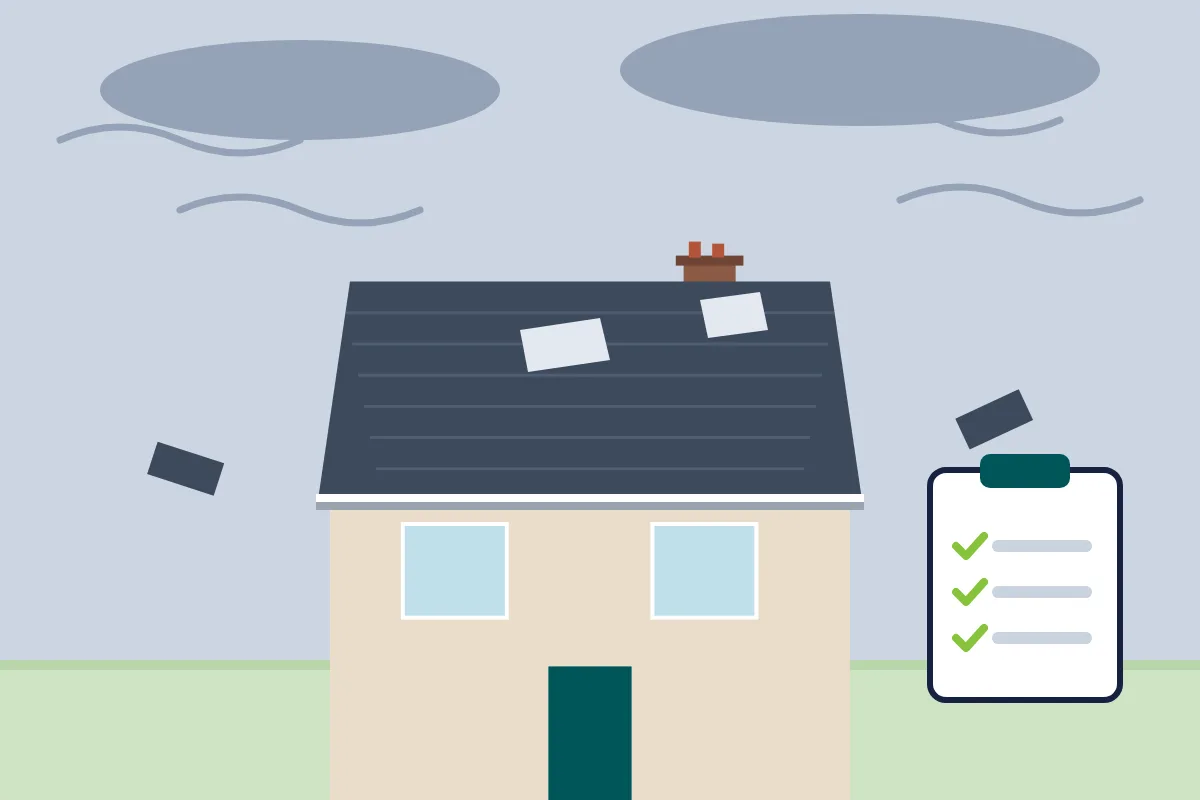
What a storm damage roof report looks like in Stanford in the Vale
Historic houses such as Longworth House, about 4.7 miles north-east, show how far back building in the area around Stanford in the Vale goes. On older houses around here, roofs often carry the marks of earlier repairs, from replaced slates to new lead, and the council can say whether a home is in a conservation area. West Oxfordshire’s older buildings frequently carry Cotswold stone slates, and a few villages in the county keep their thatch. Older houses in the South East frequently have slate or clay tile roofs, while many later estates have concrete tiles. Knowing the roof type helps narrow down where water may be getting in.
Take an older house close to Church of St Denys: lead flashings, valleys and old chimneys are typical places for water to get in.
Stanford in the Vale is about 5 miles north-west of Wantage, in Oxfordshire. We provide storm damage roof reports for homes and businesses in Stanford in the Vale and the surrounding area. Our Oxfordshire coverage includes Stanford in the Vale and the places around it. Oxford is in our area too.
Surveys in SN7 work the same way as everywhere else we cover. We offer storm damage roof reports to properties on High Street, Heigham Court and Fawkner Way and the roads around them. Neighbouring places we cover for storm damage roof reports include Bow (1 mile east), Hatford (1 mile north), Shellingford (1 mile west), Baulking (2 miles south-west) and Buckland (3 miles north). We also work in nearby towns like Oxford (14 miles north-east), Didcot (12 miles east), Abingdon-on-Thames (10 miles east), Witney (10 miles north), Carterton (10 miles north) and Wantage (5 miles south-east).
Local landmarks in Stanford in the Vale
Around Stanford in the Vale, our work takes us to homes and buildings near The Horse & Jockey pub and The Old Church of St George, among other places. Well-known places in the area include Faringdon Castle (3 miles north-west) and Faringdon Museum (3.4 miles north-west). Green spaces nearby include Dragon Hill.
What we’re asked to look at in Stanford in the Vale
Some people book because a claim has been questioned. You get an independent record of what the roof shows. What happens next is up to the insurer.
Problems we come across often include:
- New damp or leaks inside
- Damaged pots on the stack
- Loose or torn flashings
- Flat roof edges peeled back
Take a building like Stanford in the Vale Church of England Primary School: on a building that size, finding the source of a drip means looking well beyond the stain.
Before you book anyone
- What experience they bring
- What the survey will not cover
- What follow-up you get after the report
- What exactly goes into their report
Also in Stanford in the Vale
When you need someone else
We only report what can be seen safely on the day, so there are some things a survey cannot cover:
- The outcome of a claim
- A price for the repairs
- Acting for you with the insurer
Not sure which survey suits your roof? You can call 07833 053749 or use the contact form and we’ll tell you. What our survey covers.
What this survey covers
- Flashings
- Ridges and hips
- Chimney stacks
- Flat roofs
- Slate and tile slopes
- Gutters and fascias
Before and after the survey
Nothing here needs a ladder. Our suggestions:
- File receipts for anything you pay for
- Get a roofer to make the roof safe if needed
- Hold on to fallen pieces of the roof where you can
- Look at what your policy says about wear and tear
If anything in the report isn’t clear, just ask us. Standard Surveys come with a follow-up consultation, and Premium Surveys with an in-person one.
Have overhanging branches looked at by a tree surgeon. They can damage the roof in high winds.
FAQs for Stanford in the Vale
Is my home in Stanford in the Vale listed or in a conservation area?
Your council is the best source, with Historic England’s list for listed buildings. Both listing and conservation areas can limit changes of roofing material.
Do you cover Stanford in the Vale?
We do. The survey and report are the same in Stanford in the Vale as anywhere else.
Should I go up on the roof to take photos?
Please do not climb onto the roof. Photograph the damage from below or from a window. Record the date and any damage inside as well.
Will you deal with the insurance company for me?
No. We are not loss adjusters, and we don’t negotiate claims. We give you an independent report of the damage for you to send to your insurer.
Can you inspect my roof with a drone?
Yes, where it’s applicable. We hold a CAA Flyer ID and Operator ID and fly a drone under 250g, and the airspace and weather are checked before every flight.
How long have you been surveying roofs?
We have more than 20 years’ experience and have carried out more than 5,000 surveys across London and South East England.
Can you tell me if my roof has asbestos?
No. Our report may flag materials that could contain asbestos, but confirming it is a job for a specialist asbestos surveyor. Buildings built or refurbished before 2000 may contain it.
How we price storm damage roof reports
To price your survey, we check:
- Extra roofs, like extensions, dormers or garages
- Roof area
- The use of thermal imaging or a drone
- Chimneys, valleys, parapets and other details
Price depends partly on the package: from £150 for Basic, £250 for Standard and £400 for Premium, with VAT included. The roof’s size, height and access matter as well.
What to tell us when you get in touch
We’ll typically ask about:
- Access details, like a loft hatch or a shared roof
- Where the property is, with the postcode
- Where any leaks, stains or damp patches show inside
- Pictures from the garden or a window, if you have them
Prices start from £150, including VAT. The exact figure depends on the roof and the package, and you can call 07833 053749 or email us to find out.
What happens on the day
There isn’t much for you to do on the day. Show us any stains, drips or problem areas you know about, and we’ll take it from there. The survey itself takes an hour or two for most homes, depending on how much of the roof was hit. Parking around Stanford in the Vale is usually easier than in a town centre, but mention lanes, gates or long drives. On bungalows and lower roofs, much can be seen from ground level, with the loft showing the underside, while taller roofs may need other vantage points or the drone where applicable.
- We note the date of the storm and the damage you’ve seen.
- We look at the roof from wherever it is safe.
- Each area of damage is photographed and described.
- The report notes whether the damage fits a storm, older wear or both.
- We send you the report by email for your insurer.
Before the survey
- Have any questions written down, so nothing gets missed
- If it isn’t your property yet, arrange access through the agent
- Gather any invoices or paperwork from past roof work
Book a survey
If you have photos of the roof, send them over. Take them safely from ground level or a window. To get started, ring 07833 053749 or send us an email.