
Bracknell Forest · London and the South East
Storm damage roof report in Warfield Park, Bracknell Forest
Storm damage roof reports in Warfield Park, backed by more than 20 years’ experience. Every survey ends with a written report and photos.
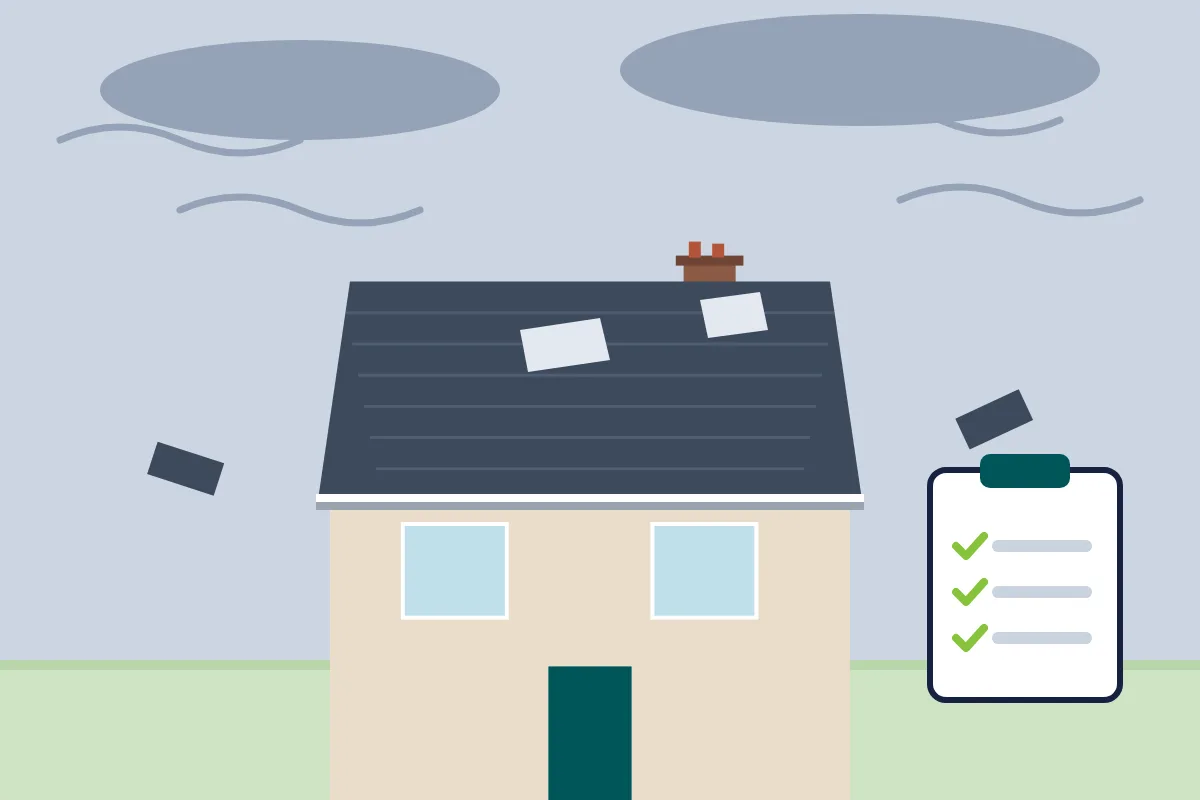
- Flat roof edges peeled back
- Slipped or missing slates or tiles
- Holes or cracks caused by debris
What a survey costs
The price reflects the time and kit the roof needs. The main factors are:
- The package you choose: Basic, Standard or Premium
- Extensions, dormers and garages with roofs of their own
- The use of thermal imaging or a drone
- House, block, shop or office
Larger roofs, taller buildings and commercial roofs take longer, so the price reflects that. The price is confirmed before you book.
What we need to know
We’ll typically ask about:
- Your postcode, so we can check access and travel
- Where any leaks, stains or damp patches show inside
- Pictures of the roof from a safe spot, if you have them
- The reason for the survey, such as buying, a leak or storm damage
To arrange a survey, call 07833 053749 or email us with the address and what you’d like to know about the roof. We will confirm the price before you book.
How a storm damage roof report works in Warfield Park
Most policies do not cover wear and tear. So it matters whether the damage came from the storm or from a roof that was already worn. We note signs of each: recent damage alongside any older defects, like nail fatigue on slates or eroded pointing. We give an honest view of what we see. How the policy applies is for your insurer to decide. We survey flashings, slate and tile slopes and flat roofs, and common reasons people get in touch are lead lifted at abutments and new damp or leaks inside.
Chimney stacks on older houses around places like Warfield Park can let water in, through worn flaunching, failed pointing or lifted flashings. Damp on a chimney breast isn’t always rain from above, which is why it’s worth tracing properly. The stack, its flashings and the loft space beside it are all worth checking.
Every survey ends with a written report, with photographs, sent by email. It sets out the condition of the roof, any defects and our written recommendations.
- Place
- Warfield Park (RG42, RG12, SL5)
- Region
- Bracknell Forest
- Prices
- From £150 inc. VAT
- Your report
- A written report with photos, by email
- Appointments
- Weekdays and weekends
- Cover
- Professional indemnity and public liability
- Telephone
- 07833 053749
- Last updated
- 27 October 2026
Towns and villages near Warfield Park
What else we do in Warfield Park
What happens if roof problems are left?
Leaving storm damage can let water into the roof space and rooms below. Further water damage can blur what the storm actually did. A roofer should deal with emergency protection quickly. In an older home around Warfield Park, water from a roof defect can get into timber and plaster, which is far harder to put right than the roof fault itself.
Every price we give includes VAT, and the written report is part of the package. Prices start from £150, including VAT. Size, height and access decide where your roof falls.
Why us?
- An independent view of the roof
- 5,000+ surveys completed
- Plain-English reports with photos
- Weekday and weekend surveys
Take a look at our cost guide or our case studies.
Roof by roof
Chimney stacks
Pots, cowls and aerials on chimneys can be damaged or dislodged in a storm. The report notes any damage to the stack.
Flat roof coverings
On flat roofs, storms can lift edges and tear membranes. We record any damage and where it is.
Warfield Park questions
Will you come out to Warfield Park?
Yes, we do. Our area covers London and South East England, from towns to the smallest villages. The journey is planned ahead, so it’s useful to know about access.
Are flat-roofed garages and porches in Warfield Park worth including?
It is often worth it, as these roofs are easy to forget. Cement sheet roofs on buildings from before 2000 may contain asbestos, so a specialist asbestos surveyor should check before they’re disturbed.
Can I check the roof after a storm?
Stay off the roof. Take photos from ground level or from windows. Record the date and any damage inside as well.
Can you inspect my roof with a drone?
Yes, where it’s applicable. Our sub-250g drone is flown by a CAA-registered operator with a Flyer ID and Operator ID, and every flight depends on the airspace and the weather.
Is it the same as a RICS Level 2 or Level 3 survey?
No. This is a survey of the roof only, so it’s not a RICS Level 2 or Level 3 survey. It can sit alongside a RICS survey if you want both.
Can you survey a shared roof?
Yes, as long as access is agreed. The roof of a block or converted house is often shared, so the freeholder or managing agent needs to agree access. We inspect only the parts we are allowed to reach.
Who handles emergency protection after a storm?
A roofer should handle temporary protection. Photograph the damage first if you can do so safely. We can record the damage in our report.
For landlords and managing agents
Shared roofs need a little more planning: access has to be agreed with whoever owns or manages the building. Let us know about it when you book and we’ll plan the survey around it.
Surveys can also be booked by buyers’ agents acting for a client. Reports are emailed, so they’re easy to pass on, photographs included.
Warfield Park roofs and the weather
Across the South East, older homes tend to have slate or clay tiles, and many later ones concrete tiles, and flat-roofed additions turn up almost everywhere. Each of these roof types has its own typical places for water to get in. Warfield Park is part of Bracknell, one of the post-war new towns. Homes from the post-war decades are common in the new towns, many with low-pitched roofs in concrete tiles and flat-roofed garages or porches. Leaks on homes like these often come from flat-roofed additions or from rain driven up under low-pitched tiles.
With St Leonard's Hill about 4.3 miles north-east, the area around Warfield Park has a long history. Older roofs in the area may have lead flashings, valleys and gutters that have been patched many times. For landlords with property near Martins Heron station, a tenant living with a leak needs the cause found, not just the stain painted over. For an older house near a landmark such as St Martin's Church, old mortar, worn lead and slipped slates are the usual suspects when water gets in.
Warfield Park is about 1 mile east of Wick Hill, in Bracknell Forest. Surveys in Warfield Park work the same way as everywhere we cover: a close look at whatever is safely visible, photos and a clear written report. Warfield Park is one of the places in Bracknell Forest where we work. Reading is in our area too.
We work across RG42, RG12 and SL5 for storm damage roof reports and the streets around it. Local streets include Birch Lane, North Road and Long Hill Road, all of which we cover. If you are just outside Warfield Park, we cover Chavey Down (1 mile south-east), Winkfield Row (1 mile north-east), Whitegrove (1 mile north-west), Bullbrook (1 mile south-west) and Martins Heron (1 mile south). Within a short drive, we also cover Sandhurst (6 miles south-west), Binfield (3 miles west), Great Hollands (3 miles south-west), Popeswood (3 miles west), Hanworth (3 miles south-west) and College Town (6 miles south-west).
Landmarks near Warfield Park
In Warfield Park, that means homes and buildings near Garth Hill College and Lambrook. The closest station to Warfield Park is Martins Heron station, roughly 1 mile south of the centre. A little further out are The Lexicon (1.4 miles west) and Heatherwood Hospital (1.6 miles south-east). Not far away are Heath Lake.
What you can safely check yourself
It helps to keep a record: dates of leaks, photos from ground level and any work done on the roof. Share it with us as you book and it will help the survey.
You can learn a lot from the ground. With binoculars, look for slipped or missing slates and tiles, gaps along the ridge and leaning chimneys. Please don’t climb up for a closer look.
How the survey works
Photographs are taken throughout the visit, so you can see in the report what we found and where. Close-ups come from the safest viewpoint available, including by drone where it’s applicable and the weather allows. Most surveys take roughly 1–2 hours at a house, and longer if the damage is spread across a large roof. A visit to Warfield Park is planned like any other: the time, the access and where to park are agreed in advance. Visits can be on weekdays, Saturdays or Sundays. Let us know about any garages, outbuildings or extensions you want included.
- You tell us when the storm was and what damage you’ve seen.
- The roof is looked at from the ground, from windows and from the roof space where it is safe.
- We photograph and record every area of damage we can see.
- We note the likely cause, including any signs of wear that were there before the storm.
- We send you a written report with photos, ready to give to your insurer.
Before the survey
- Mention any parking restrictions on your street
- Gather any invoices or paperwork from past roof work
- Buyers: confirm access with the estate agent or seller
How to book
Prices start from £150, including VAT. The exact figure depends on the roof and the package, so ring 07833 053749 or use the contact form with the details.