
Essex · London and the South East
Baythorne End New Roof Snagging
Need new roof snagging in Baythorne End? We can help, with a written report you can act on. Weekday and weekend visits available.
- Cracked or slipped new tiles or slates
- Cracked mortar at the ridge or hips
- Poorly finished verges
About our new roof snagging in Baythorne End
The best time for snagging is before the final payment, while the roofer is still on hand. If that’s passed, it is worth checking before a defects or warranty period ends. That leaves time to raise what we find. Our report gives you a clear, photographed list of snags to send to your roofer in good time. Common reasons to book are damage to other parts of the building and poorly finished verges, across replacement roofs, loft conversions and dormers and ridges and verges.
For a small place like Baythorne End, the visit is planned like any other: the journey, parking and access are simply agreed ahead of time. If there are outbuildings with roofs you want checked, mention them when you book. Whether you’re buying or checking new work, the same care goes into it. Visits can be booked on any day of the week.
Most points in the report come with a picture, so you can see each defect rather than just read about it. If something couldn’t be seen safely, the report is clear about it.
- Place
- Baythorne End (CO9)
- Region
- Essex
- Cost
- From £150 inc. VAT
- Report
- Emailed report with photos and recommendations
- Survey days
- Monday to Sunday, daytime
- Insured
- PI and public liability insurance
- Phone
- 07833 053749
- Last updated
- 27 October 2026
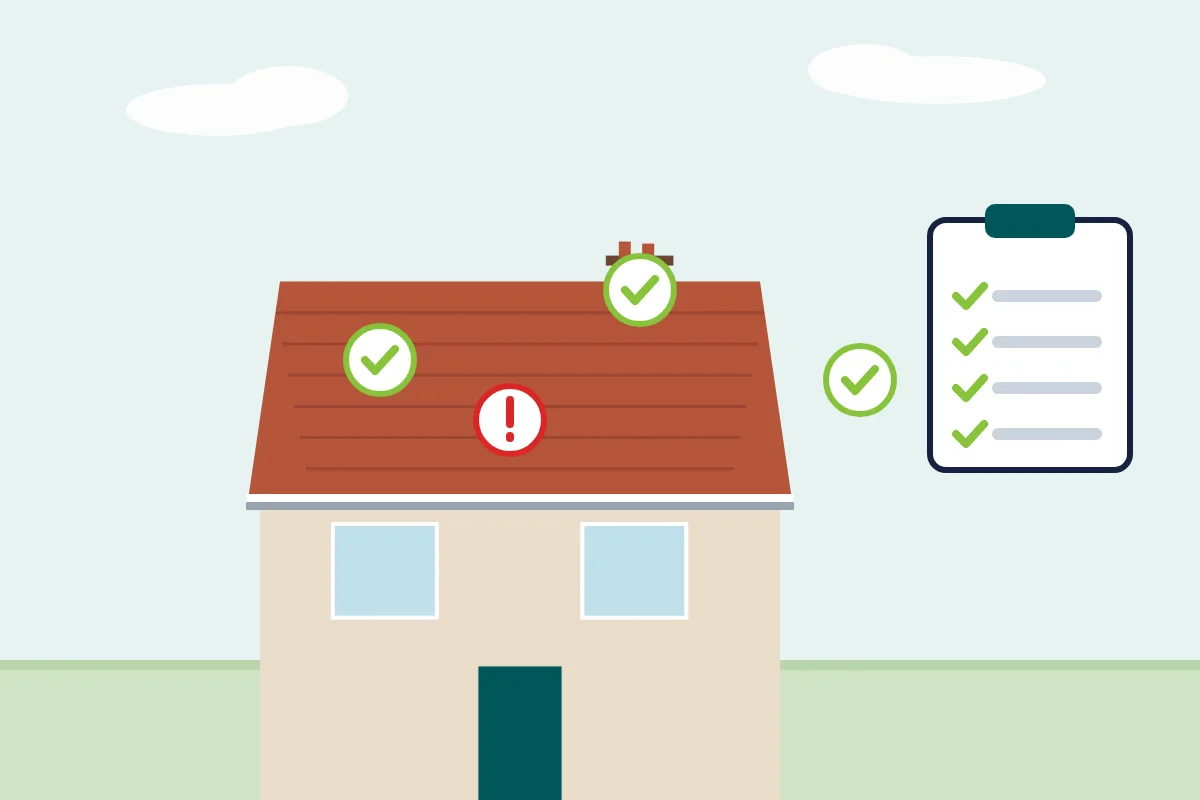
Signs you need new roof snagging in Baythorne End
Flashings at walls and chimneys often need attention. Loose or badly fitted flashings can let water in at the first heavy rain.
Things that frequently lead to a survey include:
- Untidy or loose verge details
- Gutters or fascias damaged during the job
- Loose or badly finished ridge tiles
- Signs of condensation in the loft space
In and around Baythorne End, as anywhere, a roof is easiest to deal with when its problems are found early.
Questions to ask before you book
- Whether you get a written report with photos
- What follow-up you get after the report
- What they will not be able to tell you
- How soon the report will arrive
What we look for on each type of roof
Underlay and ventilation
Vents at the ridge, eaves or in the tiles help keep the roof space dry. We check for vents where they’ve been fitted.
Flashings
Flashings around chimney stacks are a common weak point, so we look at them closely.
The survey, step by step
You do not need to do much on the day. Show us any stains, drips or problem areas you know about, and we will get on with the inspection. The survey itself takes about one to two hours on an ordinary house; commercial roofs usually need 3–4 hours. For a village or hamlet like Baythorne End, the journey is planned in advance: let us know about lanes, gates and parking. On the day, we inspect what can be seen safely, inside and out.
- We start by finding out what was replaced and what worries you.
- We check the tiles or slates, ridges, hips and verges from safe vantage points.
- Valleys, flashings, gutters and the underlay at the eaves are looked at.
- The roof space is checked where safe, along with any mess or damage left after the work.
- You get a photo report listing the snags we found.
Before we arrive
- Have keys ready for side gates, garages or roof access doors
- Tell us about parking before the day
- Point out any leaks or damp patches
How to book
To book a survey, call 07833 053749 or send us an email and let us know the address and what’s prompted the survey. You will know the price before anything is booked.
Related advice
Common questions in Baythorne End
Do you carry out roof surveys in Baythorne End?
Yes, Baythorne End is within the area we cover. Our area covers London and South East England. You can call 07833 053749 or use the contact form with the address and a few details, and we will talk through which survey suits.
How do I find out if my home in Baythorne End is listed?
Start with Historic England’s list for listing and your council for conservation areas. It is worth checking before planning roof work, as both can affect what’s allowed.
Will you check every nail and clip?
No. We do not open up the new roof so hidden fixings are not visible to us. The report says what could and couldn’t be seen.
Can you survey a shared roof?
Yes, once access has been agreed. Roofs over flats are often shared, so whoever owns or manages the building needs to agree access. We can only inspect what we’re given access to.
Do I have to be there for the survey?
If the survey includes the loft or the inside of the building, someone needs to let us in. We’ll talk about access when you book.
Does this replace a RICS home survey?
No. It’s a specialist roof survey, not a RICS Level 2 or Level 3 building survey. It focuses on the roof, so it sits alongside a building survey rather than replacing it.
Do you carry professional indemnity insurance?
We hold professional indemnity and public liability insurance, for every survey we carry out.
Rented homes, blocks and businesses
Any of our surveys can be booked by landlords, agents and building managers in Baythorne End. To discuss a property or a block, call 07833 053749 or email us.
We survey roofs for letting agents and landlords as well as householders. A written report with photos gives you a clear record of the new roof.
Why get it checked now?
Small faults on a new roof can grow. A slipped verge tile or a loose flashing may let water through in the first heavy storms. Finding them early means they can be dealt with quickly. Older and listed buildings around Baythorne End may need consent and matching materials for repairs, so a defect found early gives time to plan the work properly.
There are three survey packages: Basic from £150, Standard from £250 and Premium from £400, with VAT included. The price for your roof depends on its size, access and what you need to know.
Why book with us
- Thermal imaging and drone inspection where they help
- More than 20 years surveying roofs
- Photographs and a written report every time
- 98% of customers satisfied
Read what a roof survey costs or our case studies.
What new roof snagging looks like in Baythorne End
Clay tiles and timber weatherboarding mark out many of the older buildings in Essex, while many towns grew with post-war and newer estates. Material and age explain a lot of what turns up on the day, whether the roof is old or brand new. Listing and conservation areas can both shape what roof work is allowed on an older home. Your council and Historic England’s list will tell you where you stand.
For an older house near a landmark such as Church of St Leonard, a survey will show how the roof has been repaired before, which helps you judge what’s coming.
Baythorne End is in Essex. We cover Baythorne End and the rest of Essex. We cover towns and villages across Essex. Chelmsford is in our area too.
Every address in CO9 is within our area for new roof snagging, from the main roads to the quietest streets. We also cover Ridgewell (1 mile south-east) and Wesley End (2 miles south). Further out, we also cover Braintree (12 miles south), Saffron Walden (12 miles west), Halstead (9 miles south-east), Great Dunmow (14 miles south-west), Great Notley (13 miles south) and Bocking (12 miles south).
Near you in Baythorne End
Typical jobs here are in homes near The Swan Public House and the streets around them. A little further out are Clare Castle (3.3 miles north-east) and Toppesfield Museum of The Working Horse (3.4 miles south).
Honest limits
This is not a RICS building survey, a structural engineer’s report or an asbestos survey. Other limits to bear in mind:
- Nails and clips under the slates or tiles
- Areas out of view from each safe vantage point
- Deciding who is at fault in a disagreement
Not sure which survey suits your roof? You can call 07833 053749 or email us and we’ll tell you before booking. What a survey covers and doesn’t.
What we look at
- New-build homes
- Loft conversions and dormers
- Flashings and valleys
- Replacement roofs
- Ridges and verges
- New flat roofs