
East Sussex · London and the South East
New Roof Snagging in Down Street
Checking a new or replacement roof for snags around Down Street, with findings in writing and pictures to back them up. Book a weekday or weekend visit.
- Gaps at new flashings
- Tiles or slates sitting out of line
- Cracked lower roofs or marked walls after the work
What you can safely check yourself
During heavy rain, look at the gutters from the ground or a window. Water spilling over the edge can point to a blockage or a sagging run.
You can learn a lot from ground level. With binoculars, look for slipped or missing slates and tiles, gaps along the ridge and leaning chimneys. Never climb onto the roof to look.
New roof snagging in Down Street
Ideally, book snagging before you settle the final invoice while the roofer can still come back easily. If you’ve already paid, check before any defects or warranty period runs out. That gives you time to raise any snags. You get a written list of snags with photos, ready to pass on before the deadline. Typical surveys look at cracked or slipped new tiles or slates and underlay at the eaves left exposed, on ridges and verges, new-build homes and new flat roofs.
Being in a small place like Down Street makes no difference to the inspection itself: it just means planning the journey and access beforehand. If there are outbuildings with roofs you want checked, mention them when you book. Whether you are buying or checking new work, the same care goes into it. Weekday and weekend visits are both available.
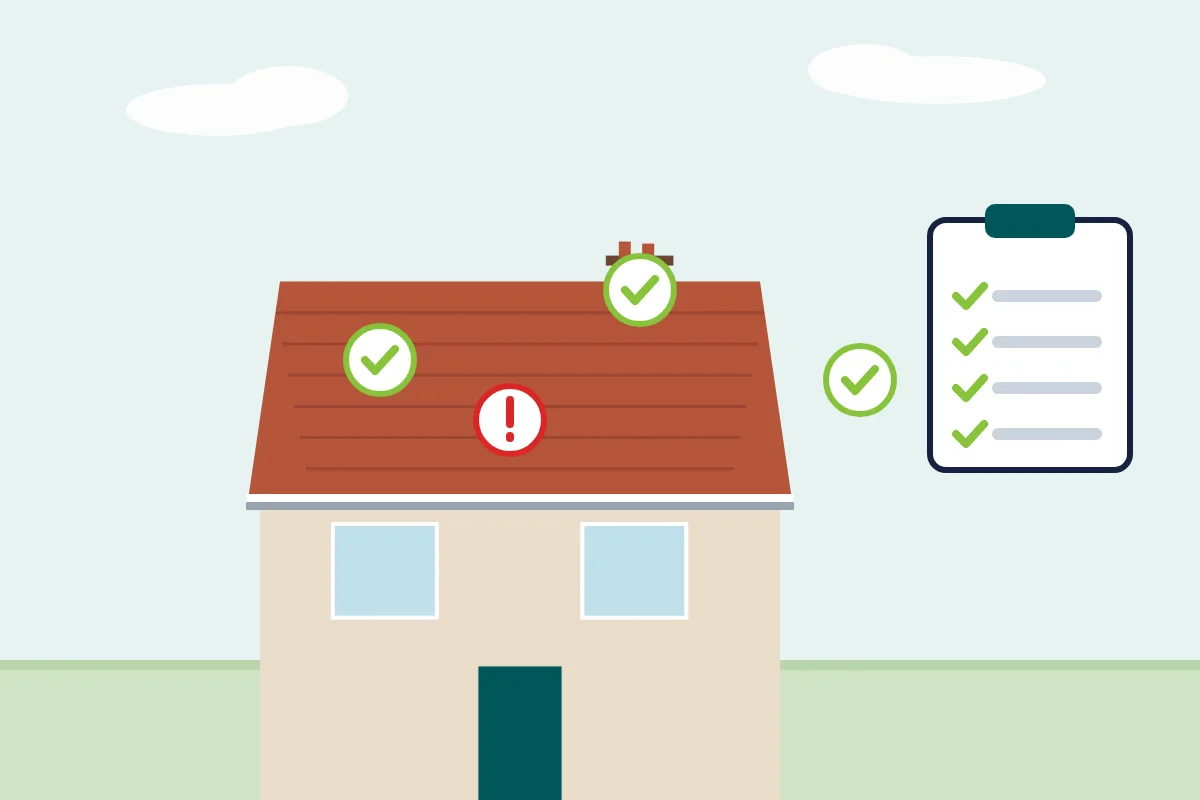
Most points in the report come with a picture, so you can see each defect rather than just read about it. Anything out of sight on the day is listed as such.
- Where
- Down Street (TN22)
- Wider area
- East Sussex
- Cost
- From £150 inc. VAT
- Your report
- Emailed report with photos and recommendations
- When we survey
- Weekdays, Saturdays and Sundays
- Insurance
- PI and public liability insurance
- Phone
- 07833 053749
- Last updated
- 27 October 2026
What we look for on each type of roof
Underlay and ventilation
Vents at the ridge, eaves or in the tiles help keep the roof space dry. Fitted vents are checked.
Flashings
Loose or badly dressed flashings are a common snag. They’re recorded with photos.
What affects the price in Down Street
We confirm the price for your roof before you book. This is what makes a difference:
- Which survey package you book
- Roof area
- The height of the building and how the roof can be seen safely
- Any need for thermal images or a drone flight
A small, low roof with good viewpoints takes less time than a tall, complicated one, and the package you pick makes a difference too. The price is always agreed first.
What we need to know
When you call or email, these details help:
- The address and postcode of the property
- The kind of building and roof involved
- What made you get in touch
- Anything about access we should know
Photos help, if you have them. Take them safely from ground level or a window. To send them or to book, ring 07833 053749 or email us.
Towns and villages near Down Street
Other services in Down Street
What new roof snagging doesn’t cover
This isn’t a RICS building survey, a structural engineer’s report or an asbestos survey. Other limits to bear in mind:
- Estimates of what fixes will cost
- What’s under the new coverings
- Settling a dispute with your roofer or builder
If you’re not sure which survey you need, ring 07833 053749 or email us and we will give you a straight answer. The full list of what we check.
Roof types and parts we check
- Flashings and valleys
- New-build homes
- New flat roofs
- Replacement roofs
- Ridges and verges
- Loft conversions and dormers
New roof snagging around Down Street
Older houses across Sussex often have handmade clay tiles, and many have tile-hanging on their upper walls. Some old buildings in Sussex have Horsham stone slab roofs, and oast houses and timber-framed Wealden hall houses are part of East Sussex’s older buildings. For a purchase or a newly finished roof, the materials decide which details matter most. Before planning roof work on an older home, find out whether it is listed or in a conservation area. Changes that affect a listed building’s special interest need listed building consent, and councils can also use Article 4 directions to control changes in conservation areas.
For landlords with property near Uckfield station, a written report helps before buying a rental or paying for a new roof on one. Take an older house close to The Parish Church of St Andrew and St Mary: ask the seller about past roof repairs, because older roofs often have patched valleys, replaced slates and reset ridges.
Down Street is about 3 miles north-west of Uckfield, in East Sussex. Wherever you are in Down Street, we can come and survey your property. Our area takes in places right across East Sussex, large and small. Our Crawley page covers surveys nearby.
We work across the TN22 postcode area for new roof snagging. Neighbouring places we cover for new roof snagging include Maresfield (1 mile east), Budlett's Common (2 miles east), Newick (3 miles south-west), Founthill (3 miles south-west) and Ridgewood (3 miles south-east). Within a short drive, we also cover Seaford (15 miles south), Lewes (9 miles south), Hailsham (13 miles south-east), Crowborough (6 miles north-east), Uckfield (3 miles south-east) and Newhaven (14 miles south).
Landmarks near Down Street
We work in homes and buildings around West Park, among other places. The nearest railway station is Uckfield station, roughly 2.6 miles south-east of the centre. Nearby you will also find Uckfield Community Hospital (3 miles south-east) and Heaven Farm Museum (2.8 miles north-west). The countryside around Down Street includes Brickfield Meadow.
Your questions about new roof snagging in Down Street
Is Down Street within the area you cover?
We do. Villages and rural addresses get the same survey as a town house.
How do I find out if my home in Down Street is listed?
For listing, use Historic England’s list; for conservation areas, ask the council. The answer matters most when a change of material is on the cards.
Can you survey in bad weather?
Light rain does not usually stop a survey. Heavy rain or strong wind can ground a drone and make the roof unsafe, so we’ll agree a new date if the weather isn’t suitable.
Can you see the fixings under the tiles?
No. We do not open up the new roof so hidden fixings aren’t visible to us. We note what couldn’t be seen.
Do you carry professional indemnity insurance?
We hold professional indemnity and public liability insurance, for every survey we carry out.
Is this an asbestos survey?
No. We can flag materials that might contain asbestos, but confirming it is a job for a specialist asbestos surveyor. It may be present in buildings built or refurbished before 2000.
How soon after the work should I book a snagging inspection?
Before the final payment is best, while the roofer is still on hand. Otherwise, book before your defects or warranty period runs out.
Rented homes, blocks and businesses
Managing agents and residents’ management companies use roof surveys to plan maintenance. The report sets out what needs attention now and what can wait, which helps with budgets and planning.
Letting agents often book on a landlord’s behalf, with the report sent to whoever needs it. We agree a time with the tenant beforehand.
How the survey works
We check the roof from outside and, where it’s relevant and there is safe access, from inside the loft space too. In the loft, the signs we look for are staining, damp, daylight and sagging. All in, the survey usually takes about 1–2 hours at most homes, and about three to four hours for a commercial roof. Rural addresses near Down Street can be hard to find from a postcode alone, so a few directions, or a note of a nearby landmark, help us arrive on time. After that, the survey runs as it would anywhere.
- We agree what to focus on, such as a payment date or a warranty period ending.
- The roof is inspected from the ground, vantage points and the roof where safe.
- We work through ridges, verges, valleys and flashings.
- Debris and damage to other parts are recorded.
- You receive a report to share with your roofer.
Getting ready for the survey
- Dig out any old roof reports or invoices
- If you’re buying, check with the agent that we can get in
- Jot down any questions you want answered
Arrange a survey
We survey roofs on weekdays and at weekends. To find a date that works for you, call 07833 053749 or email us.