
Essex · London and the South East
Hare Street New Roof Snagging
New roof snagging around Hare Street, with findings in writing and pictures to back them up. Weekday and weekend visits available.
- Cracked lower roofs or marked walls after the work
- Gaps at new flashings
- Underlay not dressed into the gutter
How new roof snagging works in Hare Street
Ventilation matters on a new roof. Where vents have been fitted at the ridge or eaves, we check them and look in the roof space for condensation. What we see goes in the report. Missing or blocked ventilation can lead to condensation over time, so it’s worth raising early. It all goes in the report. We survey ridges and verges, new flat roofs and loft conversions and dormers, and people most often book us about missing or blocked roof ventilation and offcuts and broken tiles left behind.
Being in a small place like Hare Street makes no difference to the inspection itself: the journey, parking and access are simply agreed in advance. Mention any outbuildings, barns or garages with roofs you’d like looked at when you book. Buyers and owners of new roofs get the same approach as anywhere. Visits can be booked on any day of the week.
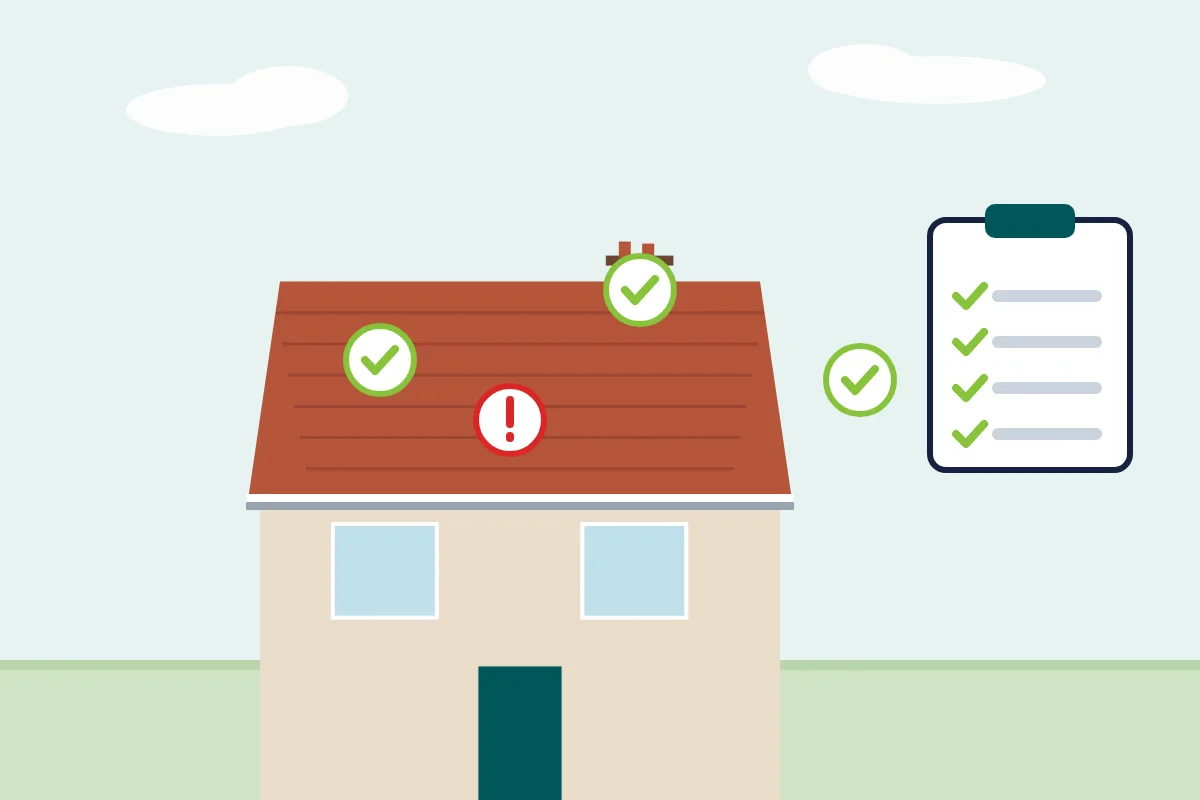
Findings are set out part by part, from the coverings down to the gutters, each with a short note and a photo. You will see the good as well as the bad.
- Location
- Hare Street (CM5)
- Wider area
- Essex
- Price
- From £150 inc. VAT
- Report
- Emailed report with photos and recommendations
- When we survey
- Weekdays and weekends
- Cover
- Professional indemnity and public liability
- Call
- 07833 053749
- Last updated
- 27 October 2026
Should I look at the roof myself first?
The one thing to avoid is getting up close. Roofs are fragile and slippery, and falls from height are serious. That part is for a survey, using safe viewpoints and a drone where applicable.
Your own check is a good start, but it is not a survey. From ground level, valleys, flashings and the backs of chimneys are frequently out of sight.
FAQs for Hare Street
Do you carry out roof surveys in Hare Street?
We do. Every survey there gets the same written report with photographs, and visits run on weekdays and weekends.
Is Hare Street within the area you cover?
Yes, we do. We work right across London and the South East, from towns to the smallest villages. The journey is planned ahead, so it’s useful to know about access.
Are you insured?
We are covered by professional indemnity and public liability insurance, for every survey we carry out.
Does someone need to be in?
If the survey includes the loft or the inside of the building, someone needs to let us in. Access is agreed with you as you book.
Is snagging available for a new-build house roof?
Yes. We inspect the roof as far as it can be seen safely and photograph what we find. Book before the defects period runs out if you can.
Is this an asbestos survey?
No. Asbestos surveys and testing are not part of what we do. We flag materials that could contain asbestos, such as cement sheets or soffits on pre-2000 buildings and suggest a specialist asbestos surveyor checks them before any work.
What if it rains on the day?
Light rain is normally fine; heavy rain and wind are different. In strong wind or a downpour, a drone can’t fly and access may not be safe, and we’d agree another day.
Practical tips
A little preparation and a few simple habits help, both for the survey and for the roof itself. Our tips:
- Put any issues to your roofer in writing
- Check the roof before you pay in full
- Check lower roofs and walls after scaffolding comes down
- Watch for gutters overflowing in rain
After the snags are sorted, watch the roof in the next heavy rain. If anything shows, tell your roofer straight away.
Put the warranty or defects period end date in your diary. Book a check well before it so snags can be raised.
New roof snagging around Hare Street
Historic houses like Hill Hall, about 3 miles west, show how far back building in the area around Hare Street goes. Older roofs in the wider area can hide decades of patch repairs, so the detail matters, and the council can say whether a home is in a conservation area. Weatherboarded walls and clay tile roofs are typical of older Essex buildings, with post-war and more recent estates making up much of the newer housing. Whether you are buying or checking new roofing work, knowing the materials helps make sense of what the inspection finds.
Hare Street is about 5 miles north-west of Brentwood, in Essex. We survey roofs in Hare Street and the surrounding area as part of our work across London and South East England. Across Essex, we cover Hare Street and the places around it. Our Chelmsford page covers surveys nearby.
Surveys in CM5 are booked the same way as anywhere else. If you are just outside Hare Street, we cover Little End (1 mile north-east), Stanford Rivers (1 mile north), Clatterford End (1 mile north-west), Marden Ash (2 miles north-east) and Navestock Heath (2 miles south). Further out, we also cover Chelmsford (12 miles east), Basildon (13 miles south-east), Harlow (8 miles north-west), Brentwood (5 miles south-east), Billericay (9 miles east) and Loughton (7 miles west).
Local landmarks in Hare Street
Typical jobs here are in homes near The Woodman Public House and the streets around them. A little further out are St. Margaret's Hospital (4.6 miles north-west). The countryside around Hare Street includes Gernon Bushes.
Honest limits
No survey can tell you everything, and we’d rather be clear about that before you book. Bear these in mind:
- A promise that the roof will not leak
- Details hidden from sight
- Pricing the remedial work
If in doubt, phone 07833 053749 or send us an email and we’ll suggest the right survey before you book. What a survey covers and does not.
Roof types and parts we check
- Ridges and verges
- New flat roofs
- New-build homes
- Replacement roofs
- Loft conversions and dormers
- Flashings and valleys
Places near Hare Street
Also in Hare Street
Common roof problems in Hare Street
Even good roofers can leave snags at the end of a job. Details at ridges, verges and flashings are easy to rush, especially when the weather is against them.
Look out for signs like these:
- Broken coverings left on a new roof
- Gutters blocked by building debris
- Underlay at the eaves left exposed
- Verge tiles or slates not secured
Take an older house close to Church of St Margaret of Antioch: the roof may have had decades of patch repairs, and the survey shows where they are.
Questions to ask before you book
- How they plan to inspect the roof safely
- Whether the loft space is looked at, where there is one
- How much experience they have with roofs like yours
- How soon the report will arrive
What happens on the day
We don’t take risks to get a closer look. Everything that can safely be seen is inspected, and anything we cannot see is noted in the report. The survey usually takes between one and two hours on an ordinary house, or half a day or so for a commercial building. For a village or hamlet like Hare Street, the journey is planned in advance: tell us about narrow lanes, gates, long drives and where we can park. The roof is looked at from the ground, from windows, from the loft where there is safe access and from the roof where it’s safe.
- We start by finding out what was replaced and what worries you.
- We look at the tiles or slates, ridges, hips and verges from safe vantage points.
- Flashings, valleys, gutters and visible underlay at the eaves are checked.
- We look in the loft space, where there is safe access, and around the property for debris or damage.
- We send a written report with photographs of each snag.
Getting ready for the survey
- Have any paperwork from past roof work to hand
- Have keys ready for side gates, garages or roof access doors
- If you are buying, let the agent know when we are coming
Arrange a survey
If you are buying, it helps to book soon after your offer is accepted, so you have the findings in time to act on them before you exchange. Otherwise, simply ring 07833 053749 or drop us an email whenever suits you.
Related advice
What we look for on each type of roof
Slate roofs
Natural slate can last 100 years or more, so the laying matters. We look for slipped, cracked or uneven slates.
Underlay and ventilation
We look in the loft space, where there’s safe access, at the underlay and ventilation.