
Hampshire · London and the South East
New Roof Snagging in Hawkley
Know where you stand with the new roof before you spend money on it. We carry out new roof snagging in Hawkley, with photos and a clear written report.
- Gaps at new flashings
- Gutters blocked by building debris
- Underlay at the eaves left exposed
Practical tips
Some practical points come up on survey after survey. They apply to most roofs:
- Check before your warranty period ends
- Check ceilings and the loft after heavy rain
- Agree snagging with your roofer at the start
- Check lower roofs and walls after scaffolding comes down
Your roofer can use the report to put the snags right. If there’s a dispute, it is between you and your roofer or builder; we report on what we see.
Keep the final payment until the roof has been checked if your contract allows it. It keeps the job open until it’s right.
New roof snagging in Hawkley: what you get
Snagging means finding the small faults and loose ends left at the end of a job. Roof snags often show at ridges, verges, valleys and flashings where the work is most fiddly. We inspect as far as can safely be seen and record what we find. Loose ridges, untidy verges, badly dressed flashings and leftover debris are typical snags. If you’ve noticed gutters blocked by building debris and cracked lower roofs or marked walls after the work, a survey will tell you what’s going on.
Somewhere as small as Hawkley, older cottages, farmhouses and converted buildings frequently sit beside a few newer homes. Older roofs there may have clay tiles, slate, stone or, in some places, thatch. Whether you’re buying or have just had a roof replaced, each material has its own checks, and thatch is a specialist material, so we report on what can be seen. Older roofs may also have old felt underlay or none, and fixings that have done a long stint.
We keep jargon out of it: where something needs attention, it says so plainly, and where it can wait, that is said too.
- Where
- Hawkley (GU33)
- Region
- Hampshire
- Prices
- From £150 inc. VAT
- Reports
- Written, with photos, emailed to you
- When we survey
- Weekdays, Saturdays and Sundays
- Insured
- Professional indemnity and public liability
- Telephone
- 07833 053749
- Updated
- 27 October 2026
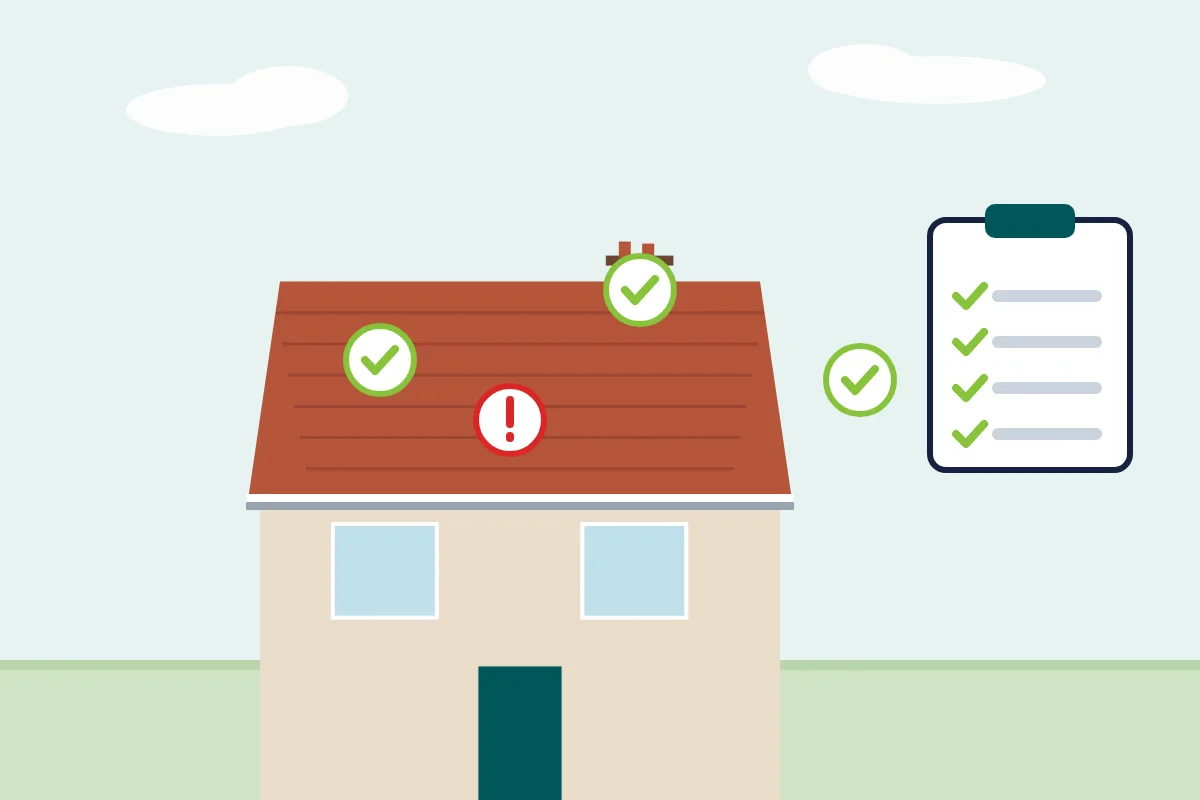
Different roofs, different checks
Underlay and ventilation
We look in the loft space, where there is safe access, at the underlay and ventilation.
Ridges, hips and verges
Ridges, hips and verges take the most weather. Bedding, dry-fix pieces and fixings are looked at where visible.
Your questions about new roof snagging in Hawkley
Does a conservation area affect roof work in Hawkley?
The council and Historic England’s list are the places to check. It is worth checking before planning roof work, as both can affect what’s allowed.
Will you come out to Hawkley?
Yes. Hawkley is within the area we cover, which takes in towns, villages and rural addresses. Our area covers London and the South East. Just mention lanes, gates or anything else about the route when you book.
Which parts of the roof does snagging cover?
Everything we can see safely, including ridges, verges, valleys, flashings, vents and gutters. The loft space is checked where there’s safe access, and we note any mess or damage left after the work.
Can you tell me if my roof has asbestos?
No. We don’t carry out asbestos surveys or testing. We flag materials that could contain asbestos, such as cement sheets or soffits on pre-2000 buildings, and recommend a specialist asbestos surveyor checks them before they’re disturbed.
How long will you be on site?
A visit typically takes roughly 1–2 hours for most houses; commercial roofs usually need 3–4 hours. We’ll give you an idea as you book.
What insurance do you have?
Our cover is professional indemnity plus public liability, and details are available on request.
Can you see the fixings under the tiles?
No. We don’t open up the new roof so hidden fixings aren’t visible to us. We note what couldn’t be seen.
What affects the price in Hawkley
All our prices include VAT. The things that change the price are:
- The number of roofs, including extensions and garages
- The package you choose: Basic, Standard or Premium
- The shape of the roof and its details
- Height and safe access
There are three survey packages: the Basic Survey from £150, the Standard Survey from £250 and the Premium Survey from £400, all with VAT included. What your roof costs depends on its size, access and what you want to find out.
Helping us price your survey
Here’s what helps us most when you get in touch:
- What’s prompted the survey
- Any photos you have, taken from ground level or a window
- Where any leaks, stains or damp patches show inside
- Your postcode, so we can check access and travel
Surveys can be booked for weekdays, Saturdays or Sundays. To arrange a day that suits you, phone 07833 053749 or drop us an email with the address and the days you’d prefer.
What we are asked to look at in Hawkley
Ventilation is sometimes missed or blocked during re-roofing. Without enough airflow, condensation can build up in the loft space.
These are some of the problems a survey can pick up:
- Cracked or slipped new tiles or slates
- Gaps at new flashings
- Offcuts and broken tiles left behind
- Cracked mortar at the ridge or hips
The streets around a church such as Church of St Peter and St Paul are often among the oldest in a place, and if you own one of the older houses nearby, a survey will show how the roof has been repaired before, which helps you judge what’s coming.
Questions to ask before booking
- Their report turnaround times
- What the report includes, and whether it has photographs
- Whether VAT is added on top
- How much experience they have with roofs like yours
Local roofs and buyers in Hawkley
A number of Hampshire villages keep thatched roofs on their older buildings. In this part of the South East, older roofs are mostly slate or clay tile and many newer ones concrete tile. For a purchase or a newly finished roof, the materials decide which details matter most. There are about 500,000 buildings on England’s list of listed buildings, and around 10,000 conservation areas. Listed building consent is needed for changes that affect a listed building’s special interest, and conservation areas can limit changes of roofing material, so the council is the place to ask.
For landlords with property near Liss station, it is worth knowing a roof’s condition before you buy it, or before you sign off new roofing work on it.
Hawkley is about 4 miles north of Petersfield, in Hampshire. Anywhere in Hawkley, we can carry out new roof snagging at your property. Hawkley is one of the towns and villages in Hampshire where we work. You can also see our page for Portsmouth.
We cover every part of GU33 for new roof snagging. Other places close to Hawkley include Lower Green (1 mile north), Oakshott (1 mile south-west), Empshott (2 miles north), Steep Marsh (2 miles south) and Steep (2 miles south). We also work in nearby towns like Havant (14 miles south), Horndean (11 miles south), Aldershot (15 miles north-east), Alton (7 miles north), Waterlooville (13 miles south) and Petersfield (4 miles south).
What’s near Hawkley
We work in homes and buildings around Hawkley Inn, among other places. For rail, the closest station is Liss station, roughly 2.1 miles south-east of the centre. Well-known places in the area include The Romany Museum (2.7 miles north) and Petersfield Community Hospital (3.6 miles south). The countryside around Hawkley includes Wheatham Hill and Liss Riverside Railway Walk South.
The survey, step by step
The visit has one job: to see as much of the new roof as can be seen safely and record it clearly. Everything we note and photograph goes into the written report. The visit normally takes between one and two hours for a typical new house roof, longer where the roof is large or complicated. For a village or hamlet like Hawkley, the journey is planned beforehand: tell us about narrow lanes, gates, long drives and where we can park. The roof is looked at from the ground, from windows, from the loft where there’s safe access and from the roof where it’s safe.
- We agree what to focus on, such as a payment date or a warranty period ending.
- We inspect as far as safe access allows.
- Each detail at ridges, verges, valleys and flashings is looked at.
- We check the gutters, lower roofs and walls for debris or damage.
- You receive a report to share with your roofer.
How to prepare
- Clear the way to the loft hatch
- Show us where any leaks or stains appear
- Gather any invoices or paperwork from past roof work
How to book
If you are buying, it helps to book soon after your offer is accepted, so there is time to use the report before exchange. Otherwise, simply call 07833 053749 or use the contact form whenever suits you.
Advice
DIY checks: what’s safe
Look up at the roof after a storm, from the ground: broken slates or tiles in the garden, gaps along the ridge or loose lead are signs to note. Leave anything above ground level to a survey.
It’s useful to keep a record: dates of leaks, photos from ground level and any work done on the roof. Send it with your enquiry, as it helps us focus the survey.