
Kent · London and the South East
New Roof Snagging in Stone Street
Not sure what state the new roof is in? You can book new roof snagging in Stone Street and across Kent, with plain-English findings.
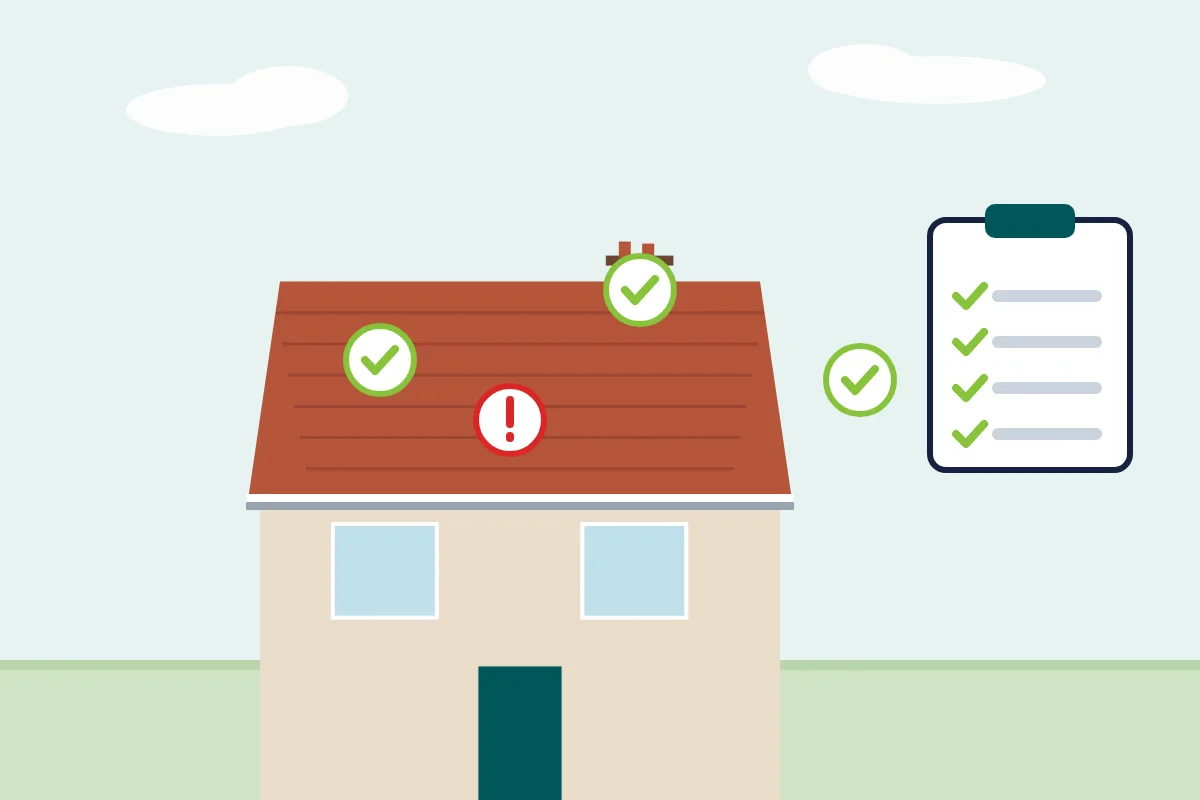
- Tiles or slates sitting out of line
- Poorly finished verges
- Cracked lower roofs or marked walls after the work
How new roof snagging works in Stone Street
People book us after having a roof replaced or re-covered, and buyers of new-build homes sometimes want the roof checked. Whatever the roof, we inspect as far as it can safely be seen, from the ground, vantage points, the loft space and the roof where safe. A photo report follows, ready to share with your roofer or builder. If you’ve noticed broken coverings left on a new roof and damage to other parts of the building, a survey will tell you what’s going on, on flashings and valleys, new flat roofs and ridges and verges alike.
Older buildings in small places like Stone Street may be listed or in a conservation area. If so, re-roofing in different materials may need consent, so check with the council before work starts. For a buyer or someone with a newly finished roof, it is worth knowing which applies. There are about 500,000 listed buildings and around 10,000 conservation areas in England.
Nothing in the report is left vague: if work is needed, the report says so clearly, and where it can wait, that’s said too.
- Place
- Stone Street (TN15)
- Wider area
- Kent
- Cost
- From £150 inc. VAT
- Your report
- Emailed report with photos and recommendations
- Appointments
- Monday to Sunday, daytime
- Insured
- Professional indemnity and public liability
- Call
- 07833 053749
- Page updated
- 27 October 2026
What we look for on each type of roof
Slate roofs
Good natural slate is very long-lasting, so the laying matters. Cracked, slipped or uneven slates are noted.
Flashings
Poorly finished flashings often show up on new roofs. They’re recorded with photos.
The survey, step by step
Where it’s relevant and can be reached safely, the roof space is checked as well as the outside. Inside, we look for staining, damp, gaps and signs of movement. All in, the survey typically takes between one and two hours for a house, and longer for a large or complex roof. For a village or hamlet like Stone Street, the journey is planned in advance: tell us about narrow lanes, gates, long drives and where we can park. The roof is looked at from ground level, from windows, from the loft where there’s safe access and from the roof where it’s safe.
- First, we note any deadlines and concerns.
- We inspect as far as safe access allows.
- We work through ridges, verges, valleys and flashings.
- We check the gutters, lower roofs and walls for debris or damage.
- You receive a report to share with your roofer.
Preparing for the visit
- Dig out any old roof reports or invoices
- Clear the way to the loft hatch
- Jot down any questions you want answered
How to book
Our phone lines are open seven days a week, including Saturdays and Sundays. For a price or to book, ring 07833 053749 or email us.
Related advice
Can I check my roof myself?
You can learn a lot from ground level. With binoculars, look for slipped or missing slates and tiles, gaps along the ridge and leaning chimneys. Never climb onto the roof to look.
After heavy rain, check ceilings and the tops of walls for new stains. Take a photo and write down when you saw it.
Leave it or get it looked at?
Small faults on a new roof can grow. A slipped verge tile or a loose flashing may let water through during the first winter. Finding them early means they can be dealt with quickly. Around Stone Street, older homes frequently have old roof timbers, and water through a failed covering can rot timber if it’s left.
Prices quoted always include VAT, and the report isn’t charged as an extra. Our price is from £150, including VAT. Size, height and access decide where your roof falls.
Why choose Independent Roof Survey in Stone Street
- PI and public liability insurance
- Prices that include VAT
- Drones and thermal imaging where it applies
- Weekday and weekend surveys
Stone Street homes and their roofs
Historic houses such as Ightham Mote, about 1.1 miles south-east, show how far back building in the area around Stone Street goes. Period homes nearby can have lead valleys, tall chimneys and a patchwork of past repairs, and any change of roofing material on a listed home needs checking with the council first. Older houses across Kent often have handmade clay or peg tiles, and many have tile-hung walls. You will also find oast houses and timber-framed Wealden hall houses among the county’s older buildings. Material and age explain a lot of what turns up on the day, whether the roof is old or brand new.
If you let a flat or house near Kemsing station, the roof is worth checking before you add another property to a portfolio or pay a roofer in full. If you live in an older home near St Lawrence, the roof may have had decades of patch repairs, and the survey shows where they are.
Stone Street is about 3 miles east of Sevenoaks, in Kent. We survey roofs in Stone Street and the surrounding area as part of our work across London and South East England. Stone Street is one of the places in Kent we cover. We also survey roofs in Maidstone.
Every address in TN15 is within our area for new roof snagging. If you need new roof snagging at a property on Church Road, Stone Street Road and Pond Lane or a nearby road, we can help. Neighbouring places we cover for new roof snagging include Bitchet Green (1 mile south-west), Ivy Hatch (1 mile east), Styants Bottom (1 mile north), Godden Green (1 mile west) and Ightham (1 mile north-east). Further out, we also cover Maidstone (12 miles east), Dartford (12 miles north), Sevenoaks (3 miles west), Royal Tunbridge Wells (9 miles south), Gravesend (12 miles north-east) and Tonbridge (5 miles south).
Around Stone Street
We work in homes and buildings around Sevenoaks Preparatory School, Ivy Hatch Nature Reserve and The Plough pub. For rail, the closest station is Kemsing station, roughly 1.9 miles north. Nearby you’ll also find Ightham Court (2.2 miles north-east) and Sevenoaks Hospital (2.8 miles north-west). For a walk, there’s Dryhill Nature Reserve.
Places near Stone Street
Other services in Stone Street
What affects the price in Stone Street
To price your survey, we check:
- Height and safe access
- The number of roofs, including extensions and garages
- The use of thermal imaging or a drone
- The package you choose: Basic, Standard or Premium
The Premium Survey includes thermal imaging and drone inspection where applicable, which starts from £400, with VAT included. We’ll tell you which package suits the questions you have.
What to tell us when you get in touch
Some details help us point you to the right survey and price. When you contact us, it’s useful to mention:
- Any deadline, such as an exchange date
- Anything about access we should know
- The type of building and roof, like pitched or flat
- Your postcode, so we can check access and travel
If you are buying, it helps to book soon after your offer is accepted, so you have the findings in time to act on them before you exchange. Otherwise, simply ring 07833 053749 or drop us an email whenever suits you.
Stone Street: your questions answered
Do you cover Stone Street?
Yes, Stone Street is within the area we cover. Our area covers London and South East England. Just phone 07833 053749 or send us an email and let us know about the property, and we will talk through which survey suits.
Do you cover smaller places like Stone Street?
Yes, Stone Street is on our map. Villages and rural addresses get the same survey as a town house, with the route planned beforehand.
Do I need to be at home?
Not always. If we only need the outside, we can agree that ahead of time, but the loft and any rooms with damp need someone to let us in.
What do you check on a new roof?
All the parts of the roof we can see safely, including ridges, verges, valleys, flashings, vents and gutters. The loft space is looked at where there’s safe access and check for damage left by the job.
How long will you be on site?
A visit typically takes between one and two hours for most homes, depending on how much new work there is to check. We will give you an idea as you book.
How long have you been surveying roofs?
Over 5,000 surveys so far, over more than 20 years.
Is snagging available for a new-build house roof?
Yes, the inspection works the same as for a re-roof. You get a photo report of any snags for you to pass to your builder.
Practical tips
Some practical points come up on survey after survey. They’re worth knowing whatever the roof:
- Watch for gutters overflowing in rain
- Keep the contract and invoices together
- Check before your warranty period ends
- Check ceilings and the loft after heavy rain
After the snags are sorted, watch the roof in the next heavy rain. If anything shows, tell your roofer straight away.
Tell your roofer at the start that the work will be inspected. It sets clear expectations and leaves time for snags to be fixed.