
Kent · London and the South East
Roof leak investigation in Chestfield, Kent
Roof leak investigations around Chestfield, with findings in writing and pictures to back them up. Book a weekday or weekend visit.
- Damp ceilings under a flat roof
- Ceiling stains that grow after rain
- Damp on a chimney breast
What happens on the day
The visit typically starts outside and finishes in the loft: first the slopes, edges and gutters from every safe viewpoint, then the loft space where it can be reached. In total, it takes between one and two hours, more where the leak is intermittent or the roof is large. In a small place like Chestfield, access is usually the main thing to plan. Mention any outbuildings, barns or garages you want included, and anything about the roof you already know. Weekday and weekend visits are available.
- We start with your notes and photos of the leak.
- We examine the damp area and the rooms near it.
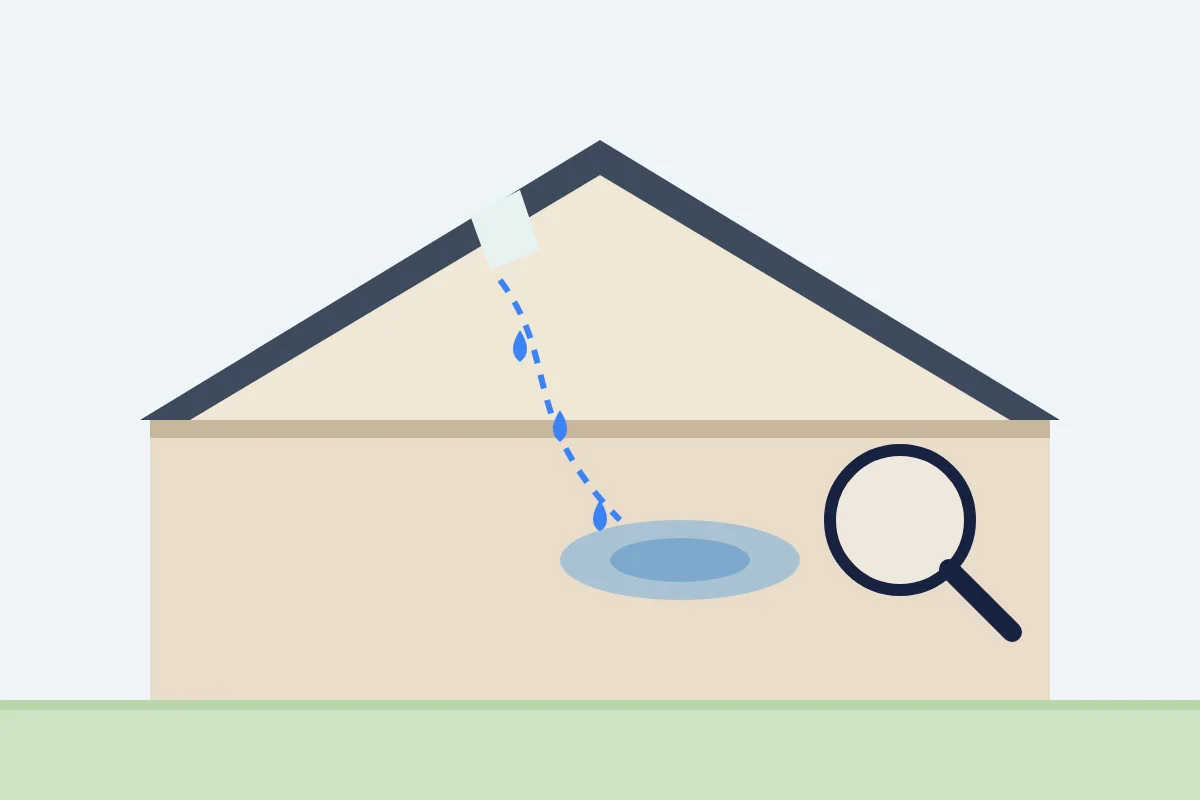
- From the roof space, we trace the water’s route where there’s safe access.
- Outside, we check flashings, valleys, chimneys, gutters and flat roof details from each safe vantage point.
- We email a written report showing where the water most likely gets in.
How to prepare
- For a flat or shared roof, check access with whoever owns or manages the building
- Have any questions written down, so nothing gets missed
- Note where any stains or damp appear
Book a survey
Getting a price is simple: just phone 07833 053749 or send us an email and give us some details about the property and we will recommend the right survey. The price is agreed up front.
Read more
Roof leak investigation in Chestfield
Flat roofs leak in their own ways. Splits, blisters, failed laps, worn upstands and blocked outlets are common causes. Ponding water makes any weakness worse. We check both the covering and the room underneath to narrow it down. Leaks under flat extension, garage and dormer roofs are common. Felt often lasts around 15 to 20 years, so age is part of the picture. We survey the roof space, rooflights and dormers and chimney stacks, and the problems we’re asked to look at most are wet patches high on an inside wall and ceiling stains that grow after rain.
Roofs in small places like Chestfield often stand in the open, so storms hit ridges, verges and chimneys hard. Damp in old stone, brick or timber walls is slow to dry out, which makes finding the cause quickly worthwhile. A written record also helps if you need to explain it to anyone else.
It isn’t only a list of defects. For each finding, it explains what it is, why it matters and what we’d recommend, so you can plan your next steps.
- Where
- Chestfield (CT5)
- Region
- Kent
- Price
- From £150 inc. VAT
- Your report
- A written report with photos, by email
- Survey days
- Weekdays, Saturdays and Sundays
- Insurance
- Professional indemnity and public liability
- Telephone
- 07833 053749
- Last updated
- 27 October 2026
Should I look at the roof myself first?
Look up at the roof after a storm, from ground level: broken slates or tiles in the garden, gaps along the ridge or loose lead are signs to note. Leave anything above ground level to a survey.
Watch the gutters in a downpour, from a window or the ground. Water spilling over the edge can be a sign of a blockage or a gutter that has dropped.
Common roof problems in Chestfield
A gutter that overflows can soak a wall and mark the ceiling inside. Parapet and box gutters are the worst for this, since a blocked outlet sends water over the lining and into the building.
These are some of the problems a survey can pick up:
- Leaks at a dormer or roof window
- Staining around the chimney inside
- Damp underlay across a wide area
- Leaks below a flat extension roof
Take an older house close to Church of St John the Baptist: water on an older roof tends to find its way in at the lead, the valleys or the chimney.
Questions to ask before you book
- What experience they bring
- Is there a chance to talk the report through?
- What’s outside the scope of the survey
- Is VAT included in the price?
Tips from our surveys
These tips come from what we see on roofs every week, before and after a survey:
- Leave roof access to professionals
- Take dated photos of the leak
- Check whether pipes or tanks run near the stain
- Protect furniture and flooring under the leak
We email the report to you, with photographs of what we found. It sets out where we believe the water is getting in, how it’s travelling and what needs attention. Turnaround is within 48 hours for Basic, 24 to 48 hours for Standard and the same day for Premium.
Keep the loft space ventilated. Good airflow reduces condensation, and condensation is a common false alarm. Make sure insulation doesn’t block airflow at the eaves.
Landlords, agents and block managers in Chestfield
Letting agents can arrange access with tenants. Surveys run on weekdays, Saturdays and Sundays, which can make access easier.
Landlords and agents in Chestfield book surveys as well as householders. The report gives you a dated record of the leaking roof, with photographs.
Roof leak investigations in Chestfield: local notes
The coast is about 1 mile or less from Chestfield, so there is more wind and more salt in the air than further inland. Wind lifts loose slates, tiles and ridge pieces, and driving rain finds any gap they leave, and salt air slowly wears metal fixings. Many older homes in Kent have handmade clay tiles, including Kent peg tiles held by pegs through two holes, and tile-hanging on their upper walls. Kent’s older buildings take in oast houses and timber-framed Wealden hall houses as well. Different coverings let water in at different points, which shapes where the search starts.
If you let a flat or house near Chestfield & Swalecliffe station, a clear finding on where water gets in helps you brief a roofer right away. If you look after a building like Swalecliffe Community Primary School, on a building that size, finding the source of a drip means looking well beyond the stain.
Chestfield is about 1 mile east of Whitstable, in Kent. We carry out roof leak investigations in Chestfield for houses, flats, blocks and commercial buildings. Across Kent, we cover Chestfield.
Surveys in CT5 are booked the same way as anywhere else. If you need a roof leak investigation at a property on Maydowns Road, Chestfield Road and Woodvale Avenue or a nearby road, we can help. With the A2990 close by, Chestfield is simple for us to get to. If you’re just outside Chestfield, we cover Swalecliffe (1 mile north), Tankerton (1 mile north-west), Radfall (1 mile south), West End (1 mile east) and Whitstable (1 mile west). Within a short drive, we also cover Canterbury (5 miles south), Margate (14 miles east), Sittingbourne (14 miles west), Ramsgate (15 miles east), Faversham (8 miles west) and Herne Bay (3 miles east).
Local landmarks in Chestfield
We work in homes and buildings around The Plough pub and The Whitstable School, among other places. Chestfield has its own railway station: Chestfield & Swalecliffe station. Other landmarks nearby include Whitstable and Tankerton Hospital (0.7 miles north-west) and Tankerton Castle (1.4 miles north-west). For a walk, there’s West Blean and Thornden Woods.
Chestfield: your questions answered
Is my home in Chestfield listed or in a conservation area?
You can check whether a building is listed on Historic England’s list, and your council can tell you if it’s in a conservation area. Listed building consent is needed for changes that affect a listed building’s special interest, and conservation areas can limit changes of roofing material.
Does being near the coast affect roofs in Chestfield?
Generally, yes: wind and salt air take more of a toll near the sea. Ridges, verges, flashings and fixings are where it normally shows, and Chestfield is within about 1 mile of the coast.
Do you look in the loft space?
If it is needed and safe to reach, yes. Inside, we look for damp, staining, gaps and sagging, as far as the space allows.
Is it a structural engineer’s report?
No. We point out what can be seen, like sagging or deflection, but we do not carry out calculations or give an engineer’s opinion. If we think you need an engineer, the report says so.
What happens after the survey?
The report comes by email, and what you do next is up to you: use it with a seller, an insurer, a roofer or a managing agent.
How do you tell a leak from condensation?
Many apparent leaks turn out to be condensation. A leak normally shows in one area and follows rain, while condensation is frequently spread out and worse in cold weather. The report explains which it looks like and what to do.
How long does the visit take?
On site, it usually takes about 1–2 hours for most homes, though a hard-to-trace leak can take longer. Report times depend on the package.
What affects the cost of roof leak investigations
To price your survey, we check:
- The height of the building and how the roof can be seen safely
- The number of roofs, including extensions and garages
- Chimneys, valleys, parapets and other details
- Which survey package you book
Prices start from £150, including VAT. The final price depends on how big and how high the roof is, how it can safely be seen and the package you choose.
Getting in touch
Getting the details right at the start saves time. It’s useful to include:
- Photos of the roof, taken safely from ground level or a window
- Dates you’re working to, such as exchange
- Why you want a survey: buying, a leak, a storm or new work
- The address and postcode of the property
Every survey is priced before it’s booked, so you know the cost up front. Roof leak investigation starts from £150, including VAT. For a price for your roof, call 07833 053749 or drop us an email.