
West Sussex · London and the South East
Roof Leak Investigation in Mackerel's Common
Roof leak investigations for homes and businesses in Mackerel's Common. We have completed more than 5,000 surveys across London and South East England.
- Water marks that spread in wet weather
- Water that shows only in certain storms
- Damp walls below an overflowing gutter
What happens on the day
Expect us to ask a few questions before we start, such as when any problem began and what work has been done before. Then the inspection itself takes about 1–2 hours, more where the leak is intermittent or the roof is large. For a village or hamlet like Mackerel's Common, the journey is planned in advance: let us know about lanes, gates and parking. The roof is looked at from the ground, from windows, from the loft where there is safe access and from the roof where it is safe.
- You pick a Basic, Standard or Premium Survey.
- A visit is booked for a weekday, Saturday or Sunday.
- We inspect inside and out, starting from the stain.
- Moisture detection and thermal imaging are used where your package includes them and they help.
- The report explains the likely entry point and what needs attention.
Preparing for the visit
- Let us know about parking near the property
- If it is not your property yet, arrange access through the agent
- Unlock side gates and any roof access doors
Booking a survey
Unsure which package suits your roof? The easiest way is to call 07833 053749 or use the contact form and describe the roof and why you want it surveyed. We will explain the options and the price.
Read more
About our roof leak investigation in Mackerel's Common
Leaks tend to begin where one part of a roof meets another. Flashings at chimneys and walls, valleys, gutters, parapets and flat roof upstands and outlets are the usual suspects. We check each likely route and we follow where the evidence leads. Chimneys, dormers and roof lights each add joints of their own. Each one is looked at from wherever it’s safe to see it. Typical surveys look at staining around the chimney inside and water coming in around a roof light or dormer, on the roof space, chimney stacks and rooflights and dormers.
Being in a small place like Mackerel's Common makes no difference to how a leak or storm damage is looked at: we simply plan the journey and access ahead. It’s useful to know where the water appears, in what weather, and what you’ve seen outside, plus any earlier repairs. Photographs of the stain and of the roof from outside are helpful too.
Every survey ends with a written report, with photographs, sent by email. It explains the condition of the leaking roof, the defects we found and what we recommend.
- Where
- Mackerel's Common (RH14)
- Region
- West Sussex
- Prices
- From £150 inc. VAT
- Your report
- Written, with photos, emailed to you
- When we survey
- Monday to Sunday, daytime
- Cover
- Professional indemnity and public liability
- Phone
- 07833 053749
- Last updated
- 27 October 2026
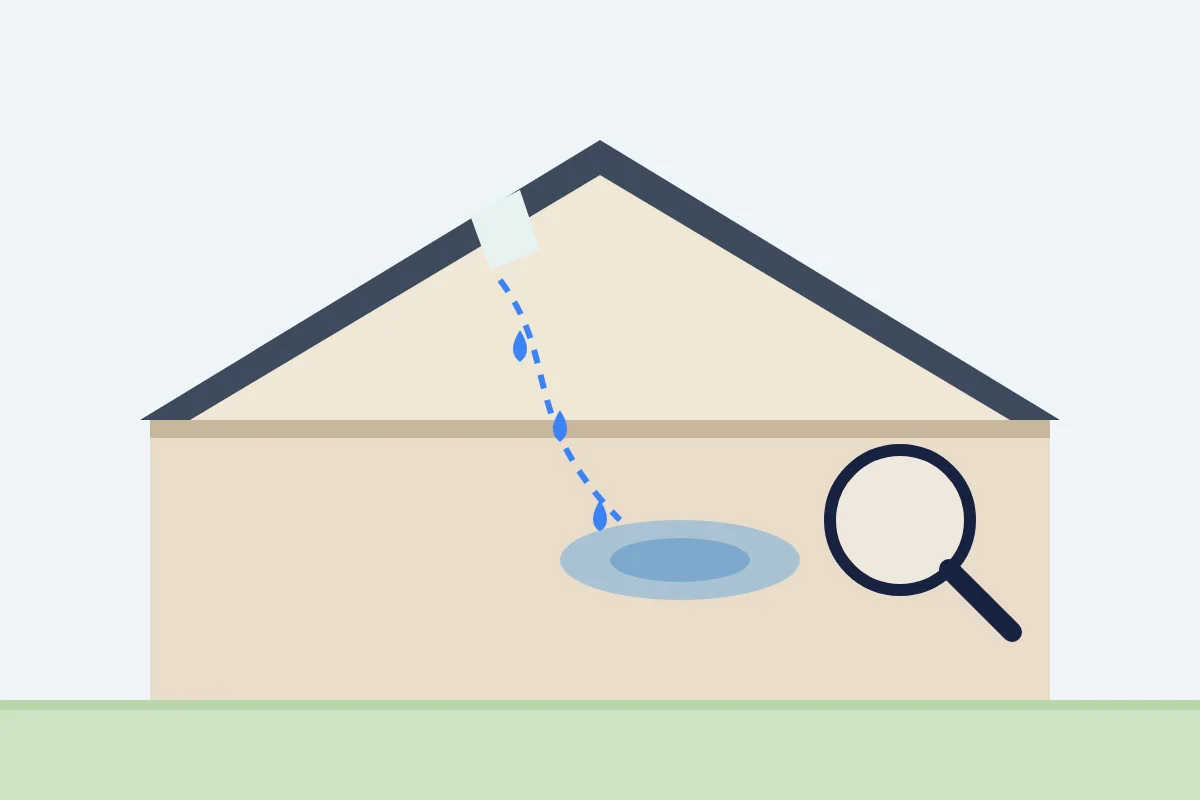
Wind, rain and roofs in Mackerel's Common
In Sussex, older roofs are often handmade clay tile, frequently with tile-hanging on the walls below. Horsham stone slab roofs survive on some old Sussex buildings. Each of these roof types has its own typical places for water to get in. Historic houses like Petworth House, about 4.6 miles south-west, show how far back building in the area around Mackerel's Common goes. Older roofs in the wider area can hide decades of patch repairs, so the detail matters, and any change of roofing material on a listed home needs checking with the council first.
For landlords with property near Billingshurst station, finding the cause of a leak fast keeps a tenant’s home dry and the work focused.
Mackerel's Common is about 10 miles west of Horsham, in West Sussex. In Mackerel's Common, as across West Sussex, every roof gets the same careful survey. Mackerel's Common is one of the towns and villages in West Sussex we cover. Guildford is in our area too.
All of RH14 is covered for roof leak investigations. If you’re just outside Mackerel's Common, we cover Kirdford (1 mile south), Plaistow (2 miles north), Ifold (2 miles north), Balls Cross (2 miles south-west) and Wisborough Green (2 miles south-east). Larger places within reach include Horsham (10 miles east), Broadfield (15 miles east), Storrington (9 miles south-east), Billingshurst (5 miles east), Bewbush (15 miles east) and Angmering (15 miles south).
Local landmarks in Mackerel's Common
For rail, the closest station is Billingshurst station, roughly 4.8 miles south-east of the centre. Open spaces near Mackerel's Common include The Mens and Shillinglee Lake.
Mackerel's Common questions
How do I find out if my home in Mackerel's Common is listed?
You can check whether a building is listed on Historic England’s list, and your council can tell you if it’s in a conservation area. If a home is listed, changes that affect its special interest need listed building consent, and in a conservation area re-roofing in different materials may need permission.
Will you come out to Mackerel's Common?
Yes, we do. We work right across London and the South East, and smaller places are part of that. The journey is planned ahead, so it helps to know about access.
How soon will I get the report?
Basic reports arrive within 48 hours, Standard reports in 24–48 hours and Premium reports on the same day. Each one is emailed, ready to forward.
Will you check the loft?
Normally, if there is one and it can be reached safely. The loft space can show things the outside can’t, such as damp timbers, staining or daylight.
Do I have to be there for the survey?
Not necessarily. An outside-only look can be arranged beforehand, but the loft and any rooms with damp need someone to let us in.
Will you fly a drone over my roof?
Where it helps and the rules allow, yes. Our sub-250g drone is flown by a CAA-registered operator with a Flyer ID and Operator ID, and every flight depends on the airspace and the weather.
Do you use thermal imaging to find leaks?
Where conditions suit, it can. The best results come after a sunny day, on a dry roof with little wind. Wet insulation holds heat longer than dry, which can show up on the image. Its findings are confirmed with a moisture check.
Tips that help
Getting the most from a roof leak investigation starts before we arrive and carries on afterwards. Tips:
- Let us know what has already been tried
- Don’t climb onto the roof to look
- Record whether it leaks in every downpour or only some
- Clear the loft hatch so we can get in
If the leak turns out to be condensation, the report says so, and suggest how the loft space could be better ventilated. That avoids roof work that wouldn’t help.
Keep the loft space ventilated. Good airflow reduces condensation, which is frequently mistaken for a leak. Keep insulation clear of the eaves.
Towns and villages near Mackerel's Common
What else we do in Mackerel's Common
When you need someone else
Without opening up the roof, some things stay hidden, so a survey has limits:
- Leaks that only appear in weather we can’t recreate
- Leaks from plumbing, tanks or pipework rather than the roof
- Putting the leak right
If in doubt, ring 07833 053749 or send us an email and we’ll point you to the right survey before you book. What a survey covers and doesn’t.
What this survey covers
- Slate and tile slopes
- Lead flashings
- Chimney stacks
- Flat roof details
- Valleys and parapet gutters
- Rooflights and dormers
- The roof space
For landlords and managing agents
Where a roof is shared: we need access agreed with the building owner or managing agent. Tell us about it when you book and we’ll plan the survey around it.
Letting agents can arrange access with tenants. We survey on weekdays and at weekends, which helps when tenants work during the week.
Signs you need a roof leak investigation in Mackerel's Common
Slipped or missing slates and tiles let rain reach the underlay. Old bitumen felt may cope for a while, but it tears and sags with age, while some very old roofs have nothing under the coverings. Corroded nails, known as ‘nail fatigue’, are a frequent cause on slate roofs.
Things that frequently lead to a survey include:
- Damp patches next to the stack
- Staining where a gutter or parapet meets the wall
- Drips in the loft during heavy rain
- Water marks that spread in wet weather
Take an older house close to The Parish Church of St John the Baptist: old mortar, worn lead and slipped slates are the usual suspects when water gets in.
Choosing a roof surveyor
- Which limits apply to the survey
- Whether you get a written report with photos
- Whether VAT is in the quoted price
- How soon the report will arrive
Why act early in Mackerel's Common
Guesswork repairs are a common reason leaks keep coming back. The real way in may be a metre or more away. An investigation finds the likely cause first. Matching old materials, like handmade tiles or stone slates, can take time to source. Spotting a problem early leaves room to find them.
Price depends partly on the package: Basic from £150, Standard from £250 or Premium from £400, all with VAT included. Size, height and access can affect the price too.
Why us?
- Weekday and weekend surveys
- More than 20 years surveying roofs
- Drone flown under a CAA Flyer ID and Operator ID
- Drone and thermal imaging surveys available
Take a look at how roof surveys are priced and what we found on two real jobs.