
Hampshire · London and the South East
Lower Farringdon Storm Damage Roof Report
Storm damage roof reports across Lower Farringdon, with over 20 years’ experience behind it. You get a clear report with photos.
- Broken or displaced guttering
- Ridge tiles that have come loose
- Slipped or missing slates or tiles
How a storm damage roof report works in Lower Farringdon
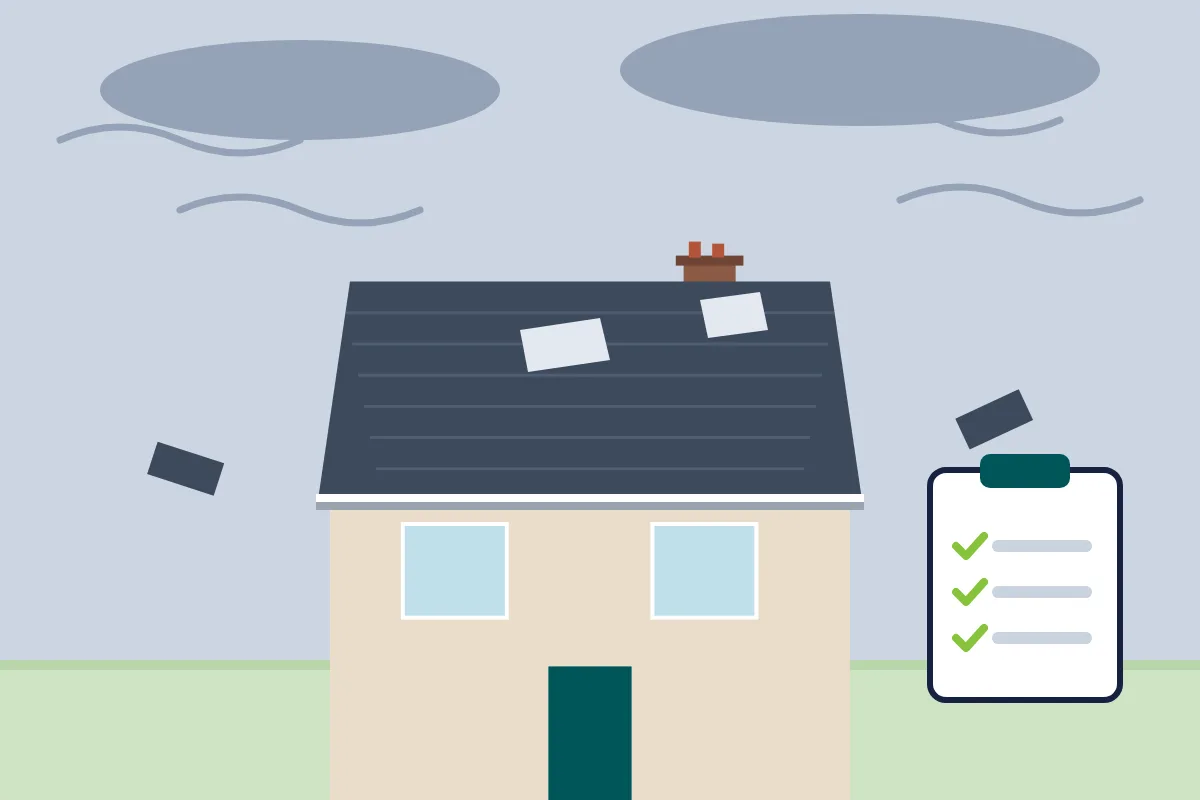
What counts as a storm depends on your policy, though many use gusts of about 55 mph. Check your own policy wording. We do not decide whether a storm met that test. We record the damage and what seems to have caused it. The report includes photos of each area of damage, and you decide what to send. Insurers decide claims on their own policy wording. If you’re worried about damaged ridges and hips and flashings pulled away from walls or stacks, a survey will tell you what’s going on, on gutters and fascias, flat roofs and flashings alike.
Many homes in small places like Lower Farringdon face open ground, where storms hit ridges, verges and chimneys hardest. Once water gets into older walls, it takes a long time to dry, which makes finding the cause quickly worthwhile. A record with photographs is useful if you need to show the damage to anyone else.
We write the report in plain English, so it makes sense without any roofing background. Each point is backed by a photograph where possible, and recommendations are put by urgency where it matters.
- Location
- Lower Farringdon (GU34)
- Region
- Hampshire
- Prices
- From £150 inc. VAT
- Your report
- Written, with photos, emailed to you
- When we survey
- Weekdays and weekends
- Cover
- Professional indemnity and public liability
- Phone
- 07833 053749
- Updated
- 27 October 2026
Tips from our surveys
Some practical points come up on survey after survey. They apply to most roofs:
- Photograph the damage safely from below
- Photograph damage inside the house too
- File receipts for anything you pay for
- Check your policy for how to report damage
Once we’ve been, the findings are written up with photos. It sets out what is damaged, the likely cause and any signs of older wear. Turnaround is within 48 hours for Basic, 24 to 48 hours for Standard and the same day for Premium.
Check the roof from the ground after strong winds. Binoculars help you spot slipped slates or lifted ridges. Do not go up a ladder to look.
FAQs for Lower Farringdon
Is Lower Farringdon within the area you cover?
Yes, Lower Farringdon is on our map. A small place gets exactly the same survey as a big one, with the route planned beforehand.
How do I find out if my home in Lower Farringdon is listed?
We can’t confirm that for you, but Historic England’s list and your council can. A change of roofing material may need consent in either case, and councils can also use Article 4 directions.
How long is the visit?
Time on site depends on the roof, but most surveys take between one and two hours for most homes, depending on how much of the roof was hit. The written report follows by email.
Is it the same as a RICS Level 2 or Level 3 survey?
No. This is a survey of the roof only, so it is not a RICS Level 2 or Level 3 survey. Many buyers have both.
How long have you been surveying roofs?
We’ve completed more than 5,000 surveys, over more than 20 years, and 98% of customers are satisfied.
Do you carry out surveys on Saturdays and Sundays?
We survey on any day from Monday to Sunday, during the day, which suits people who work during the week. Just say which days work for you.
Will you walk on the roof?
Only where it’s safe to do so. We check everything that can be seen safely: from the ground, from windows, from inside the roof space, from the roof where it’s safe and by drone where it applies. Anything we can’t see is noted in the report.
Landlord and commercial surveys in Lower Farringdon
Surveys can also be booked by buyers’ agents acting for a client. Reports are emailed, so they’re easy to pass on.
For blocks of flats, a roof survey helps managing agents and residents’ management companies plan ahead. Recommendations are set out with the most urgent first where relevant, which helps when budgeting.
Towns and villages near Lower Farringdon
More services for Lower Farringdon
Prices for storm damage roof reports in Lower Farringdon
To price your survey, we look at:
- Extensions, dormers and garages with roofs of their own
- Whether you choose the Basic, Standard or Premium Survey
- If the survey needs thermal imaging or a drone
- The size of the roof
Every price we give includes VAT. Storm damage roof report starts from £150, including VAT. We confirm the price for your roof before booking.
Helping us price your survey
A little information up front helps. It is useful to include:
- Pictures of the roof from a safe spot, if you have them
- Any marks or damp showing indoors
- Where the property is, with the postcode
- The reason for the survey, such as buying, a leak or storm damage
Most bookings start with a short call: ring 07833 053749 or email us and we’ll ask a few questions about the roof. You’ll have a price before anything is arranged.
Lower Farringdon roofs and the weather
Bentworth Hall, about 3.5 miles north-west, is one of the historic houses in the wider area around Lower Farringdon. Older homes in the wider area often have features worth a closer look, such as lead valleys, tall stacks and roofs that have been patched over the years, and any change of roofing material on a listed home needs checking with the council first. Some Hampshire villages still have thatched roofs. Older houses in the South East often have slate or clay tile roofs, while many later estates have concrete tiles. Each of these roof types has its own typical places for water to get in.
If you live in an older home near Church of All Saints, the leak may come from a chimney, a valley or tired lead rather than the covering itself. If you let a flat or house near Alton station, tracing a leak quickly matters when a tenant is living with it.
Lower Farringdon is about 3 miles south of Alton, in Hampshire. In Lower Farringdon, as across Hampshire, every roof gets the same careful survey. Lower Farringdon is one of the towns and villages in Hampshire we cover for storm damage roof reports. We also survey roofs in Guildford.
Surveys in GU34 work the same way as everywhere else we cover. Local streets include Gosport Road, Brightstone Lane and Shirnall Meadow. We also cover the places around Lower Farringdon: Farringdon (1 mile east), Upper Farringdon (1 mile east), Chawton (2 miles north), Hartley Mauditt (2 miles east) and Alton (3 miles north). We also work in nearby towns such as Basingstoke (12 miles north-west), Winchester (14 miles west), Fleet (13 miles north-east), Horndean (14 miles south), Aldershot (14 miles north-east) and Petersfield (8 miles south).
Around Lower Farringdon
Locally, jobs take us to homes and businesses close to Royal Oak pub. For rail, the closest station is Alton station, about 3 miles north of the centre. Nearby you’ll also find Alton Community Hospital (2 miles north) and The Romany Museum (2.6 miles south-east). For a walk, there is Red Hill.
How it works
We don’t take risks to get a closer look. Everything that can be seen safely is inspected, and if part of the roof can’t be seen, the report says so. The survey typically takes between one and two hours for most homes, depending on how much of the roof was hit. In a hamlet or village like Lower Farringdon, a postcode doesn’t always lead to the right gate, so a few directions, or a note of a nearby landmark, help us arrive on time. The visit itself is the same as anywhere else.
- We note the date of the storm and the damage you’ve seen.
- We look at the roof from wherever it’s safe.
- We record and photograph the damage.
- The report notes whether the damage fits a storm, older wear or both.
- We send you the report by email for your insurer.
How to prepare
- If you’re buying, let the agent know when we are coming
- Unlock side gates and any roof access doors
- Point out any leaks or damp patches
How to book
Not sure which survey you need? It’s easiest to phone 07833 053749 or email us and describe the roof and what’s worrying you. We’ll explain the options and the price.
Read more
Checking the roof from the ground
Inside, the loft is a good place to look, with care. Take a torch and only step on boards or joists, checking for stains, damp wood or chinks of daylight.
After strong wind, take a look from the pavement or garden: pieces of tile or slate on the ground, a gap in the ridge or a lifted flashing are all worth noting. Don’t go up yourself.
Roof by roof
Clay and concrete tiles
Tiles without fixings can move more easily in wind. We record what we can see of the fixings.
Flat roof coverings
Branches and debris can damage flat roofs or block outlets. Any damage is recorded with photos.