
Oxfordshire · London and the South East
Stadhampton Storm Damage Roof Report
An independent record of roof damage after a storm in Stadhampton, with drones and thermal imaging where they help. Call or email for a price.
- Gaps where slates or tiles have gone
- Broken or displaced guttering
- Water coming in after the storm
Storm damage roof report in Stadhampton: what you get
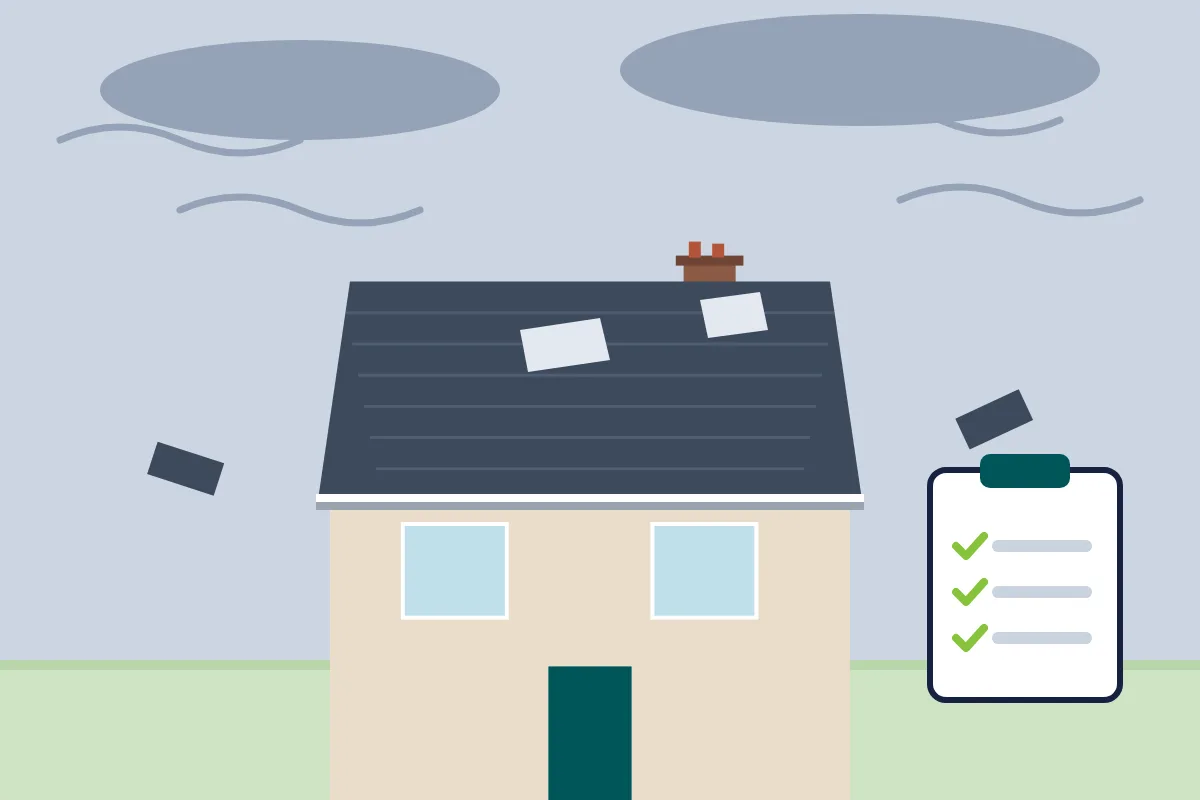
A storm damage roof report is an independent record of the damage to your roof after a storm. It sets out what is damaged, with photos, and what we think the likely cause is. It is yours to pass to your insurer. Insurers decide claims on their own policy wording. We are not loss adjusters, and we cannot tell you whether a claim will succeed. We are often asked to look into cowls or aerials dislodged in the wind and damaged ridges and hips, across flat roofs, chimney stacks and ridges and hips.
Being in a small place like Stadhampton makes no difference to how a leak or storm damage is looked at: we simply plan the journey and access ahead. It helps to know where the water appears, in what weather, and what you’ve seen outside, plus any earlier repairs. Photographs of the stain and of the roof from outside are helpful too.
The written findings come by email, ready to forward to whoever needs them. Basic reports come within 48 hours, Standard within 24–48 hours and Premium on the day.
- Place
- Stadhampton (OX44)
- Region
- Oxfordshire
- Prices
- From £150 inc. VAT
- Your report
- Emailed report with photos and recommendations
- Appointments
- Weekdays, Saturdays and Sundays
- Insurance
- PI and public liability insurance
- Telephone
- 07833 053749
- Last updated
- 27 October 2026
Different roofs, different checks
Slate roofs
Slates can slip or blow off in a storm, particularly where the nails have corroded. Our report notes moved slates and any sign of older corrosion.
Flat roof coverings
Branches and debris can damage flat roofs or block outlets. We record what we find.
Your questions about storm damage roof reports in Stadhampton
Do you cover Stadhampton?
We do. The survey and report are the same in Stadhampton as anywhere else.
Is Stadhampton within the area you cover?
Yes, Stadhampton is covered. Our area covers London and South East England, from towns to the smallest villages. Longer journeys are simply planned ahead of time.
Is this an asbestos survey?
No. We can flag materials that might contain asbestos, but confirming it is a job for a specialist asbestos surveyor. Buildings built or refurbished before 2000 may contain it.
How long will you be at the property?
That depends on the size and shape of the roof; most visits take between one and two hours for most homes, depending on how much of the roof was hit. The report is sent afterwards by email.
Will you check the loft?
If the survey needs it and the roof space can be reached safely, yes. A clear path to the hatch helps.
How long have you been surveying roofs?
We have more than 20 years’ experience and have carried out more than 5,000 surveys.
Should I go up on the roof to take photos?
Only from the ground or from windows. Do not use a ladder or go onto the roof. With binoculars, you can see a lot from ground level, and we’ll record the rest.
Storm damage roof reports around Stadhampton
Garsington Manor, about 2.5 miles north-west, is one of the historic houses in the wider area around Stadhampton. On older houses around here, roofs often carry the marks of earlier repairs, from replaced slates to new lead. Older buildings in west Oxfordshire often have Cotswold stone slate roofs, and some Oxfordshire villages still have thatch. Across the South East, older homes tend to have slate or clay tiles, and many later ones concrete tiles. Knowing the roof type helps narrow down where water may be getting in.
Anyone responsible for a site like Stadhampton Primary School will know that on a building that size, finding the source of a drip means looking well beyond the stain. If you own a rental within reach of Radley station, a clear finding on where water gets in helps you brief a roofer straight away.
Stadhampton is about 6 miles south-east of Oxford, in Oxfordshire. We survey roofs in Stadhampton and the rest of Oxfordshire, as part of our work across London and the South East. Stadhampton is one of the places in Oxfordshire where we work. You can also see our page for Oxford.
Postcode districts we cover here for storm damage roof reports: OX44. We cover properties on Lucerne Drive, Thame Road and Mill Lane. If you are just outside Stadhampton, we cover Brookhampton (1 mile south), Newington (1 mile south), Great Holcombe (1 mile south), Drayton St Leonard (1 mile south) and Berinsfield (2 miles south-west). Further out, we also cover Oxford (6 miles north-west), Didcot (7 miles south-west), Bicester (15 miles north), Abingdon-on-Thames (7 miles west), Thame (8 miles north-east) and Wantage (14 miles south-west).
What’s near Stadhampton
Typical jobs here are in homes near The Crown pub and the streets around them. The nearest railway station is Radley station, roughly 4.8 miles west of the centre. Well-known places in the area include Aston Martin Heritage Trust Museum (1.6 miles south) and Littlemore Hospital (4.8 miles north-west). Not far away are Wells Farm and Wittenham Clumps.
Rented homes, blocks and businesses
Where a roof is shared: we need access agreed with the freeholder or managing agent. Tell us about it when you book and we’ll plan the visit with that in mind.
With a portfolio of properties, surveys can be booked for more than one address. To arrange surveys for several addresses, phone 07833 053749 or send us an email with the addresses.
Common roof problems in Stadhampton
A storm frequently finds a roof’s existing weak spots. Corroded nails on slate roofs, worn mortar on ridges and old flashings can all give way. We record recent damage alongside older defects.
These are some of the problems a survey can pick up:
- Gutters pulled loose in the wind
- Lead lifted at abutments
- Damage from fallen branches or debris
- Damaged pots on the stack
Take an older house close to Church of St John the Baptist: leaks on older roofs often start at lead flashings, valleys or around old chimney stacks.
Before booking anyone
- How soon the report will arrive
- Which limits apply to the survey
- Whether VAT is added on top
- What experience they bring
Nearby places to Stadhampton
Other services in Stadhampton
What happens on the day
You do not need to do much on the day. Show us any stains, drips or problem areas you know about, and we’ll get on with the inspection. The survey itself takes between one and two hours on an ordinary house; commercial roofs usually need 3–4 hours. Cottages and farmhouses around Stadhampton often have roofs at several levels, with lean-tos and outbuildings attached. Each part is looked at from wherever it can be seen safely.
- You let us know what happened and whether a roofer has made the roof safe.
- We check inside, including the loft where there is access, for water damage.
- The roof is inspected from the ground, windows and the roof where it’s safe.
- Storm damage and older wear are recorded separately where we can.
- The report, with photos, is emailed to you.
How to prepare
- Check pets are kept safely away
- Tell us about parking before the day
- If you’re buying, let the agent know when we are coming
Book a survey
A quick phone call is normally the easiest start: ring 07833 053749 or use the contact form and we will ask a few questions about the roof. The price is agreed before a date is set.
Advice
Honest limits
To be straight with you, a roof survey has limits:
- Repair costs or quotes for the work
- Acting for you with the insurer
- Areas we can’t see safely
If you’re not sure which survey you need, call 07833 053749 or drop us an email and we will give you a straight answer before you book. What our survey covers.
What this survey covers
- Chimney stacks
- Gutters and fascias
- Ridges and hips
- Flashings
- Slate and tile slopes
- Flat roofs
Can I check my roof myself?
After strong wind, take a look from the pavement or garden: pieces of tile or slate on the ground, a gap in the ridge or a lifted flashing are all worth noting. Leave anything above ground level to a survey.
The one thing to avoid is getting up close. Roofs are fragile and slippery. That is where a survey comes in, using safe viewpoints and a drone where applicable.