
West Sussex · London and the South East
Blackstone Thermal Roof Survey
Wondering about the roof at a property in Blackstone? You can book a thermal roof survey in Blackstone and across West Sussex, with plain-English findings.
- Possible trapped moisture under a flat roof covering
- Gaps in loft insulation
- Damp where roofs meet walls and chimneys
About our thermal roof survey in Blackstone
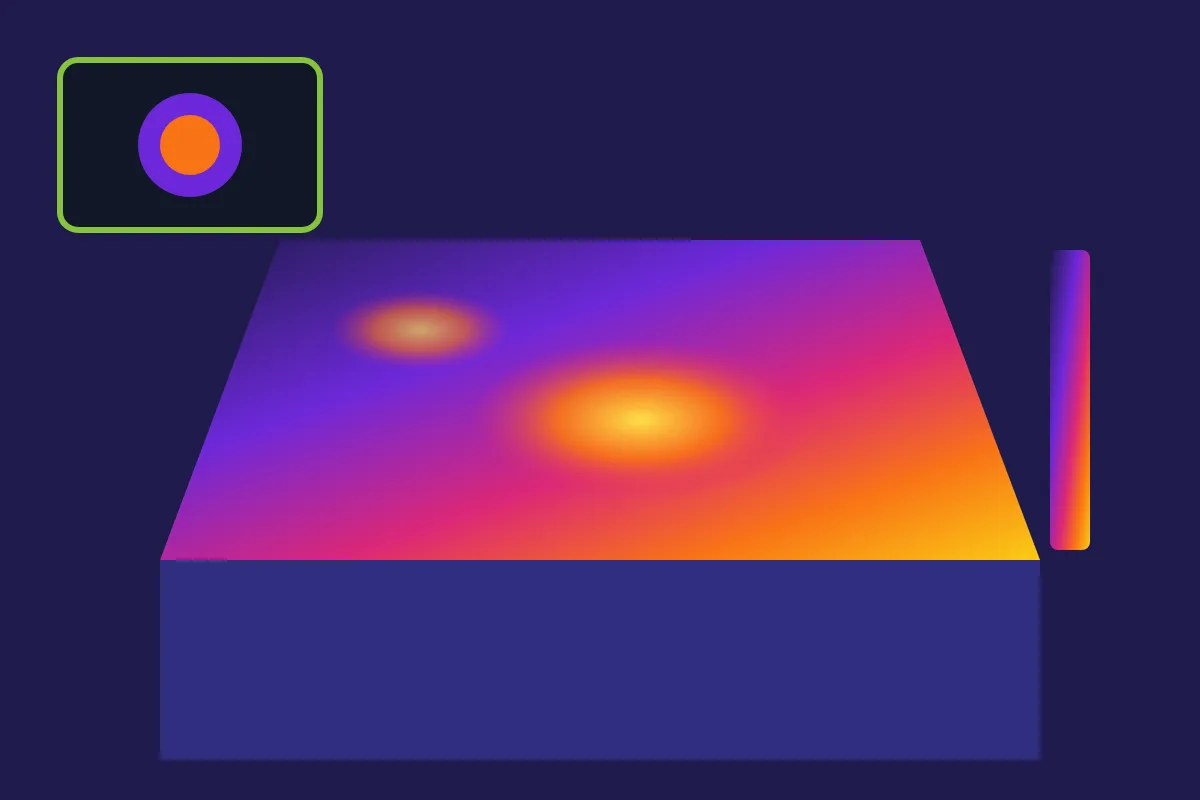
On a flat roof, wet insulation holds heat longer than dry insulation. That means a wet area can show up as a different temperature from the rest of the roof. This can give an idea of how far water has travelled beneath the membrane, something you cannot typically tell from the surface. Moisture readings are then used to check what the camera suggests. If you’ve noticed heat escaping through the roof and stains that keep coming back, a survey will tell you what’s going on.
Villages like Blackstone often stand in open country, where wind can be strong. A small drone cannot fly safely in strong wind or a downpour, and thermal imaging works best with little wind. We plan the journey, access and timing around the weather. If the day turns windy or wet, the visit can be moved.
Most points in the report come with a picture, so you can see each defect rather than just read about it. Anything out of sight on the day is listed as such.
- Where
- Blackstone (BN5)
- Region
- West Sussex
- Prices
- From £400 inc. VAT
- Reports
- Written, with photos, emailed to you
- Survey days
- Weekdays and weekends
- Cover
- Professional indemnity and public liability
- Phone
- 07833 053749
- Page updated
- 27 October 2026
How the survey changes by roof type
Single-ply and EPDM roofs
On larger commercial single-ply roofs, thermal imaging can help target moisture readings. It focuses the survey on the areas that matter.
Loft insulation
Heat loss shows most clearly when it is warm inside and colder outside. We explain in the report how the conditions on the day affected what we saw.
How we price thermal roof surveys
Not every roof costs the same to survey, and it comes down to:
- Whether thermal imaging or a drone is needed
- How big the roof is
- The type of building, from a house to a block or an office
- The height of the building and how the roof can be seen safely
One thing that affects the price is the package: Basic from £150, Standard from £250 or Premium from £400, all including VAT. Size, height and access can affect the price too.
Helping us price your survey
To price your survey accurately, we will ask about:
- Whether there’s a loft hatch, a shared roof or tricky access
- The kind of building and roof involved
- Where the property is, with the postcode
- Where water is showing inside, if it is
To arrange a survey, phone 07833 053749 or send us an email and let us know the address and what’s prompted the survey. You’ll know the price before anything is booked.
Also near Blackstone
Also in Blackstone
What we are asked to look at in Blackstone
Not every roof problem shows on the surface. Wet insulation, gaps in insulation and heat loss are often invisible from outside. A thermal camera adds another way of finding them.
Things that often lead to a survey include:
- Wet insulation beneath the membrane
- Damp around roof outlets and upstands
- Missing or slipped insulation
- Damp that repairs haven’t cured
If yours is one of the older homes in the streets near The Parish Church of St Bartholomew, steep roofs, tall chimneys and hidden valleys can be hard to see from ground level, and that is where a view from the air or with a thermal camera helps.
What to check before booking
- Which parts of the roof they’ll actually see
- What the survey will not cover
- Their track record with similar roofs
- What follow-up you get after the report
What a thermal roof survey looks like in Blackstone
Handmade clay tiles and tile-hung upper walls are typical of older Sussex houses. Some old buildings in Sussex have Horsham stone slab roofs. Where a roof is steep, tall or hard to see from ground level, drone photos and thermal images add detail. If the drone is used for your survey, the flight is checked against the Drone Safety Map first.
For any home in Blackstone, it’s the small, early fault that is cheapest to put right.
Blackstone is about 5 miles west of Burgess Hill, in West Sussex. Roofs in Blackstone get the same thorough look as anywhere else in West Sussex. We cover towns and villages across West Sussex, from the larger towns to small villages. You can also see our page for Brighton.
All of BN5 is covered for thermal roof surveys. Streets in the area include Blackstone Lane and Blackstone Street. If you’re just outside Blackstone, we cover Woodmancote (1 mile south-west), High Cross (1 mile north-east), Albourne (1 mile east), Albourne Street (1 mile east) and Albourne Green (1 mile east). Further out, we also cover Crawley (13 miles north), Horsham (10 miles north), Worthing (10 miles south-west), Haywards Heath (8 miles north-east), Burgess Hill (5 miles east) and Littlehampton (15 miles south-west).
Landmarks near Blackstone
The nearest railway station is Hassocks station, roughly 3.9 miles east of the centre. A little further out are The Dene Hospital (3.8 miles north-east) and The Budding Foundation Museum of Gardening (3.6 miles east). Not far away are Woods Mill and Wolstonbury Hill.
Common questions in Blackstone
Does a conservation area affect roof work in Blackstone?
The council and Historic England’s list are the places to check. It is worth checking before planning roof work, as both can affect what’s allowed.
Will you come out to Blackstone?
Yes, smaller places are covered as well as towns. We work right across London and South East England. Let us know about access, parking and anything unusual about getting there when you book.
How long is the visit?
Most surveys take between one and two hours at a house, including the thermal images, and around 3–4 hours for a commercial roof. The report follows by email.
How long have you been surveying roofs?
We have been surveying roofs for over 20 years and have completed over 5,000 surveys.
What’s in the report?
It explains what we saw, what it means and what we’d suggest, backed by photos. Anything we couldn’t see safely is noted too, so you know exactly what was covered.
What does a thermal roof survey show?
The images show how warm or cool each part of the surface is. Unusual patterns can point to trapped water, gaps in insulation or heat escaping, and we check them with moisture readings.
What conditions are best for thermal imaging?
Conditions on the day affect the results. A sunny day beforehand, a dry surface and calm air all help. Rain, wind and heavy cloud can weaken the patterns, so we discuss the forecast when booking.
What you can safely check yourself
A DIY look is useful, but it isn’t a survey. From ground level, valleys, flashings and the backs of chimneys are often out of sight.
Watch the gutters in a downpour, from a window or the ground. Water spilling over the edge can point to a blockage or a sagging run.
Honest limits
To be straight with you, there are limits to any roof survey:
- A structural engineer’s assessment
- What’s inside walls or under coverings, without opening up
- Confirming water without moisture readings
If you are not sure which survey you need, ring 07833 053749 or drop us an email and we’ll give you a straight answer. The full list of what we check.
What this survey covers
- Loft conversions
- Insulated roof spaces
- Commercial roofs
- Flat roofs
- Pitched roof slopes
- Ceilings below the roof
The survey, step by step
We do not take risks to get a closer look. Everything that can safely be seen is inspected, and anything we can’t see is noted in the report. Most visits take an hour or two at a house, including the thermal images, and around 3–4 hours for a commercial roof. Cottages and farmhouses around Blackstone often have roofs at several levels, with lean-tos and outbuildings attached. We work round each section in turn, from the safest viewpoints, and anything we cannot see is noted.
- First we discuss the roof, any damp and the forecast for the visit.
- The roof is inspected visually from safe positions.
- Thermal images are taken across the roof and, where there’s safe access, in the loft.
- Patterns that stand out are checked with moisture readings.
- The report pairs each thermal image with a photo and explains what it suggests.
Getting ready for the survey
- Have keys ready for side gates, garages or roof access doors
- Tell us about parking before the day
- Make a note of anything you’d like us to look at
Booking a survey
Not sure which survey you need? The easiest way is to phone 07833 053749 or use the contact form and describe the roof and why you want it surveyed. We’ll explain the options and the price.