
Milton Keynes · London and the South East
Flat roof survey in Lower End, Milton Keynes
Find out what’s going on with the flat roof before you decide what to do next. We carry out flat roof surveys in Lower End, with photographs and a clear written report.
- Dips that suggest the deck is deflecting
- Blocked or damaged outlets
- Damaged trims at the roof edge
How a flat roof survey works in Lower End
Flat roofs deal with rain in a very different way from pitched ones. Because rain sits on it for longer, a small split, an open seam or a blocked outlet matters more. The surface, the falls, the upstands and the trims are all looked at closely, and we note any sign that the deck below has got wet. That way, defects are found before they reach the room below. If you’ve noticed outlets choked with leaves and silt and water getting in at rooflights, we can find out what’s behind it, whatever the roof.
Older buildings in small places like Lower End may be listed or in a conservation area, which can shape what a new flat roof may look like. Check with the council before planning any change of material. Finding out what state the roof is in gives you the facts to plan with. Listed building consent is needed for changes that affect a listed building’s special interest.
If any part of the flat roof couldn’t be seen safely, we say so in the report. You will know exactly what was inspected and what wasn’t, and what we’d suggest next.
- Location
- Lower End (MK17)
- Region
- Milton Keynes
- Prices
- From £150 inc. VAT
- Your report
- Emailed report with photos and recommendations
- Survey days
- Monday to Sunday, daytime
- Cover
- Professional indemnity and public liability
- Telephone
- 07833 053749
- Updated
- 27 October 2026
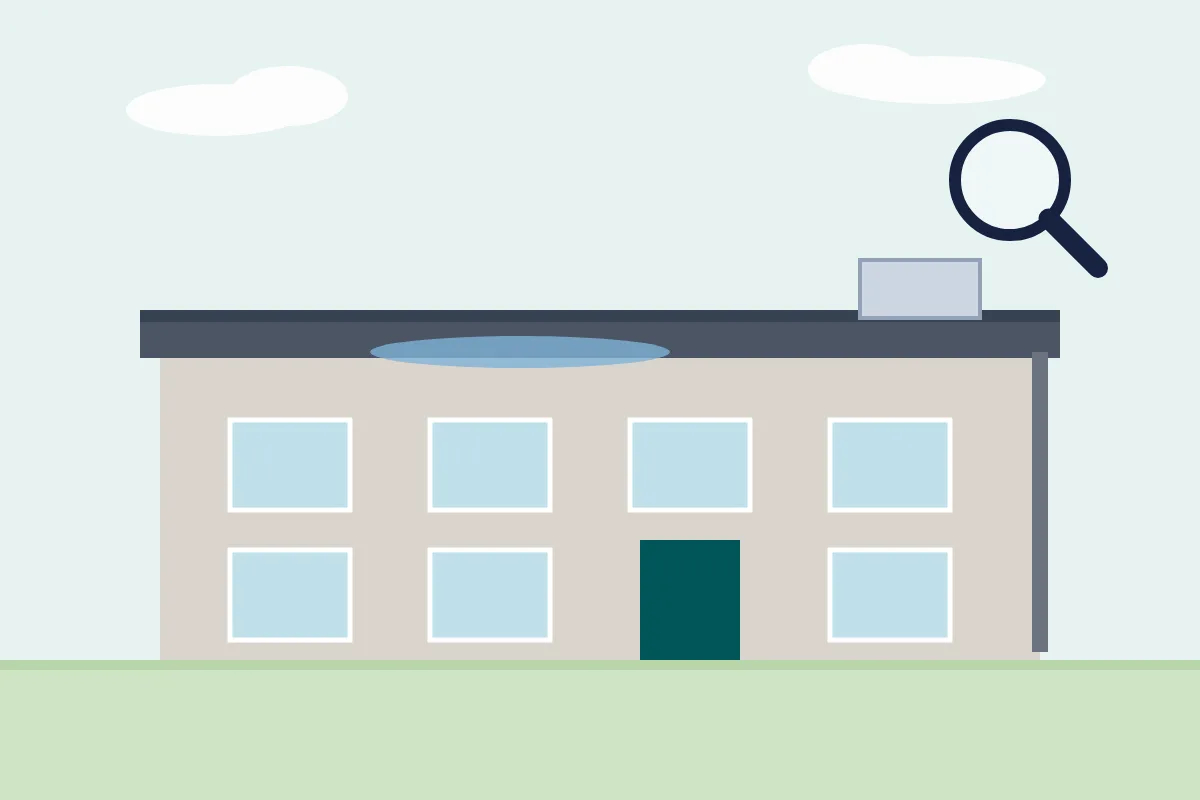
How the survey changes by roof type
Felt and built-up roofs
Many extensions, garages and dormers have a felt roof laid in layers. The survey checks for blisters, cracks, open laps and bare patches where the surfacing has worn.
EPDM rubber
EPDM often lasts 30 to 50 years, but it relies on its seams, trims and upstands being well finished. Those details are where we focus.
FAQs for Lower End
Will you come out to Lower End?
Yes, Lower End is covered. We survey roofs across London and South East England, and smaller places are part of that. Longer journeys are simply planned beforehand.
Is my home in Lower End listed or in a conservation area?
We can’t confirm that for you, but Historic England’s list and your council can. A change of roofing material may need consent in either case.
Do you use drones?
Where it helps and the rules allow, yes. We hold a CAA Flyer ID and Operator ID and fly a drone under 250g, and the airspace and weather are checked before every flight.
How long does the survey take?
It normally takes an hour or two at a typical home, rising to roughly 3–4 hours on a commercial building. The report follows by email.
Do you give a life expectancy for the roof?
There is no honest way to give an exact number of years. As a guide, felt frequently lasts around 15 to 20 years, EPDM frequently 30 to 50 and GRP up to about 30, but the report tells you how your roof is really doing.
Do you go up onto the roof?
Only where it’s safe to do so. Otherwise we use windows, vantage points and the spaces below, and the report says if any part couldn’t be seen. We don’t walk on fragile rooflights or sheeting.
Can you give me structural calculations?
No. We note visible signs like sagging or deflection, but we don’t carry out calculations or give an engineer’s opinion. Where an engineer is needed, we say so in the report.
Checking the roof from ground level
The one thing to avoid is getting up close. Roofs are fragile and slippery, and a fall can be serious. That part is for a survey.
Watch the gutters in a downpour, from a window or the ground. Water spilling over the edge can point to a blockage or a sagging run.
Flat roof surveys around Lower End
With Woburn Abbey about 3.9 miles south-east, Lower End sits in an area with a long building history. On older houses around here, roofs frequently carry the marks of earlier repairs, from replaced slates to new lead, and a listed home or one in a conservation area may need consent for changes of material. Older houses in the South East often have slate or clay tile roofs, while many later estates have concrete tiles. Alongside them, flat-roofed extensions, dormers, garages and commercial units are common almost everywhere.
Anyone responsible for a site like Swallowfield Lower School will know that ponding and blocked outlets on a wide flat roof are worth catching before the next wet season. For landlords with property near Aspley Guise station, flat roofs over rear additions and dormers in rented property are worth checking between tenancies.
Lower End is about 5 miles north-east of Bletchley, in Milton Keynes. Anywhere in Lower End, we can come and survey your property. We cover towns and villages across Milton Keynes.
Flat roof surveys in MK17 are booked the same way as anywhere else. We cover properties on Cranfield Road and Crow Lane and the roads around them. We also cover Salford (1 mile north), Glebe Farm (1 mile west), Woburn Sands (1 mile south), Wavendon (1 mile west) and Hulcote (1 mile east). Larger places within reach include Milton Keynes (5 miles west), Bletchley (5 miles south-west), Newport Pagnell (5 miles north-west), Bletchley and Fenny Stratford (4 miles south-west), Furzton (5 miles west) and Whitehouse (7 miles west).
Local landmarks in Lower End
Typical jobs here are in homes near The Station Hotel and Walton High and the streets around them. The nearest railway station is Aspley Guise station, roughly 0.9 miles south-east of the centre. Well-known places in the area include Rugemont Castle (2.5 miles east) and Milton Keynes University Hospital (3.9 miles west). Not far away are Kings and Bakers Woods and Heaths and Heydon Hill.
Signs you need a flat roof survey in Lower End
Water that doesn’t drain sits on the roof and speeds up wear. It usually comes from poor falls, a blocked outlet or a deck that has dipped. Where trees are close by, leaves and silt can block an outlet within a single autumn.
Typical things we are asked to look at include:
- Blocked or damaged outlets
- Gaps at upstands and abutments
- Damaged trims at the roof edge
- Cracked or split membrane
If your house is among the older ones in the streets near Church of St Mary the Virgin, flat-roofed rear additions and dormers added over the years are worth checking.
Questions to ask before booking
- Their report turnaround times
- What follow-up you get after the report
- Which limits apply to the survey
- What experience they bring
What we do, step by step
Safety comes first on every visit. Everything that can be seen safely is inspected, and if part of the roof cannot be seen, the report says so. Most visits take about one to two hours on an ordinary house, or half a day or so for a commercial building. Rural addresses near Lower End can be hard to find from a postcode alone, so a few directions are welcome. After that, the survey runs as it would anywhere.
- We start with the details: the address, the roof’s use and any leaks or stains.
- We view the roof from the ground, from windows and from the roof where it is safe to do so.
- We check and photograph the covering, the falls, the upstands, the outlets, the trims and any rooflights.
- We check the rooms or spaces under the roof for staining where we can reach them.
- We send a written report with photos, the defects we found and what we recommend.
How to prepare
- Jot down any questions you want answered
- Have keys ready for side gates, garages or roof access doors
- Leave a clear route to the loft
Book a survey
To get a price for flat roof surveys in Lower End, ring 07833 053749 or drop us an email. The address, the type of property and what you need to know help us give you an accurate price.
Related advice
Leave it or get it looked at?
If you are buying, find out about the flat roof before you exchange. Once you’ve exchanged, any work on the roof is down to you. A report gives you facts to put to the seller or agent. Matching old materials, such as handmade tiles or stone slates, can take time to source. That’s one more reason to find defects before they become urgent.
There are three survey packages: the Basic Survey from £150, the Standard Survey from £250 and the Premium Survey from £400, with VAT included. What your roof costs depends on its size, access and what you want to find out.
Why book with us
- Thermal imaging and drone inspection where they help
- Package prices that include VAT
- Surveys on any day of the week
- An independent look at the roof
See our cost guide and two real surveys.
Places near Lower End
More services for Lower End
What this survey cannot tell you
In fairness, there are limits to any roof survey:
- Fragile surfaces, which we do not walk on
- Whether old sheeting or boards contain asbestos
- An exact number of years the roof has left
Not sure which survey suits your roof? You can call 07833 053749 or use the contact form and we will tell you. What a survey covers and doesn’t.
Roof types and parts we check
- Single-ply membranes
- Upstands and outlets
- GRP fibreglass
- Mastic asphalt
- Felt flat roofs
- EPDM rubber