
East Sussex · London and the South East
Flat roof survey in South Street, East Sussex
A careful look at the flat roof at your property in South Street, with photographs and a written report.
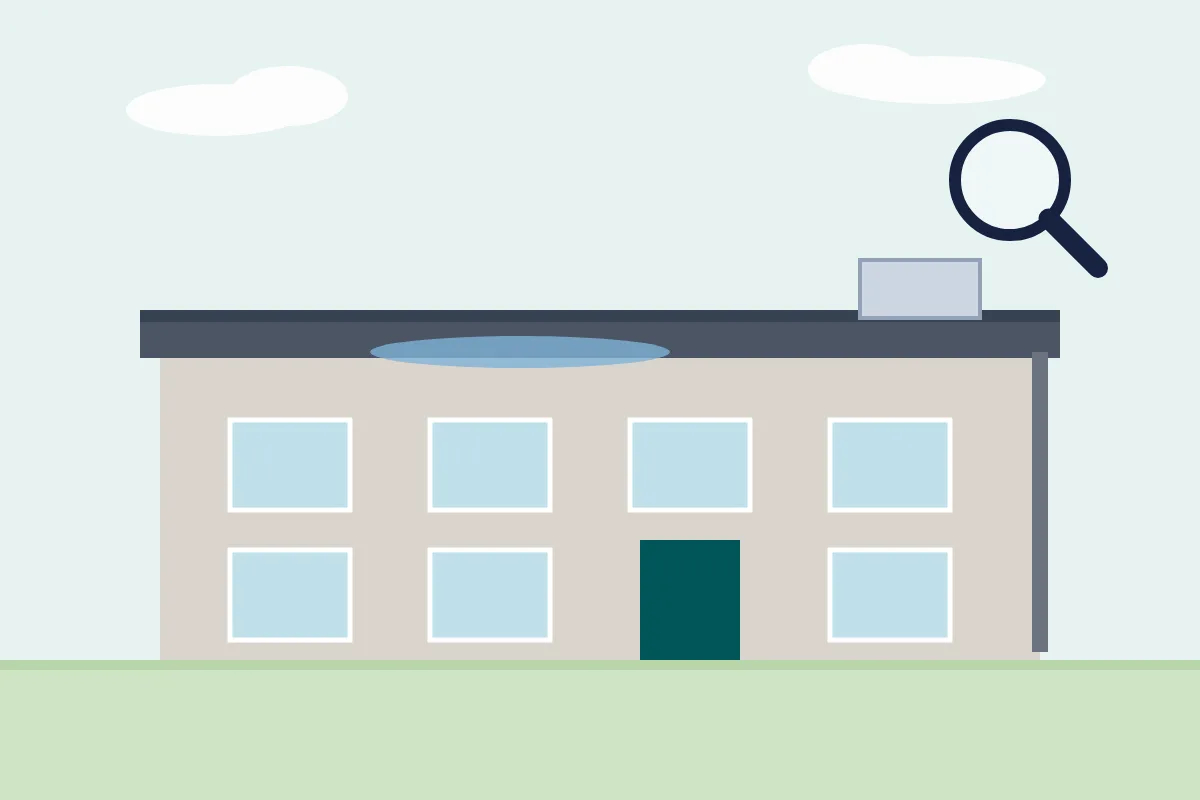
- Blocked or damaged outlets
- Edge trims that have lifted or split
- Ponding water that doesn’t drain away
Flat roof survey in South Street: what you get
Buying a home with a flat-roofed extension, dormer or garage? It helps to know that roof’s condition before you exchange. Many felt roofs need renewing after around 15 to 20 years, and EPDM and GRP often go on for longer. We set out the type of covering, its condition and the defects we found, with a photo of every defect. That gives you facts to raise with the seller or agent. We survey EPDM rubber, single-ply membranes and GRP fibreglass, and the problems we’re asked to look at most are outlets that hold water back and edge trims that have lifted or split.
Flat roofs on exposed homes in small places like South Street take more wind and rain, so edges, upstands and laps take a beating. Felt roofs, which frequently last around 15–20 years, normally show it first. EPDM rubber and GRP coverings last longer, but their edges and joints still need checking. Exposed edges are normally the first part of a flat roof to go.
With the Standard Survey, you also get moisture detection, a structural check and a follow-up consultation. The Premium Survey adds thermal imaging, drone inspection where it applies, structural analysis and an in-person consultation.
- Location
- South Street (BN8)
- Wider area
- East Sussex
- Price
- From £150 inc. VAT
- Your report
- A written report with photos, by email
- When we survey
- Weekdays, Saturdays and Sundays
- Insurance
- PI and public liability insurance
- Telephone
- 07833 053749
- Updated
- 27 October 2026
Tips that help
These tips come from what we see on roofs every week, before and after a survey:
- Note any new marks on ceilings beneath the roof
- Check that new brackets or units haven’t damaged the covering
- Keep people off the roof unless they need to be there
- Check from a window for ponding after heavy rain
You can use the report to ask roofers to quote for the same work. Because everyone is pricing the same findings, the quotes are easier to compare. You stay in control of who does the work and when.
After heavy rain, look at the roof from an upstairs window if you can. Water still lying a day or two later is worth getting looked at.
Questions from South Street
Does a conservation area affect roof work in South Street?
We cannot confirm that for you, but Historic England’s list and your council can. Both listing and conservation areas can limit changes of roofing material.
Is South Street in the area you cover?
Yes, South Street is within the area we cover. We cover the whole of London and South East England. You can ring 07833 053749 or drop us an email with the address and some details.
How do you inspect a flat roof?
We inspect from wherever is safe: on the roof where it’s safe, and from windows, nearby vantage points and inside. We never walk on fragile rooflights or sheeting.
What do I do with the report?
You receive the written report by email, with photographs and recommendations. It is yours to share with a seller, insurer, roofer or managing agent, whichever applies.
How long have you been surveying roofs?
More than 5,000 surveys over 20+ years.
Can you survey any kind of flat roof?
We cover the main flat roof coverings: felt, asphalt, EPDM, GRP and single-ply. We record what the covering is and how it is holding up.
Can you find where water is getting through my flat roof?
We check the covering and every detail where leaks commonly start, and photograph anything that could be letting water in. Where the source isn’t obvious, a roof leak investigation or electronic leak detection may be the next step.
Different roofs, different checks
Mastic asphalt
Without seams, asphalt tends to fail through cracking and at its skirtings. Our report notes crazing, cracks and any likely entry points.
Felt and built-up roofs
Built-up felt is one of the most common flat roof coverings on extensions, garages and dormers. We look for blistering, cracking, split laps and worn mineral surfacing.
Common roof problems in South Street
A flat roof lies open to sun, rain and frost, and water drains off it slowly. In time, the covering dries out, cracks and loosens at its edges and laps. Most people book a survey after a leak, before buying, or when they think the roof is getting old.
It’s worth booking a survey if you’ve seen:
- Outlets choked with leaves and silt
- Loose or cracked edge trims
- Standing water left after rain
- Failed seals around rooflight kerbs
Take an older house close to The Parish Church of St Peter: any flat roof added at the back or on a dormer is likely to be far younger, and less durable, than the main roof.
What to check before booking
- Which viewpoints they use to see the roof
- Whether you can ask questions once you have the report
- What exactly goes into their report
- Whether the roof space is looked at, where there is one
DIY checks: what’s safe
A lot can be seen from the ground. With binoculars, look for slipped or missing slates and tiles, gaps along the ridge and leaning chimneys. Please don’t climb up for a closer look.
After heavy rain, check ceilings and the tops of walls for new stains. Take a photo and write down when you saw it, as it helps a surveyor trace the cause.
Flat roof surveys around South Street
Older buildings may be listed or sit in a conservation area. To find out, check Historic England’s list and ask the council about conservation areas. In either case, a change of roofing material may need consent. Handmade clay tiles and tile-hung upper walls are typical of older Sussex houses. Horsham stone slab roofs survive on some old Sussex buildings, alongside oast houses and timber-framed Wealden hall houses. Flat roofs on extensions, dormers, garages and business units are found alongside them almost everywhere.
For site and facilities teams at buildings such as Chailey School, a large flat roof with a good many outlets and rooflights has many places where a membrane can fail. Landlords with a home close to Plumpton station may find that the flat roof over a let home is worth a look before it becomes a tenant complaint.
South Street is about 5 miles east of Burgess Hill, in East Sussex. We provide flat roof surveys for homeowners, landlords and businesses in South Street. Our East Sussex coverage includes South Street. We also survey roofs in Brighton.
We survey roofs across the BN8 postcode area for flat roof surveys. Whether your property is on Green Lane, Markstakes Corner and St James Walk or anywhere close by, we can survey it. Close by, we survey roofs in South Chailey (1 mile south), Chailey (1 mile north-east), North Chailey (2 miles north), Chiltington (2 miles south) and Plumpton Green (2 miles south-west). Within a short drive, we also cover Seaford (13 miles south-east), Lewes (5 miles south), Hailsham (13 miles south-east), Crowborough (11 miles north-east), Uckfield (5 miles east) and Newhaven (11 miles south).
Landmarks near South Street
Around South Street, our work takes us to homes and buildings near The Five Bells Inn and Chailey St Peter's Church of England Primary School and the streets around them. The closest station to South Street is Plumpton station, about 2.2 miles south-west of the centre. Well-known places in the area include Princess Royal Hospital (4.3 miles north-west). For a walk, there’s Blackcap and Malling Down.
How it works
After the inspection, everything we found is written up in a report with photographs, sent to you by email. On timing, most surveys take about one to two hours for a small flat roof at home, and longer for a large commercial one. Older roofs in small places like South Street can have low, tight loft spaces, so it helps to know whether there’s a loft hatch and how easy it is to reach. We only go where it’s safe.
- We start with the details: the address, the roof’s use and any leaks or stains.
- We check the roof from wherever it can safely be seen.
- We check and photograph the covering, the falls, the upstands, the outlets, the trims and any rooflights.
- We check the rooms or spaces under the roof for staining where we can reach them.
- You get a written report with photographs and our recommendations.
Before we arrive
- Jot down any questions you want answered
- If the roof is shared, arrange access with whoever manages the building
- Leave side gates unlocked
Book a survey
Not sure which survey you need? It is easiest to ring 07833 053749 or drop us an email and describe the roof and why you want it surveyed. We’ll talk you through the options and what they cost.
Related advice
Nearby places to South Street
What else we do in South Street
Landlords, agents and block managers in South Street
Businesses and commercial landlords can book us too, from shops and offices to industrial units. Larger roofs take longer.
Surveys can also be booked by buyers’ agents acting for a client. Reports are emailed, so they’re easy to pass on.