
Essex · London and the South East
Layer-de-la-Haye Roof Leak Investigation
Tracing where water is getting into your roof across Layer-de-la-Haye, using drones and thermal imaging where it applies. Call or email for a price.
- Leaks that appear only in driving rain
- Water dripping from rafters or underlay
- Damp ceilings under a flat roof
Do you need a roof leak investigation in Layer-de-la-Haye?
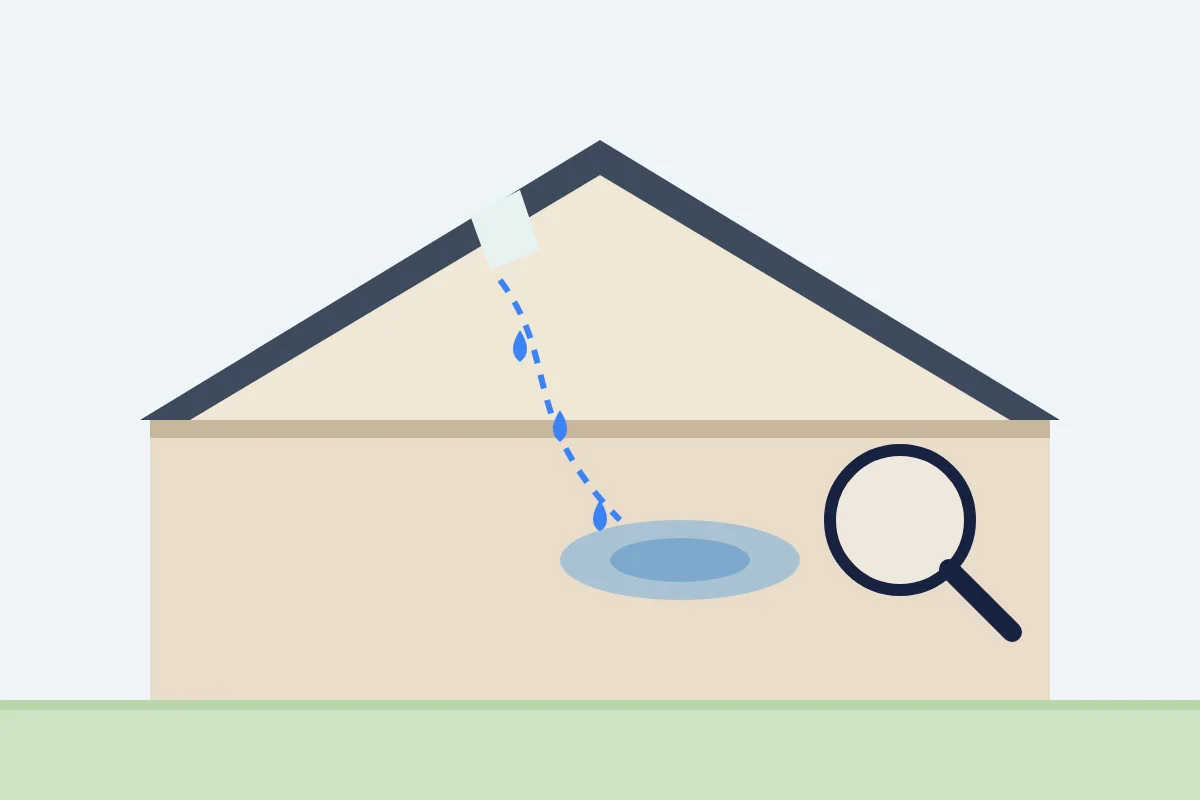
Valleys carry a lot of water. Split linings, slipped valley tiles or debris can push water under the slates or tiles. Leaks from valleys often show up some distance away inside.
People normally book a survey after spotting one of these:
- Stains around a skylight
- Water dripping from rafters or underlay
- Ceiling stains that grow after rain
- Leaks that appear only in driving rain
If you look after a shop, office or commercial unit, for instance near Lion Walk, finding where water is getting in quickly keeps disruption down.
Choosing a roof surveyor
- Whether the roof space is looked at, where there is one
- Whether VAT is added on top
- Whether they hold professional indemnity and public liability insurance
- If they fly a drone, whether they hold a CAA Flyer ID and Operator ID
Roof leak investigation in Layer-de-la-Haye: what you get
Some ‘leaks’ are not leaks at all. In a badly ventilated roof space, condensation can form under the roof and drip, and the stains look much like a leak. Telling the two apart matters, because they need very different work. The pattern of the damp, the ventilation and the timing all help us decide. Typical surveys look at water through the ceiling under a flat roof and brown rings on upstairs ceilings, across lead flashings, rooflights and dormers and valleys and parapet gutters.
In a village or hamlet like Layer-de-la-Haye, older cottages and farmhouses frequently have roofs that have been patched over many years. A new leak may be fresh damage or the latest sign of long-term wear, and the difference matters, especially to an insurer. The report says what was seen and what it points to. Older walls and timbers hold water for a long time, so it’s worth finding the cause soon.
Pictures do a lot of the work in our reports, so you can see each defect rather than just read about it. Anything out of sight on the day is listed as such.
- Location
- Layer-de-la-Haye (CO2)
- Region
- Essex
- Price
- From £150 inc. VAT
- Reports
- A written report with photos, by email
- When we survey
- Weekdays, Saturdays and Sundays
- Insurance
- PI and public liability insurance
- Call
- 07833 053749
- Page updated
- 27 October 2026
Nearby places to Layer-de-la-Haye
More services for Layer-de-la-Haye
Layer-de-la-Haye: your questions answered
Will you come out to Layer-de-la-Haye?
Yes, we do. Our area covers London and the South East, from towns to the smallest villages. Longer journeys are simply planned beforehand.
How do I find out if my home in Layer-de-la-Haye is listed?
Your council is the best source, with Historic England’s list for listed buildings. Both listing and conservation areas can limit changes of roofing material.
Do you test for asbestos?
No. We do not sample or test for asbestos. Where a material might contain it, like old cement sheets on a building from before 2000, the report flags it.
Can you trace a leak in dry weather?
Often, yes. Leaks leave clues, like staining, damp timber and moisture in materials. Intermittent leaks can be harder, so photos and notes from when it leaks help a lot.
Which days do you carry out surveys?
We survey seven days a week: weekdays, Saturdays and Sundays. Let us know which days suit you when booking.
When does the report arrive?
That depends on the survey you book: Basic within 48 hours, Standard in 24–48 hours and Premium the same day. The report is emailed to you.
Will you go up on the roof?
Only when it’s safe. Safe viewpoints, the roof space and a drone where it applies cover most of what’s needed, and anything out of sight is recorded in the report.
Can I check my roof myself?
Your own check is a good start, but it is not a survey. You will not see flashings, valleys or the backs of chimneys properly from the ground, and those are details a survey looks at closely.
During heavy rain, look at the gutters from the ground or a window. Water spilling over the edge can point to a blockage or a sagging run.
The survey, step by step
On the day, we begin with a quick chat about the roof and anything that is worrying you. After that, we check everything we can see safely, from ground level, from windows, in the loft space and by drone where it applies. Most surveys take about 1–2 hours at a typical home, though large, tall or awkward roofs take more time. In a small place like Layer-de-la-Haye, access is normally the main thing to plan. Let us know about outbuildings, past repairs and any leaks you’ve noticed. Weekday and weekend visits are available.
- You let us know where the water appears, when, and what the weather was doing.
- We examine the damp area and the rooms near it.
- From the roof space, we trace the water’s route where there is safe access.
- We inspect the likely entry points outside, from the ground, windows and the roof where safe.
- We email a written report showing where the water most likely gets in.
Before the survey
- Make sure the loft hatch can be reached
- Buyers: confirm access with the estate agent or seller
- Mention any parking restrictions on your street
Book a survey
To arrange a survey, call 07833 053749 or drop us an email and let us know the address and what’s prompted the survey. We’ll confirm the price before you book.
Read more
Surveys for landlords and agents in Layer-de-la-Haye
Roof problems in a rented home affect tenants as well as the building. A survey shows what needs attention, so you can plan the work around your tenants.
Letting agents often book on a landlord’s behalf. Access is agreed with the tenant beforehand.
Layer-de-la-Haye roofs and the weather
Layer-de-la-Haye lies within about 5 miles of the sea, so there is more wind and more salt in the air than further inland. Wind lifts loose slates, tiles and ridge pieces, and driving rain finds any gap they leave. Older buildings in Essex frequently have clay tiles and weatherboarding, with post-war and more recent estates making up much of the newer housing. Each of these roof types has its own typical places for water to get in.
Layer Marney Tower lies about 3.1 miles south-west, so building around Layer-de-la-Haye goes back a long way. Older roofs in the area may have lead flashings, valleys and gutters that have been patched many times. For site and facilities teams at buildings such as Alderman Blaxill School, on a building that size, finding the source of a drip means looking well beyond the stain.
Layer-de-la-Haye is about 3 miles south-west of Colchester, in Essex. From houses to flats and shops in Layer-de-la-Haye, we can survey the roof on a weekday or at the weekend. Our Essex coverage includes Layer-de-la-Haye and the places around it. We also survey roofs in Chelmsford.
All of CO2 is within our area for roof leak investigations, from the main roads to the quietest streets. We cover properties on Church Road, Green Acres Road and Old Forge Road. Other places close to Layer-de-la-Haye include Malting Green (1 mile east), Birch (2 miles west), Birch Green (2 miles west), Heckfordbridge (2 miles north-west) and Layer Breton (2 miles south-west). Further out, we also cover Colchester (3 miles north-east), Braintree (13 miles west), Clacton-on-Sea (13 miles east), Maldon (11 miles south-west), Witham (10 miles west) and Camulodunum (3 miles north).
Local landmarks in Layer-de-la-Haye
In Layer-de-la-Haye, that means homes and buildings near The Fox Public House and the streets around them. The nearest railway station is Colchester Town station, about 3.4 miles north-east. Nearby you will also find Essex County Hospital (3.1 miles north-east) and Social History Museum (3.4 miles north-east). Green spaces nearby include Roman River Valley.
Roof by roof
Parapet and box gutters
Hidden gutters run behind parapets or between roofs. When their outlets block, water rises over the lining and runs indoors.
Chimney stacks
Our chimney check is a visual inspection of the stack, and it is not a flue or gas safety check.
Tips from our surveys
There’s plenty you can do without going near the roof. What helps most:
- Keep water away from lights and sockets
- Let us know if there are tanks or pipes in the loft
- Write down the wind direction and rain when it leaks
- Leave roof access to professionals
Any roofer you ask to quote can work from the report. They’ll see exactly where the problem is, so the repair is aimed at the cause.
Keep the loft space ventilated. Air movement keeps condensation down, which is frequently mistaken for a leak. Make sure insulation does not block airflow at the eaves.