
Essex · London and the South East
Lee-over-Sands Roof Leak Investigation
A careful look at the leaking roof at your property in Lee-over-Sands, with photographs and a written report.
- Damp ceilings under a flat roof
- Stains around a skylight
- Water marks that spread in wet weather
Common roof problems in Lee-over-Sands
Valleys carry a lot of water. Worn lead, cracked linings or a build-up of leaves and moss can send that water under the coverings. Leaks from valleys often show up some distance away inside.
Things that often lead to a survey include:
- Ceiling stains that grow after rain
- Leaks below a flat extension roof
- Staining around the chimney inside
- Wet patches high on an inside wall
For any home in Lee-over-Sands, it is the small, early fault that is cheapest to put right.
What to check before booking
- What they won’t be able to tell you
- Whether the loft space is looked at, where there is one
- Whether they hold professional indemnity and public liability insurance
- What experience they bring
Roof leak investigations for homes and businesses in Lee-over-Sands
Leaks tend to begin where one part of a roof meets another. Common entry points include chimney and wall flashings, valleys, parapet and box gutters, and the upstands and outlets on flat roofs. Each of these is checked in turn and follow the evidence. Every chimney, dormer and roof light adds more joints to check. Each one is checked from wherever it’s safe to see it. We are often asked to look into wet patches high on an inside wall and water through the ceiling under a flat roof, across lead flashings, chimney stacks and rooflights and dormers.
For a small place like Lee-over-Sands, the inspection is the same as anywhere: the journey and access are just planned ahead of time. It’s useful to know where the water appears, in what weather, and what you’ve seen outside, along with any repairs done before. If you have photographs of the water coming in, they help as well.
Where we cannot see part of the leaking roof, the report says so. You’ll know exactly what was inspected and what wasn’t, and what we’d suggest next.
- Place
- Lee-over-Sands (CO16)
- Region
- Essex
- Cost
- From £150 inc. VAT
- Your report
- Emailed report with photos and recommendations
- Appointments
- Weekdays and weekends
- Insurance
- Professional indemnity and public liability
- Phone
- 07833 053749
- Last updated
- 27 October 2026
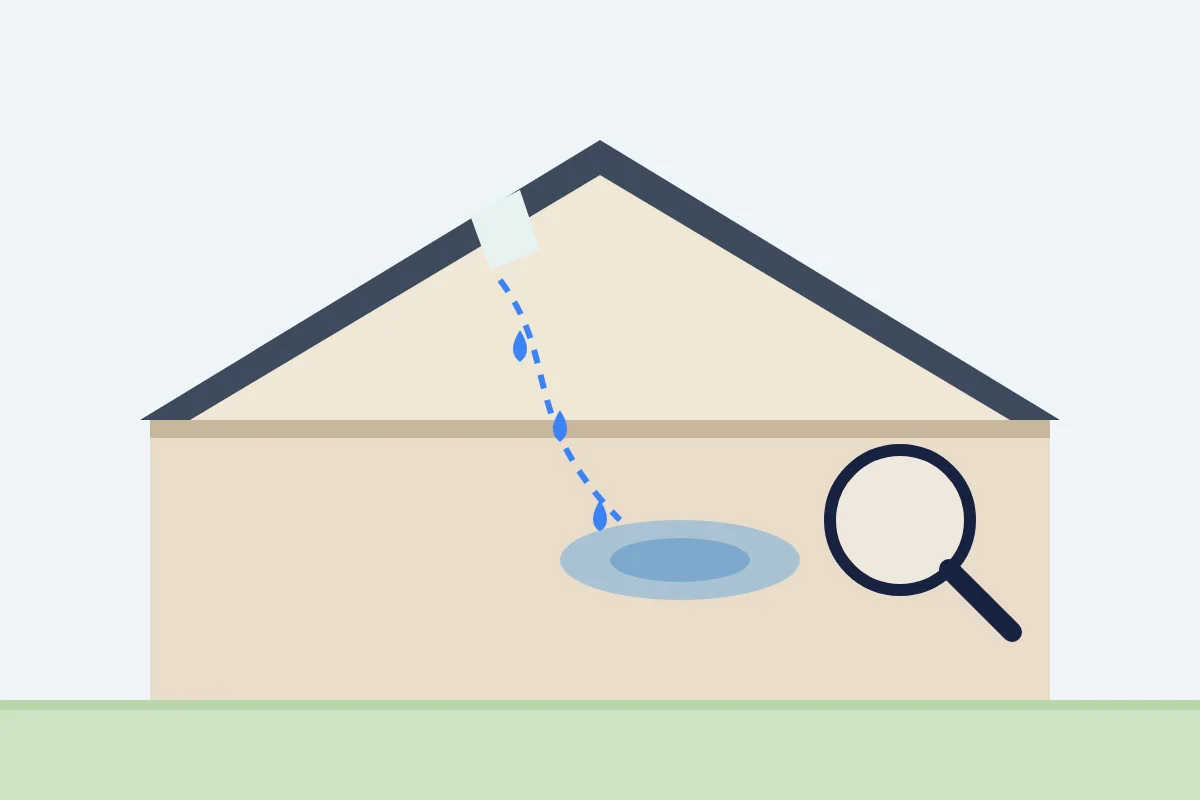
What a roof leak investigation looks like in Lee-over-Sands
Lee-over-Sands is within about 1 mile of the coast, where sea air brings more salt and stronger wind than inland. Strong wind lifts anything already loose, and driving rain gets in wherever it can. In Essex, older buildings are often clay-tiled, many with weatherboarding, with post-war and more recent estates making up much of the newer housing. Different coverings let water in at different points, which shapes where the search starts.
If you let a flat or house near Clacton-On-Sea station, finding the cause of a leak fast keeps a tenant’s home dry and the work focused.
Lee-over-Sands is about 5 miles south-west of Clacton-on-Sea, in Essex. Lee-over-Sands is part of the area we cover and the surrounding area across London and South East England. Lee-over-Sands is one of the places in Essex where we work. For surveys nearby, see our Chelmsford page.
We survey roofs across the CO16 postcode area for roof leak investigations and the streets around it. Close by, we survey roofs in Seawick (1 mile east), Point Clear (2 miles north), St Osyth (2 miles north-east), Jaywick (3 miles east) and Brightlingsea (3 miles north). Larger places within reach include Colchester (10 miles north-west), Clacton-on-Sea (5 miles north-east), Harwich (14 miles north-east), Camulodunum (11 miles north-west), Greenstead (10 miles north-west) and Burnham-on-Crouch (14 miles south-west).
Local landmarks in Lee-over-Sands
Lee-over-Sands’s nearest station is Clacton-On-Sea station, about 4.7 miles east of the centre. Green spaces nearby include Colne Point nature reserve.
Nearby places to Lee-over-Sands
Also in Lee-over-Sands
What a roof leak investigation doesn’t cover
Every survey has limits, and we’d rather be clear about that before booking. Keep these in mind:
- Structural calculations (that’s a structural engineer’s job)
- Water from pipes, tanks or heating systems
- What’s under the covering or behind the plaster
If in doubt, ring 07833 053749 or send us an email and we’ll point you to the right survey before booking. What a survey covers and does not.
What we check
- Flat roof details
- Lead flashings
- Slate and tile slopes
- Chimney stacks
- Rooflights and dormers
- The roof space
- Valleys and parapet gutters
Why get it checked now?
A small drip today can be a bigger leak after the next storm. Wind lifts loose slates further and gaps widen. Tracing it now lets you plan the work rather than react to it. Where a roof is exposed, as many are in small places like Lee-over-Sands, driving rain gets into any weakness, and older walls, once damp, take a long time to dry.
What a survey costs comes down to the roof itself: how big it is, how high it is, the number of separate roofs and how safely it can be seen. Our price is from £150, including VAT.
Why book us in Lee-over-Sands
- CAA-registered drone operator (Flyer ID and Operator ID)
- Thermal imaging and drone inspection where they help
- Clear package prices, with VAT included
- An independent look at the roof
Take a look at how roof surveys are priced or our case studies.
Lee-over-Sands questions
Do roofs near the sea, like those around Lee-over-Sands, take more of a battering?
Places near the sea get more wind and more salt in the air than inland, and both are hard on roofs. Salt is hard on nails, clips and metal flashings, while strong wind lifts anything already loose.
Is my home in Lee-over-Sands listed or in a conservation area?
Check Historic England’s online list first, then ask the council about conservation areas and any Article 4 direction. It matters most if you are planning to re-roof in a different material.
Do you test for asbestos?
No. We don’t carry out asbestos surveys or testing. We flag materials that could contain asbestos, such as cement sheets or soffits on pre-2000 buildings and suggest a specialist asbestos surveyor checks them before any work.
Do you need to get into the loft?
If the survey needs it and the loft space can be reached safely, yes. Please clear anything stored under the hatch.
Is this a RICS survey?
No. We are experienced roof surveyors, and our survey covers the roof rather than the whole building. For the rest of the building, a RICS home survey is a separate job.
Does the investigation include the repair?
This service finds and reports the cause, and the repair is separate. The report gives any roofer a clear brief.
Does someone need to be in?
Someone needs to let us in if we are looking inside or in the loft. Access is agreed with you when you book.
What we look for on each type of roof
Lead flashings
Water from a failed flashing can travel down the wall or along a rafter. That’s why we check the flashings near a stain, not just the one directly above.
Slate and tile slopes
Slipped, cracked or missing slates and tiles let rain onto the underlay. Older felt may hold for a while, but it tears with age.
Should I look at the roof myself first?
After strong wind, take a look from the pavement or garden: pieces of tile or slate on the ground, a gap in the ridge or a lifted flashing are all worth noting. Do not go up yourself.
During heavy rain, look at the gutters from the ground or a window. Water spilling over the edge can point to a blockage or a sagging run.
How it works
Every visit follows the same pattern: we listen to what’s been worrying you, inspect the roof from every safe vantage point, take photographs as we go and record our findings for the written report. Most visits take roughly 1–2 hours at most homes; commercial roofs usually need 3–4 hours. Older roofs in small places like Lee-over-Sands can have low, tight loft spaces, so it’s useful to know whether there’s a loft hatch and how easy it is to reach. We only go where it is safe.
- We start with your notes and photos of the leak.
- We examine the damp area and the rooms near it.
- From the roof space, we trace the water’s route where there is safe access.
- We inspect the likely entry points outside, from the ground, windows and the roof where safe.
- We email a written report showing where the water most likely gets in.
Getting ready for the survey
- Unlock side gates and any roof access doors
- Tell us where we can park nearby
- Clear the way to the loft hatch
Book a survey
Booking is simple: just phone 07833 053749 or email us, let us know about the property and we will explain which survey suits. We confirm the price before anything is booked.