
East Sussex · London and the South East
Roof leak investigation in Lower Dicker, East Sussex
Tracing where water is getting into your roof for Lower Dicker, from an experienced roof surveyor. Every survey comes with a written report and photographs.
- Ceiling stains that grow after rain
- Leaks that appear only in driving rain
- Stains around a skylight
Roof leak investigation in Lower Dicker
We use moisture detection and thermal imaging where they help. Moisture readings show which materials are wet. A thermal camera shows patterns of temperature rather than water, so we confirm what it suggests with moisture readings. Thermal imaging is part of the Premium Survey, and moisture detection comes with Standard. Thermal imaging works best after a sunny day, on a dry roof with little wind. Common reasons to book are condensation that looks like a leak and water through the ceiling under a flat roof, across slate and tile slopes, lead flashings and the roof space.
Many homes in small places like Lower Dicker face open ground, so storms hit ridges, verges and chimneys hard. Damp in old stone, brick or timber walls is slow to dry out, so it pays to find the cause quickly. A record with photos is useful if you need to show the damage to anyone else.
You can share the report with anyone who needs it: your solicitor, the seller, your insurer, a roofer or the building’s managing agent.
- Where
- Lower Dicker (BN27)
- Region
- East Sussex
- Cost
- From £150 inc. VAT
- Reports
- Written, with photos, emailed to you
- Appointments
- Weekdays, Saturdays and Sundays
- Insured
- Professional indemnity and public liability
- Call
- 07833 053749
- Page updated
- 27 October 2026
Wind, rain and roofs in Lower Dicker
Older houses across Sussex often have handmade clay tiles, and many have tile-hanging on their upper walls. Horsham stone slab roofs survive on some old Sussex buildings, alongside oast houses and timber-framed Wealden hall houses. The covering and its details give the first clues when tracing where water is coming from. With Horselunges Manor about 1.2 miles east, Lower Dicker sits in an area with a long building history. On older houses around here, roofs often carry the marks of earlier repairs, from replaced slates to new lead, and a listed home or one in a conservation area may need consent for changes of material.
For an older house near a landmark such as Zoar Strict Baptist Chapel, lead flashings, valleys and old chimneys are typical places for water to get in. Landlords with a home close to Berwick (Sussex) station may find that a clear finding on where water gets in helps you brief a roofer straight away.
Lower Dicker is about 2 miles north-west of Hailsham, in East Sussex. Whether the building in Lower Dicker is a house, a flat or a commercial unit, we can survey the roof on a weekday or at the weekend. Lower Dicker is one of the places in East Sussex we cover. Brighton is in our area too.
Surveys in BN27 are booked the same way as anywhere else. That includes homes and businesses on Hackhurst Lane, Diamond Drive and Court Lodge Close and the roads around them. If you’re just outside Lower Dicker, we cover Lower Horsebridge (1 mile east), Nash Street (1 mile north-west), Tile Hurst (1 mile south-east), Upper Dicker (1 mile south-west) and Upper Horsebridge (2 miles east). Further out, we also cover Eastbourne (7 miles south-east), Hastings (15 miles east), Bexhill-on-Sea (11 miles east), Seaford (9 miles south-west), Lewes (9 miles west) and Crowborough (12 miles north).
Around Lower Dicker
Typical jobs here are in homes near Hailsham Community College and Bede's Prep School and the streets around them. The closest station to Lower Dicker is Berwick (Sussex) station, about 3.9 miles south-west of the centre. Other landmarks nearby include Sussex Farm Museum (3.5 miles north) and Hellingly Hospital Railway (1.8 miles east).
How the survey works
Once we have finished looking, we write up our findings in a report with photographs, sent to you by email. On timing, most surveys take between one and two hours, more where the leak is intermittent or the roof is large. For a village or hamlet like Lower Dicker, the journey is planned in advance: let us know about narrow lanes, gates, long drives and where we can park. The roof is looked at from the ground, from windows, from the loft where there’s safe access and from the roof where it’s safe.
- We start with what you’ve seen: where the stain is and when it gets worse.
- Inside, we check the damp area and the loft space above it.
- Outside, we look at every likely route in.
- We use moisture detection, and thermal imaging where it is useful.
- Your report sets out where the water is most likely getting in, with photos and recommendations.
Before the survey
- If it isn’t your property yet, arrange access through the agent
- Make a note of anything you’d like us to look at
- Find any records of previous roof work
How to book
To book a survey, phone 07833 053749 or use the contact form and let us know the address and what’s prompted the survey. We’ll confirm the price before you book.
Related advice
Nearby places to Lower Dicker
More services for Lower Dicker
Why it’s worth a survey now in Lower Dicker
Damp in a ceiling or loft can lead to mould. Once mould takes hold, it’s harder to clear. Finding the leak comes first. Matching old materials, such as handmade tiles or stone slates, can take time to source. Spotting a problem early leaves room to find them.
Roof leak investigation starts from £150, including VAT. Packages run from Basic at £150 through Standard at £250 to Premium at £400, with VAT included, and we’ll tell you which fits.
Why us?
- More than 20 years surveying roofs
- Satisfaction rate of 98%
- Surveys seven days a week
- Thermal imaging and drones used where they help
Take a look at what a roof survey costs and our case studies.
FAQs for Lower Dicker
Do you cover smaller places like Lower Dicker?
Yes, Lower Dicker is on our map. Villages and rural addresses get the same survey as a town house, with the route planned beforehand.
Is my home in Lower Dicker listed or in a conservation area?
Check Historic England’s online list first, then ask the council about conservation areas and any Article 4 direction. It matters most if you are planning to re-roof in a different material.
Do you look in the loft space?
If it’s needed and safe to reach, yes. We look for staining, damp, daylight and signs of movement, as far as the space allows.
Why doesn’t the damp patch line up with the hole?
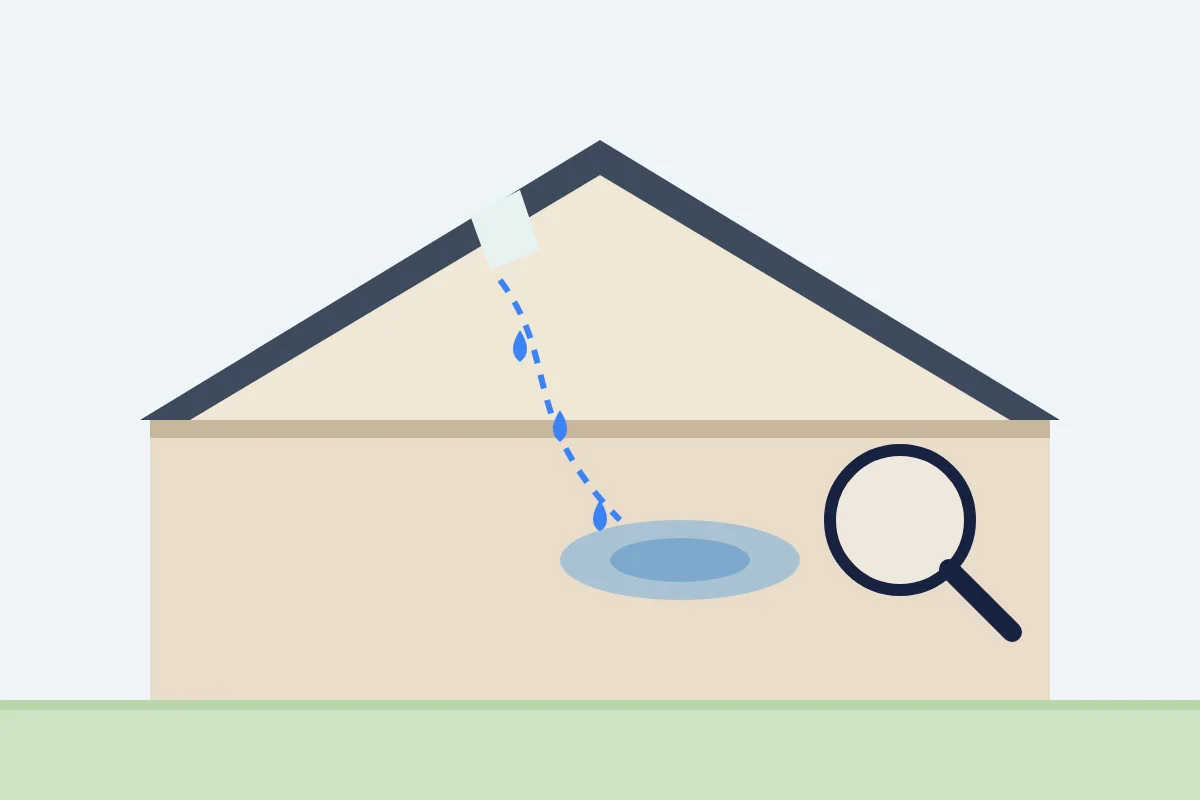
Rain that gets in will run along whatever it lands on. On a flat roof it can travel under the covering before it shows. Tracing that path is the heart of a leak investigation.
Is it the same as a RICS Level 2 or Level 3 survey?
No. This is a survey of the roof only, so it is not a RICS Level 2 or Level 3 survey. It can sit alongside a RICS survey if you want both.
Will you walk on the roof?
Only when it is safe. Some roofs are too steep or fragile to walk on safely. Safe viewpoints, the loft and a drone where it applies let us see the rest, and the report records anything we couldn’t see.
Can you tell me if my roof has asbestos?
No. We do not carry out asbestos surveys or testing. We flag materials that could contain asbestos, such as cement sheets or soffits on pre-2000 buildings, and recommend a specialist asbestos surveyor checks them before they’re disturbed.
Surveys for landlords and agents in Lower Dicker
Surveys can also be booked by buyers’ agents acting for a client. The report is emailed, so it can go straight to your client.
If the property is let, the agent or a tenant can let us in. We survey on weekdays and at weekends, which can make access easier.
Common roof problems in Lower Dicker
Slipped or missing slates and tiles let rain reach the underlay. Ageing felt underlay eventually tears and lets water through, while some very old roofs have nothing under the coverings. On slate roofs, slipping is frequently caused by corroded nails.
People normally book a survey after spotting one of these:
- Damp on a chimney breast
- Water through the ceiling under a flat roof
- Leaks that appear only in driving rain
- Stains around a skylight
For site and facilities teams at buildings like Hellingly Community Primary School, tracing a leak on a big roof starts with where the water appears and works back.
Choosing a roof surveyor
- Their drone registration, if they fly one
- What insurance they carry
- How long the report takes to arrive
- Whether the loft space is looked at, where there is one
What we look for on each type of roof
Valleys
Debris in a valley slows the water and pushes it sideways. During a downpour, water can back up under the coverings.
Flat roof upstands and outlets
On a flat roof, a leak can show some distance from the split. Moisture readings and thermal imaging can help narrow it down where conditions suit.
DIY checks: what’s safe
During heavy rain, look at the gutters from ground level or a window. Overflowing water can be a sign of a blockage or a gutter that has dropped.
Look up at the roof after a storm, from ground level: pieces of tile or slate on the ground, a gap in the ridge or a lifted flashing are all worth noting. Leave anything above ground level to a survey.