
West Sussex · London and the South East
Roof leak investigation in Patching, West Sussex
Tracing where water is getting into your roof for Patching, from an experienced roof surveyor. You get a clear written report with photos.
- Stains around a skylight
- Damp patches next to the stack
- Ceiling stains that grow after rain
How a roof leak investigation works in Patching
Moisture readings and thermal imaging are used where they’re useful. Moisture detection confirms where timbers, plaster or insulation are damp. A thermal camera shows patterns of temperature rather than water, so its findings are checked with moisture readings. Thermal imaging is part of the Premium Survey, and moisture detection comes with Standard. Thermal imaging works best after a sunny day, on a dry roof with little wind. We’re often asked to look into a leak that comes and goes with the weather and wet patches high on an inside wall, on the roof space, flat roof details and rooflights and dormers.
Many homes in small places like Patching face open ground, where storms hit ridges, verges and chimneys hardest. Once water gets into older walls, it takes a long time to dry, which makes finding the cause quickly worthwhile. A record with photographs is useful if you need to show the damage to anyone else.
The report works through the roof section by section, from the coverings down to the gutters, each with a short note and a photo. You will see the good as well as the bad.
- Where
- Patching (BN13)
- Wider area
- West Sussex
- Price
- From £150 inc. VAT
- Report
- A written report with photos, by email
- Appointments
- Monday to Sunday, daytime
- Insured
- PI and public liability insurance
- Call
- 07833 053749
- Page updated
- 27 October 2026
How the survey changes by roof type
Parapet and box gutters
Linings, joints and outlets are inspected wherever it’s safe, and look for signs of past overflowing.
Lead flashings
Water from a failed flashing can travel down the wall or along a rafter. That is why we check the flashings near a stain, not just the one directly above.
What affects the price in Patching
Prices vary from roof to roof, for these reasons:
- House, block, shop or office
- Height and safe access
- If the survey needs thermal imaging or a drone
- Chimneys, valleys, parapets and other details
Thermal imaging and drone inspection (where it applies) come with the Premium Survey, from £400 including VAT. We can help you choose the package that fits what you want to find out.
What we need to know
There’s no need for technical words. Just let us know:
- Whether there is a loft hatch, a shared roof or tricky access
- The type of building and roof, like pitched or flat
- Photos of the roof, taken safely from ground level or a window
- What’s prompted the survey
Surveys can be booked for weekdays, Saturdays or Sundays. To find a date that works for you, phone 07833 053749 or email us with the address and the days you’d prefer.
What else we do in Patching
Leave it or get it looked at?
Water and electrics do not mix. Keep away from any fitting that water is reaching and have an electrician check it. Then the source needs tracing. Matching old materials, such as handmade tiles or stone slates, can take time to source. Spotting a problem early leaves room to find them.
To find out what your survey will cost, call 07833 053749 or use the contact form and let us know about the roof. The price is agreed before a date is set.
Why book us in Patching
- 5,000+ roofs surveyed
- Thermal imaging and drones used where they help
- PI and public liability insurance
- Drone flown under a CAA Flyer ID and Operator ID
Read our cost guide or our case studies.
Common roof problems in Patching
Some water in the loft is not rain at all. Warm, moist air from the house rises into a cold roof space and condenses, particularly where ventilation is poor. Wet nail tips and damp underlay over a wide area are classic signs.
It’s worth booking a survey if you’ve seen:
- Brown rings on upstairs ceilings
- Stains around a skylight
- Drips from nail tips in a cold loft
- Damp on a chimney breast
Trees in and around Clapham Wood shed leaves that can end up in nearby gutters, so outlets and downpipes are worth watching.
Choosing a roof surveyor
- Are they insured for the work?
- When you’ll get the report
- How much experience they have with roofs like yours
- Their drone registration, if they fly one
Before and after the survey
Small things make a difference, both for the survey and for the roof itself. Our tips:
- Write down the wind direction and rain when it leaks
- Photograph the stain each time it appears
- Clear the loft hatch so we can get in
- Do not touch fittings that water is reaching
Once the work is done, hold on to the report. If water appears again, it shows what was found before, which makes the next step quicker.
Keep the roof space ventilated. Good airflow reduces condensation, which is often mistaken for a leak. Keep insulation clear of the eaves.
Questions from Patching
How do I find out if my home in Patching is listed?
Start with Historic England’s list for listing and your council for conservation areas. It’s worth checking before planning roof work, as both can affect what’s allowed.
Does being near the coast affect roofs in Patching?
Near the coast, roofs face more wind and more salt than further inland. Salt is hard on nails, clips and metal flashings, while strong wind lifts anything already loose.
Why is the stain in a different place from the leak?
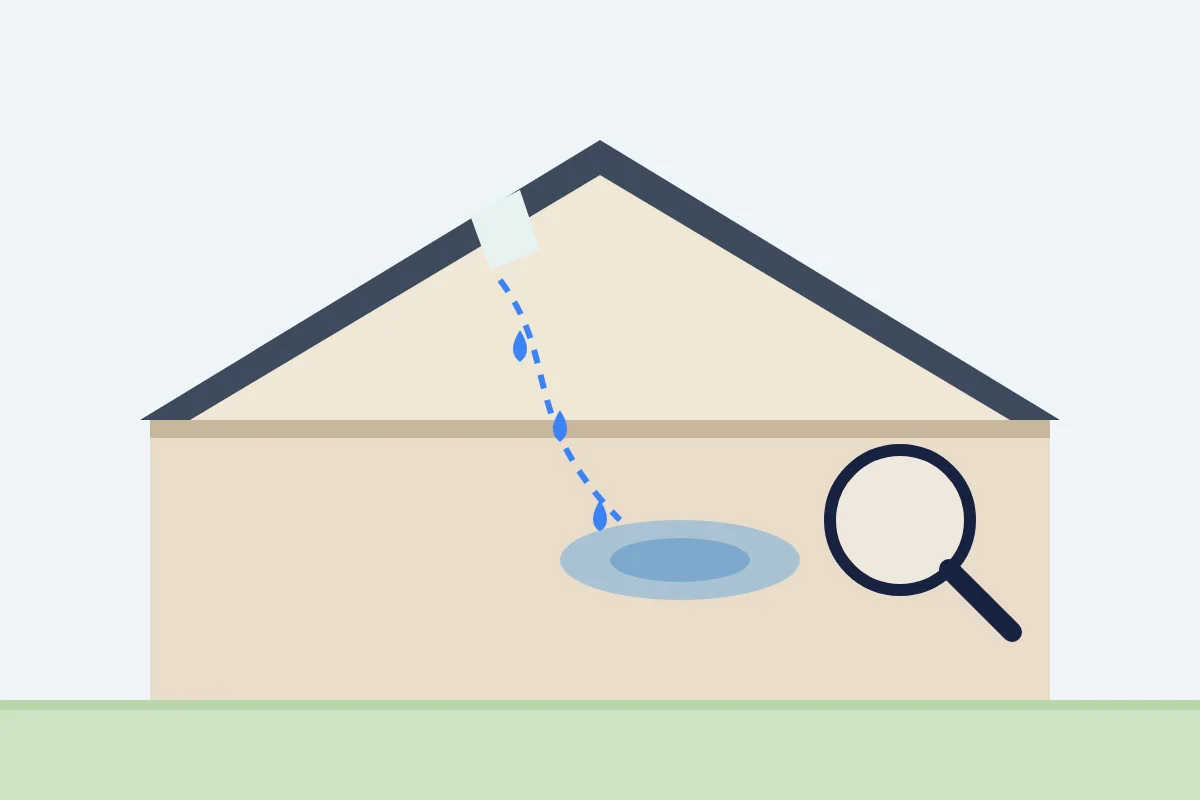
Rain that gets in will run along whatever it lands on. On a pitched roof it often runs down a rafter before it finds a way through the ceiling. Following that route is what our investigation does.
Is this an asbestos survey?
No. We don’t carry out asbestos surveys or testing. We flag materials that could contain asbestos, like cement sheets or soffits on pre-2000 buildings, and recommend a specialist asbestos surveyor checks them before they’re disturbed.
Can every leak be traced?
Not every leak can be pinned down in a single visit. Many leave clear signs, but intermittent leaks that need particular weather can be harder. The report sets out what we found and the most likely routes.
Do you work in Patching?
Yes. Patching is part of the area we cover.
How many surveys have you done?
We have more than 20 years’ experience and have completed over 5,000 surveys across London and the South East.
Patching roofs and the weather
Patching lies within about 4 miles of the sea, where sea air brings more salt and stronger wind than inland. Driving rain off the sea can be pushed into gaps that stay dry in calmer weather. Older houses across Sussex often have handmade clay tiles, and many have tile-hanging on their upper walls. Horsham stone slab roofs survive on some old Sussex buildings. The covering and its details give the first clues when tracing where water is coming from.
The streets around a church like The Parish Church of St John the Divine are often among the oldest in a place, and if you own one of the older houses nearby, lead flashings, valleys and old chimneys are typical places for water to get in. Historic houses like Ecclesden Manor, about 1.5 miles south-west, show how far back building around Patching goes. Leaks in period homes nearby often come from lead work and valleys that have been patched before.
Patching is about 3 miles north-west of Worthing, in West Sussex. We carry out roof leak investigations in Patching for houses, flats, blocks and commercial buildings, with a written report and photographs every time. Across West Sussex, we cover Patching and the places around it. You can also see our page for Brighton.
Every address in BN13 is within our area for roof leak investigations, from the main roads to the quietest streets. We cover properties on The Street and Coldharbour Lane and the roads around them. Other places close to Patching include Clapham (1 mile south-east), Hammerpot (2 miles west), Cote (2 miles east), Angmering (2 miles south-west) and Hangleton (2 miles south). Further out, we also cover Worthing (3 miles south-east), Bognor Regis (11 miles west), Chichester (14 miles west), Littlehampton (4 miles south-west), Shoreham-by-Sea (8 miles east) and Lancing (6 miles east).
Local landmarks in Patching
We work in homes and buildings around The Fox pub, The Angmering School and Clapham Wood. Patching’s nearest station is Goring-By-Sea station, about 2.3 miles south-east of the centre. Nearby you’ll also find Museum of Sussex Folklore (3.1 miles south-east) and Old Castle (3.1 miles south-east). Not far away are WWT Arundel and Highdown Hill.
The survey, step by step
We don’t take risks to get a closer look. We inspect what can be seen safely, and anything we can’t see is noted in the report. The survey typically takes about one to two hours for a house, and about three to four hours for a commercial roof. Somewhere like Patching needs a little journey planning: tell us about narrow lanes, gates, long drives and where we can park. On the day, we inspect what can be seen safely, inside and out.
- You let us know where the water shows and when it appears.
- We look at the stain, the ceiling and the loft above it.
- Outside, we look at every likely route in.
- Where it helps, we take moisture readings and use thermal imaging.
- You receive a written report with photos showing the likely source and what needs attention.
Preparing for the visit
- Jot down any questions you want answered
- Mention any parking restrictions on your street
- Point out any leaks or damp patches
Getting a price
Not sure which survey you need? It’s easiest to call 07833 053749 or drop us an email and describe the roof and what’s worrying you. We will explain the options and the price.