
Hampshire · London and the South East
Storm damage roof report in Filmore Hill, Hampshire
Find out what’s going on with the roof before you decide what to do next. We carry out storm damage roof reports in Filmore Hill, with photos and a clear written report.
- Damage from fallen branches or debris
- Flashings pulled away from walls or stacks
- Damaged pots on the stack
Honest limits
Without opening up the roof, some things stay hidden, so a survey has limits:
- Whether your insurer will pay the claim
- Acting for you with the insurer
- How your policy defines a storm
Not sure which survey suits your roof? You can phone 07833 053749 or email us and we will tell you. What our survey covers.
Roof types and parts we check
- Slate and tile slopes
- Gutters and fascias
- Ridges and hips
- Chimney stacks
- Flashings
- Flat roofs
Storm damage roof report in Filmore Hill
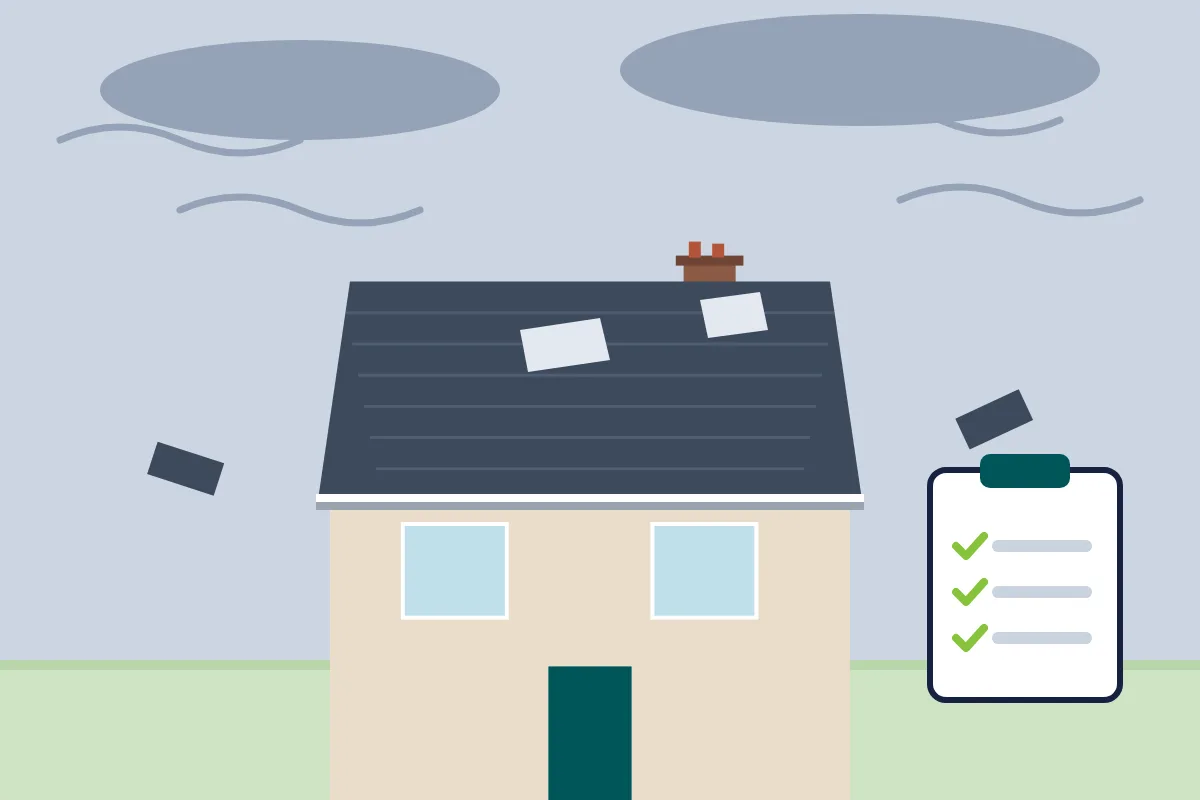
A storm damage roof report is an independent record of the damage to your roof after a storm. It sets out what is damaged, with photographs, and what we think the likely cause is. It is yours to pass to your insurer. The decision on any claim rests with your insurer and its policy wording. We are not loss adjusters, and we cannot tell you whether a claim will succeed. If you are worried about water coming in after the storm and broken or displaced guttering, we can find out what’s behind it.
In a village or hamlet like Filmore Hill, older cottages and farmhouses often have roofs that have been patched over many years. A new leak may be fresh damage or the latest sign of long-term wear, and the difference matters, especially to an insurer. We look at everything that’s safely in view and set out what we find. Damp in old walls and timbers is slow to dry, so the sooner the cause is found the better.
Most points in the report come with a picture, so you can see each defect rather than just read about it. If something couldn’t be seen safely, the report is clear about it.
- Location
- Filmore Hill (GU34)
- Wider area
- Hampshire
- Price
- From £150 inc. VAT
- Your report
- Emailed report with photos and recommendations
- Appointments
- Monday to Sunday, daytime
- Cover
- PI and public liability insurance
- Call
- 07833 053749
- Last updated
- 27 October 2026
How the survey works
We will ask a few questions first, about the roof’s history, any leaks and past repairs. The inspection then takes about 1–2 hours for most homes, depending on how much of the roof was hit. Around Filmore Hill, older homes can have small or awkward roof spaces, so it helps to know whether there is a loft hatch and how easy it is to reach. Only areas that can be reached safely are inspected.
- We note the date of the storm and the damage you’ve seen.
- We check the roof from wherever it is safe.
- Each area of damage is photographed and described.
- We note the likely cause and any signs of older wear.
- You get a written report to pass to your insurer.
How to prepare
- Clear the way to the loft hatch
- Tell us where we can park nearby
- Keep pets inside or away from the areas we are looking at
How to book
If you are buying, it helps to book soon after your offer is accepted, so there’s time to use the report before exchange. Otherwise, simply phone 07833 053749 or email us whenever suits you.
Related advice
Leaks and storm damage in Filmore Hill
About 4.2 miles west lies Hinton Ampner House, a reminder of how long the area around Filmore Hill has been built on. Period homes nearby can have lead valleys, tall chimneys and a patchwork of past repairs. Some Hampshire villages still have thatched roofs. Across the South East, older homes tend to have slate or clay tiles, and many later ones concrete tiles. Each of these roof types has its own typical places for water to get in.
For an older house near a landmark such as Holy Trinity Church, old mortar, worn lead and slipped slates are the usual suspects when water gets in.
Filmore Hill is about 6 miles north-west of Petersfield, in Hampshire. Filmore Hill is part of the area we cover across London and South East England. Across Hampshire, we cover Filmore Hill. Portsmouth is in our area too.
Postcode districts we cover here for storm damage roof reports: GU34. If you are just outside Filmore Hill, we cover Bailey Green (1 mile east), Privett (1 mile east), West Tisted (1 mile north-west), Monkwood (2 miles north) and West Meon (2 miles south-west). We also work in nearby towns such as Winchester (11 miles west), Havant (13 miles south), Eastleigh (14 miles west), Fareham (14 miles south-west), Horndean (9 miles south) and Chandler's Ford (15 miles west).
Near you in Filmore Hill
A little further out are Petersfield Community Hospital (5.6 miles south-east). Open spaces near Filmore Hill include Shutts Copse and Pidham Hill.
DIY checks: what’s safe
Your own check is a good start, but it is not a survey. You won’t see flashings, valleys or the backs of chimneys properly from ground level.
Look up at the roof after a storm, from the ground: broken slates or tiles in the garden, gaps along the ridge or loose lead are signs to note. Don’t go up yourself.
How we price storm damage roof reports
The price reflects the time and kit the roof needs. The main factors are:
- The height of the building and how the roof can safely be seen
- The size of the roof
- If the survey needs thermal imaging or a drone
- The shape of the roof and its details
One thing that affects the price is the package: Basic from £150, Standard from £250 or Premium from £400, all with VAT included. The roof’s size, height and access matter as well.
What we need to know
Some details help us recommend the right survey and price. When you contact us, it’s useful to mention:
- The type of building and roof, such as pitched or flat
- Pictures of the roof from a safe spot, if you have them
- The property’s address and postcode
- When you need the report by
A quick phone call is normally the easiest start: phone 07833 053749 or email us and we will ask a few questions about the roof. The price is agreed before a date is set.
Questions from Filmore Hill
Is Filmore Hill in the area you cover?
We do. The survey and report are the same in Filmore Hill as anywhere else, and visits run on weekdays and weekends.
How do I find out if my home in Filmore Hill is listed?
Historic England’s list shows listed buildings, and the local council can tell you about conservation areas. Listed building consent is needed for changes that affect a listed building’s special interest, and conservation areas can limit changes of roofing material.
Will my insurer pay out if I get a storm damage report?
That is not something we can promise. Insurers decide claims on their own policy wording. What we provide is an independent record of the damage.
Will you check the loft?
If it’s needed and safe to reach, yes. Inside, we look for damp, staining, gaps and sagging, as far as the space allows.
Do you test for asbestos?
No. Asbestos surveys and sampling are not something we do. The report may flag materials that could contain asbestos on buildings built or refurbished before 2000.
How strong does the wind have to be for a storm claim?
There’s no single figure. Many policies treat gusts of about 55 mph as storm conditions, but it varies. Your policy document will say.
How experienced are you?
We have completed more than 5,000 surveys, across 20+ years of surveying roofs, and 98% of customers are satisfied.
Tips that help
These tips come from what we see on roofs every week, before and after a survey:
- Record any water damage in rooms and the loft
- Look at what your policy says about wear and tear
- Arrange temporary cover with a roofer if rain is getting in
- Keep fallen slates or tiles as evidence if safe
If a claim is declined and you disagree, the first step is a complaint to the insurer. After that, you may be able to take it to the Financial Ombudsman Service.
Keep records of roof work and surveys. They help show the roof was in good order before a storm.
Roof by roof
Clay and concrete tiles
Tiles without fixings can move more easily in wind. We note what we can see of how tiles are fixed.
Ridge and hip tiles
A lifted ridge tile can let water into the roof. Each one is recorded with photos.