
Essex · London and the South East
Storm Damage Roof Report in Fuller's End
Wondering about the roof at a property in Fuller's End? We carry out storm damage roof reports in Fuller's End and across Essex, with plain-English findings.
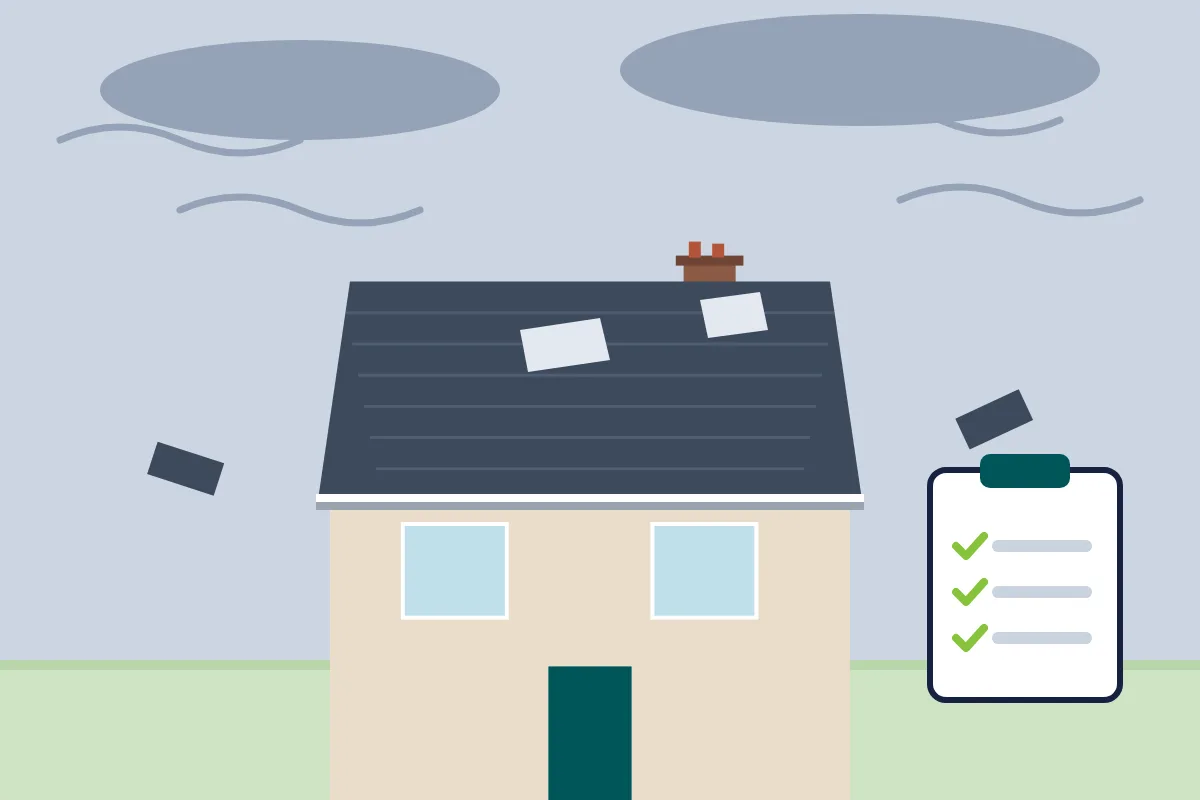
- Slates and tiles blown off the roof
- Loose or torn flashings
- Gutters pulled loose in the wind
What happens if roof problems are left?
It is useful to get a record soon after the storm, while the damage is fresh. Later weather and temporary repairs can make it harder to see what happened. In a place like Fuller's End, a barn or garage roof left to fail puts whatever is inside at risk. It is worth including them in a survey before a winter does the damage.
All our prices include VAT. Our price is from £150, including VAT. You will know the price for your survey before booking.
Why book us in Fuller's End
- Drone flown under a CAA Flyer ID and Operator ID
- Customer satisfaction of 98%
- Package prices that include VAT
- Covered by professional indemnity and public liability insurance
Take a look at what a roof survey costs and two real surveys.
Storm damage roof reports for homes and businesses in Fuller's End
Most policies do not cover wear and tear. That makes the difference between storm damage and old wear important. Our report records both: fresh breaks and recently moved slates or tiles, and older problems such as corroded nails or worn mortar. We describe what we see, whichever way it points. Your insurer then decides how its policy applies. We survey slate and tile slopes, chimney stacks and ridges and hips, and people most often book us about roofs hit by falling trees and loose or torn flashings.
In a village or hamlet like Fuller's End, older cottages and farmhouses often have roofs that have been patched over many years. A new leak may be fresh damage or the latest sign of long-term wear, and the difference matters, especially to an insurer. We look at whatever is safely visible and set out what we find. Older walls and timbers hold water for a long time, so it’s worth finding the cause soon.
The report does not just list problems. It explains what we found, why it matters and what we recommend, so you can decide what to do next.
- Location
- Fuller's End (CM22)
- Wider area
- Essex
- Cost
- From £150 inc. VAT
- Report
- Written, with photos, emailed to you
- Appointments
- Weekdays, Saturdays and Sundays
- Insured
- Professional indemnity and public liability
- Phone
- 07833 053749
- Updated
- 27 October 2026
What a storm damage roof report looks like in Fuller's End
Weatherboarded walls and clay tile roofs are typical of older Essex buildings, while many towns grew with post-war and newer estates. Knowing the roof type helps narrow down where water may be getting in. The wider area around Fuller's End has a long history of building, with Horham Hall about 4 miles north-east. Older homes in the wider area often have features worth a closer look, like lead valleys, tall stacks and roofs that have been patched over the years, and a listed home or one in a conservation area may need consent for changes of material.
For landlords with property near Elsenham station, tracing a leak quickly matters when a tenant is living with it. If you live in an older home near Church of St Mary the Virgin, leaks on older roofs frequently start at lead flashings, valleys or around old chimney stacks.
Fuller's End is about 4 miles north-east of Bishop's Stortford, in Essex. We cover Fuller's End and the rest of Essex, as part of our work across London and the South East. Our area takes in places right across Essex, large and small. You can also see our page for Chelmsford.
Surveys in CM22 work the same way as everywhere else we cover. We also cover Elsenham (1 mile north-west), Ugley Green (1 mile north-west), Henham (2 miles north-east), Brick End (2 miles east) and Ugley (2 miles north-west). Within a short drive, we also cover Braintree (14 miles east), Harlow (11 miles south-west), Saffron Walden (8 miles north), Great Dunmow (6 miles south-east), Epping (15 miles south) and Great Notley (13 miles east).
Local landmarks in Fuller's End
We work in homes and buildings around Robin Hood Public House, among other places. The nearest railway station is Elsenham station, about 0.8 miles north of the centre. Nearby you’ll also find House On The Hill Toy Museum (1.3 miles west) and Herts and Essex Hospital (3.9 miles south-west). For a walk, there is Portingbury Hills and Aubrey Buxton Nature Reserve.
Signs you need a storm damage roof report in Fuller's End
When you claim, your insurer may ask for evidence of the damage and its cause. An independent report gives you a clear record to send. The decision still rests with the insurer.
We’re often asked to look at:
- Loose or torn flashings
- Broken or displaced guttering
- New damp or leaks inside
- Roofs hit by falling trees
If you look after a building such as Forest Hall School, water through a big roof can travel a long way before it drips, so the search covers more than the obvious spot.
Choosing a roof surveyor
- How soon the report will arrive
- Which viewpoints they use to see the roof
- Are they insured for the work?
- What they won’t be able to tell you
Towns and villages near Fuller's End
What else we do in Fuller's End
How the survey works
Safety comes first on every visit. Everything that can safely be seen is inspected, and if part of the roof can’t be seen, the report says so. Most visits take an hour or two at a house, and longer if the damage is spread across a large roof. For a village or hamlet like Fuller's End, the journey is planned in advance: let us know about lanes, gates and parking. The roof is looked at from the ground, from windows, from the loft where there’s safe access and from the roof where it’s safe.
- First we go through when the storm hit and what you’ve noticed.
- We look at the roof from wherever it’s safe.
- We record and photograph the damage.
- The report notes whether the damage fits a storm, older wear or both.
- You get a written report to pass to your insurer.
Before we arrive
- Jot down any questions you want answered
- Tell us about parking before the day
- Check the loft hatch can be reached
Book a survey
Photos help, if you have them. Take them safely from ground level or a window. To send them or to book, phone 07833 053749 or send us an email.
Advice
What we can’t see
Before booking, it’s worth knowing what a survey will not do:
- Negotiating a claim settlement
- How your policy defines a storm
- Damage hidden under coverings or inside the structure, without opening up
If in doubt, ring 07833 053749 or drop us an email and we will point you to the right survey. What our survey covers.
Roof types and parts we check
- Flashings
- Ridges and hips
- Slate and tile slopes
- Flat roofs
- Gutters and fascias
- Chimney stacks
Fuller's End questions
Does a conservation area affect roof work in Fuller's End?
Historic England’s list shows listed buildings, and the local council can tell you about conservation areas. Listed building consent is needed for changes that affect a listed building’s special interest, and conservation areas can limit changes of roofing material.
Is Fuller's End within the area you cover?
Yes. Fuller's End is within the area we cover, which takes in towns, villages and rural addresses. We work right across London and South East England. Just mention lanes, gates or anything else about the route when booking.
Will my insurer pay out if I get a storm damage report?
The decision is your insurer’s, not ours. We record the damage, with photos and the likely cause, for you to give to your insurer.
How experienced are you?
More than 5,000 surveys over 20+ years, across London and South East England.
Are you loss adjusters?
No. We’re not loss adjusters, and we don’t negotiate claims. We give you an independent report of the damage for you to send to your insurer.
Do I have to be there for the survey?
That depends on the survey. For inside areas and the loft space, someone has to give us access; we’ll agree the details when you book.
Will you fly a drone over my roof?
Where it helps and the rules allow, yes. Our sub-250g drone is flown by a CAA-registered operator with a Flyer ID and Operator ID, and the airspace and weather are checked before every flight.
DIY checks: what’s safe
Fresh stains on ceilings or walls after rain are worth noting. Photograph them and note the date, which helps when we check the roof.
You can learn a lot from the ground. With binoculars, look for slipped or missing slates and tiles, gaps along the ridge and leaning chimneys. Please do not climb up for a closer look.
What a survey costs
The price reflects the time and kit the roof needs. That comes down to:
- The size of the roof
- The package you choose: Basic, Standard or Premium
- How tall the building is and how easy the roof is to see
- Features like valleys, chimneys, dormers and parapets
The Premium Survey includes thermal imaging and drone inspection where it applies, which starts from £400, including VAT. We can help you choose the package that fits what you’d like to know.
Getting in touch
Here’s what helps us most when you contact us:
- The type of building and roof, such as pitched or flat
- Dates you are working to, like exchange
- Anything about access we should know
- Any stains, drips or damp patches you’ve seen indoors
We survey roofs on any day of the week. To arrange a day that suits you, phone 07833 053749 or send us an email.