
East Sussex · London and the South East
Storm damage roof report in Glynde, East Sussex
Find out what’s going on with the roof before you spend money on it. Storm damage roof reports in Glynde, with photos and a clear written report.
- Slipped or missing slates or tiles
- Ridge tiles that have come loose
- Lead lifted at abutments
Rented homes, blocks and businesses
Letting agents can arrange access with tenants, at a time agreed in advance. We survey seven days a week, which can make access easier.
Surveys can also be booked by buyers’ agents acting for a client. Reports are emailed, so they’re easy to pass on.
Storm damage roof report in Glynde
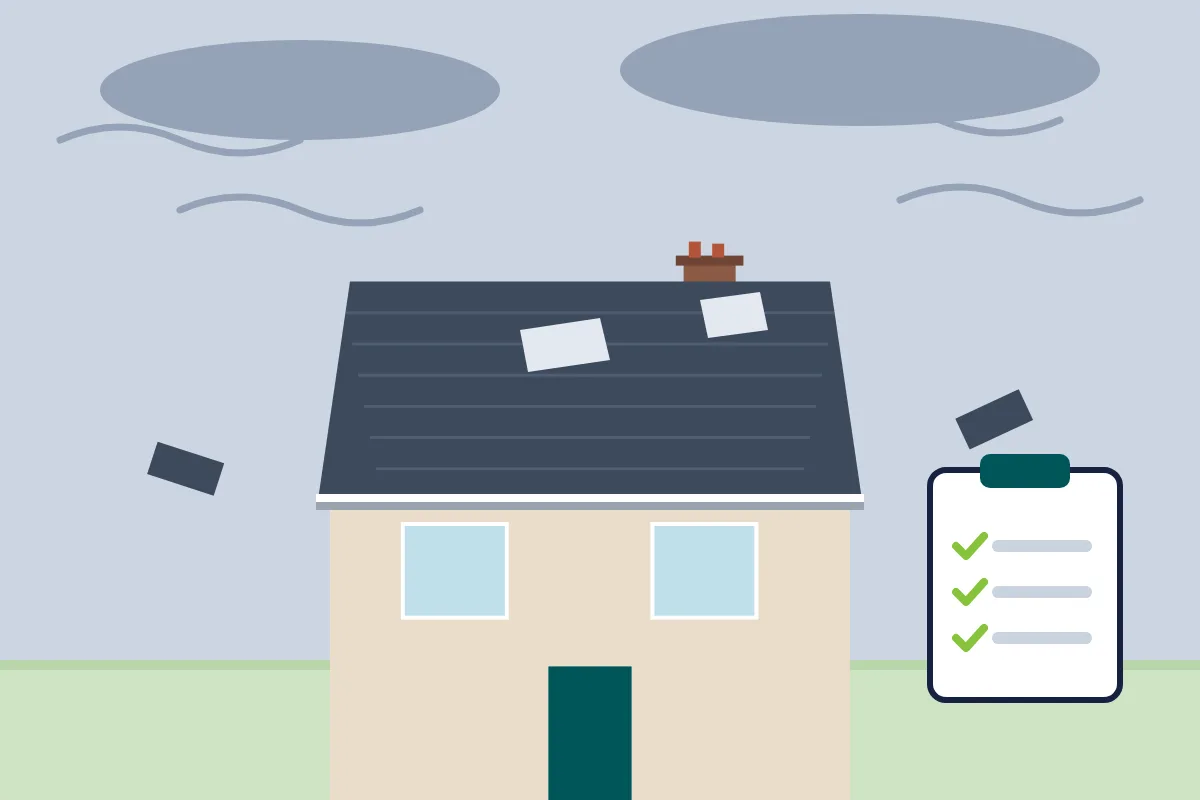
Most policies do not cover wear and tear. So it matters whether the damage came from the storm or from a roof that was already worn. We note signs of each: fresh breaks and recently moved slates or tiles, and older problems such as corroded nails or worn mortar. We describe what we see, whichever way it points. Your insurer then decides how its policy applies. If you’ve noticed flashings pulled away from walls or stacks and broken or displaced guttering, we can find out what’s behind it, whatever the roof.
Roofs in small places like Glynde often stand in the open, where storms hit ridges, verges and chimneys hardest. Once water gets into older walls, it takes a long time to dry, which makes finding the cause quickly worthwhile. A written record also helps if you need to explain it to anyone else.
Report times depend on the survey you book: Basic within 48 hours, Standard in 24–48 hours and Premium the same day.
- Where
- Glynde (BN8)
- Wider area
- East Sussex
- Prices
- From £150 inc. VAT
- Report
- A written report with photos, by email
- Survey days
- Weekdays, Saturdays and Sundays
- Insurance
- PI and public liability insurance
- Telephone
- 07833 053749
- Updated
- 27 October 2026
When you need someone else
It is a careful look at the roof, not the whole story. The main limits are:
- A decision on your insurance claim
- Acting for you with the insurer
- Repair costs or quotes for the work
If in doubt, phone 07833 053749 or send us an email and we’ll recommend the right survey. What a survey covers and does not.
Roofs we survey in Glynde
- Ridges and hips
- Gutters and fascias
- Chimney stacks
- Flashings
- Flat roofs
- Slate and tile slopes
Tips from our surveys
A little preparation and a few simple habits help. Our tips:
- Keep invoices for temporary repairs
- Take photos from ground level or a window, never by climbing
- Look at what your policy says about wear and tear
- Record any water damage in rooms and the loft
For repair costs, ask a roofer to quote. They can use our report to see what needs doing.
Store invoices and reports for any roof work. They help show the roof was in good order before a storm.
Places near Glynde
More services for Glynde
How it works
The visit normally starts outside and finishes in the loft: outside views come first, then the roof space if there is safe access. All told, expect an hour or two at most homes; commercial roofs usually need 3–4 hours. Older rural homes like those around Glynde can have a main roof, lower lean-to roofs and outbuildings all joined together. We work round each section in turn, from the safest viewpoints, and anything we can’t see is noted.
- We start with the details: when the storm hit and what damage you can see.
- We inspect the roof from safe viewpoints and from the loft where there’s access.
- The damage is recorded with photographs, area by area.
- The likely cause is recorded, along with any evidence of older wear.
- We send you a written report with photos, ready to give to your insurer.
Before the survey
- Keep pets inside or away from the areas we are looking at
- Buyers: confirm access with the estate agent or seller
- Let us know about parking near the property
Booking a survey
A quick phone call is typically the easiest start: call 07833 053749 or send us an email. The price is agreed before a date is set.
Related advice
When to book a survey in Glynde
Gusts work at anything on a roof that is loose or exposed. Rain can then blow in where slates or tiles have gone. People usually call us after a storm, once they’ve noticed damage or a leak.
Most people get in touch after spotting one of these:
- Damaged ridges and hips
- Broken or displaced guttering
- Flat roof edges peeled back
- Roofs hit by falling trees
Landlords with a home close to Glynde station may find that tracing a leak quickly matters when a tenant is living with it.
Before booking anyone
- How they plan to inspect the roof safely
- Do they have a CAA Flyer ID and Operator ID for drone work?
- Which limits apply to the survey
- Is VAT included in the price?
Common questions in Glynde
How do I find out if my home in Glynde is listed?
Historic England’s list shows listed buildings, and the local council can tell you about conservation areas. If a home is listed, changes that affect its special interest need listed building consent, and in a conservation area re-roofing in different materials may need permission.
Do you carry out roof surveys in Glynde?
Yes. We work right across London and South East England, and Glynde is part of that. You can call 07833 053749 or use the contact form with the address and a few details.
What wind speed counts as a storm?
There is no single figure. Many use gusts of about 55 mph, but each policy sets its own definition. Your policy document will say.
Can I challenge a declined storm claim?
The first step is a complaint to your insurer. If you’re still unhappy, you may be able to take it to the Financial Ombudsman Service. Our report gives you an independent record of the roof, though we can’t predict the outcome.
How long will you be at the property?
It usually takes about 1–2 hours at a house, and longer if the damage is spread across a large roof. The report follows by email.
Can you survey a shared roof?
Yes, as long as access is agreed. The roof of a block or converted house is often shared, so the freeholder or managing agent needs to agree access. We inspect only the parts we are allowed to reach.
Will you walk on the roof?
Not always. Some roofs are too steep or fragile to walk on safely. We use safe viewpoints, the loft space and a drone where it applies.
Leaks and storm damage in Glynde
Glynde Place, about 0.1 miles north, is one of the historic houses in the wider area around Glynde. Period homes nearby can have lead valleys, tall chimneys and a patchwork of past repairs, and the council can say whether a home is in a conservation area. In Sussex, older roofs are often handmade clay tile, frequently with tile-hanging on the walls below. Horsham stone slab roofs survive on some old Sussex buildings, alongside oast houses and timber-framed Wealden hall houses. Where water gets in depends a good deal on what the roof is made of and how it’s detailed.
If you live in an older home near St Mary's Church, lead flashings, valleys and old chimneys are typical places for water to get in. Trees in and around Lewes and Laughton Levels shed leaves that can end up in nearby gutters, so outlets and downpipes are worth watching.
Glynde is about 3 miles east of Lewes, in East Sussex. Glynde gets the same service as everywhere else we work: a close look at what can safely be seen, photographs and a clear written report. Glynde is one of the places in East Sussex we cover. There’s also a page for Brighton.
All of BN8 is covered for storm damage roof reports. Streets in the area include Lacys Hill and Ranscombe Lane, all of which we cover. Neighbouring places we cover for storm damage roof reports include Glyndebourne (1 mile north), Firle (1 mile south-east), Ashton Green (2 miles north), Ringmer (2 miles north) and Cliffe (2 miles west). Further out, we also cover Eastbourne (11 miles south-east), Seaford (6 miles south), Lewes (3 miles west), Hailsham (8 miles east), Crowborough (14 miles north) and Uckfield (7 miles north).
Near you in Glynde
Around Glynde, our work takes us to homes and buildings near Ringmer Community College and Sixth Form, Lewes and Laughton Levels and Firle Church of England Primary School, among other places. Glynde has its own railway station: Glynde station. Other landmarks nearby include Lewes Castle (2.7 miles west) and Museum of Agricultural Bygones (2.4 miles north-east). The countryside around Glynde includes Cliffe Hill and Southerham Farm.
How we price storm damage roof reports
We confirm the price for your survey before you book. This is what makes a difference:
- Basic, Standard or Premium
- Extensions, dormers and garages with roofs of their own
- How tall the building is and how easy the roof is to see
- The type of building, from a house to a block or an office
All our prices include VAT. Storm damage roof report starts from £150, including VAT. We confirm the exact price before booking.
What to let us know when you get in touch
A little information up front helps. Please include:
- What’s prompted the survey
- Anything about access we should know
- When you need the report by
- The style of property, from a terrace to a block
Our price is from £150, including VAT. The exact figure depends on the roof and the package, so call 07833 053749 or use the contact form with the details.