
Bracknell Forest · London and the South East
Wildridings Storm Damage Roof Report
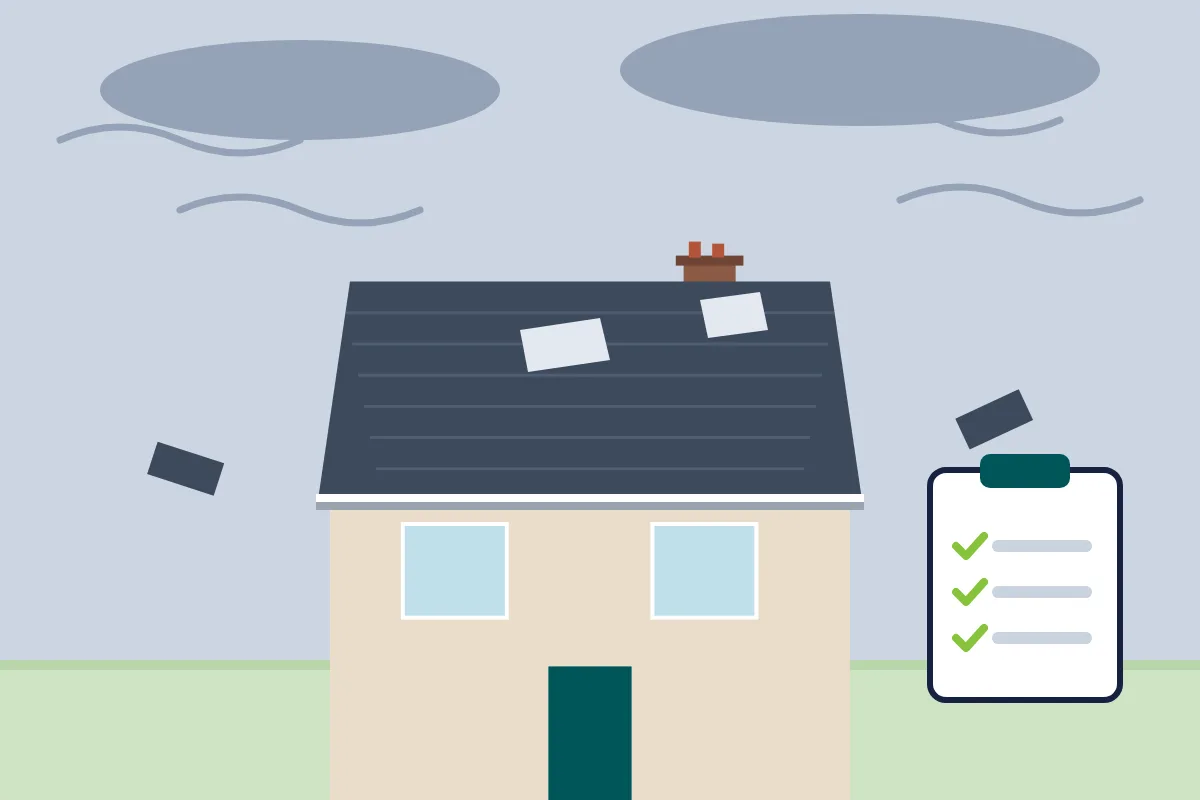
We take a careful look at the roof at your property in Wildridings, and put it all in a written report with photos.
- Gutters pulled loose in the wind
- Flat roof edges peeled back
- Gaps where slates or tiles have gone
How a storm damage roof report works in Wildridings
The Financial Ombudsman asks three questions when it looks at storm complaints: whether there were storm conditions around the date, whether the damage fits a storm, and whether the storm was the main cause. Our report focuses on the second and third points. Weather records for the date are for you or your insurer to check. We survey chimney stacks, gutters and fascias and flat roofs, and common reasons people get in touch are damaged pots on the stack and torn or lifted flat roof coverings.
Houses in smaller places like Wildridings can stand more in the open, so wind and driving rain find any weakness in ridges, verges and flashings. If a leak shows only when the wind is in a certain direction, that is a useful clue. Let us know when it happens when you contact us. Gutters and downpipes on the exposed side are worth a look as well.
The report is written in plain words, so you don’t need to be a roofer to follow it. Photos show what each point refers to, with the urgent items made clear.
- Where
- Wildridings (RG12)
- Region
- Bracknell Forest
- Price
- From £150 inc. VAT
- Your report
- A written report with photos, by email
- Appointments
- Weekdays, Saturdays and Sundays
- Cover
- PI and public liability insurance
- Phone
- 07833 053749
- Page updated
- 27 October 2026
Why it’s worth a survey now in Wildridings
Your policy may say how quickly you need to report damage. Check the wording and tell your insurer as soon as you can. An independent report can follow. In a smaller place like Wildridings, wherever a roof is exposed, a loose ridge or flashing does not stay loose for long. Each storm lifts it a little further, and water follows.
Thermal imaging and drone inspection (where it applies) come with the Premium Survey, from £400 including VAT. We’ll tell you which package suits the questions you have.
Why choose Independent Roof Survey in Wildridings
- Surveys on weekdays, Saturdays and Sundays
- Thermal imaging and drones used where they help
- Plain-English reports with photos
- Over 20 years’ experience
Take a look at our cost guide and our case studies.
Places near Wildridings
Other services in Wildridings
Tips that help
Some practical points come up on survey after survey. They’re worth knowing whatever the roof:
- Keep fallen slates or tiles as evidence if safe
- Arrange temporary cover with a roofer if rain is getting in
- Take photos from ground level or a window, never by climbing
- Check your policy for how to report damage
For repair costs, ask a roofer to quote. The report gives them a clear list of the damage.
Keep the roof in good order between storms. Have loose slates, tiles and flashings seen to promptly.
Common questions in Wildridings
Is Wildridings within the area you cover?
We do. Villages and rural addresses get the same survey as a town house.
Should a flat-roofed garage or porch in Wildridings be checked too?
Frequently, yes, so mention it as you book. Flat-roofed garages and porches are common in new towns like Bracknell, and older felt coverings may be near the end of their life.
Is wear and tear covered by insurance?
Wear and tear is typically excluded from home insurance. We note both storm damage and older defects, so you know what the roof shows. How the policy applies is up to your insurer.
Do I need to be at home?
It depends on what we need to see. For inside areas and the roof space, someone has to give us access.
Do you climb onto every roof?
Only when it is safe. Most of what we need can be seen from safe viewpoints, the loft and, where it applies, a drone, and the report notes anything we couldn’t see.
Do you look in the roof space?
If the survey needs it and the loft space can be reached safely, yes. Please clear anything stored under the hatch.
How long will you be at the property?
Most surveys take between one and two hours at a typical home, or half a day or so for a commercial building. The report follows by email.
Roof by roof
Slate roofs
In high winds, slates can slip or go, often where nails have rusted. Our report notes moved slates and any sign of older corrosion.
Chimney stacks
Wind can pull the flashings away from a chimney. We photograph any we find.
Can I check my roof myself?
A lot can be seen from the ground. Binoculars help you spot slipped slates or tiles, gaps along the ridge and a leaning stack. Please don’t climb up for a closer look.
Keep a simple record: when leaks happen, ground-level photos and any past roof work. Share it with us when booking, as it helps us focus the survey.
What this survey can’t tell you
Our survey is not a RICS Level 2 or Level 3 survey, a structural engineer’s report or an asbestos survey. It also has these limits:
- Repair costs or quotes for the work
- Areas we cannot see safely
- What your policy covers, which depends on its wording
Not sure which survey suits your roof? You can ring 07833 053749 or use the contact form and we’ll tell you before booking. What a survey covers and does not.
Roofs we survey in Wildridings
- Flat roofs
- Ridges and hips
- Gutters and fascias
- Chimney stacks
- Slate and tile slopes
- Flashings
How the survey works
We work from the outside in: outside views come first, then the loft space if there’s safe access. In total, it takes roughly 1–2 hours for a house, with bigger or more complicated roofs taking longer. Being in a smaller place like Wildridings does not change how the visit works: we look from the ground, from windows, from the loft and from the roof where it’s safe. Point out any stains, cracks or loose pieces you’ve spotted.
- First you give us the date of the storm and what you’ve noticed, inside and out.
- The roof is looked at from ground level, from windows and from the loft space where it is safe.
- Each area of damage is photographed and described.
- The likely cause is recorded, along with any evidence of older wear.
- The findings are written up with photos for you to share with your insurer.
Getting ready for the survey
- For a flat or shared roof, check access with whoever owns or manages the building
- Make sure we can get to the back of the property
- Leave a clear route to the loft
Arrange a survey
We survey roofs on weekdays and at weekends. To find a date that works for you, ring 07833 053749 or email us with the address and the days you’d prefer.
Related advice
What a storm damage roof report looks like in Wildridings
Slate and clay tile are the usual coverings on older South East houses, with concrete tiles on many later estates, and flat-roofed additions turn up almost everywhere. Knowing the roof type helps narrow down where water may be getting in. Listing and conservation areas can both shape what roof work is allowed on an older home. Your council and Historic England’s list will tell you where you stand.
For site and facilities teams at buildings such as Wildridings Primary School, water through a big roof can travel a long way before it drips, so the search covers more than the obvious spot. If you run a business near The Lexicon, a quick answer on where water is coming in keeps a business running. If you live in an older home near St Michael and St Mary Magdalene's Church, old mortar, worn lead and slipped slates are the usual suspects when water gets in.
Wildridings is about 1 mile south-west of Bracknell, in Bracknell Forest. Wildridings is one of many places we visit across Bracknell Forest, for houses, flats and commercial buildings. Our area takes in places right across Bracknell Forest, from the larger towns to small villages. There’s also a page for Reading.
Surveys in RG12 work the same way as everywhere else we cover. If you need a storm damage roof report at a property on Mill Lane, Frog Lane and Rectory Lane or anywhere close by, we can survey it. Wildridings is on the A3095, so it is easy for us to get to. We also cover the places around Wildridings: Easthampstead (1 mile south-east), Bracknell (1 mile north-east), Harmans Water (1 mile east), Amen Corner (1 mile west) and Priestwood (1 mile north). Further out, we also cover Sandhurst (4 miles south), College Town (5 miles south), Little Sandhurst (4 miles south-west), Owlsmoor (4 miles south) and Winkfield Row (3 miles north-east).
Landmarks near Wildridings
In Wildridings, that means homes and buildings near The Brakenhale School, The Brakenhale School and The Horse And Groom Public House, among other places. Wildridings’s nearest station is Bracknell station, about 0.6 miles north-east of the centre. Nearby you’ll also find The Lexicon (0.8 miles north-east) and Pinewood Hospital (2.1 miles south-west). Green spaces nearby include Heath Lake and Wildmoor Heath.