
Isle of Wight · London and the South East
Gutter survey in St Lawrence, Isle of Wight
A survey of gutters, valleys, outlets and downpipes across St Lawrence, with drones and thermal imaging where they help. Call or email for a price.
- Fascia boards damaged by overflowing water
- Leaks at the gutter joints
- Blocked outlets and hoppers
Gutter survey in St Lawrence
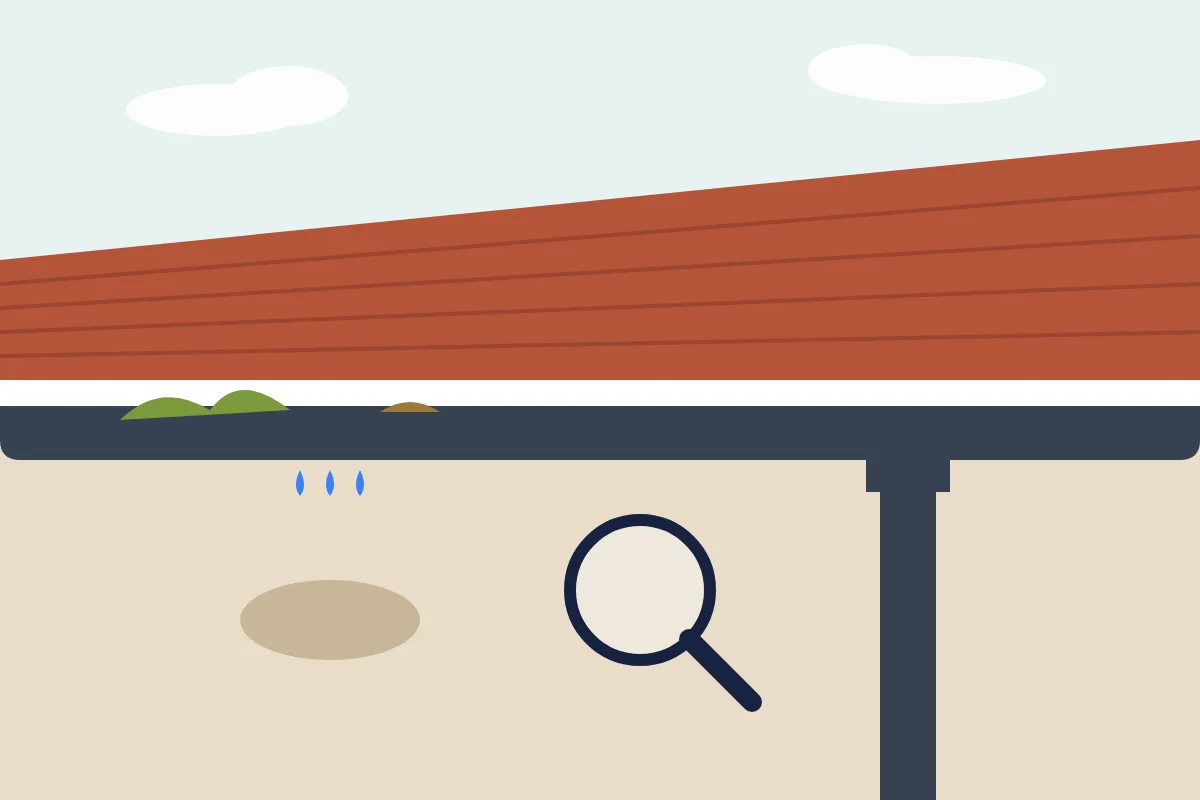
Damp on walls, water marks under a valley or streaks down the brickwork can frequently be traced to the gutters. We check whether gutters, outlets or downpipes are the likely source, as far as can be seen safely. If the evidence points elsewhere, such as a flashing or the roof covering, we will say so, with a suggested next step. We survey parapet and box gutters, eaves gutters and valley gutters, and the problems we are asked to look at most are leaves and moss blocking gutters and overflowing valley or parapet gutters.
Somewhere as small as St Lawrence, homes are often older cottages and farmhouses, with outbuildings and some newer houses. Roofs there can be clay tile, slate, stone or thatch, and chimney stacks are often old. Each needs checking in its own way, and thatch is a specialist material we report on as far as it can be seen. On older roofs, it is typically the chimneys and lead flashings that need work first.
If any part of the gutter couldn’t be seen safely, we say so in the report. That way, it is clear what was covered and what wasn’t.
- Location
- St Lawrence (PO38)
- Region
- Isle of Wight
- Prices
- From £150 inc. VAT
- Report
- Emailed report with photos and recommendations
- Appointments
- Weekdays, Saturdays and Sundays
- Cover
- Professional indemnity and public liability
- Call
- 07833 053749
- Page updated
- 27 October 2026
Gutter surveys around St Lawrence
St Lawrence is within about 1 mile of the coast, where sea air brings more salt and stronger wind than inland. Near the sea, metal fixings wear faster and loose pieces on a roof are more likely to lift. Thatch survives on some older Isle of Wight buildings, and nowhere on the island is far from the sea. On roofs like these, good slates or tiles can outlast the nails, battens, lead and mortar around them.
Landlords with a home close to Shanklin station may find that a roof report helps you deal with small faults before they turn into a call from a tenant. If you look after a building such as St Francis Catholic and Church of England Primary Academy, a written record of a large roof helps plan work for the holidays rather than in term time. Take an older house close to St Lawrence's Church: its roof may have old fixings, lead flashings and chimneys that need a closer look.
St Lawrence is about 4 miles south-west of Shanklin, in the Isle of Wight. Wherever you are in St Lawrence, we can carry out gutter surveys at your property, on a weekday, Saturday or Sunday. We cover towns and villages across the Isle of Wight. Our Portsmouth page covers surveys nearby.
We cover every part of PO38 for gutter surveys. Whether your property is on Twining Road, Whitwell Road and Woolverton Road or anywhere close by, we can survey it. Neighbouring places we cover for gutter surveys include Steephill (1 mile east), Nettlecombe (1 mile north-west), Whitwell (1 mile north-west), Ventnor (1 mile east) and Bierley (2 miles north-west). We also work in nearby towns like Newport (8 miles north), Ryde (10 miles north), Cowes (12 miles north), Sandown (6 miles north-east), Shanklin (4 miles north-east) and East Cowes (12 miles north). Remote addresses need a little more planning, so please mention your location when you ring 07833 053749 or send us an email.
Around St Lawrence
We work in homes and buildings around St Catherine's School and the streets around them. The nearest railway station is Shanklin station, about 4.1 miles north-east of the centre. A little further out are Arthur Webster Memorial Hospital for Children (4.1 miles north-east) and Longshoremans Museum (1.3 miles east). Open spaces near St Lawrence include Stenbury Down.
How we price gutter surveys
Prices vary from roof to roof, and it comes down to:
- The type of building, from a house to a block or an office
- Whether thermal imaging or a drone is needed
- The package you choose: Basic, Standard or Premium
- Building height and the viewpoints available
One thing that affects the price is the package: Basic from £150, Standard from £250 or Premium from £400, all with VAT included. Size, height and access can affect the price too.
Booking your survey
You do not need to know any roofing terms. It’s enough to tell us:
- The type of building and roof, such as pitched or flat
- Why you want a survey: buying, a leak, a storm or new work
- Pictures from the garden or a window, if you have them
- Any stains, drips or damp patches you’ve seen indoors
Photos help, if you have them. Pictures from ground level or a window are fine; never climb up to get a better view. To send them or to book, phone 07833 053749 or drop us an email.
What a gutter survey does not cover
To be straight with you, there are limits to any roof survey:
- What’s hidden inside a downpipe
- The inside of buried drains
- Rot or damp concealed behind fascias or inside walls
If in doubt, call 07833 053749 or email us and we will point you to the right survey. What our survey covers.
What we look at
- Valley gutters
- Downpipes
- Parapet and box gutters
- Eaves gutters
- Fascias and soffits
- Outlets and hoppers
How the survey changes by roof type
Cast iron gutters
Plenty of period homes still have cast iron rainwater goods. They last well when painted but corrode once the paint wears off.
Plastic (uPVC) gutters
Plastic rainwater systems are common on homes of many ages. As the seals age, joints can start to drip and brackets may drop under the weight of debris.
Tips from our surveys
From years of surveys, a few habits stand out as worth the effort:
- Look for green streaks or damp patches on walls
- Leave gutter checks at height to someone equipped for it
- Look for downpipes coming loose
- Do not leave hidden gutters out of a clear-out
After any work is done, watch the gutters in the next heavy rain. Water should run to the outlets and away without spilling over, and if it doesn’t, raise it with whoever did the job.
Get the gutters cleared every year or more often near trees. The best time is typically after the leaves have dropped. Clean gutters can do their job.
How it works
You do not need to do much on the day. Show us any stains, drips or problem areas you know about, and we’ll get on with the inspection. The survey itself takes between one and two hours on an ordinary house, with bigger or more complicated roofs taking longer. For a village or hamlet like St Lawrence, the journey is planned beforehand: let us know about lanes, gates and parking. On the day, we inspect everything that’s safely in view, inside and out.
- We agree which parts of the building you are most worried about.
- Each gutter run is checked for blockages, sags and leaking joints.
- We check the outlets, hoppers, downpipes and any overflows.
- Fascias, soffits and the walls below are looked at for signs of overflow.
- You get photos and written recommendations, prioritised where relevant.
How to prepare
- Make sure we can get to the back of the property
- Agree roof access with the managing agent if it’s shared
- Make a note of anything you’d like us to look at
Book a survey
Getting a price is simple: just ring 07833 053749 or email us and give us a few details about the property and we’ll explain which survey suits. The price is agreed up front.
Related advice
Common questions in St Lawrence
Is the coastal weather around St Lawrence hard on roofs?
It can do. Within about 1 mile of the sea, as St Lawrence is, metal fixings wear faster and gales find any loose ridge or slate.
Can a landlord with a rental near Shanklin station book a roof survey?
Yes, landlords and letting agents book with us as well as owners. You can ring 07833 053749 or email us with the address and a few details, including who will give access on the day.
Do you use drones?
Where it is applicable and safe, yes. We are a CAA-registered drone operator (Flyer ID and Operator ID), flying a sub-250g drone. It is included in the Drone Roof Survey and, where it applies, the Premium Survey.
How long will you be on site?
It typically takes roughly 1–2 hours for most homes, and longer where there are parapet, valley or box gutters to follow. We’ll give you an idea when you book.
How quickly is the report sent?
Each package has its own report time. Basic: within 48 hours. Standard: 24 to 48 hours. Premium: the same day. If you have a deadline, such as an exchange date, tell us as you book.
Can a gutter survey explain damp on my walls?
The survey looks at whether rainwater is spilling onto the wall, through overflows, drips or damaged downpipes. We cannot see inside the wall itself, so the report covers what can be seen.
Is it the same as a RICS Level 2 or Level 3 survey?
No. We’re experienced roof surveyors, and our survey covers the roof rather than the whole building. For the rest of the building, a RICS home survey is a separate job.
More services for St Lawrence
Landlords, agents and block managers in St Lawrence
Letting agents can arrange access with tenants. We survey on weekdays and at weekends, which helps when tenants work during the week.
We also survey roofs for businesses and commercial landlords, from shops and offices to industrial units. Larger roofs take longer, so they’re priced to suit.