
Medway · London and the South East
Gutter Survey in Tunbridge Hill
A survey of gutters, valleys, outlets and downpipes in Tunbridge Hill, carried out by an experienced roof surveyor. Every survey comes with a written report and photos.
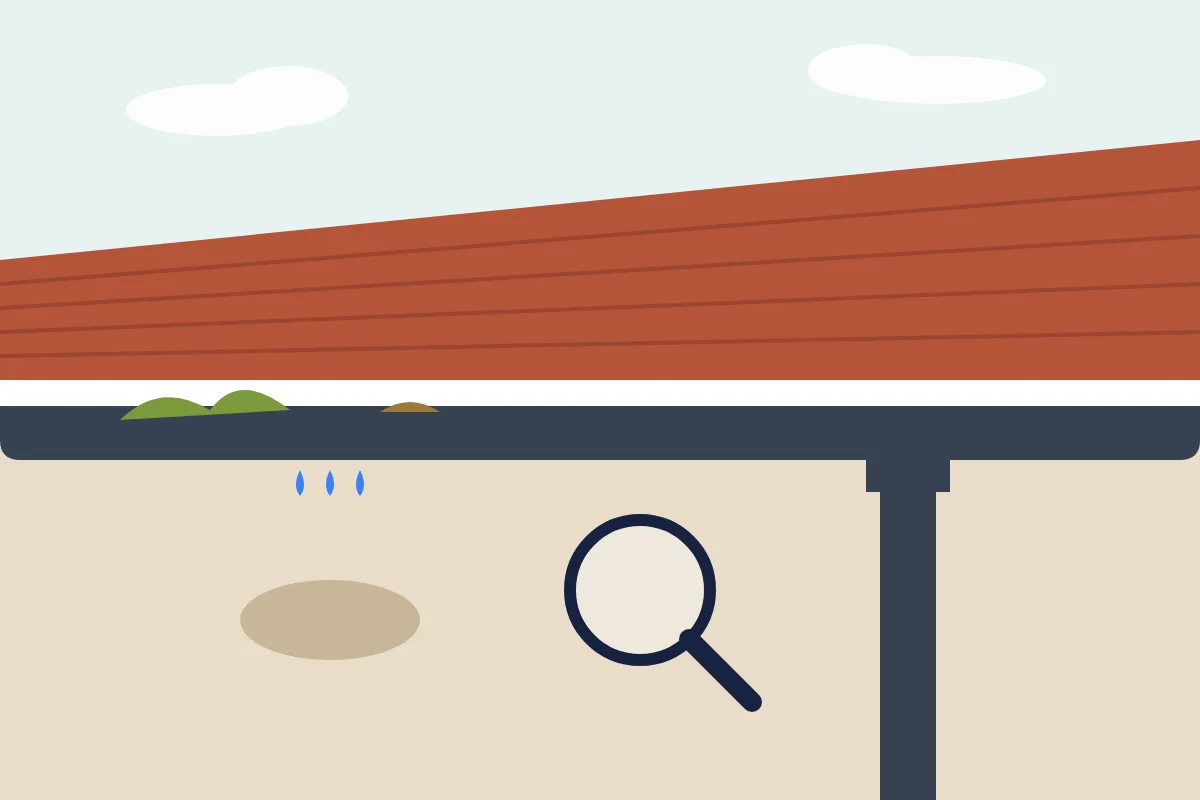
- Leaks at the gutter joints
- Fascia boards damaged by overflowing water
- Leaking or loose downpipes
Honest limits
Our findings are based on what we can see safely on the day, so there are some things a survey can’t cover:
- Pipes below ground level
- The inside of a downpipe along its whole length
- What’s behind fascias and inside walls
If you’re not sure which survey you need, call 07833 053749 or email us and we’ll give you a straight answer. The full list of what we check.
Roof types and parts we check
- Eaves gutters
- Fascias and soffits
- Outlets and hoppers
- Parapet and box gutters
- Valley gutters
- Downpipes
Gutter surveys for homes and businesses in Tunbridge Hill
Damp on walls, water marks under a valley or streaks down the brickwork often trace back to the gutters. Our gutter survey helps show whether the rainwater system is the cause, from what can be seen safely. If the evidence points elsewhere, such as a flashing or the roof covering, we will say so, with a suggested next step. We survey eaves gutters, parapet and box gutters and outlets and hoppers, and people most often book us about gutters full of debris and silt and overflowing valley or parapet gutters.
Somewhere as small as Tunbridge Hill, homes are often older cottages and farmhouses, with outbuildings and some newer houses. Roofs there can be clay tile, slate, stone or thatch, and chimney stacks are frequently old. We report on whatever is safely visible, and thatch is a specialist material. On older roofs, it is usually the chimneys and lead flashings that need work first.
You can share the report with anyone who needs it: your solicitor, the seller, your insurer, a roofer or the building’s managing agent, whichever applies.
- Location
- Tunbridge Hill (ME3)
- Region
- Medway
- Cost
- From £150 inc. VAT
- Your report
- Emailed report with photos and recommendations
- Survey days
- Weekdays and weekends
- Cover
- Professional indemnity and public liability
- Telephone
- 07833 053749
- Page updated
- 27 October 2026
Roofs, chimneys and gutters in Tunbridge Hill
Tunbridge Hill is within about 1 mile of the coast, and places near the sea get more salt in the air and more wind than inland. Metal fixings and flashings corrode faster in salt air, while gales work at loose ridges, slates and tiles, while driving rain finds any gap. Many older homes in Kent have handmade clay tiles, including Kent peg tiles held by pegs through two holes, and tile-hanging on their upper walls. The county’s older buildings also include oast houses and timber-framed Wealden hall houses. Each of these coverings has its own weak points, from fixings and valleys to flashings, chimneys and gutters.
For landlords with property near Gillingham (Kent) station, a roof report between tenancies helps plan work before a small defect becomes a tenant’s leak. If you look after a building such as The Hundred of Hoo Academy, a written record of a large roof helps plan work for the holidays rather than in term time.
Tunbridge Hill is about 5 miles north of Gillingham, in Medway. In Tunbridge Hill, as across Medway, every roof gets the same careful survey. Tunbridge Hill is one of the places in Medway where we work. We also survey roofs in Maidstone.
We cover every part of ME3 for gutter surveys. We also cover the places around Tunbridge Hill: Kingsnorth (1 mile south), Fenn Street (1 mile north-west), Sharnal Street (1 mile north-west), St Mary Hoo (2 miles north) and High Halstow (2 miles north-west). Larger places within reach include Gillingham (5 miles south), Chatham (6 miles south-west), Rochester (5 miles south-west), Rainham (5 miles south), Strood (6 miles south-west) and Luton (5 miles south-west).
Around Tunbridge Hill
For rail, the closest station is Gillingham (Kent) station, about 3.9 miles south-west of the centre. Well-known places in the area include Medway Maritime Hospital (4.5 miles south-west) and Upnor Castle (3.6 miles south-west). For a walk, there is Bishop Saltings.
The survey, step by step
The visit usually starts outside and finishes in the loft: first the slopes, edges and gutters from every safe viewpoint, then the loft space where it can be reached. All told, expect about 1–2 hours at most homes, with bigger or more complicated roofs taking longer. Older roofs in small places like Tunbridge Hill can have low, tight loft spaces, so it is useful to know whether there’s a loft hatch and how easy it is to reach. We only go where it is safe.
- We start by hearing about any drips, overflows or damp patches.
- The eaves gutters, downpipes and fascias are looked at from ground level and vantage points.
- We check hidden gutters, such as valleys and parapets, where it is safe to see them.
- The loft space is checked for water marks if it is safe to get into.
- We send a written report with photos and clear recommendations.
Before the survey
- Let us know about parking near the property
- Let us know about any leaks, stains or damp patches you know of
- For flats, make sure roof access has been agreed
Arrange a survey
If you are buying, it’s useful to book soon after your offer is accepted, so you have the findings in time to act on them before you exchange. Otherwise, simply ring 07833 053749 or drop us an email whenever suits you.
Advice
Nearby places to Tunbridge Hill
What else we do in Tunbridge Hill
What a survey costs
We confirm the price for your roof before booking. This is what makes a difference:
- Whether you choose the Basic, Standard or Premium Survey
- Extensions, dormers and garages with roofs of their own
- Whether thermal imaging or a drone is needed
- How tall the building is and how easy the roof is to see
For a price for your roof in Tunbridge Hill, ring 07833 053749 or send us an email and tell us about the roof. We’ll confirm the figure before booking.
Helping us price your survey
When you call or email, these details help:
- Anything about access we should know
- The type of building and roof, like pitched or flat
- Why you want a survey: buying, a leak, a storm or new work
- Your postcode, so we can check access and travel
A quick phone call is normally the easiest start: ring 07833 053749 or email us. The price is agreed before a date is set.
Practical tips
Here are a few things we’d tell any owner, before and after a survey:
- Check for spilling water in a downpour
- Do not leave hidden gutters out of a clear-out
- Check from the ground or a window, not a ladder
- Book gutter clearing once a year, more frequently near trees
The report comes with photos and recommendations, prioritised by urgency where relevant. You can pass it to whoever you choose to do the work so they can see exactly what’s needed.
Watch your gutters from ground level or a window during heavy rain. Water spilling over the edge or out of a joint is a sign that something needs attention before damage builds up.
Roof by roof
Fascias and soffits
Fascias carry the gutters, so a rotten fascia can let the gutter drop. Damaged or stained boards are recorded.
Lead-lined valley and parapet gutters
We look at the lining, the joints and the outlets as far as they can safely be seen. Missing lead is something we check for too.
Can I check my roof myself?
Fresh stains on ceilings or walls after rain are worth noting. Take a photo and write down when you saw it.
Inside, the loft is a good place to look, with care. Take a torch and only step on boards or joists, checking for stains, damp wood or chinks of daylight.
FAQs for Tunbridge Hill
Does being near the coast affect roofs in Tunbridge Hill?
Places near the sea get more wind and more salt in the air than inland, and both are hard on roofs. Salt corrodes metal fixings and flashings, and wind lifts loose slates, tiles and ridge pieces.
Does a conservation area affect roof work in Tunbridge Hill?
We can’t confirm that for you, but Historic England’s list and your council can. A change of roofing material may need consent in either case, and councils can also use Article 4 directions.
Could my damp wall be caused by the gutters?
We check whether rainwater from the gutters is reaching the wall from overflows, leaking joints or loose downpipes. We cannot see inside walls, so the report covers what can be seen.
How many surveys have you done?
More than 5,000 surveys over 20+ years, across London and South East England.
What happens after the survey?
The report arrives by email. The Standard Survey includes a follow-up consultation, and the Premium Survey an in-person consultation.
Do I have to be there for the survey?
If the survey includes the loft or the inside of the building, someone needs to let us in. Access is agreed with you when booking.
What does a gutter survey cost?
Our price is from £150, including VAT. The price depends on the size of the building and how easy the gutters are to see. To get a price, call 07833 053749 or send us an email.